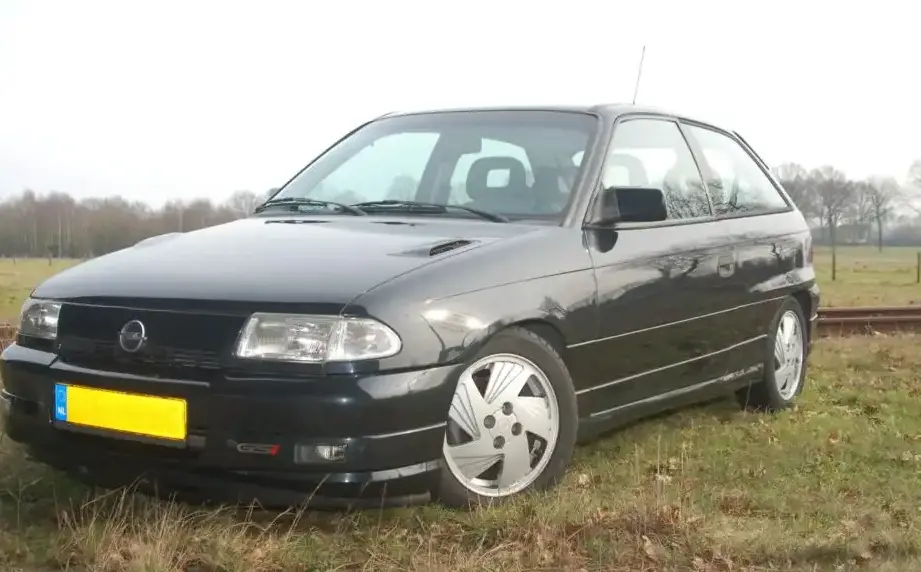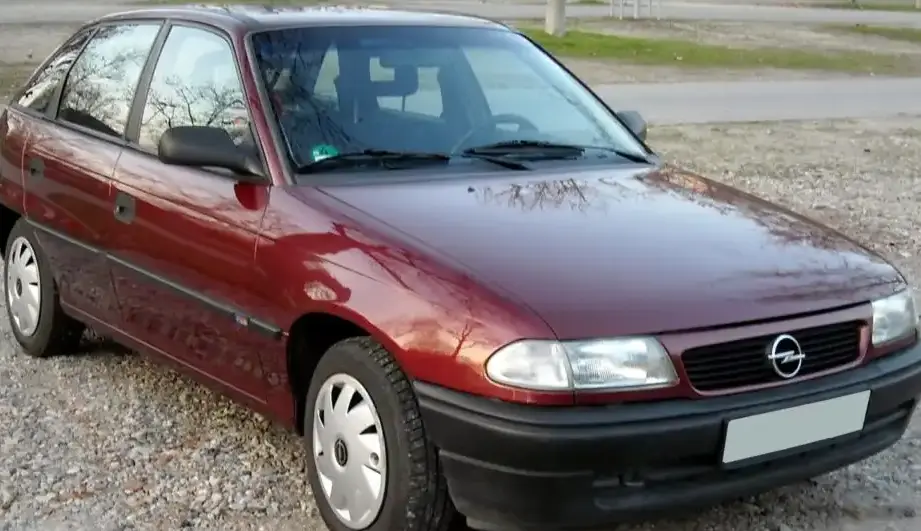
The Opel Astra F 1.7 Turbo, produced from 1994 to 1997, represented a compelling entry point into the turbocharged Astra range during the facelifted ‘F’ generation (1994-1998). Positioned as a more performance-oriented alternative to the naturally aspirated engines, the 1.7 Turbo offered a blend of reasonable power and fuel efficiency. This variant primarily served the European market, offering a sporty driving experience at a relatively affordable price point. It was a key component of Opel’s strategy to appeal to buyers seeking a modern, efficient, and somewhat spirited hatchback.
Technical Specifications
| Brand | Opel |
| Model | Astra |
| Generation | Astra F (facelift 1994) |
| Type (Engine) | 1.7 Turbo (82 Hp) |
| Start of production | 1994 |
| End of production | December, 1997 |
| Powertrain Architecture | Internal Combustion engine |
| Body type | Hatchback |
| Seats | 5 |
| Doors | 3 |
| Fuel consumption (urban) | 7.2 l/100 km (32.7 US mpg, 39.2 UK mpg, 13.9 km/l) |
| Fuel consumption (extra urban) | 5.1 l/100 km (46.1 US mpg, 55.4 UK mpg, 19.6 km/l) |
| Fuel consumption (combined) | 6.5 l/100 km (36.2 US mpg, 43.5 UK mpg, 15.4 km/l) |
| Fuel Type | Diesel |
| Acceleration 0 – 100 km/h | 13.5 sec |
| Acceleration 0 – 62 mph | 13.5 sec |
| Acceleration 0 – 60 mph | 12.8 sec |
| Maximum speed | 173 km/h (107.5 mph) |
| Weight-to-power ratio | 13 kg/Hp, 77 Hp/tonne |
| Weight-to-torque ratio | 6.3 kg/Nm, 157.7 Nm/tonne |
| Power | 82 Hp @ 4400 rpm |
| Power per litre | 48.6 Hp/l |
| Torque | 168 Nm @ 2400 rpm (123.91 lb.-ft. @ 2400 rpm) |
| Engine layout | Front, Transverse |
| Engine Model/Code | X17DT |
| Engine displacement | 1686 cm3 (102.89 cu. in.) |
| Number of cylinders | 4 |
| Engine configuration | Inline |
| Cylinder Bore | 79 mm (3.11 in.) |
| Piston Stroke | 86 mm (3.39 in.) |
| Compression ratio | 22:1 |
| Number of valves per cylinder | 2 |
| Fuel injection system | Precombustion chamber injection |
| Engine aspiration | Turbocharger, Intercooler |
| Valvetrain | SOHC |
| Engine oil capacity | 4.5 l (4.76 US qt | 3.96 UK qt) |
| Coolant | 6.8 l (7.19 US qt | 5.98 UK qt) |
| Kerb Weight | 1065/1085 kg (2347.92 lbs.) |
| Max. weight | 1575 kg (3472.28 lbs.) |
| Max load | 490-510 kg (1080.27 – 1124.36 lbs.) |
| Trunk (boot) space – minimum | 360 l (12.71 cu. ft.) |
| Trunk (boot) space – maximum | 1200 l (42.38 cu. ft.) |
| Fuel tank capacity | 52 l (13.74 US gal | 11.44 UK gal) |
| Length | 4051 mm (159.49 in.) |
| Width | 1696 mm (66.77 in.) |
| Width including mirrors | 1852 mm (72.91 in.) |
| Height | 1410 mm (55.51 in.) |
| Wheelbase | 2517 mm (99.09 in.) |
| Front track | 1430/1424 mm (56.3 in.) |
| Rear (Back) track | 1429/1423 mm (56.26 in.) |
| Ride height (ground clearance) | 135 mm (5.31 in.) |
| Drag coefficient (Cd) | 0.32 |
| Minimum turning circle | 10.5 m (34.45 ft.) |
| Drivetrain Architecture | The Internal combustion engine (ICE) drives the front wheels of the vehicle. |
| Drive wheel | Front wheel drive |
| Number of gears and type of gearbox | 5 gears, manual transmission |
| Front suspension | Wishbone |
| Rear suspension | Suspension with traction connecting levers |
| Front brakes | Ventilated discs |
| Rear brakes | Drum |
| Steering type | Steering rack and pinion |
| Tires size | 175/70 R13 82T; 175/65 R14 82T |
| Wheel rims size | 5.5J x 13 ET49; 5.5J x 14 ET49 |
Powertrain & Engine Architecture
The heart of the Astra F 1.7 Turbo was the X17DT engine, a 1.7-liter inline-four cylinder diesel engine. This engine utilized a precombustion chamber injection system, a common technology for diesel engines of the era, designed to improve combustion efficiency and reduce emissions. A turbocharger with an intercooler was employed to boost power output, increasing the engine’s capacity to produce 82 horsepower and 168 Nm (124 lb-ft) of torque. The single overhead camshaft (SOHC) valvetrain kept the engine relatively simple and cost-effective. The engine’s transverse mounting and front-wheel-drive configuration were standard for this class of vehicle. The 5-speed manual transmission was the only gearbox option available with this engine.
Driving Characteristics
The 1.7 Turbo offered a noticeable improvement in performance over the base, naturally aspirated Astra models. While not a sports car by any means, the turbocharger provided a useful boost in acceleration, making overtaking and merging onto highways more manageable. The 0-60 mph time of around 12.8 seconds and a top speed of 107.5 mph were respectable for the time. However, the turbo lag was noticeable, requiring drivers to downshift to access the engine’s peak torque. The gear ratios were tuned for fuel efficiency, meaning the engine could feel strained at higher speeds. Compared to the more powerful 2.0-liter 16V models, the 1.7 Turbo lacked the outright punch and responsiveness, but it offered a better balance of performance and economy.
Equipment & Trim Levels
The 1.7 Turbo typically came with a moderate level of equipment. Standard features generally included power steering, central locking, and basic instrumentation. Interior upholstery was typically cloth, and the dashboard featured a functional, if somewhat utilitarian, design. Optional extras included power windows, a sunroof, and upgraded audio systems. The trim level often fell into a mid-range category, offering more features than the base models but lacking the luxury appointments of the higher-spec versions. The focus was on providing a well-equipped, practical, and affordable package.
Chassis & Braking
The Astra F 1.7 Turbo utilized a relatively simple chassis design. Front suspension consisted of wishbones, while the rear employed a suspension system with traction connecting levers. This setup provided a reasonable compromise between ride comfort and handling. Braking was handled by ventilated discs at the front and drum brakes at the rear. While adequate for everyday driving, the braking system lacked the stopping power of more advanced setups found on higher-performance models. Stabilizer bars were included to reduce body roll during cornering, but the overall handling characteristics were geared towards comfort and practicality rather than outright sportiness.
Market Reception & Comparison
The Astra F 1.7 Turbo was generally well-received by automotive critics as a sensible and economical option. It was praised for its fuel efficiency, reasonable performance, and affordability. However, some critics noted the noticeable turbo lag and the somewhat basic interior. Compared to other engines in the Astra F lineup, the 1.7 Turbo offered a good balance between performance and economy. The 1.6-liter naturally aspirated engine was less powerful but more refined, while the 2.0-liter 16V offered significantly more performance but at the cost of fuel economy. The 1.7 Turbo appealed to buyers who wanted a bit more pep than the base models without sacrificing fuel efficiency.
Legacy
The Opel Astra F 1.7 Turbo, while not a particularly rare or collectible model, remains a popular choice among enthusiasts and budget-conscious buyers. The X17DT engine is known for its durability and relatively simple maintenance requirements. However, like all older diesel engines, it can be prone to issues such as injector problems and turbocharger wear. Finding parts is generally not a major issue, as the Astra F was a widely produced vehicle. Today, well-maintained examples of the 1.7 Turbo can still provide reliable and economical transportation, offering a glimpse into the era of affordable, turbocharged hatchbacks.