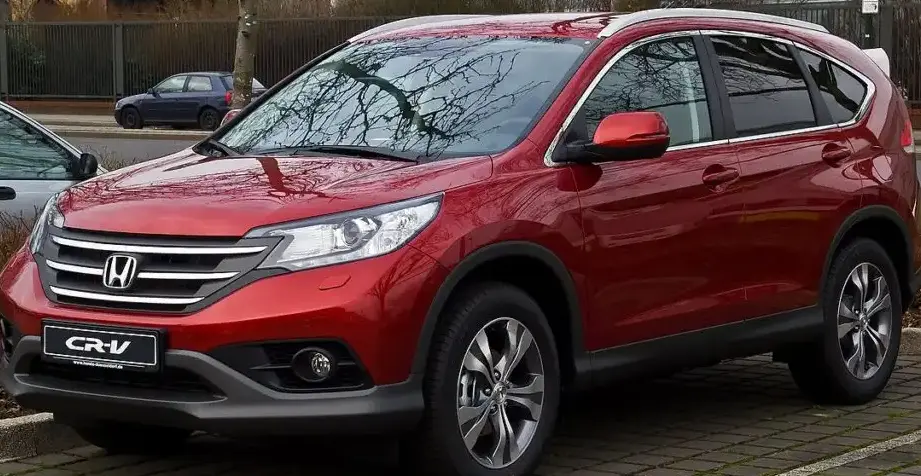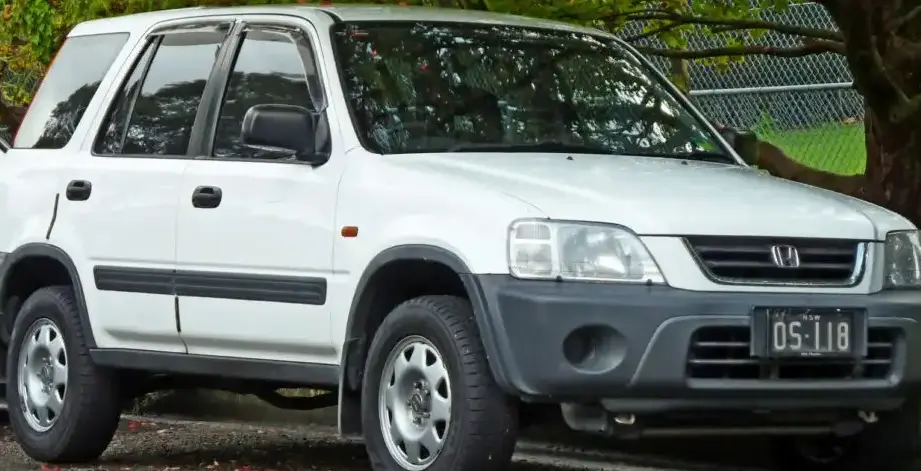
The Honda CR-V first generation (RD series), produced from 1997 to 2001 (with some markets continuing production into 2002), represented Honda’s entry into the burgeoning compact SUV market. Introduced in Japan in 1995, the CR-V aimed to combine the practicality of a station wagon with the increased ride height and all-weather capability of a sport utility vehicle. The 2.0 16V variant, powered by the B20Z1 engine producing 147 horsepower, was a key offering in many markets, including North America, and served as a mid-range option within the CR-V lineup. This model year bridged the gap between the base engine and potential higher-spec trims, offering a balance of performance and affordability.
Technical Specifications
| Brand | Honda |
| Model | CR-V |
| Generation | CR-V I (RD) |
| Type (Engine) | 2.0 16V (147 Hp) |
| Start of production | 1999 year |
| End of production | 2002 year |
| Powertrain Architecture | Internal Combustion engine |
| Body type | SUV |
| Seats | 5 |
| Doors | 5 |
| Fuel consumption (economy) – urban | 11.9 l/100 km (19.8 US mpg) |
| Fuel consumption (economy) – extra urban | 8.4 l/100 km (28 US mpg) |
| Fuel Type | Petrol (Gasoline) |
| Acceleration 0 – 100 km/h | 10.5 sec |
| Acceleration 0 – 62 mph | 10.5 sec |
| Acceleration 0 – 60 mph | 10 sec |
| Maximum speed | 177 km/h (109.98 mph) |
| Weight-to-power ratio | 10.1 kg/Hp |
| Weight-to-torque ratio | 8.2 kg/Nm |
| Power | 147 Hp @ 5500 rpm |
| Power per litre | 74.5 Hp/l |
| Torque | 182 Nm @ 4200 rpm (134.24 lb.-ft. @ 4200 rpm) |
| Engine layout | Front, Transverse |
| Engine Model/Code | B20Z1 |
| Engine displacement | 1973 cm3 (120.4 cu. in.) |
| Number of cylinders | 4 |
| Engine configuration | Inline |
| Cylinder Bore | 84 mm (3.31 in.) |
| Piston Stroke | 89 mm (3.5 in.) |
| Compression ratio | 9.6:1 |
| Number of valves per cylinder | 4 |
| Fuel injection system | Multi-port manifold injection |
| Engine aspiration | Naturally aspirated engine |
| Engine oil capacity | 3.8 l (4.02 US qt | 3.34 UK qt) |
| Coolant | 3.9 l (4.12 US qt | 3.43 UK qt) |
| Kerb Weight | 1490 kg (3284.89 lbs.) |
| Max. weight | 1900 kg (4188.78 lbs.) |
| Max load | 410 kg (903.9 lbs.) |
| Trunk (boot) space – minimum | 375 l (13.24 cu. ft.) |
| Trunk (boot) space – maximum | 670 l (23.66 cu. ft.) |
| Fuel tank capacity | 58 l (15.32 US gal | 12.76 UK gal) |
| Length | 4520 mm (177.95 in.) |
| Width | 1750 mm (68.9 in.) |
| Height | 1675 mm (65.94 in.) |
| Wheelbase | 2620 mm (103.15 in.) |
| Front track | 1535 mm (60.43 in.) |
| Rear (Back) track | 1535 mm (60.43 in.) |
| Drive wheel | All wheel drive (4×4) |
| Number of gears and type of gearbox | 5 gears, manual transmission |
| Front suspension | Double wishbone |
| Rear suspension | Coil spring |
| Front brakes | Disc |
| Rear brakes | Drum |
| Assisting systems | ABS (Anti-lock braking system) |
| Steering type | Steering rack and pinion |
| Power steering | Hydraulic Steering |
| Tires size | 205/70 R15 |
| Wheel rims size | 6J x 15 |
INTRODUCTION
The 2.0 16V CR-V, utilizing the Honda B20Z1 engine, was a significant model for Honda in the late 1990s and early 2000s. It represented a move towards a more versatile vehicle, blending the comfort of a car with the utility expected of an SUV. The RD series CR-V was built on Honda’s compact platform, and the 2.0L engine variant was positioned as a sweet spot in the range, offering a reasonable level of performance without the higher price tag of potential VTEC-equipped models available in some markets. It quickly gained popularity for its spacious interior, reliable mechanics, and practical design, becoming a common sight on roads across North America, Europe, and Asia.
Powertrain & Engine Architecture
The heart of the 2.0 16V CR-V is the B20Z1 engine, a 1973cc inline-four cylinder powerplant. This engine is a naturally aspirated design, meaning it doesn’t employ forced induction like a turbocharger or supercharger. It features a single overhead camshaft (SOHC) design with four valves per cylinder, contributing to its respectable power output. Fuel delivery is managed by a multi-point fuel injection system, ensuring efficient combustion and smooth operation. The B20Z1 is known for its durability and relatively simple design, making it a reliable engine for long-term ownership. The engine was paired with a five-speed manual transmission in many markets, but a four-speed automatic transmission was also offered, and is the focus of this article. This automatic transmission, while not particularly advanced by modern standards, was known for its smooth shifts and dependability. It featured typical torque converter technology and electronic control for optimized gear selection.
Driving Characteristics
The 2.0L engine with the four-speed automatic transmission delivered adequate, though not exhilarating, performance. Acceleration from 0-60 mph took around 10 seconds, which was competitive for the class at the time. The automatic transmission’s gear ratios were tuned for fuel efficiency and comfortable cruising rather than outright speed. The engine felt most responsive in the mid-range, providing sufficient power for everyday driving and highway merging. Compared to the manual transmission version, the automatic offered a more relaxed driving experience, particularly in urban traffic. However, the manual version generally provided slightly better fuel economy and a more engaging driving feel. The all-wheel-drive system, standard on most CR-V models, provided enhanced traction in inclement weather conditions, making it a practical choice for drivers in regions with snow or rain.
Equipment & Trim Levels
The 2.0 16V CR-V typically came with a reasonable level of standard equipment. Base models included features such as air conditioning, power windows and locks, and an AM/FM radio. Higher trim levels, often denoted by “LX” or “EX” designations, added features like alloy wheels, a sunroof, upgraded audio systems, and cruise control. Interior upholstery was typically cloth, with options for leather in some markets and on higher trims. The dashboard layout was functional and straightforward, prioritizing ease of use over stylistic flair. Optional extras included a CD player, rear cargo organizer, and upgraded sound systems.
Chassis & Braking
The CR-V’s chassis featured an independent double wishbone suspension in the front, providing a comfortable ride and good handling characteristics. The rear suspension utilized a coil spring setup. Braking duties were handled by disc brakes in the front and drum brakes in the rear. Anti-lock braking system (ABS) was standard on most models, enhancing safety by preventing wheel lockup during hard braking. The steering system employed a rack-and-pinion setup with hydraulic power assistance, providing precise and responsive steering feel. The suspension was tuned for a balance between ride comfort and handling, making it suitable for both on-road and light off-road driving.
Market Reception & Comparison
The 2.0 16V CR-V was generally well-received by automotive critics. It was praised for its spacious interior, practical design, and reliable mechanics. However, some critics noted that the engine lacked the power of some competitors, and the automatic transmission could feel somewhat dated. Compared to other compact SUVs of the time, such as the Toyota RAV4 and the Subaru Forester, the CR-V offered a compelling combination of features and value. Fuel economy was respectable, averaging around 23 mpg in combined driving. Reliability was a strong point, with the B20Z1 engine proving to be a durable and long-lasting powerplant.
Legacy
The first-generation Honda CR-V, particularly the 2.0 16V variant, established the CR-V as a popular and reliable compact SUV. The B20Z1 engine, while not a high-performance unit, has proven to be remarkably durable, and many examples are still on the road today. In the used car market, these CR-Vs are often sought after for their affordability, practicality, and reputation for reliability. Maintenance costs are generally reasonable, and parts availability is good. The 2.0 16V automatic CR-V represents a solid choice for buyers seeking a dependable and versatile vehicle that can handle a variety of tasks.