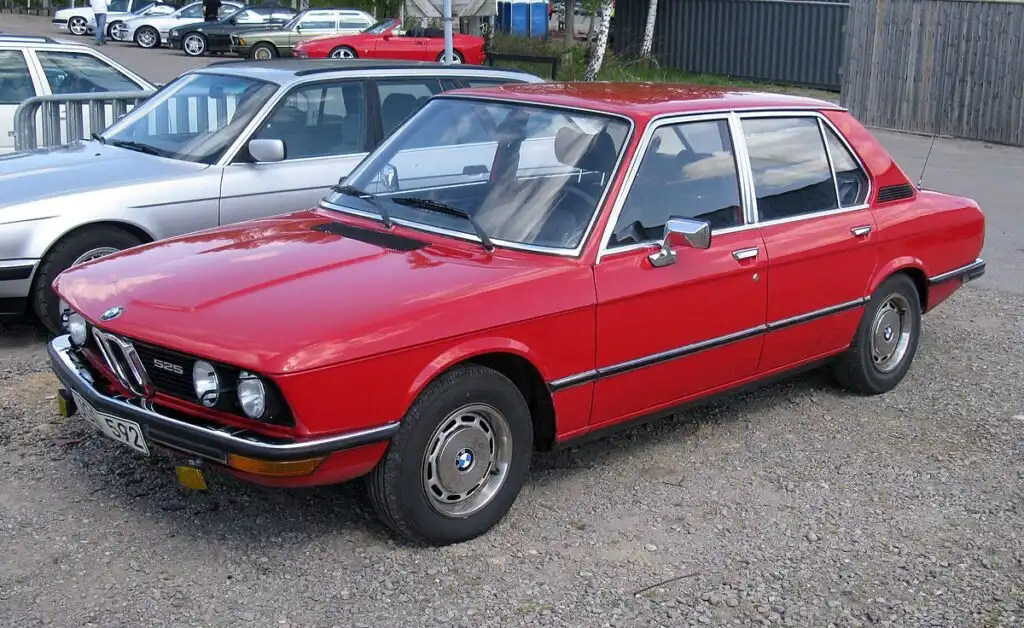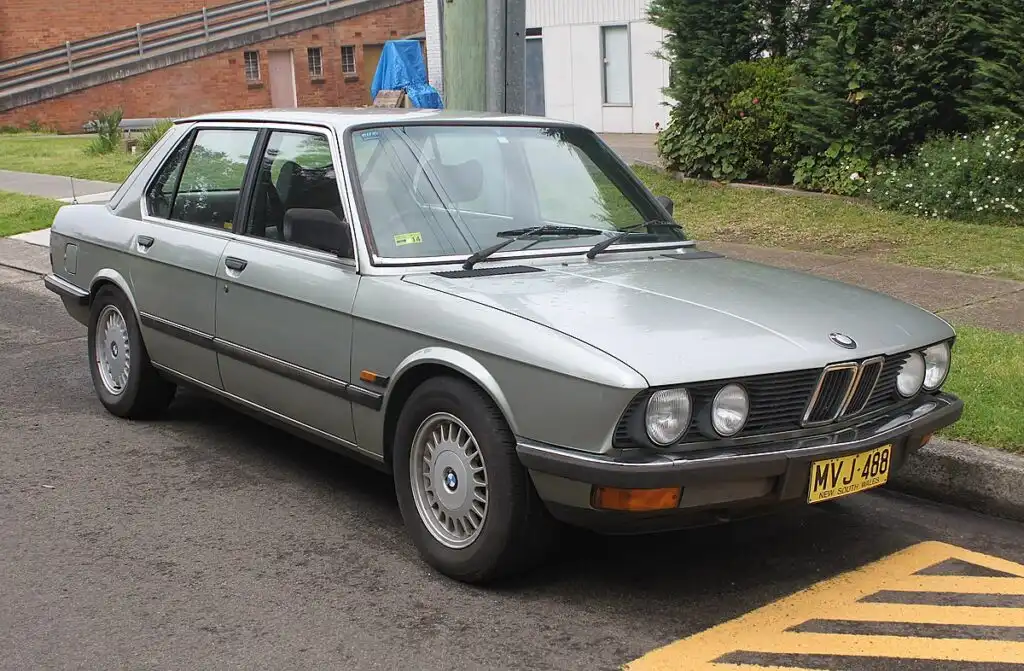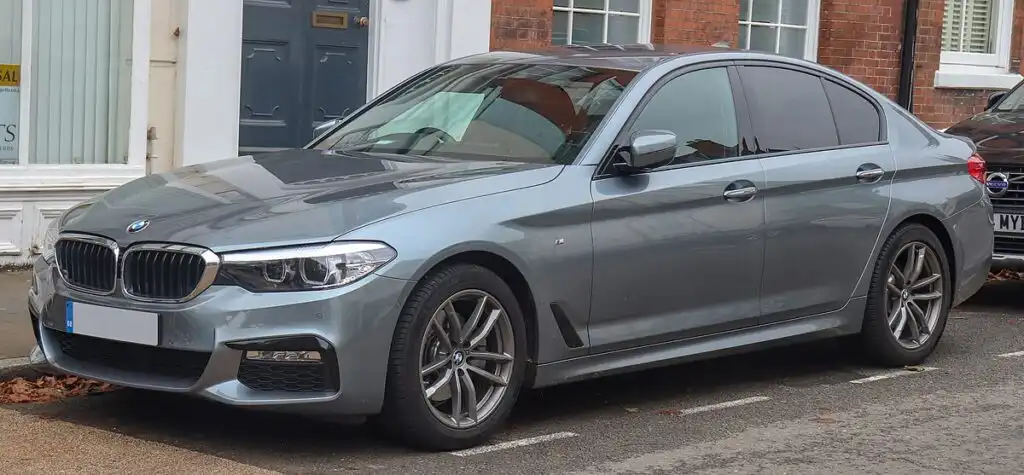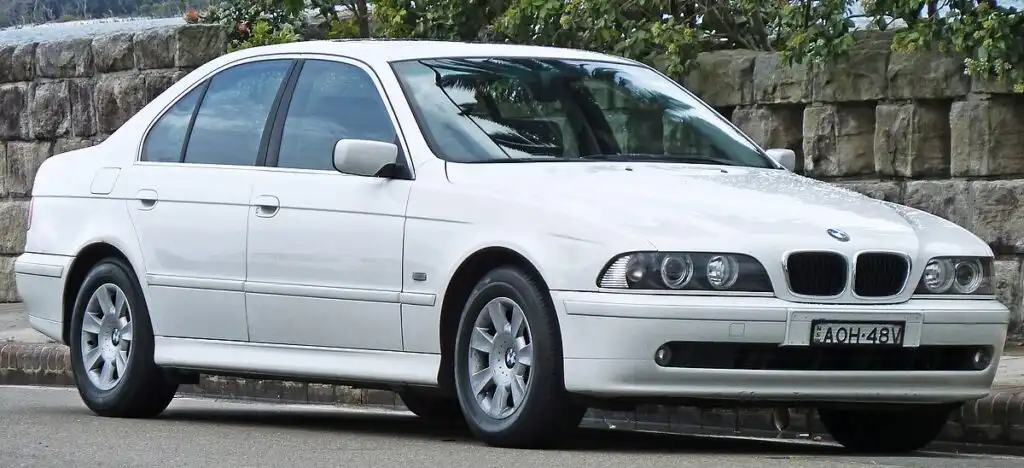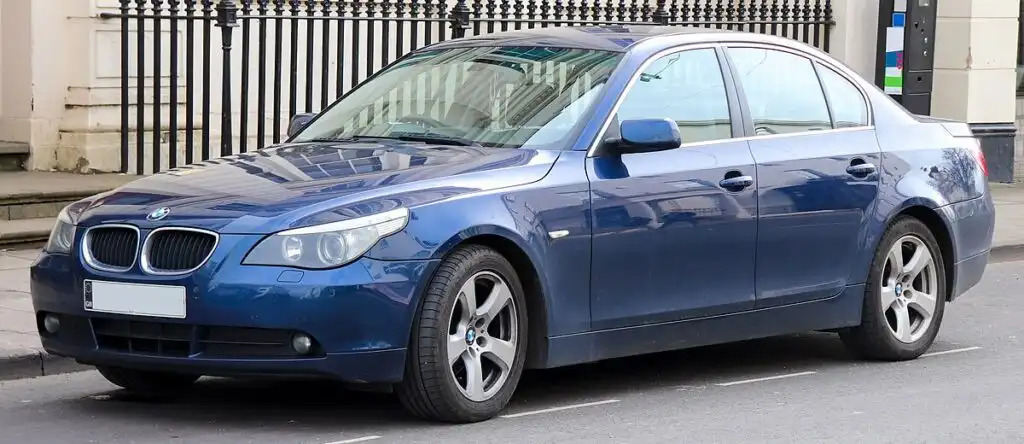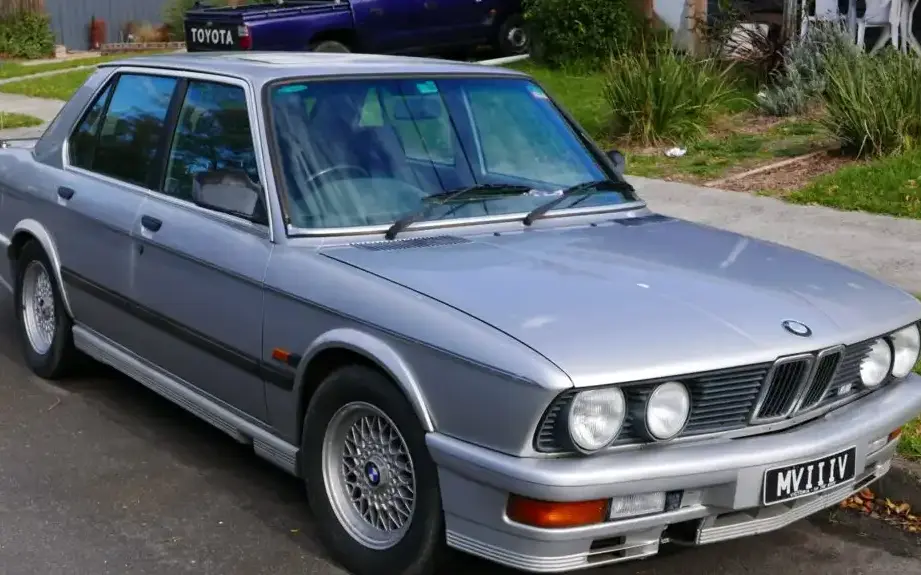
The BMW 5 Series M535i, produced between 1984 and 1987, represented a significant step in the evolution of BMW’s mid-size executive car. Part of the E28 generation (1981-1988), the M535i was designed to bridge the gap between the standard 5 Series and the full-blown M5 that would arrive later. It offered a substantial performance upgrade over other E28 models, establishing a reputation for refined power and handling. The M535i was primarily marketed in Europe and North America as a high-performance sedan appealing to drivers seeking a blend of luxury and sporting capability.
Technical Specifications
| Brand | BMW |
| Model | 5 Series |
| Generation | 5 Series (E28) |
| Type | M535i (215 Hp) |
| Start of production | 1984 |
| End of production | 1987 |
| Powertrain Architecture | Internal Combustion engine |
| Body type | Sedan |
| Seats | 5 |
| Doors | 4 |
| Fuel consumption (urban) | 15 l/100 km (15.7 US mpg, 18.8 UK mpg, 6.7 km/l) |
| Fuel consumption (extra urban) | 7.3-9 l/100 km (32.2 – 26.1 US mpg, 38.7 – 31.4 UK mpg, 13.7 – 11.1 km/l) |
| Fuel Type | Petrol (Gasoline) |
| Acceleration 0 – 100 km/h | 7.2 sec |
| Acceleration 0 – 62 mph | 7.2 sec |
| Acceleration 0 – 60 mph | 6.8 sec |
| Maximum speed | 230 km/h (142.92 mph) |
| Weight-to-power ratio | 6 kg/Hp, 165.8 Hp/tonne |
| Weight-to-torque ratio | 4.2 kg/Nm, 235.7 Nm/tonne |
| Power | 215 Hp @ 5500 rpm |
| Power per litre | 63.6 Hp/l |
| Torque | 310 Nm @ 4000 rpm (228.64 lb.-ft. @ 4000 rpm) |
| Engine layout | Front, Longitudinal |
| Engine Model/Code | M30B34 |
| Engine displacement | 3430 cm3 (209.31 cu. in.) |
| Number of cylinders | 6 |
| Engine configuration | Inline |
| Cylinder Bore | 92 mm (3.62 in.) |
| Piston Stroke | 86 mm (3.39 in.) |
| Compression ratio | 10:1 |
| Number of valves per cylinder | 2 |
| Fuel injection system | Multi-port manifold injection |
| Engine aspiration | Naturally aspirated engine |
| Valvetrain | SOHC |
| Engine oil capacity | 5.75 l (6.08 US qt, 5.06 UK qt) |
| Coolant | 12 l (12.68 US qt, 10.56 UK qt) |
| Kerb Weight | 1315 kg (2899.08 lbs.) |
| Max. weight | 1900 kg (4188.78 lbs.) |
| Max load | 585 kg (1289.7 lbs.) |
| Trunk (boot) space – minimum | 460 l (16.24 cu. ft.) |
| Fuel tank capacity | 70 l (18.49 US gal, 15.4 UK gal) |
| Max. roof load | 75 kg (165.35 lbs.) |
| Permitted trailer load with brakes (12%) | 1500 kg (3306.93 lbs.) |
| Permitted trailer load without brakes | 500 kg (1102.31 lbs.) |
| Length | 4604 mm (181.26 in.) |
| Width | 1710 mm (67.32 in.) |
| Height | 1397 mm (55 in.) |
| Wheelbase | 2628 mm (103.46 in.) |
| Front track | 1430 mm (56.3 in.) |
| Rear (Back) track | 1460 mm (57.48 in.) |
| Minimum turning circle | 11 m (36.09 ft.) |
| Drivetrain Architecture | Rear wheel drive |
| Number of gears and type of gearbox | 5 gears, manual transmission |
| Front suspension | Spring Strut, Transverse stabilizer |
| Rear suspension | Independent coil spring, Transverse stabilizer, Trailing arm |
| Front brakes | Ventilated discs |
| Rear brakes | Disc |
| Assisting systems | ABS (Anti-lock braking system) |
| Steering type | Cone worm with recirculation balls |
| Power steering | Hydraulic Steering |
| Tires size | 220/55 R16 |
| Wheel rims size | 16 |
Powertrain & Engine Architecture
The heart of the M535i was the M30B34 engine, a 3.4-liter inline-six. This engine was derived from the standard M30 engine found in other 5 Series models, but significantly upgraded. Key modifications included a larger bore, higher compression ratio (10:1), and a revised cylinder head with larger valves. The engine utilized Bosch Motronic fuel injection, a sophisticated system for its time, which optimized fuel delivery and ignition timing for improved performance and efficiency. The single overhead camshaft (SOHC) design, while not as advanced as dual overhead cam setups, proved durable and contributed to the engine’s smooth power delivery. The M535i exclusively came with a 5-speed manual transmission, designed to handle the increased power output. This transmission featured a robust construction and precise shift feel, enhancing the driving experience.
Driving Characteristics
The M535i offered a noticeably more engaging driving experience than its standard 5 Series counterparts. The 215 horsepower and 228 lb-ft of torque provided brisk acceleration, with 0-60 mph times consistently around 6.8 seconds. While not a modern sports car by today’s standards, this was a quick time for the mid-1980s. The manual transmission allowed for precise control, and the rear-wheel-drive layout contributed to a balanced and predictable handling characteristic. The suspension was tuned for a firmer ride than standard 5 Series models, reducing body roll and improving cornering stability. The M535i felt composed and confident on both winding roads and high-speed highways.
Equipment & Trim Levels
The M535i was relatively well-equipped for its era, though options were available to further enhance the luxury and convenience. Standard features typically included power windows, central locking, a sunroof, and a high-quality sound system. Interior upholstery was usually a combination of cloth and leather, with sport seats providing enhanced support. Optional extras included leather upholstery, a limited-slip differential (a popular choice for improved handling), and upgraded audio systems. The dashboard layout was typical of the E28 5 Series, with a functional and driver-focused design.
Chassis & Braking
The M535i benefited from several chassis upgrades compared to standard E28 models. A thicker front stabilizer bar reduced body roll, while stiffer springs and dampers improved handling precision. The braking system featured ventilated disc brakes at the front and solid discs at the rear, providing adequate stopping power. Anti-lock braking system (ABS) was available as an option, enhancing safety in slippery conditions. The rear suspension utilized an independent coil spring setup with trailing arms, contributing to a comfortable ride and good handling balance.
Market Reception & Comparison
The M535i was generally well-received by automotive critics. It was praised for its strong performance, refined handling, and comfortable interior. However, some reviewers noted that the engine, while powerful, lacked the ultimate responsiveness of the later M5’s inline-six. Compared to other E28 5 Series models, the M535i offered a significant performance advantage. It was positioned as a more affordable alternative to the upcoming M5, appealing to buyers who wanted a high-performance sedan without the full M-car price tag. Fuel economy, while not a primary concern for buyers of this vehicle, was reasonable for its performance level.
Legacy
The BMW M535i holds a respected place in BMW history as a precursor to the iconic M5. The M30B34 engine proved to be a durable and reliable powerplant, and many examples are still on the road today. The M535i is sought after by collectors and enthusiasts who appreciate its classic styling, engaging driving dynamics, and historical significance. While maintenance costs can be higher than for standard E28 models due to the more complex engine and specialized parts, the M535i remains a rewarding and enjoyable classic car to own and drive. Its influence can be seen in subsequent generations of high-performance 5 Series models.