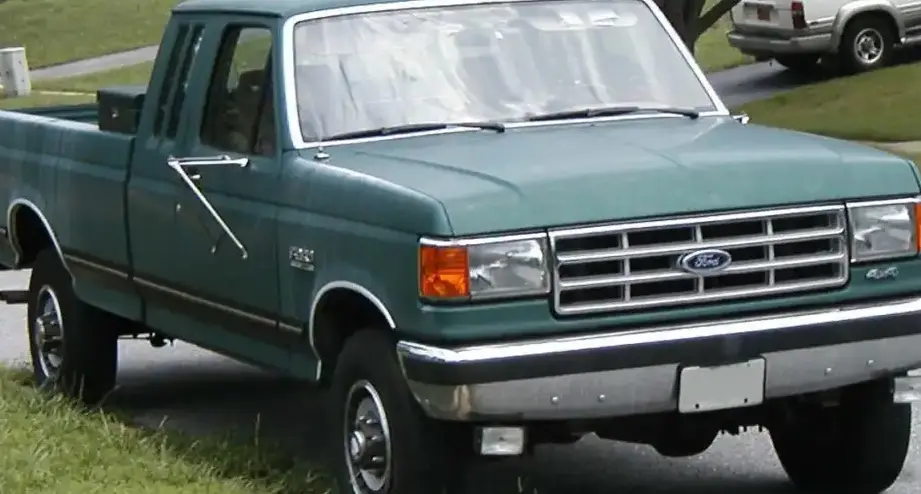
The Ford F-Series F-250 VIII SuperCab HD, equipped with the 6.9L V8 Indirect Injection Diesel (IDI) engine producing 170 horsepower, was a significant offering in Ford’s heavy-duty truck lineup during its 1986-1987 production run. This variant represented a work-focused configuration within the eighth generation (1987-1991) of the F-Series, positioned as a robust and capable truck for demanding tasks. The SuperCab designation indicated an extended cab, offering additional passenger space compared to the standard cab models. This particular combination of engine and cab configuration aimed to balance power, practicality, and affordability for buyers needing a heavy-duty truck with some passenger capacity.
Technical Specifications
| Brand | Ford |
| Model | F-Series F-250 |
| Generation | F-Series F-250 VIII SuperCab HD |
| Type (Engine) | 6.9 V8 IDI (170 Hp) 4×4 |
| Start of production | 1986 |
| End of production | 1987 |
| Powertrain Architecture | Internal Combustion engine |
| Body type | Pick-up |
| Seats | 6 |
| Doors | 2 |
| Fuel Type | Diesel |
| Power | 170 Hp |
| Power per litre | 24.7 Hp/l |
| Torque | 427 Nm / 314.94 lb.-ft. |
| Engine layout | Front, Longitudinal |
| Engine displacement | 6883 cm3 / 420.03 cu. in. |
| Number of cylinders | 8 |
| Engine configuration | V-engine |
| Fuel injection system | Precombustion chamber injection |
| Engine aspiration | Naturally aspirated engine |
| Engine oil capacity | 9.3 l / 9.83 US qt | 8.18 UK qt |
| Coolant capacity | 29 l / 30.64 US qt | 25.52 UK qt |
| Max. weight | 3992 kg / 8800.85 lbs. |
| Fuel tank capacity | 144 l / 38.04 US gal | 31.68 UK gal |
| Length | 5898 mm / 232.2 in. |
| Width | 1778 mm / 70 in. |
| Height | 1956 mm / 77.01 in. |
| Wheelbase | 3937 mm / 155 in. |
| Wading depth | 914 mm / 35.98 in. |
| Drivetrain Architecture | All wheel drive (4×4). ICE drives rear wheels, front wheels engaged via clutch. |
| Number of gears and type of gearbox | 4 gears, manual transmission |
| Front suspension | Leaf spring |
| Rear suspension | Leaf spring |
| Front brakes | Disc |
| Rear brakes | Drum |
| Power steering | Electric Steering |
| Tires size | 235/85 R16 |
| Wheel rims size | 16 |
Powertrain & Engine Architecture
The heart of this F-250 variant was the 6.9-liter IDI V8 diesel engine. This engine, produced by Ford from 1983 to 1987, utilized a precombustion chamber injection system. Unlike direct injection diesels, IDI systems inject fuel into a small pre-chamber connected to the main combustion chamber, promoting more complete combustion and quieter operation. The 6.9L engine featured a cast iron block and head, known for their durability. The engine produced 170 horsepower at 3,000 rpm and 315 lb-ft of torque at 1,600 rpm. The four-speed manual transmission was the standard offering, providing a direct mechanical connection and allowing the driver to fully utilize the engine’s torque. The transmission’s gear ratios were optimized for hauling and towing, with a relatively low first gear for starting heavy loads and a higher fourth gear for highway cruising.
Driving Characteristics
The 170 hp 6.9L IDI engine, coupled with the manual transmission, delivered a driving experience focused on utility rather than outright speed. Acceleration was modest, but the engine’s substantial torque allowed for confident towing and hauling capabilities. The manual transmission provided precise control, especially when navigating challenging terrain or managing heavy loads. Compared to later fuel-injected diesel engines, the IDI engine was known for its slower warm-up times and slightly more noticeable engine noise. The 4×4 system, engaged manually, provided enhanced traction in off-road conditions or slippery surfaces. The leaf spring suspension, while robust, offered a firm ride, typical of heavy-duty trucks of this era.
Equipment & Trim Levels
The F-250 SuperCab HD, even in its base configuration, offered a reasonable level of standard equipment. The interior typically featured vinyl upholstery, a basic instrument cluster, and a functional dashboard layout. The SuperCab configuration added a rear bench seat, increasing passenger capacity to six. Optional extras included air conditioning, a radio, upgraded interior trim, and various towing packages. The HD designation indicated a heavier-duty suspension and chassis components, designed for increased payload and towing capacity. The trim level was generally considered a step up from the base F-250, offering the extended cab as a primary benefit.
Chassis & Braking
The F-250’s chassis was built for durability and heavy-duty use. It featured a robust ladder frame construction, designed to withstand significant stress. The front suspension utilized leaf springs, while the rear suspension also employed leaf springs, providing a stable and predictable ride. The braking system consisted of disc brakes on the front axle and drum brakes on the rear axle. Power steering was standard, assisting with maneuverability, especially at low speeds. The 235/85R16 tires were chosen for their load-carrying capacity and durability, providing adequate traction for both on-road and off-road use.
Market Reception & Comparison
The 1986-1987 Ford F-250 with the 6.9L IDI diesel engine was well-received by buyers needing a reliable and capable work truck. Critics praised its durability and towing capacity, but noted its relatively low horsepower compared to gasoline-powered alternatives. Compared to the later 7.3L IDI engine, the 6.9L offered similar reliability but slightly less power. The manual transmission was favored by those prioritizing control and durability, while some buyers opted for the available automatic transmission for increased convenience. Fuel economy, while reasonable for a heavy-duty truck, was not a primary selling point.
Legacy
The 6.9L IDI diesel engine has earned a reputation for its longevity and relative simplicity. Many examples remain on the road today, a testament to its robust construction. While not as powerful or refined as modern diesel engines, the 6.9L is relatively easy to maintain and repair, making it a popular choice among enthusiasts and those seeking a dependable work truck. In the used car market, these F-250s are often sought after for their classic styling and proven reliability. Parts availability remains good, and a strong community of owners and enthusiasts provides support and resources for maintaining these iconic trucks. The 6.9L IDI engine represents a pivotal point in Ford’s diesel truck history, paving the way for the more advanced Power Stroke engines that followed.