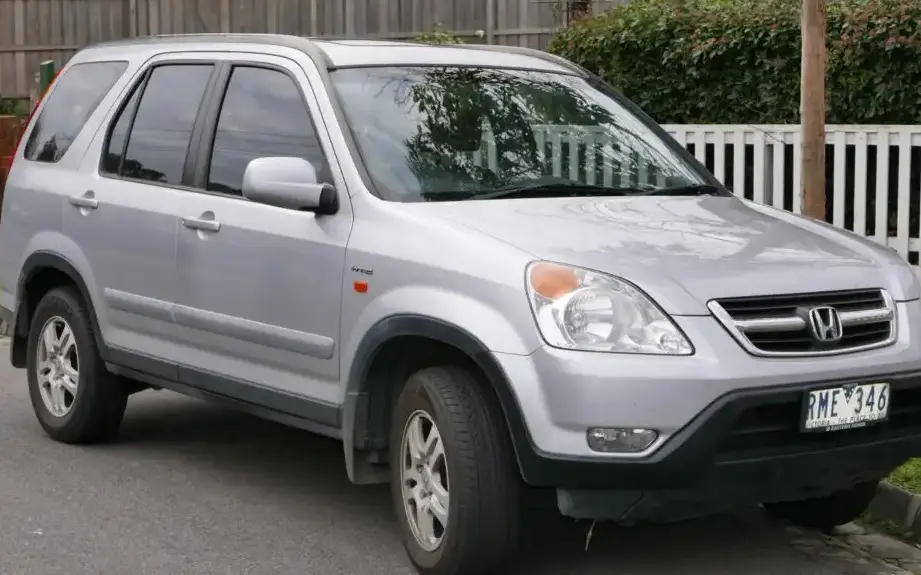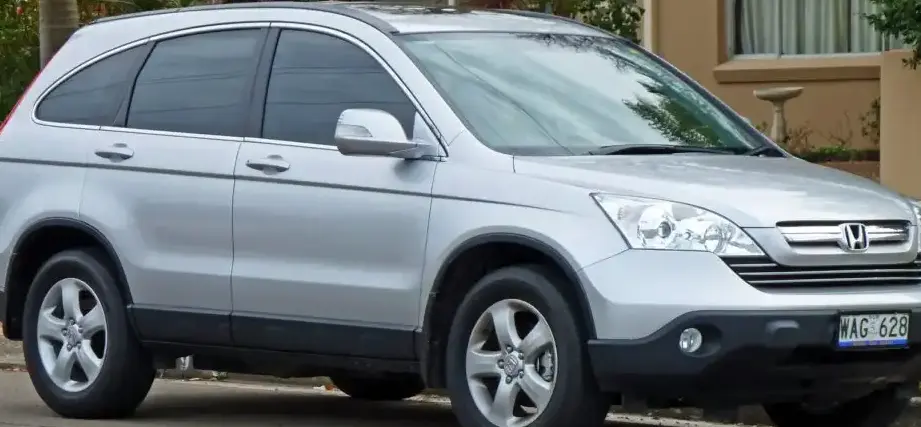
The Honda CR-V III, produced between 2006 and 2010, represented a significant evolution in Honda’s popular compact SUV lineup. The 2.0 i-VTEC (150 Hp) All-Wheel Drive (AWD) variant occupied a middle ground within the CR-V III range, offering a balance between fuel efficiency, practicality, and all-weather capability. This model was primarily aimed at buyers seeking a versatile family vehicle with the added security of AWD, without the higher price tag associated with the larger engine options. It was a key offering in markets like North America and Europe, where compact SUVs were gaining significant traction.
Technical Specifications
| Brand | Honda |
| Model | CR-V |
| Generation | CR-V III |
| Type (Engine) | 2.0 i-VTEC (150 Hp) AWD |
| Start of production | 2006 |
| End of production | 2010 |
| Powertrain Architecture | Internal Combustion engine |
| Body type | SUV |
| Seats | 5 |
| Doors | 5 |
| Fuel consumption (urban) | 10.4 l/100 km (22.6 US mpg, 27.2 UK mpg, 9.6 km/l) |
| Fuel consumption (extra urban) | 6.7 l/100 km (35.1 US mpg, 42.2 UK mpg, 14.9 km/l) |
| Fuel consumption (combined) | 8.1 l/100 km (29 US mpg, 34.9 UK mpg, 12.3 km/l) |
| CO2 emissions | 192 g/km |
| Fuel Type | Petrol (Gasoline) |
| Acceleration 0 – 100 km/h | 10.2 sec |
| Acceleration 0 – 62 mph | 10.2 sec |
| Acceleration 0 – 60 mph | 9.7 sec |
| Maximum speed | 190 km/h (118.06 mph) |
| Emission standard | Euro 4 |
| Weight-to-power ratio | 10 kg/Hp, 100.4 Hp/tonne |
| Weight-to-torque ratio | 7.8 kg/Nm, 128.5 Nm/tonne |
| Power | 150 Hp @ 6200 rpm |
| Power per litre | 75.1 Hp/l |
| Torque | 192 Nm @ 4200 rpm (141.61 lb.-ft. @ 4200 rpm) |
| Engine layout | Front, Transverse |
| Engine Model/Code | R20A2 |
| Engine displacement | 1997 cm3 (121.86 cu. in.) |
| Number of cylinders | 4 |
| Engine configuration | Inline |
| Cylinder Bore | 81 mm (3.19 in.) |
| Piston Stroke | 96.9 mm (3.81 in.) |
| Compression ratio | 10.5:1 |
| Number of valves per cylinder | 4 |
| Fuel injection system | Multi-port manifold injection |
| Engine aspiration | Naturally aspirated engine |
| Valvetrain | SOHC, i-VTEC |
| Engine oil capacity | 3.7 l (3.91 US qt, 3.26 UK qt) |
| Coolant capacity | 6.2 l (6.55 US qt, 5.46 UK qt) |
| Kerb Weight | 1494-1585 kg (3293.71 – 3494.33 lbs.) |
| Max. weight | 2050 kg (4519.48 lbs.) |
| Max load | 465-556 kg (1025.15 – 1225.77 lbs.) |
| Trunk (boot) space – minimum | 524 l (18.5 cu. ft.) |
| Trunk (boot) space – maximum | 1532 l (54.1 cu. ft.) |
| Fuel tank capacity | 58 l (15.32 US gal, 12.76 UK gal) |
| Max. roof load | 80 kg (176.37 lbs.) |
| Permitted trailer load with brakes (12%) | 1600 kg (3527.4 lbs.) |
| Permitted trailer load without brakes | 600 kg (1322.77 lbs.) |
| Permitted towbar download | 100 kg (220.46 lbs.) |
| Length | 4530 mm (178.35 in.) |
| Width | 1820 mm (71.65 in.) |
| Width including mirrors | 2091 mm (82.32 in.) |
| Height | 1675 mm (65.94 in.) |
| Wheelbase | 2630 mm (103.54 in.) |
| Front track | 1565-1570 mm (61.61 – 61.81 in.) |
| Rear (Back) track | 1565-1575 mm (61.61 – 62.01 in.) |
| Ride height (ground clearance) | 175 mm (6.89 in.) |
| Minimum turning circle | 11.8 m (38.71 ft.) |
| Drivetrain Architecture | All wheel drive (4×4). ICE drives front wheels, rear wheels engaged via clutch. |
| Drive wheel | All wheel drive (4×4) |
| Number of gears | 6 |
| Type of gearbox | Manual transmission |
| Front suspension | Independent, McPherson with coil spring and anti-roll bar |
| Rear suspension | Independent multi-link spring suspension with stabilizer |
| Front brakes | Ventilated discs, 293 mm |
| Rear brakes | Disc, 302 mm |
| Assisting systems | ABS (Anti-lock braking system) |
| Steering type | Steering rack and pinion |
| Power steering | Electric |
| Tires size | 225/65 R17; 225/60 R18 |
| Wheel rims size | 6.5J x 17; 7J x 18 |
INTRODUCTION
The 2.0 i-VTEC AWD variant of the Honda CR-V III, manufactured from 2006 to 2010, was a popular choice for drivers seeking a practical and reliable compact SUV. Built on the Honda Civic’s platform (specifically the 2006-2011 Civic), the CR-V III moved towards a more car-like driving experience compared to its predecessors. The 2.0-liter engine, coupled with the all-wheel-drive system, provided a good balance of performance and fuel economy, making it suitable for both urban commuting and occasional off-road adventures. This trim level typically sat in the mid-range of the CR-V III lineup, offering a step up from the base models in terms of features and capability.
Powertrain & Engine Architecture
The heart of the CR-V III 2.0 i-VTEC AWD is the R20A2 engine, a 1997cc inline-four cylinder gasoline engine. This engine utilizes Honda’s intelligent Variable Valve Timing and Lift Electronic Control (i-VTEC) system, which optimizes valve timing and lift based on engine speed and load, improving both power and fuel efficiency. The R20A2 features multi-point fuel injection and a compression ratio of 10.5:1. The engine’s design prioritizes smooth operation and reliability. The six-speed manual transmission was standard, offering precise gear changes and contributing to the vehicle’s responsive feel. The transmission’s gear ratios were tuned to provide a good balance between acceleration and fuel economy, with a relatively tall sixth gear for highway cruising.
Driving Characteristics
The 2.0 i-VTEC AWD CR-V offered a comfortable and predictable driving experience. While not particularly sporty, the 150 horsepower engine provided adequate power for everyday driving situations. Acceleration from 0-60 mph took around 9.7 seconds, which was competitive for its class. The all-wheel-drive system provided enhanced traction in slippery conditions, making it a confident performer in rain or snow. Compared to the more powerful 2.4-liter engine option, the 2.0-liter felt less strained during acceleration, but also lacked the same level of outright performance. The manual transmission allowed for greater driver control, but the gear ratios were spaced to prioritize fuel efficiency over aggressive acceleration.
Equipment & Trim Levels
The 2.0 i-VTEC AWD CR-V typically came standard with features such as air conditioning, power windows and locks, a CD player with auxiliary input, and anti-lock brakes (ABS). Higher trim levels offered options like a sunroof, upgraded audio system, alloy wheels, and leather upholstery. Interior materials were generally durable and well-assembled, reflecting Honda’s reputation for quality. The dashboard layout was functional and easy to use, with clearly labeled controls. The rear seats offered ample legroom for passengers, and the cargo area was spacious and versatile, with folding rear seats to accommodate larger items.
Chassis & Braking
The CR-V III utilized an independent suspension system, with McPherson struts at the front and a multi-link setup at the rear. This suspension design provided a comfortable ride and good handling characteristics. The front and rear stabilizer bars helped to reduce body roll during cornering. The braking system consisted of ventilated discs at the front and solid discs at the rear, providing adequate stopping power. ABS was standard, enhancing safety by preventing wheel lockup during hard braking. The all-wheel-drive system employed a real-time system, automatically distributing torque between the front and rear wheels as needed to maintain optimal traction.
Market Reception & Comparison
The Honda CR-V III 2.0 i-VTEC AWD was generally well-received by automotive critics. It was praised for its practicality, reliability, and fuel efficiency. However, some reviewers noted that the 2.0-liter engine could feel underpowered when fully loaded or driving uphill. Compared to other compact SUVs in its class, the CR-V offered a compelling combination of features and value. The 2.4-liter engine variant provided more power but came at a higher price and with slightly lower fuel economy. The 2.0-liter AWD model appealed to buyers who prioritized fuel efficiency and all-weather capability over outright performance.
Legacy
The Honda CR-V III 2.0 i-VTEC AWD has proven to be a durable and reliable vehicle, with many examples still on the road today. The R20A2 engine is known for its longevity and relatively low maintenance costs. Common issues are typically related to wear and tear, such as suspension components and exhaust system parts. In the used car market, these CR-Vs are often sought after for their practicality, reliability, and affordability. They represent a solid choice for buyers looking for a dependable and versatile compact SUV.