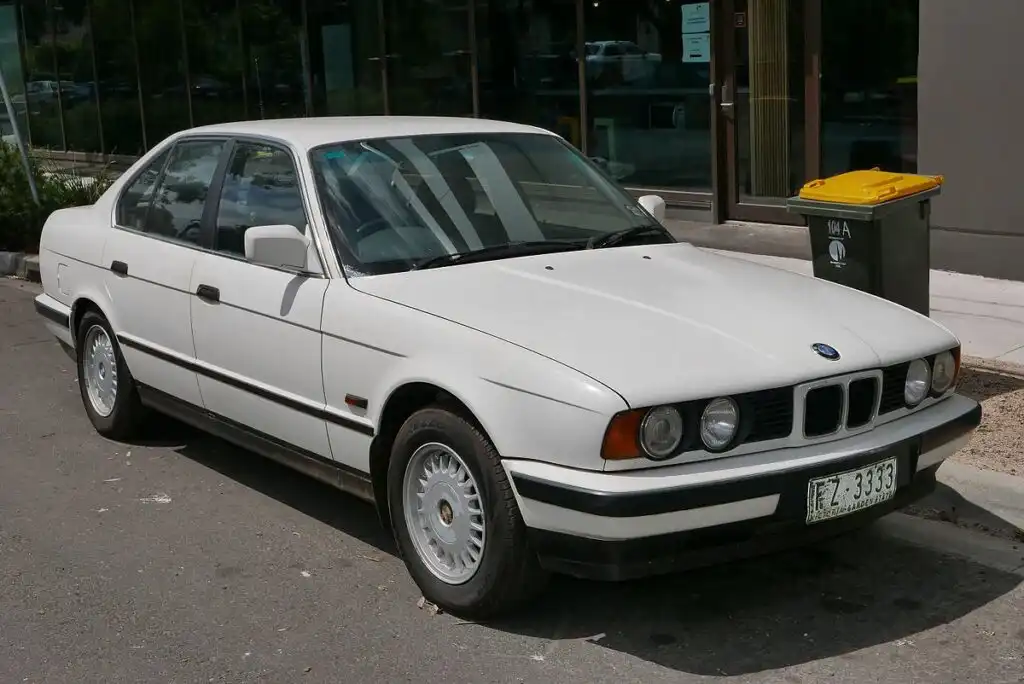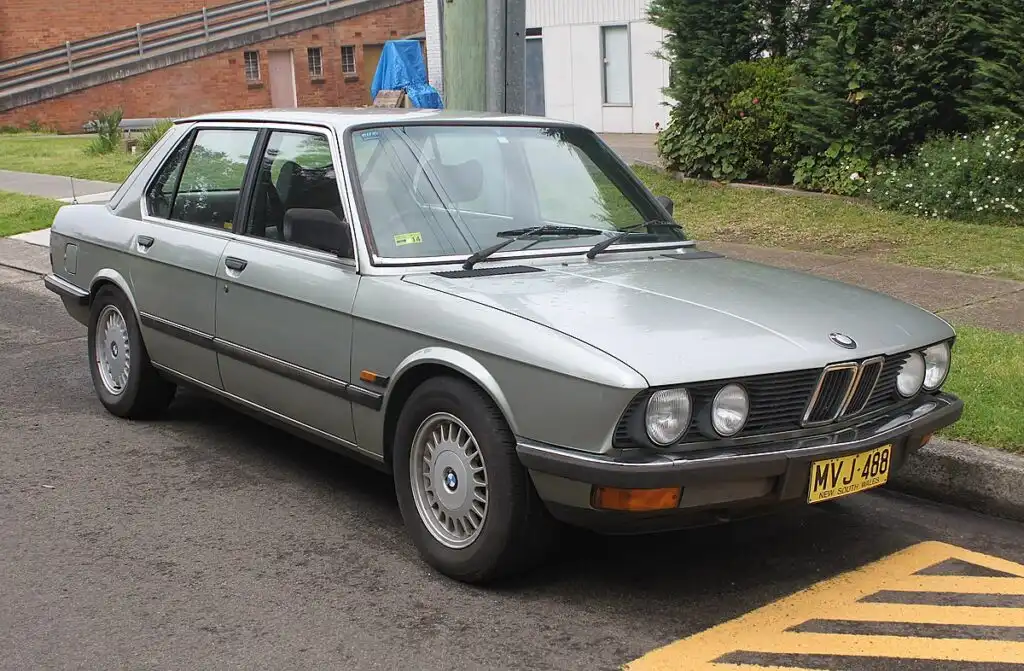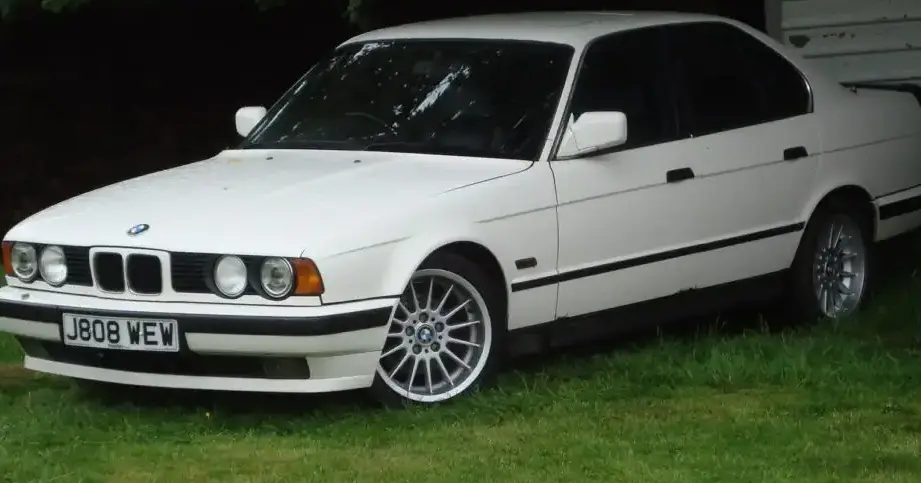
The BMW 5 Series (E34) 524td Automatic, produced between 1988 and 1991, represented a unique offering within the second generation of BMW’s mid-size executive car. Positioned as a fuel-efficient alternative in the 5 Series lineup, it combined a turbocharged diesel engine with a four-speed automatic transmission. This variant was primarily aimed at European markets where diesel engines were more popular and offered significant tax advantages, as well as drivers prioritizing economy over outright performance. The E34 platform, succeeding the E28, was a significant step forward in terms of technology, refinement, and overall driving experience for BMW.
Technical Specifications
| Brand | BMW |
| Model | 5 Series |
| Generation | 5 Series (E34) |
| Type (Engine) | 524td (115 Hp) Automatic |
| Start of production | 1988 |
| End of production | 1991 |
| Powertrain Architecture | Internal Combustion engine |
| Body type | Sedan |
| Seats | 5 |
| Doors | 4 |
| Fuel consumption (urban) | 9.8 l/100 km (24 US mpg, 28.8 UK mpg, 10.2 km/l) |
| Fuel consumption (extra urban) | 5.3 l/100 km (44.4 US mpg, 53.3 UK mpg, 18.9 km/l) |
| Fuel consumption (combined) | 6.8 l/100 km (34.6 US mpg, 41.5 UK mpg, 14.7 km/l) |
| Fuel Type | Diesel |
| Acceleration 0 – 100 km/h | 13.9 sec |
| Acceleration 0 – 62 mph | 13.9 sec |
| Acceleration 0 – 60 mph | 13.2 sec |
| Maximum speed | 190 km/h (118.06 mph) |
| Weight-to-power ratio | 12.9 kg/Hp, 77.7 Hp/tonne |
| Weight-to-torque ratio | 6.7 kg/Nm, 150 Nm/tonne |
| Power | 115 Hp @ 4800 rpm |
| Power per litre | 47.1 Hp/l |
| Torque | 222 Nm @ 2400 rpm (163.74 lb.-ft. @ 2400 rpm) |
| Engine layout | Front, Longitudinal |
| Engine Model/Code | M21D24 |
| Engine displacement | 2443 cm3 (149.08 cu. in.) |
| Number of cylinders | 6 |
| Engine configuration | Inline |
| Cylinder Bore | 80 mm (3.15 in.) |
| Piston Stroke | 81 mm (3.19 in.) |
| Compression ratio | 22:1 |
| Number of valves per cylinder | 2 |
| Fuel injection system | Precombustion chamber injection |
| Engine aspiration | Turbocharger, Intercooler |
| Engine oil capacity | 6 l (6.34 US qt | 5.28 UK qt) |
| Coolant | 12 l (12.68 US qt | 10.56 UK qt) |
| Kerb Weight | 1480 kg (3262.84 lbs.) |
| Max. weight | 1990 kg (4387.2 lbs.) |
| Max load | 510 kg (1124.36 lbs.) |
| Trunk (boot) space – minimum | 460 l (16.24 cu. ft.) |
| Fuel tank capacity | 80 l (21.13 US gal | 17.6 UK gal) |
| Length | 4720 mm (185.83 in.) |
| Width | 1751 mm (68.94 in.) |
| Height | 1412 mm (55.59 in.) |
| Wheelbase | 2761 mm (108.7 in.) |
| Front track | 1470 mm (57.87 in.) |
| Rear (Back) track | 1495 mm (58.86 in.) |
| Drivetrain Architecture | The Internal combustion engine (ICE) drives the rear wheels of the vehicle. |
| Drive wheel | Rear wheel drive |
| Number of gears and type of gearbox | 4 gears, automatic transmission |
| Front suspension | Wishbone |
| Rear suspension | Spring Strut |
| Front brakes | Disc |
| Rear brakes | Disc |
| Assisting systems | ABS (Anti-lock braking system) |
| Power steering | Hydraulic Steering |
| Tires size | 195/65 R15 |
| Wheel rims size | 15 |
Powertrain & Engine Architecture
The heart of the 524td was the M21D24, a 2.4-liter inline-six diesel engine. This engine was a development of BMW’s earlier M21 diesel series, incorporating a turbocharger and intercooler to boost power output to 115 horsepower and 222 Nm (163.74 lb-ft) of torque. The engine utilized a precombustion chamber injection system, a common diesel technology of the time, which improved combustion efficiency and reduced engine noise compared to direct injection systems. The four-speed automatic transmission, a ZF 4HP22 unit, was chosen for its smoothness and relative reliability. While not a performance-oriented transmission, it provided comfortable and effortless cruising, aligning with the car’s intended purpose. The engine was mounted longitudinally in the front of the vehicle, driving the rear wheels.
Driving Characteristics
The 524td Automatic offered a distinctly different driving experience compared to its gasoline-powered siblings, such as the 525i or 535i. Acceleration was modest, taking around 13.9 seconds to reach 62 mph (100 km/h). However, the engine’s strong low-end torque made it surprisingly capable in everyday driving situations. The automatic transmission, while smooth, did contribute to some power loss, and gear changes weren’t particularly quick. Compared to the manual transmission versions of the 524td, the automatic felt noticeably slower. The focus was on relaxed cruising and fuel efficiency rather than spirited performance. The gear ratios were optimized for economy, resulting in a comfortable but not particularly engaging driving experience.
Equipment & Trim Levels
The 524td Automatic typically came with a fairly standard level of equipment for the time. This included power windows, central locking, and a basic stereo system. Interior upholstery was usually cloth, although leather was available as an option. Dashboard configuration was typical of the E34, with a straightforward layout and clear instrumentation. Optional extras included a sunroof, air conditioning, and upgraded sound systems. The trim level was generally considered mid-range, offering a good balance of comfort and practicality without the luxury appointments of the higher-spec models.
Chassis & Braking
The E34 5 Series featured a robust chassis with independent suspension all around. The front suspension utilized a MacPherson strut design, while the rear employed a semi-trailing arm setup. The 524td Automatic, due to its weight, often featured slightly stiffer spring rates compared to lighter models. Braking was handled by disc brakes on all four wheels, with ABS (Anti-lock Braking System) available as an option, and becoming increasingly common as standard equipment towards the end of production. The steering was hydraulic power-assisted, providing a reasonable level of feel and responsiveness.
Market Reception & Comparison
The 524td Automatic was generally well-received in European markets, particularly by those seeking a fuel-efficient and comfortable executive car. Critics praised its economy and smooth ride, but noted its lack of outright performance. Compared to the 525i, the 524td offered significantly better fuel economy but considerably less power. Against other diesel-powered competitors, such as the Mercedes-Benz E-Class diesel, the BMW was often seen as offering a more engaging driving experience. Reliability was generally good, although the turbocharger could be a potential source of issues if not properly maintained.
Legacy
The BMW E34 524td Automatic, while not the most sought-after variant of the E34, holds a unique place in the model’s history. Its combination of a turbocharged diesel engine and automatic transmission was relatively uncommon for the time. Today, these cars are becoming increasingly collectible, particularly well-maintained examples. The M21D24 engine, while aging, is known for its durability and relative simplicity. Finding parts can sometimes be a challenge, but a dedicated community of BMW enthusiasts ensures that support and expertise are available. The 524td Automatic represents a fascinating chapter in BMW’s history, showcasing the company’s willingness to experiment with different powertrain combinations to meet the diverse needs of its customers.