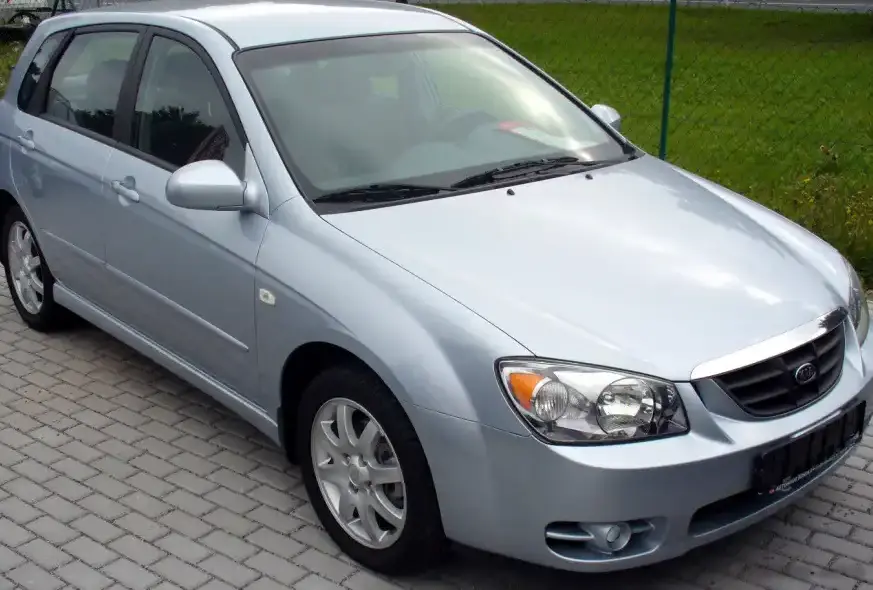
The Kia Cerato III Hatchback, specifically the facelifted version introduced in December 2016 and produced through January 2018, represented a significant step forward for Kia in the competitive compact hatchback segment. This variant, powered by a 2.0-liter MPI (Multi-Point Injection) engine producing 152 horsepower and paired with a 6-speed automatic transmission, occupied a mid-range position within the Cerato III lineup, offering a balance of performance, fuel efficiency, and convenience. It was primarily marketed towards buyers seeking a practical and well-equipped hatchback with the ease of an automatic gearbox. The Cerato III, built on the Kia’s platform, aimed to provide a more refined and feature-rich experience compared to its predecessors, targeting a broader customer base in both domestic and international markets.
Technical Specifications
| Brand | Kia |
| Model | Cerato |
| Generation | Cerato III Hatchback (facelift 2016) |
| Type (Engine) | 2.0 MPI (152 Hp) Automatic |
| Start of production | December, 2016 |
| End of production | January, 2018 |
| Powertrain Architecture | Internal Combustion engine |
| Body type | Hatchback |
| Seats | 5 |
| Doors | 5 |
| Fuel consumption (combined) | 7.2 l/100 km (32.7 US mpg, 39.2 UK mpg, 13.9 km/l) |
| CO2 emissions | 168 g/km |
| Fuel Type | Petrol (Gasoline) |
| Weight-to-power ratio | 8.6 kg/Hp, 116.5 Hp/tonne |
| Weight-to-torque ratio | 6.8 kg/Nm, 147.1 Nm/tonne |
| Power | 152 Hp @ 6200 rpm |
| Power per litre | 76 Hp/l |
| Torque | 192 Nm @ 4000 rpm (141.61 lb.-ft. @ 4000 rpm) |
| Engine layout | Front, Transverse |
| Engine Model/Code | Nu / G4NA |
| Engine displacement | 1999 cm3 (121.99 cu. in.) |
| Number of cylinders | 4 |
| Engine configuration | Inline |
| Compression ratio | 10.3:1 |
| Number of valves per cylinder | 4 |
| Fuel injection system | Multi-port manifold injection |
| Engine aspiration | Naturally aspirated engine |
| Valvetrain | DOHC, D-CVVT |
| Engine oil capacity | 4 l (4.23 US qt | 3.52 UK qt) |
| Coolant capacity | 5.9 l (6.23 US qt | 5.19 UK qt) |
| Kerb Weight | 1305-1339 kg (2877.03 – 2951.99 lbs.) |
| Trunk (boot) space – minimum | 385 l (13.6 cu. ft.) |
| Fuel tank capacity | 50 l (13.21 US gal | 11 UK gal) |
| Permitted trailer load with brakes (12%) | 1100 kg (2425.08 lbs.) |
| Permitted trailer load without brakes | 610 kg (1344.82 lbs.) |
| Length | 4350 mm (171.26 in.) |
| Width | 1780 mm (70.08 in.) |
| Height | 1450 mm (57.09 in.) |
| Wheelbase | 2700 mm (106.3 in.) |
| Minimum turning circle | 10.6 m (34.78 ft.) |
| Drivetrain Architecture | Front wheel drive |
| Number of gears and type of gearbox | 6 gears, automatic transmission |
| Front suspension | Independent, type McPherson with coil spring and anti-roll bar |
| Rear suspension | Torsion |
| Front brakes | Ventilated discs |
| Rear brakes | Disc |
| Assisting systems | ABS (Anti-lock braking system) |
| Steering type | Steering rack and pinion |
| Power steering | Electric Steering |
| Tires size | 205/55 R16; 215/45 R17 |
| Wheel rims size | 16; 17 |
Powertrain & Engine Architecture
At the heart of the 2016-2018 Kia Cerato III Hatchback 2.0 MPI Automatic lies the Nu series engine, specifically the G4NA code. This 1.999-liter inline-four cylinder engine utilizes a naturally aspirated configuration and multi-point fuel injection. The engine features a double overhead camshaft (DOHC) valvetrain with Kia’s Dual Continuous Variable Valve Timing (D-CVVT) technology. D-CVVT optimizes valve timing for both intake and exhaust valves, improving fuel efficiency and throttle response across the engine’s operating range. The 6-speed automatic transmission, a common unit in Kia and Hyundai vehicles of the period, provides smooth and relatively quick shifts. While not a dual-clutch transmission, it was well-regarded for its reliability and ease of use. The engine’s design prioritized smooth power delivery over outright performance, making it well-suited for everyday driving conditions.
Driving Characteristics
The 152 horsepower and 192 Nm (141.61 lb-ft) of torque produced by the 2.0-liter engine, when coupled with the 6-speed automatic, resulted in adequate, but not exhilarating, performance. Acceleration from 0 to 60 mph was estimated to be around 9.5-10.5 seconds. The automatic transmission was tuned for comfort and fuel economy, meaning it wasn’t particularly aggressive in its shift points. Compared to the manual transmission version of the same engine, the automatic offered slightly slower acceleration due to inherent transmission losses. Against other engine options in the Cerato III lineup, such as the more fuel-efficient but less powerful 1.6L engine, the 2.0L Automatic provided a noticeable boost in performance, making it more suitable for highway driving and carrying a full load of passengers. The gear ratios were optimized for cruising, providing a relaxed driving experience at highway speeds.
Equipment & Trim Levels
The 2.0 MPI Automatic trim of the Cerato III Hatchback typically included a generous array of standard features. These commonly included air conditioning, power windows and locks, a touchscreen infotainment system with Bluetooth connectivity, a rearview camera, and alloy wheels. Higher trim levels, often designated as ‘SX’ or similar, added features such as a sunroof, leather upholstery, heated front seats, and advanced driver-assistance systems like lane departure warning and automatic emergency braking. Interior upholstery was typically cloth on the base trims, with leather options available on higher-spec models. The dashboard layout was functional and modern, with a focus on ease of use. Optional extras often included a premium sound system and navigation system.
Chassis & Braking
The Cerato III Hatchback utilized a front-wheel-drive layout with an independent McPherson strut suspension in the front and a torsion beam suspension in the rear. This suspension setup provided a comfortable ride quality, although it wasn’t particularly sporty. The front brakes were ventilated discs, providing adequate stopping power, while the rear brakes were solid discs. ABS (Anti-lock Braking System) was standard equipment. The steering was electrically assisted, offering light and precise control. Stabilizer bars were included both front and rear to reduce body roll during cornering. The chassis was designed to balance ride comfort with handling stability, making it suitable for a wide range of driving conditions.
Market Reception & Comparison
The Kia Cerato III Hatchback 2.0 MPI Automatic received generally positive reviews from automotive critics. It was praised for its value for money, spacious interior, and comfortable ride. However, some critics noted that the engine lacked the refinement and performance of some of its competitors. Fuel economy was considered average for its class, with the combined fuel consumption of 7.2 l/100 km (32.7 US mpg) being competitive but not class-leading. Compared to the 1.6L engine option, the 2.0L Automatic offered a significant performance upgrade, but at the cost of slightly lower fuel economy. Reliability was generally good, with Kia’s improving reputation for build quality.
Legacy
The Kia Cerato III Hatchback 2.0 MPI Automatic has proven to be a relatively reliable vehicle in the used car market. The Nu engine, while not known for being exceptionally durable, has generally held up well with proper maintenance. The 6-speed automatic transmission is also considered to be fairly robust. Common issues reported by owners include minor electrical glitches and wear-and-tear on suspension components. Overall, this variant represents a solid and practical choice for buyers seeking an affordable and well-equipped compact hatchback. Its blend of comfort, convenience, and reasonable performance has ensured its continued popularity in the used car market.