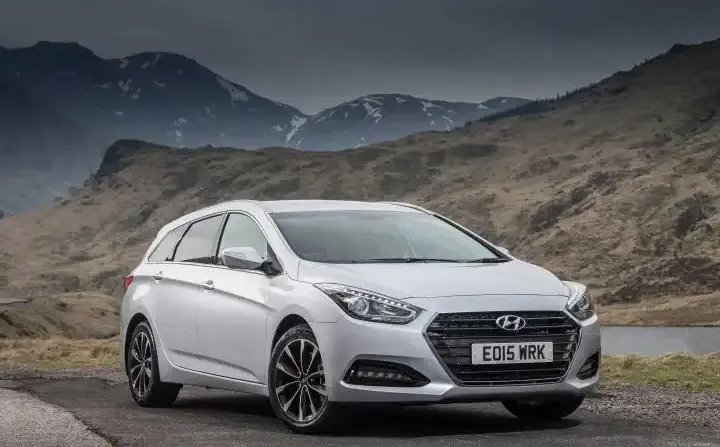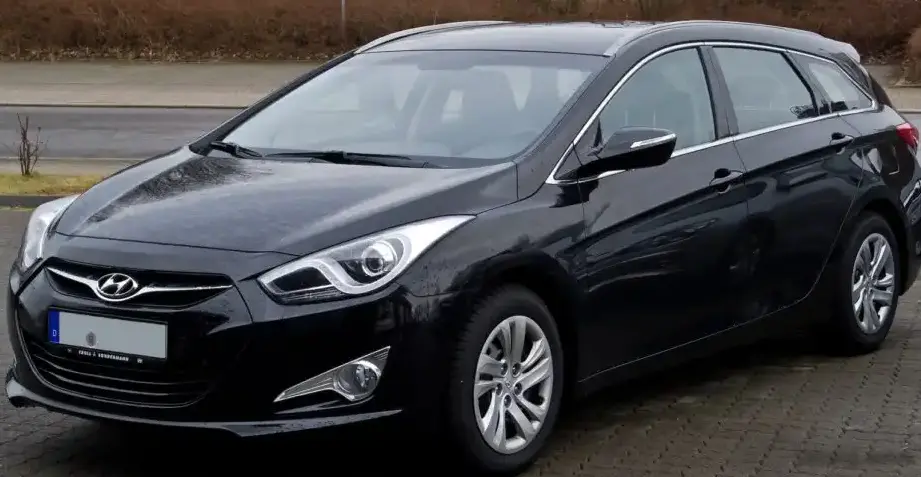
The Hyundai i40 Combi 1.6 GDI, produced from 2011 to 2015, represents Hyundai’s entry into the competitive European D-segment wagon market. Positioned as a practical and stylish alternative to established rivals like the Ford Mondeo, Volkswagen Passat, and Opel/Vauxhall Insignia, the i40 Combi (estate) aimed to offer a compelling blend of space, efficiency, and value. This particular variant, equipped with the 1.6-liter GDI engine producing 135 horsepower, served as a core model within the i40 range, appealing to buyers prioritizing fuel economy and everyday usability over outright performance. It was part of the VF generation of the i40, built on the platform shared with the Kia Optima.
Technical Specifications
| Brand | Hyundai |
| Model | i40 |
| Generation | i40 Combi |
| Type (Engine) | 1.6 GDI (135 Hp) |
| Start of production | 2011 |
| End of production | 2015 |
| Powertrain Architecture | Internal Combustion engine |
| Body type | Station wagon (estate) |
| Seats | 5 |
| Doors | 5 |
| Fuel consumption (urban) | 8 l/100 km (29.4 US mpg) |
| Fuel consumption (extra urban) | 5.4 l/100 km (43.6 US mpg) |
| Fuel consumption (combined) | 6.4 l/100 km (36.8 US mpg) |
| Fuel Type | Petrol (Gasoline) |
| Acceleration 0 – 100 km/h | 11.6 sec |
| Acceleration 0 – 62 mph | 11.6 sec |
| Acceleration 0 – 60 mph | 11 sec |
| Maximum speed | 195 km/h (121.17 mph) |
| Emission standard | Euro 5 |
| Weight-to-power ratio | 10.3 kg/Hp |
| Weight-to-torque ratio | 8.5 kg/Nm |
| Power | 135 Hp @ 6300 rpm |
| Torque | 164 Nm @ 3850 rpm (120.96 lb.-ft. @ 3850 rpm) |
| Engine layout | Front, Transverse |
| Engine Model/Code | G4FD |
| Engine displacement | 1591 cm3 (97.09 cu. in.) |
| Number of cylinders | 4 |
| Engine configuration | Inline |
| Cylinder Bore | 77 mm (3.03 in.) |
| Piston Stroke | 85.44 mm (3.36 in.) |
| Compression ratio | 11:1 |
| Number of valves per cylinder | 4 |
| Fuel injection system | Direct injection |
| Engine aspiration | Naturally aspirated engine |
| Valvetrain | D-CVVT |
| Engine oil capacity | 3.6 l (3.8 US qt | 3.17 UK qt) |
| Coolant | 6.8 l (7.19 US qt | 5.98 UK qt) |
| Kerb Weight | 1395 kg (3075.45 lbs.) |
| Max. weight | 2030 kg (4475.38 lbs.) |
| Max load | 635 kg (1399.94 lbs.) |
| Trunk (boot) space – minimum | 553 l (19.53 cu. ft.) |
| Trunk (boot) space – maximum | 1719 l (60.71 cu. ft.) |
| Fuel tank capacity | 70 l (18.49 US gal | 15.4 UK gal) |
| Length | 4770 mm (187.8 in.) |
| Width | 1815 mm (71.46 in.) |
| Height | 1470 mm (57.87 in.) |
| Wheelbase | 2770 mm (109.06 in.) |
| Front track | 1591 mm (62.64 in.) |
| Rear (Back) track | 1597 mm (62.87 in.) |
| Minimum turning circle | 10.94 m (35.89 ft.) |
| Drivetrain Architecture | Front wheel drive |
| Number of gears | 6 gears, manual transmission |
| Front suspension | Independent type McPherson |
| Rear suspension | Independent coil spring |
| Front brakes | Ventilated discs |
| Rear brakes | Disc |
| Assisting systems | ABS (Anti-lock braking system) |
| Steering type | Steering rack and pinion |
| Power steering | Electric Steering |
| Tires size | 205/60 R16; 215/50 R17; 225/45 R18 |
| Wheel rims size | 7.0J x 16; 7.5J x 17; 8.0J x 18 |
Powertrain & Engine Architecture
The heart of the i40 Combi 1.6 GDI is the Hyundai G4FD engine, a 1.6-liter inline-four cylinder gasoline engine. This engine utilizes Gasoline Direct Injection (GDI) technology, where fuel is injected directly into the combustion chamber, improving efficiency and power output compared to traditional port fuel injection. The G4FD also features Hyundai’s Dual Continuously Variable Valve Timing (D-CVVT) system, optimizing valve timing for both intake and exhaust to enhance performance across the rev range. The engine produces 135 horsepower at 6,300 rpm and 164 Nm (120.96 lb-ft) of torque at 3,850 rpm. The engine’s relatively high compression ratio of 11:1 contributes to its efficiency. The standard transmission for this variant was a six-speed manual gearbox, although a six-speed automatic transmission was also available as an option. The automatic transmission, while offering convenience, did slightly impact fuel economy and acceleration.
Driving Characteristics
The i40 Combi 1.6 GDI with the manual transmission offered a reasonably engaging driving experience, though it wasn’t designed for sporty performance. Acceleration from 0-60 mph took around 11 seconds, and top speed was approximately 121 mph. The engine felt responsive enough for everyday driving, with adequate torque for overtaking maneuvers. The six-speed gearbox was well-matched to the engine, allowing for comfortable cruising on the highway. The automatic transmission, while smooth, resulted in a noticeable decrease in responsiveness and a slight increase in fuel consumption. The i40 Combi prioritized comfort and refinement over outright handling prowess, offering a compliant ride quality that absorbed bumps and imperfections in the road well.
Equipment & Trim Levels
The i40 Combi 1.6 GDI typically came equipped with a respectable level of standard features. Base models included air conditioning, electric front and rear windows, a USB audio input, and a basic audio system. Higher trim levels, such as Style and Premium, added features like alloy wheels, a touchscreen infotainment system with navigation, rear parking sensors, automatic climate control, and leather upholstery. Optional extras included a panoramic sunroof, heated front seats, and a premium sound system. Interior upholstery was typically cloth on base models, with leather available on higher trims. The dashboard layout was functional and user-friendly, with a focus on ergonomics.
Chassis & Braking
The i40 Combi featured a front-wheel-drive layout with independent suspension at all four corners. The front suspension utilized a McPherson strut design, while the rear employed an independent multi-link setup. This configuration provided a good balance between ride comfort and handling stability. Braking duties were handled by ventilated discs at the front and solid discs at the rear, equipped with an Anti-lock Braking System (ABS). The steering was electrically assisted, providing light and precise control. The i40 Combi’s chassis was tuned for comfort, prioritizing a smooth ride over sharp handling.
Market Reception & Comparison
The Hyundai i40 Combi 1.6 GDI was generally well-received by automotive critics. It was praised for its spacious interior, comfortable ride, and competitive pricing. However, some reviewers noted that the 1.6-liter engine could feel underpowered when fully loaded or tackling steep hills. Compared to the more powerful 1.7 CRDi diesel or the 2.0-liter gasoline variants, the 1.6 GDI offered lower performance but superior fuel economy. The diesel models were favored by those prioritizing fuel efficiency and torque, while the 2.0-liter gasoline engine appealed to drivers seeking more spirited performance. The 1.6 GDI occupied a middle ground, offering a balance of both.
Legacy
The Hyundai i40 Combi 1.6 GDI has proven to be a relatively reliable vehicle in the used car market. The G4FD engine is generally considered durable, although regular maintenance is crucial. Common issues reported include occasional problems with the fuel injectors and the D-CVVT system. The automatic transmission, while generally reliable, may require servicing at higher mileages. Today, the i40 Combi 1.6 GDI represents a practical and affordable option for buyers seeking a spacious and fuel-efficient estate car. Its blend of comfort, practicality, and value continues to make it a compelling choice in the used car market.