Technical Specifications
| Brand | Jaguar |
| Model | XK |
| Generation | XK Coupe (X150, facelift 2009) |
| Type (Engine) | R 5.0 V8 (510 Hp) Automatic |
| Start of production | 2009 |
| End of production | 2011 |
| Powertrain Architecture | Internal Combustion engine |
| Body type | Coupe |
| Seats | 4 |
| Doors | 2 |
| Fuel consumption (economy) – urban (NEDC) | 18.9 l/100 km (12.4 US mpg, 14.9 UK mpg, 5.3 km/l) |
| Fuel consumption (economy) – extra urban (NEDC) | 8.6 l/100 km (27.4 US mpg, 32.8 UK mpg, 11.6 km/l) |
| Fuel consumption (economy) – combined (NEDC) | 12.3 l/100 km (19.1 US mpg, 23 UK mpg, 8.1 km/l) |
| CO2 emissions (NEDC) | 292 g/km |
| Fuel Type | Petrol (Gasoline) |
| Acceleration 0 – 100 km/h | 4.8 sec |
| Acceleration 0 – 62 mph | 4.8 sec |
| Acceleration 0 – 60 mph | 4.6 sec |
| Maximum speed | 250 km/h (155.34 mph), Electronically limited |
| Emission standard | Euro 5 |
| Weight-to-power ratio | 3.4 kg/Hp, 290.9 Hp/tonne |
| Weight-to-torque ratio | 2.8 kg/Nm, 356.5 Nm/tonne |
| Power | 510 Hp @ 6000-6500 rpm |
| Power per litre | 102 Hp/l |
| Torque | 625 Nm @ 2500-5500 rpm (460.98 lb.-ft. @ 2500-5500 rpm) |
| Engine layout | Front, Longitudinal |
| Engine Model/Code | AJ133 |
| Engine displacement | 5000 cm3 (305.12 cu. in.) |
| Number of cylinders | 8 |
| Engine configuration | V-engine |
| Cylinder Bore | 92.5 mm (3.64 in.) |
| Piston Stroke | 93 mm (3.66 in.) |
| Compression ratio | 9.5:1 |
| Number of valves per cylinder | 4 |
| Fuel injection system | Direct injection |
| Engine aspiration | Supercharger, Intercooler |
| Valvetrain | DOHC |
| Engine oil capacity | 7.25 l (7.66 US qt | 6.38 UK qt) |
| Coolant | 10 l (10.57 US qt | 8.8 UK qt) |
| Kerb Weight | 1753 kg (3864.7 lbs.) |
| Max. weight | 2145 kg (4728.92 lbs.) |
| Max load | 392 kg (864.21 lbs.) |
| Trunk (boot) space – minimum | 330 l (11.65 cu. ft.) |
| Fuel tank capacity | 70.6 l (18.65 US gal | 15.53 UK gal) |
| Length | 4794 mm (188.74 in.) |
| Width with mirrors folded | 1892 mm (74.49 in.) |
| Width including mirrors | 2028 mm (79.84 in.) |
| Height | 1322 mm (52.05 in.) |
| Wheelbase | 2752 mm (108.35 in.) |
| Ride height (ground clearance) | 100 mm (3.94 in.) |
| Minimum turning circle | 10.9 m (35.76 ft.) |
| Drivetrain Architecture | Rear wheel drive |
| Drive wheel | Rear wheel drive |
| Number of gears and type of gearbox | 6 gears, automatic transmission |
| Front suspension | Double wishbone, Transverse stabilizer |
| Rear suspension | Double wishbone, Transverse stabilizer |
| Front brakes | Ventilated discs |
| Rear brakes | Ventilated discs |
| Assisting systems | ABS (Anti-lock braking system) |
| Steering type | Steering rack and pinion |
| Power steering | Hydraulic Steering |
| Front tires | 245/40 R19; 255/35 R20 |
| Rear tires | 275/35 R19; 285/30 R20 |
| Front wheel rims | 8.5J x 19; 8.5J x 20 |
| Rear wheel rims | 9.5J x 19; 9.5J x 20 |
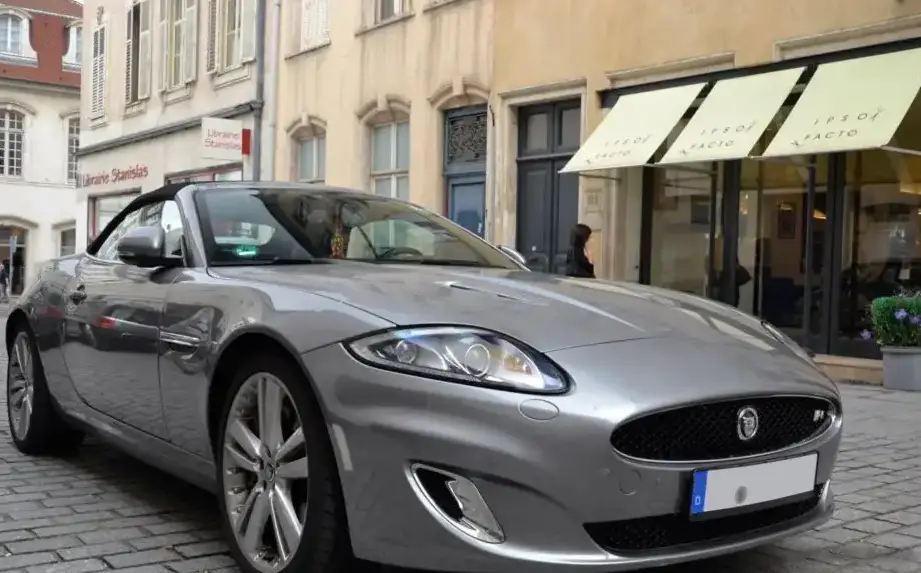
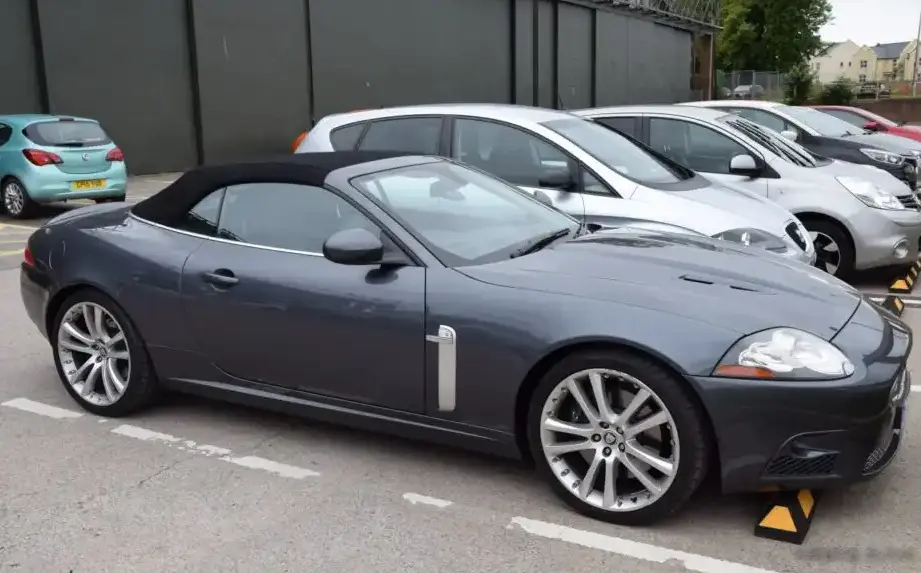
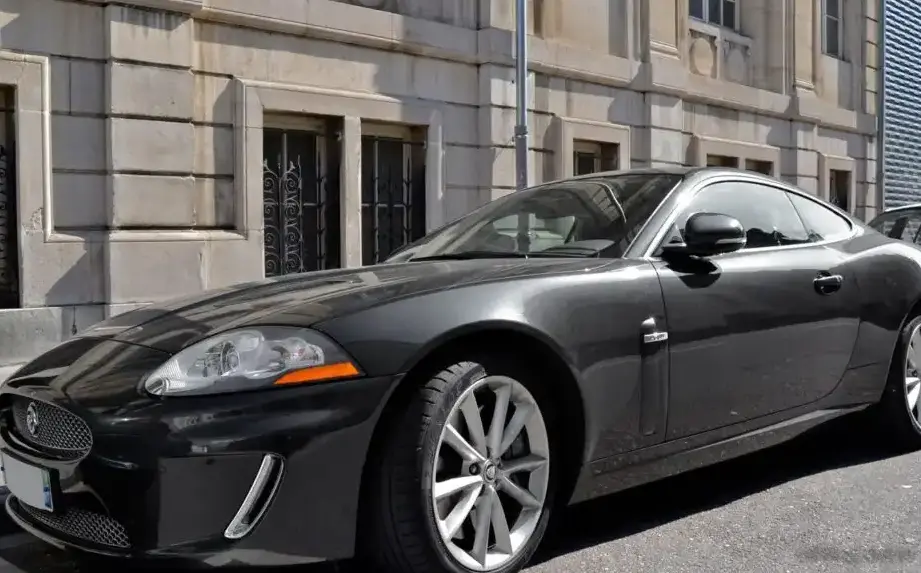
The Jaguar XK R Coupe (X150, 2009-2011) was the performance flagship of the XK range, building upon the foundation of the X150 platform. Introduced as a facelift to the original X150, the 2009 model year brought subtle but significant aesthetic and technological updates. The “R” designation signified a substantial increase in power and performance compared to the standard XK and the XK Portfolio models. It was designed to offer a compelling alternative to established grand tourers, emphasizing a blend of luxury, performance, and British styling. The X150 generation, and particularly the R variant, aimed to recapture the spirit of classic Jaguar grand tourers like the E-Type and XK120.
Powertrain & Engine Architecture
At the heart of the XK R lies Jaguar’s AJ133 5.0-liter supercharged V8 engine. This engine, a cornerstone of Jaguar’s performance lineup, utilizes a Roots-type supercharger for forced induction, delivering 510 horsepower at 6000-6500 rpm and 625 Nm (460.98 lb-ft) of torque between 2500 and 5500 rpm. The engine features direct fuel injection, a double overhead camshaft (DOHC) valvetrain with four valves per cylinder, and an intercooler to manage intake air temperatures. The engine’s architecture is longitudinal, meaning it’s mounted lengthwise in the chassis. The XK R exclusively came equipped with a six-speed automatic transmission, engineered to handle the substantial power output. This transmission featured manual shift control via steering wheel-mounted paddles, allowing drivers to select gears for more engaging driving. The transmission was calibrated for both smooth cruising and rapid acceleration.
Driving Characteristics
The XK R’s driving experience is defined by its effortless power and refined composure. The supercharged V8 delivers immediate and potent acceleration, with a 0-60 mph time of around 4.6 seconds and a limited top speed of 155 mph. The six-speed automatic transmission provides smooth and responsive shifts, although some critics noted it wasn’t as quick or sophisticated as some dual-clutch transmissions found in competitors. The suspension, featuring double wishbones at both the front and rear with transverse stabilizers, provides a comfortable ride while maintaining excellent body control. The steering is precise and well-weighted, offering good feedback to the driver. Compared to the naturally aspirated XK, the R model offers a dramatically different driving experience, prioritizing performance over fuel economy and providing a more visceral connection to the road.
Equipment & Trim Levels
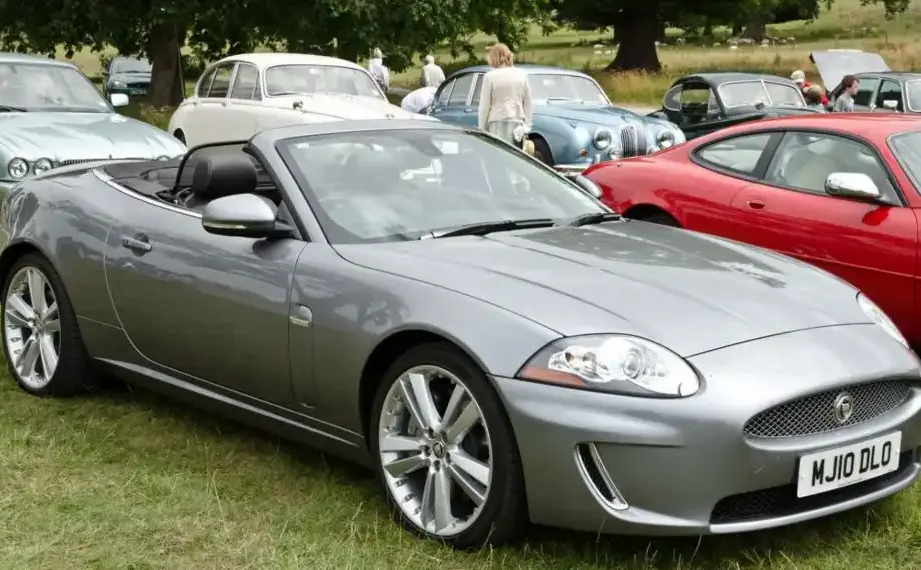
The XK R came generously equipped as standard. Interior features included leather upholstery, power-adjustable heated seats, a premium audio system, automatic climate control, and a navigation system. Exterior features included unique R-specific styling cues, such as a mesh grille, body-colored side sills and rear spoiler, and larger alloy wheels. Optional extras included adaptive cruise control, a panoramic sunroof, and upgraded interior trim materials. The interior design emphasized luxury and craftsmanship, with high-quality materials and meticulous attention to detail. The R trim was positioned as the top-of-the-line offering, and therefore included many features that were optional on lower trims.
Chassis & Braking
The XK R’s chassis was designed to provide a balance of rigidity and lightweight construction. The body structure utilized aluminum extensively, contributing to a relatively low curb weight of 1753 kg (3864.7 lbs). The suspension system, as mentioned, employed double wishbones all around, providing a stable and controlled ride. Braking duties were handled by ventilated discs at all four corners, coupled with an anti-lock braking system (ABS). The braking system provided ample stopping power and fade resistance, essential for a high-performance grand tourer. The steering system utilized a hydraulic rack and pinion setup, offering precise and responsive steering feel.
Market Reception & Comparison
The XK R was generally well-received by automotive critics, who praised its powerful engine, luxurious interior, and refined driving experience. However, some criticisms were leveled at the aging X150 platform, particularly its infotainment system and fuel economy. Compared to the standard XK, the R model offered a significant performance upgrade, but at the cost of increased fuel consumption. Against competitors like the Porsche 911 and BMW 6 Series, the XK R offered a more luxurious and comfortable experience, but lacked the ultimate track performance of some rivals. Fuel economy figures were rated at 12.3 l/100 km combined, which was typical for a high-performance V8 grand tourer of the era.
Legacy
The Jaguar XK R (X150) remains a desirable grand tourer in the used car market. The AJ133 5.0-liter supercharged V8 engine is known for its reliability, provided it receives regular maintenance. While the X150 platform is now aging, the XK R continues to offer a compelling blend of performance, luxury, and British style. Common maintenance items include regular oil changes, coolant flushes, and inspection of the supercharger belt. The XK R represents a high point in Jaguar’s modern grand touring heritage, offering a sophisticated and engaging driving experience that continues to appeal to enthusiasts today.