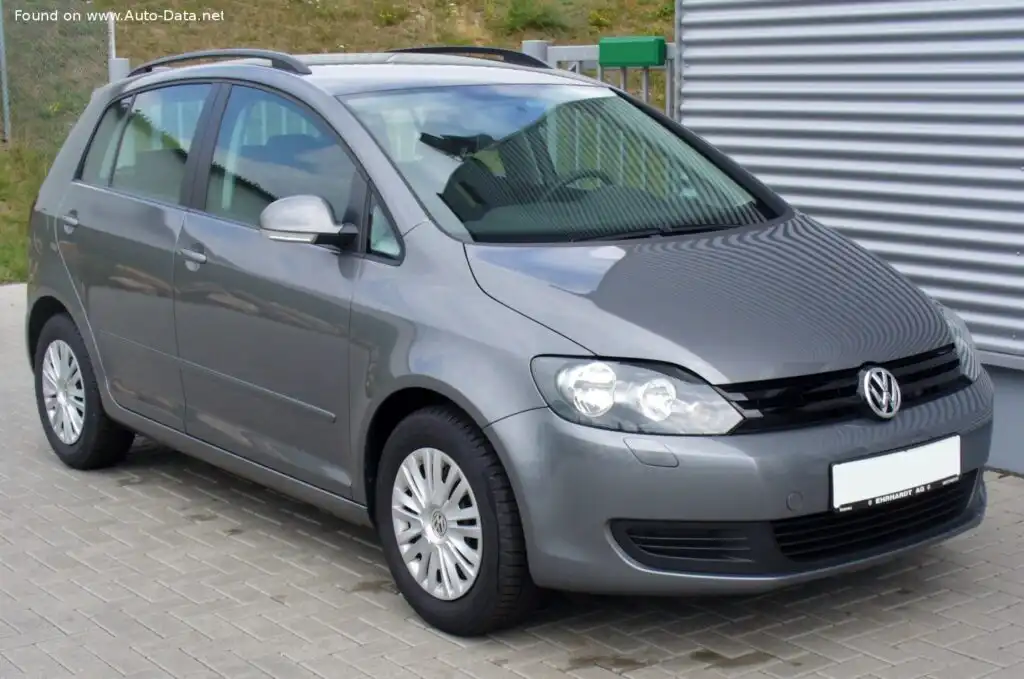
The Volkswagen Golf VI Plus 2.0 TDI with the 140 horsepower (Hp) engine and Direct-Shift Gearbox (DSG) was a key variant within the Golf VI Plus range, produced from December 2008 to January 2014. Positioned as a mid-range offering, it aimed to balance fuel efficiency with respectable performance in the compact MPV (Multi-Purpose Vehicle) segment. The Golf VI Plus, a stretched version of the standard Golf VI, offered increased rear passenger space and cargo capacity, making it a popular choice for small families in Europe. This particular 2.0 TDI/DSG combination represented a significant step up in performance and refinement compared to the lower-powered engine options available.
Technical Specifications
| Brand | Volkswagen |
| Model | Golf |
| Generation | Golf VI Plus |
| Type (Engine) | 2.0 TDI (140 Hp) DSG |
| Start of production | December, 2008 |
| End of production | January, 2014 |
| Powertrain Architecture | Internal Combustion engine |
| Body type | Minivan |
| Seats | 5 |
| Doors | 5 |
| Fuel consumption (urban) | 6.9 l/100 km (34.1 US mpg, 40.9 UK mpg, 14.5 km/l) |
| Fuel consumption (extra urban) | 4.7 l/100 km (50 US mpg, 60.1 UK mpg, 21.3 km/l) |
| Fuel consumption (combined) | 5.5 l/100 km (42.8 US mpg, 51.4 UK mpg, 18.2 km/l) |
| Fuel Type | Diesel |
| Acceleration 0 – 100 km/h | 9.8 sec |
| Acceleration 0 – 62 mph | 9.8 sec |
| Acceleration 0 – 60 mph | 9.3 sec |
| Maximum speed | 202 km/h (125.52 mph) |
| Weight-to-power ratio | 10.7 kg/Hp, 93.3 Hp/tonne |
| Weight-to-torque ratio | 4.7 kg/Nm, 213.2 Nm/tonne |
| Power | 140 Hp @ 4200 rpm |
| Power per litre | 71.1 Hp/l |
| Torque | 320 Nm @ 1750-2500 rpm (236.02 lb.-ft. @ 1750-2500 rpm) |
| Engine layout | Front, Transverse |
| Engine Model/Code | CFHC |
| Engine displacement | 1968 cm3 (120.09 cu. in.) |
| Number of cylinders | 4 |
| Engine configuration | Inline |
| Fuel injection system | Diesel Commonrail |
| Engine aspiration | Turbocharger, Intercooler |
| Engine oil capacity | 4.3 l (4.54 US qt | 3.78 UK qt) |
| Coolant | 8 l (8.45 US qt | 7.04 UK qt) |
| Kerb Weight | 1501 kg (3309.14 lbs) |
| Max. weight | 2070 kg (4563.57 lbs) |
| Max load | 569 kg (1254.43 lbs) |
| Trunk (boot) space – minimum | 395 l (13.95 cu. ft.) |
| Trunk (boot) space – maximum | 1450 l (51.21 cu. ft.) |
| Fuel tank capacity | 55 l (14.53 US gal | 12.1 UK gal) |
| Length | 4204 mm (165.51 in.) |
| Width | 1759 mm (69.25 in.) |
| Height | 1592 mm (62.68 in.) |
| Wheelbase | 2578 mm (101.5 in.) |
| Front track | 1541 mm (60.67 in.) |
| Rear (Back) track | 1517 mm (59.72 in.) |
| Minimum turning circle | 10.8 m (35.43 ft.) |
| Drivetrain Architecture | The Internal combustion engine (ICE) drives the front wheels of the vehicle. |
| Drive wheel | Front wheel drive |
| Number of gears and type of gearbox | 6 gears, automatic transmission |
| Assisting systems | ABS (Anti-lock braking system) |
| Steering type | Steering rack and pinion |
| Power steering | Electric Steering |
INTRODUCTION
The Volkswagen Golf VI Plus, launched in 2008, was designed to bridge the gap between the standard Golf and larger MPVs like the Touran. The “Plus” designation indicated a 150mm longer wheelbase compared to the Golf VI hatchback, resulting in a more spacious interior and a larger cargo area. The 2.0 TDI 140 Hp DSG variant was a popular choice, particularly in European markets where diesel engines were favored for their fuel efficiency and torque. It offered a compelling combination of practicality, performance, and economy, appealing to buyers seeking a versatile family vehicle.
Powertrain & Engine Architecture
At the heart of the Golf VI Plus 2.0 TDI was the CFHC engine code, a four-cylinder, inline diesel engine displacing 1968cc. This engine utilized a common rail direct injection system, delivering fuel at extremely high pressure for optimized combustion. A turbocharger with an intercooler further enhanced performance, boosting power output to 140 Hp at 4200 rpm and generating a substantial 320 Nm (236 lb-ft) of torque between 1750 and 2500 rpm. The engine featured four valves per cylinder and a single overhead camshaft. The Direct-Shift Gearbox (DSG), a seven-speed dual-clutch transmission, was a crucial component of this variant. DSG offered quicker, smoother gear changes compared to a traditional automatic transmission, contributing to both performance and fuel efficiency. The DSG unit was programmed for a balance between comfort and responsiveness, with a slightly more relaxed shift pattern than the sportier settings found in some Golf models.
Driving Characteristics
The 2.0 TDI 140 Hp/DSG combination in the Golf VI Plus provided a noticeably more relaxed driving experience than the lower-powered 1.6 TDI variants. Acceleration from 0-60 mph took approximately 9.3 seconds, and the car could reach a top speed of 125.52 mph. The DSG transmission effectively managed the engine’s torque, providing strong pull in everyday driving situations. While not a sports car, the Golf VI Plus 2.0 TDI offered sufficient power for overtaking and highway cruising. The DSG’s gear ratios were optimized for fuel economy, but manual gear selection was also available for more spirited driving. Compared to the six-speed manual transmission available on other Golf VI Plus models, the DSG offered greater convenience, especially in urban traffic.
Equipment & Trim Levels
The Golf VI Plus 2.0 TDI DSG typically came equipped with a reasonable level of standard features. These included air conditioning, power windows, central locking, and an integrated audio system. Higher trim levels, such as ‘Trendline’ and ‘Comfortline’, added features like alloy wheels, a multi-function steering wheel, and upgraded interior trim. Optional extras included a sunroof, parking sensors, and a navigation system. Interior upholstery was typically cloth, with leather options available as an upgrade. The dashboard layout was typical of the Golf VI, with a functional and ergonomic design.
Chassis & Braking
The Golf VI Plus utilized a MacPherson strut front suspension and a multi-link rear suspension, providing a comfortable and controlled ride. The longer wheelbase of the Plus model contributed to improved stability. Braking systems varied depending on the trim level, with lower trims often featuring drum brakes on the rear wheels and higher trims offering disc brakes all around. Anti-lock Braking System (ABS) was standard. Stabilizer bars were fitted to both the front and rear axles to reduce body roll during cornering.
Market Reception & Comparison
The Golf VI Plus 2.0 TDI DSG was generally well-received by automotive critics. It was praised for its spacious interior, comfortable ride, and fuel-efficient engine. Compared to the 1.6 TDI variants, the 2.0 TDI offered a significant performance boost, making it a more enjoyable car to drive. However, it was also more expensive to purchase and maintain. The DSG transmission, while offering convenience, was sometimes criticized for its complexity and potential for costly repairs. Fuel economy figures of around 42.8 US mpg combined were considered excellent for a vehicle of its size and type.
Legacy
The Golf VI Plus 2.0 TDI DSG has proven to be a relatively reliable vehicle, although, like any modern diesel, it’s susceptible to issues with the diesel particulate filter (DPF) if not driven on longer journeys regularly. The DSG transmission requires regular servicing, including fluid changes, to ensure longevity. In the used car market, these models remain popular due to their practicality, fuel efficiency, and relatively low running costs. The CFHC engine is generally considered robust, but potential buyers should be aware of the potential for issues with the turbocharger and fuel injectors as the vehicle ages. Overall, the Golf VI Plus 2.0 TDI DSG represents a well-rounded and versatile family car that continues to offer good value for money.