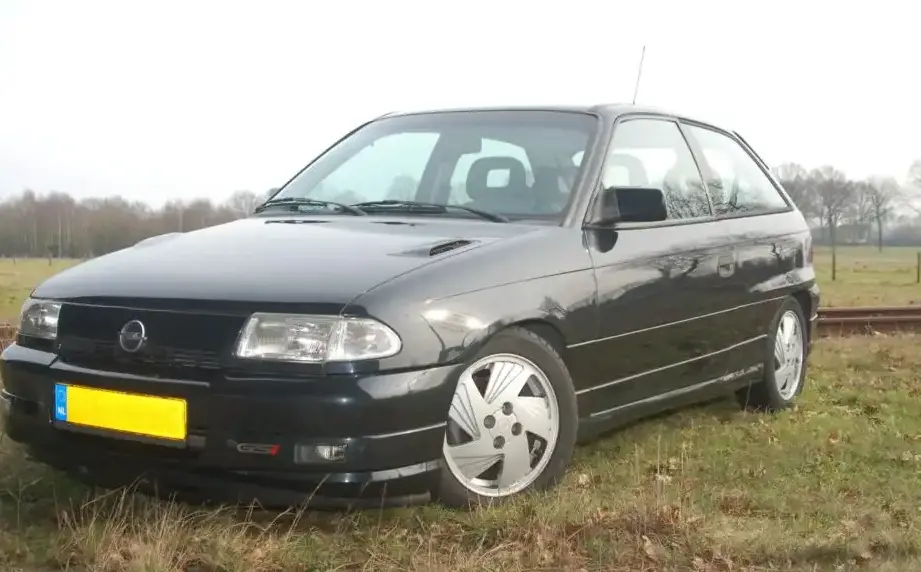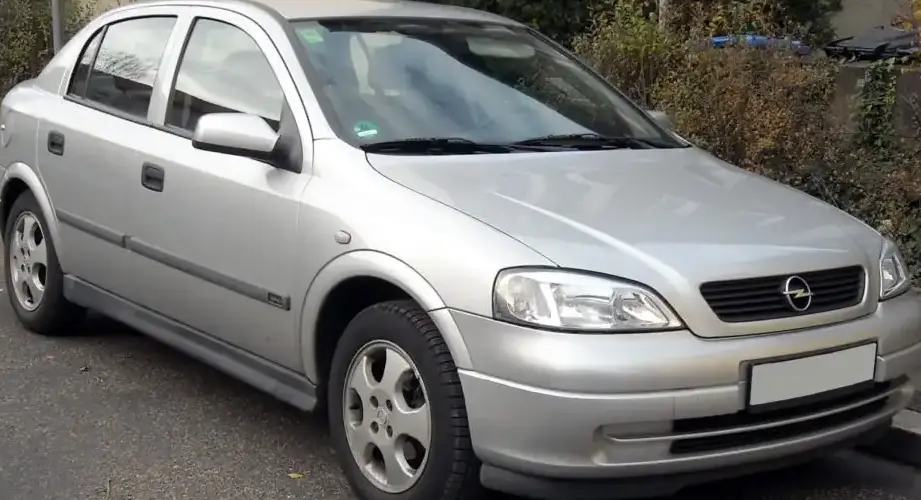
The Opel Astra G 1.7 DTI 16V, produced from February 2000 to 2002, represented an entry-level diesel offering within the broader Astra G range (1998-2004). Positioned as a fuel-efficient and affordable option, this variant utilized a direct injection turbocharged diesel engine paired with a five-speed manual transmission. It was primarily aimed at buyers in Europe seeking economical transportation, particularly those covering high mileage. The Astra G itself was a significant model for Opel, building upon the success of its predecessors and offering a more refined and modern package compared to the Astra F.
Technical Specifications
| Brand | Opel |
| Model | Astra |
| Generation | Astra G |
| Type (Engine) | 1.7 DTI 16V (75 Hp) |
| Start of production | February, 2000 |
| End of production | 2002 |
| Powertrain Architecture | Internal Combustion engine |
| Body type | Hatchback |
| Seats | 5 |
| Doors | 3-5 |
| Fuel consumption (urban) | 6.1 l/100 km (38.6 US mpg, 46.3 UK mpg, 16.4 km/l) |
| Fuel consumption (extra urban) | 4 l/100 km (58.8 US mpg, 70.6 UK mpg, 25 km/l) |
| Fuel consumption (combined) | 4.8 l/100 km (49 US mpg, 58.9 UK mpg, 20.8 km/l) |
| CO2 emissions | 130 g/km |
| Fuel Type | Diesel |
| Acceleration 0 – 100 km/h | 15.5 sec |
| Acceleration 0 – 62 mph | 15.5 sec |
| Acceleration 0 – 60 mph | 14.7 sec |
| Maximum speed | 165 km/h (102.53 mph) |
| Emission standard | Euro 3 |
| Weight-to-power ratio | 15.8 kg/Hp, 63.3 Hp/tonne |
| Weight-to-torque ratio | 7.2 kg/Nm, 139.2 Nm/tonne |
| Power | 75 Hp @ 4400 rpm |
| Power per litre | 44.5 Hp/l |
| Torque | 165 Nm @ 1800 rpm (121.7 lb.-ft. @ 1800 rpm) |
| Engine layout | Front, Transverse |
| Engine Model/Code | Y17DT |
| Engine displacement | 1686 cm3 (102.89 cu. in.) |
| Number of cylinders | 4 |
| Engine configuration | Inline |
| Cylinder Bore | 79 mm (3.11 in.) |
| Piston Stroke | 86 mm (3.39 in.) |
| Compression ratio | 18.4:1 |
| Number of valves per cylinder | 4 |
| Fuel injection system | Diesel Commonrail |
| Engine aspiration | Turbocharger |
| Valvetrain | DOHC |
| Engine oil capacity | 4.5 l (4.76 US qt | 3.96 UK qt) |
| Coolant | 7.1 l (7.5 US qt | 6.25 UK qt) |
| Kerb Weight | 1185 kg (2612.48 lbs.) |
| Max. weight | 1705 kg (3758.88 lbs.) |
| Max load | 520 kg (1146.4 lbs.) |
| Trunk (boot) space – minimum | 370 l (13.07 cu. ft.) |
| Trunk (boot) space – maximum | 1180 l (41.67 cu. ft.) |
| Fuel tank capacity | 52 l (13.74 US gal | 11.44 UK gal) |
| Max. roof load | 100 kg (220.46 lbs.) |
| Permitted trailer load with brakes (12%) | 1150 kg (2535.32 lbs.) |
| Permitted trailer load without brakes | 600 kg (1322.77 lbs.) |
| Permitted towbar download | 75 kg (165.35 lbs.) |
| Length | 4110 mm (161.81 in.) |
| Width | 1709 mm (67.28 in.) |
| Width including mirrors | 1989 mm (78.31 in.) |
| Height | 1425 mm (56.1 in.) |
| Wheelbase | 2606 mm (102.6 in.) |
| Front track | 1484 mm (58.43 in.) |
| Rear (Back) track | 1472 mm (57.95 in.) |
| Front overhang | 791 mm (31.14 in.) |
| Rear overhang | 713 mm (28.07 in.) |
| Ride height (ground clearance) | 130 mm (5.12 in.) |
| Drag coefficient (Cd) | 0.28 |
| Minimum turning circle (turning diameter) | 10.8 m (35.43 ft.) |
| Drivetrain Architecture | The Internal combustion engine (ICE) drives the front wheels of the vehicle. |
| Drive wheel | Front wheel drive |
| Number of gears and type of gearbox | 5 gears, manual transmission |
| Front suspension | Independent, type McPherson with coil spring and anti-roll bar |
| Rear suspension | Semi-independent, coil spring |
| Front brakes | Ventilated discs |
| Rear brakes | Disc |
| Assisting systems | ABS (Anti-lock braking system) |
| Steering type | Steering rack and pinion |
| Power steering | Hydraulic Steering |
| Tires size | 185/65 R15 |
| Wheel rims size | 6J x 15 ET49 |
Powertrain & Engine Architecture
The heart of the Astra G 1.7 DTI 16V is the Y17DT engine, a 1.7-liter inline-four cylinder diesel. This engine is characterized by its direct injection system and a turbocharger with an intercooler, which helps to improve power and efficiency. The ‘16V’ designation indicates the engine features four valves per cylinder, enhancing breathing and contributing to improved performance. The Y17DT utilizes a common rail diesel injection system, delivering fuel at extremely high pressure for finer atomization and more complete combustion. This system, relatively new at the time, offered improvements in refinement and reduced emissions compared to older diesel injection technologies. The engine’s turbocharger is a wastegate type, providing boost across a broad RPM range. The five-speed manual transmission was the only gearbox option available with this engine, chosen for its efficiency and cost-effectiveness.
Driving Characteristics
The 1.7 DTI 16V, producing 75 horsepower and 165 Nm (121.7 lb-ft) of torque, offered modest performance. Acceleration from 0-100 km/h (0-62 mph) took approximately 15.5 seconds, and top speed was around 165 km/h (102.53 mph). While not a sporty performer, the engine’s torque delivery made it reasonably capable for everyday driving, particularly in urban and highway situations. The five-speed manual transmission was well-matched to the engine’s characteristics, allowing drivers to keep the engine in its optimal power band. Compared to the more powerful 1.8-liter gasoline engines or the later 2.0-liter DTI, the 1.7 DTI felt noticeably slower, but it excelled in fuel economy. The gear ratios were geared towards maximizing fuel efficiency rather than outright acceleration.
Equipment & Trim Levels
The 1.7 DTI 16V typically came with a fairly basic level of equipment, reflecting its position as an entry-level model. Standard features generally included power steering, central locking, and an immobilizer. Interior upholstery was typically cloth, and the dashboard featured a simple, functional design. Optional extras included air conditioning, electric windows, and an upgraded audio system. Trim levels varied slightly depending on the market, but generally, the 1.7 DTI was offered in base ‘Life’ or ‘Comfort’ trims, with the latter adding a few more convenience features.
Chassis & Braking
The Astra G 1.7 DTI 16V utilized a McPherson strut front suspension and a semi-independent torsion beam rear suspension. This setup provided a reasonable balance between ride comfort and handling. Front brakes were ventilated discs, while rear brakes were solid discs. ABS (Anti-lock Braking System) was standard, enhancing safety. The suspension was tuned for comfort, prioritizing a smooth ride over sporty handling. Stabilizer bars were fitted to both the front and rear axles to reduce body roll during cornering.
Market Reception & Comparison
The Astra G 1.7 DTI 16V was generally well-received as an economical and practical hatchback. Critics praised its fuel efficiency and low running costs, but noted its modest performance. Compared to the gasoline-powered Astra G models, the 1.7 DTI offered significantly better fuel economy, but at the expense of acceleration. Against competitors like the Volkswagen Golf TDI and Ford Focus TDCi, the Astra G 1.7 DTI offered a competitive package in terms of price and fuel efficiency. However, some reviewers found the engine to be somewhat noisy and lacking in refinement compared to some of its rivals.
Legacy
The Y17DT engine, while not known for being particularly powerful, proved to be relatively reliable. With proper maintenance, these engines can accumulate high mileage. Today, the Astra G 1.7 DTI 16V is a relatively affordable used car, appealing to buyers seeking a cheap and economical mode of transportation. Common issues include wear and tear on turbocharger components and potential problems with the fuel injection system. However, spare parts are readily available and relatively inexpensive. The Astra G 1.7 DTI 16V represents a practical and fuel-efficient option from a popular European manufacturer, and remains a viable choice for budget-conscious drivers.