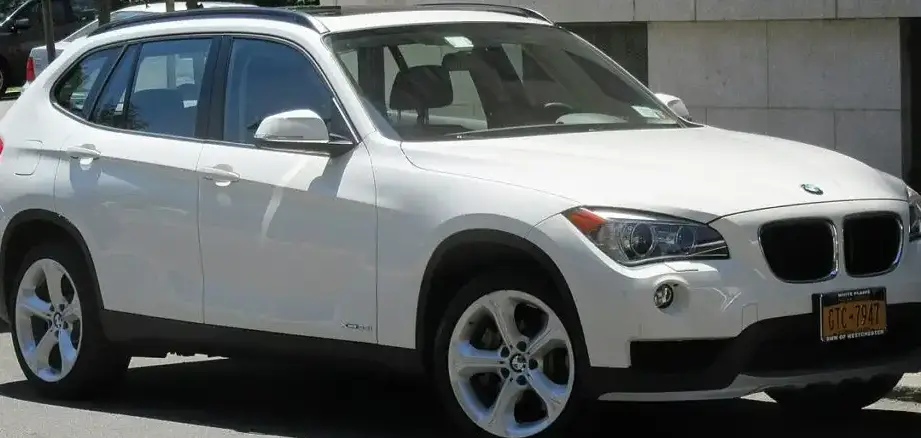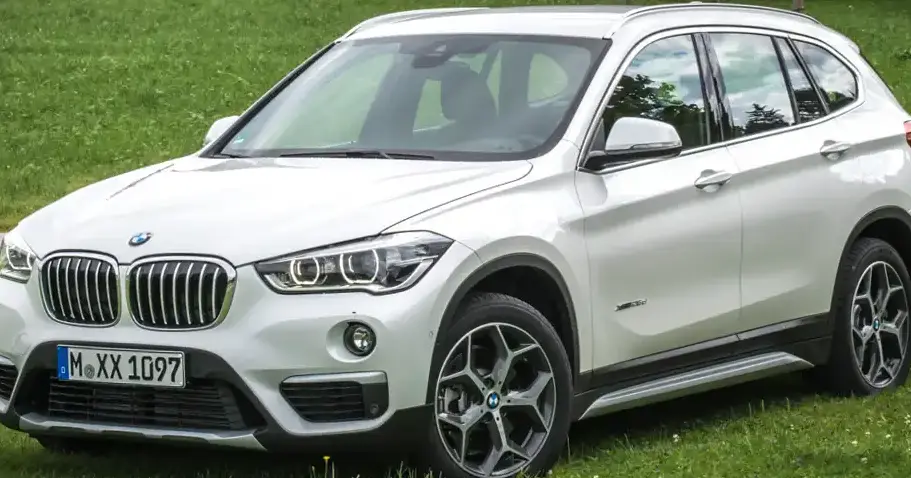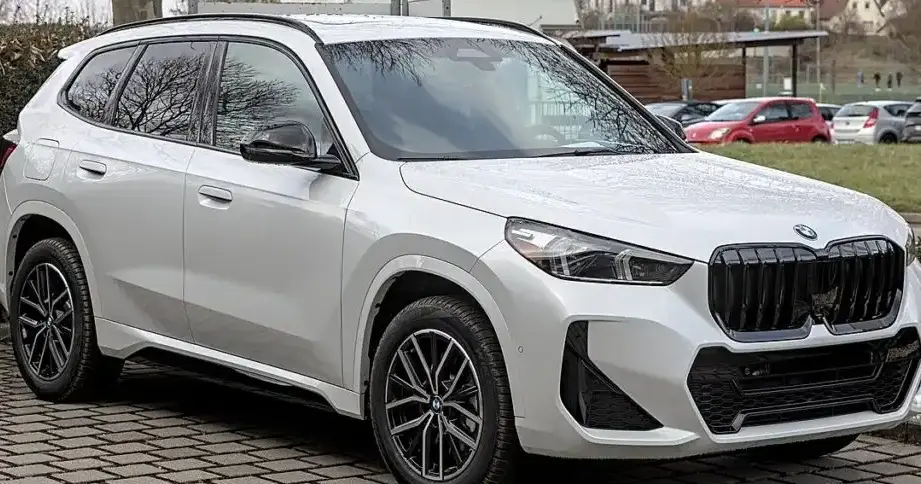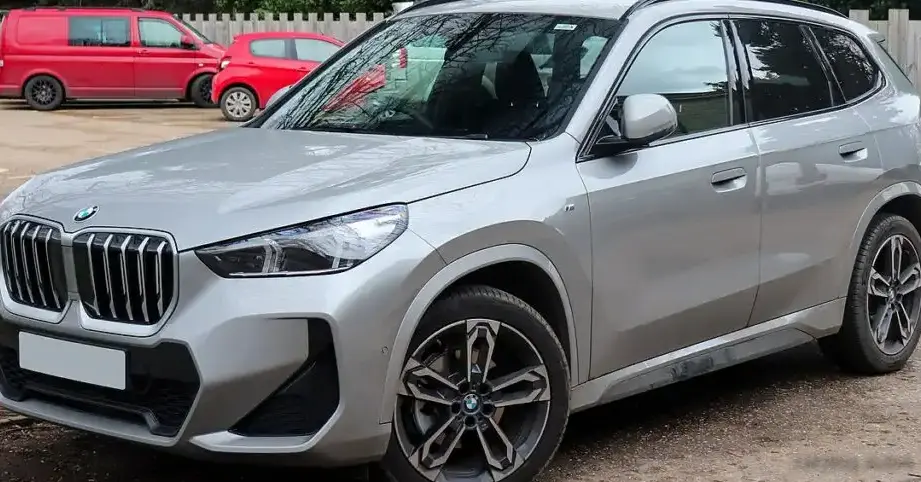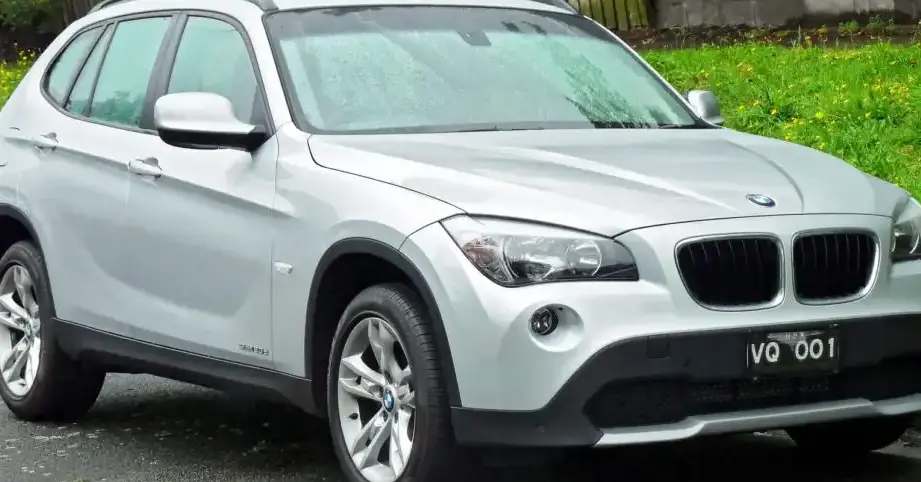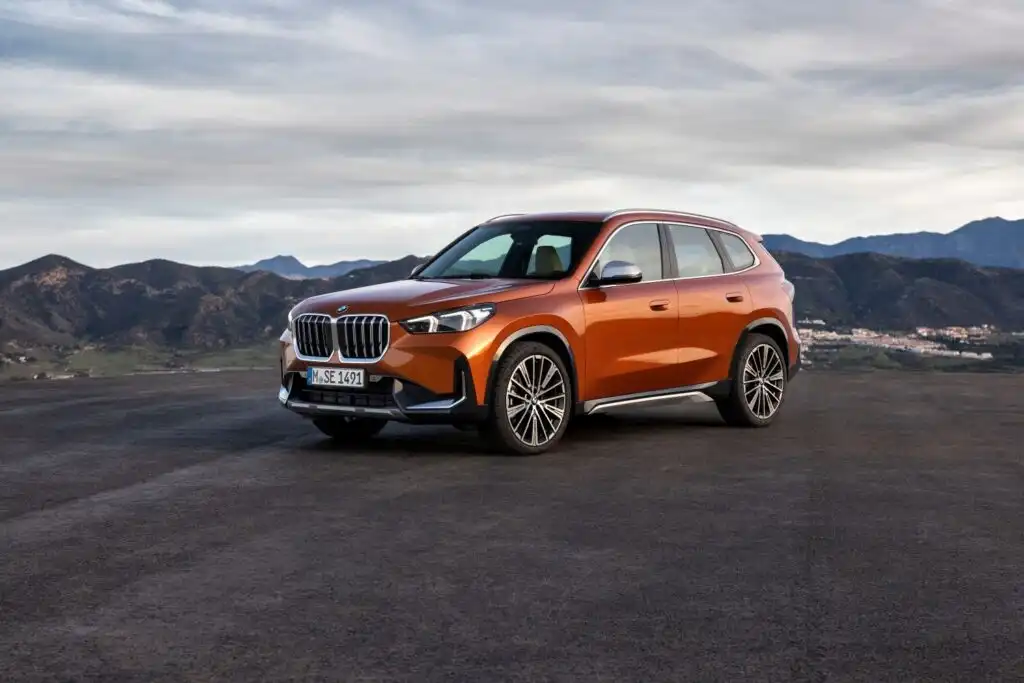
The BMW X1 (U11) 30e xDrive Steptronic, introduced in 2022, represents BMW’s entry into the compact luxury plug-in hybrid (PHEV) crossover segment. Part of the third generation of the X1 (U11 chassis), the 30e combines a 1.5-liter turbocharged three-cylinder gasoline engine with an electric motor, delivering a combined system output of 326 horsepower. This variant is positioned as a mid-range offering within the U11 X1 lineup, bridging the gap between the base gasoline models and potential future, higher-performance PHEV or fully electric versions. The U11 generation marked a significant departure from its predecessors, adopting a more modern design language and incorporating advanced technology focused on efficiency and connectivity.
Technical Specifications
| Brand | BMW |
| Model | X1 |
| Generation | X1 (U11) |
| Type | 30e (326 Hp) Plug-in Hybrid xDrive Steptronic |
| Start of production | 2022 |
| Powertrain Architecture | PHEV (Plug-in Hybrid Electric Vehicle) |
| Body type | SAV (Sports Activity Vehicle) |
| Seats | 5 |
| Doors | 5 |
| Combined fuel consumption (WLTP) | 0.7-1.1 l/100 km (336 – 213.8 US mpg, 403.5 – 256.8 UK mpg, 142.9 – 90.9 km/l) |
| CO2 emissions (WLTP) | 16-24 g/km |
| Fuel Type | Petrol / electricity |
| Acceleration 0 – 100 km/h | 5.6 sec |
| Acceleration 0 – 62 mph | 5.6 sec |
| Acceleration 0 – 60 mph | 5.3 sec |
| Maximum speed | 205 km/h (127.38 mph) |
| Emission standard | Euro 6d |
| Weight-to-power ratio | 5.7 kg/Hp, 175.3 Hp/tonne |
| Weight-to-torque ratio | 3.9 kg/Nm, 256.5 Nm/tonne |
| Gross battery capacity | 16.3 kWh |
| Net (usable) battery capacity | 14.2 kWh |
| Battery technology | Lithium-ion (Li-Ion) |
| Battery location | Below the floor |
| All-electric range (WLTP) | 71-85 km (44.12 – 52.82 mi) |
| Average Energy consumption (WLTP) | 16.8-19.3 kWh/100 km (27.04 – 31.06 kWh/100 mi, 125 – 108 MPGe, 6 – 5.2 km/kWh, 3.7 – 3.2 mi/kWh) |
| Max speed (electric) | 140 km/h (86.99 mph) |
| Electric motor power | 177 Hp |
| Electric motor Torque | 247 Nm (182.18 lb.-ft.) |
| Electric motor location | Rear axle, Transverse |
| Electric motor type | Synchronous |
| System power | 326 Hp |
| System torque | 477 Nm (351.82 lb.-ft.) |
| Power | 150 Hp @ 4700-6500 rpm |
| Torque | 230 Nm @ 1500-4400 rpm (169.64 lb.-ft. @ 1500-4400 rpm) |
| Engine layout | Front, Transverse |
| Engine Model/Code | B38A15P |
| Engine displacement | 1499 cm3 (91.47 cu. in.) |
| Number of cylinders | 3 |
| Engine configuration | Inline |
| Cylinder Bore | 82 mm (3.23 in.) |
| Piston Stroke | 94.6 mm (3.72 in.) |
| Number of valves per cylinder | 4 |
| Fuel injection system | Direct injection |
| Engine aspiration | Twin-power turbo, Intercooler |
| Valvetrain | DOHC |
| Engine oil capacity | 4.5 l (4.76 US qt | 3.96 UK qt) |
| Kerb Weight | 1860 kg (4100.6 lbs.) |
| Max. weight | 2435 kg (5368.26 lbs.) |
| Max load | 575 kg (1267.66 lbs.) |
| Trunk (boot) space – minimum | 490 l (17.3 cu. ft.) |
| Trunk (boot) space – maximum | 1495 l (52.8 cu. ft.) |
| Fuel tank capacity | 47 l (12.42 US gal | 10.34 UK gal) |
| Max. roof load | 75 kg (165.35 lbs.) |
| Permitted trailer load with brakes (8%) | 1800 kg (3968.32 lbs.) |
| Permitted trailer load with brakes (12%) | 1800 kg (3968.32 lbs.) |
| Permitted trailer load without brakes | 750 kg (1653.47 lbs.) |
| Permitted towbar download | 80 kg (176.37 lbs.) |
| Length | 4500 mm (177.17 in.) |
| Width | 1845 mm (72.64 in.) |
| Width including mirrors | 2104 mm (82.83 in.) |
| Height | 1630 mm (64.17 in.) |
| Wheelbase | 2692 mm (105.98 in.) |
| Front track | 1592 mm (62.68 in.) |
| Rear (Back) track | 1593 mm (62.72 in.) |
| Front overhang | 875 mm (34.45 in.) |
| Rear overhang | 933 mm (36.73 in.) |
| Minimum turning circle (turning diameter) | 11.7 m (38.39 ft.) |
| Drivetrain Architecture | The Internal combustion engine (ICE) permanently drives the front wheels of the vehicle, the electric motor drives the rear wheels of the vehicle, capable of running in full electric mode, only by the Internal combustion engine (ICE) or in mixed mode. |
| Drive wheel | All wheel drive (4×4) |
| Number of gears and type of gearbox | 7 gears, automatic transmission Steptronic |
| Front suspension | Independent, type McPherson with coil spring and anti-roll bar |
| Rear suspension | Independent multi-link spring suspension with stabilizer |
Powertrain & Engine Architecture
The BMW X1 30e’s powertrain centers around the B38A15P, a 1.5-liter turbocharged inline-three cylinder gasoline engine. This engine, part of BMW’s modular engine family, utilizes direct fuel injection and a twin-scroll turbocharger to deliver 150 horsepower and 230 Nm (169.64 lb.-ft.) of torque. The engine’s compact size and lightweight construction contribute to the vehicle’s overall efficiency. Coupled with the engine is a synchronous electric motor, producing 177 horsepower and 247 Nm (182.18 lb.-ft.) of torque, located on the rear axle. This configuration allows for an all-wheel-drive system where the gasoline engine powers the front wheels and the electric motor drives the rear wheels. The combined system output reaches 326 horsepower and 477 Nm (351.82 lb.-ft.) of torque. The powertrain is managed by a 7-speed Steptronic automatic transmission, optimized for smooth and efficient gear changes. The 16.3 kWh (usable 14.2 kWh) lithium-ion battery pack is positioned under the vehicle floor, minimizing impact on passenger space.
Driving Characteristics
The X1 30e offers a unique driving experience, blending the responsiveness of a gasoline engine with the instant torque of an electric motor. In electric-only mode, the vehicle provides quiet and emissions-free driving for up to 85 kilometers (52.82 miles) on the WLTP cycle. Switching to hybrid mode seamlessly combines the power of both engines, resulting in brisk acceleration – 0 to 60 mph in approximately 5.3 seconds. The rear-wheel-drive electric motor contributes to improved handling and traction, particularly in adverse weather conditions. Compared to the standard gasoline-powered X1 models, the 30e offers significantly enhanced acceleration and a more refined driving experience. However, the added weight of the battery pack does slightly impact handling agility compared to lighter variants. The Steptronic transmission provides smooth shifts, but some drivers may prefer the more engaging control of a manual gearbox, which is not offered on this model.
Equipment & Trim Levels
The X1 30e typically comes well-equipped, reflecting its position as a mid-range offering. Standard features generally include BMW’s iDrive infotainment system with a curved display, navigation, Apple CarPlay and Android Auto compatibility, automatic climate control, and a suite of advanced driver-assistance systems (ADAS) such as lane departure warning and forward collision mitigation. Interior upholstery is typically a combination of synthetic leather and fabric, with optional upgrades to full leather available. Exterior features include alloy wheels, LED headlights, and a panoramic sunroof. Optional extras can include a premium sound system, head-up display, and adaptive suspension.
Chassis & Braking
The X1 30e utilizes a McPherson strut front suspension and a multi-link rear suspension, tuned to provide a balance between comfort and handling. Stabilizer bars are fitted to both axles to reduce body roll during cornering. The braking system consists of ventilated disc brakes on all four wheels, with ABS (Anti-lock Braking System) and electronic brake-force distribution as standard. Due to the regenerative braking system integrated with the electric motor, the brakes also recover energy during deceleration, further enhancing efficiency.
Market Reception & Comparison
The BMW X1 30e has been generally well-received by automotive critics, praised for its fuel efficiency, performance, and refined driving experience. Compared to the standard gasoline-powered X1 models, the 30e offers significantly lower running costs, particularly for drivers who frequently commute short distances and can take advantage of electric-only driving. However, the higher purchase price and the added weight of the battery pack are drawbacks. Compared to other PHEV crossovers in its class, the X1 30e stands out with its premium interior, engaging driving dynamics, and strong brand reputation.
Legacy
The BMW X1 30e represents a significant step in BMW’s electrification strategy, offering a compelling alternative to traditional gasoline-powered vehicles. The B38 engine, while relatively new, has proven to be reliable in other BMW applications. The long-term durability of the battery pack and electric motor remains to be seen, but BMW offers an eight-year/100,000-mile warranty on the battery. On the used car market, the X1 30e is expected to hold its value well, particularly as demand for PHEV vehicles continues to grow. Its combination of practicality, performance, and efficiency makes it an attractive option for buyers seeking a premium compact crossover.