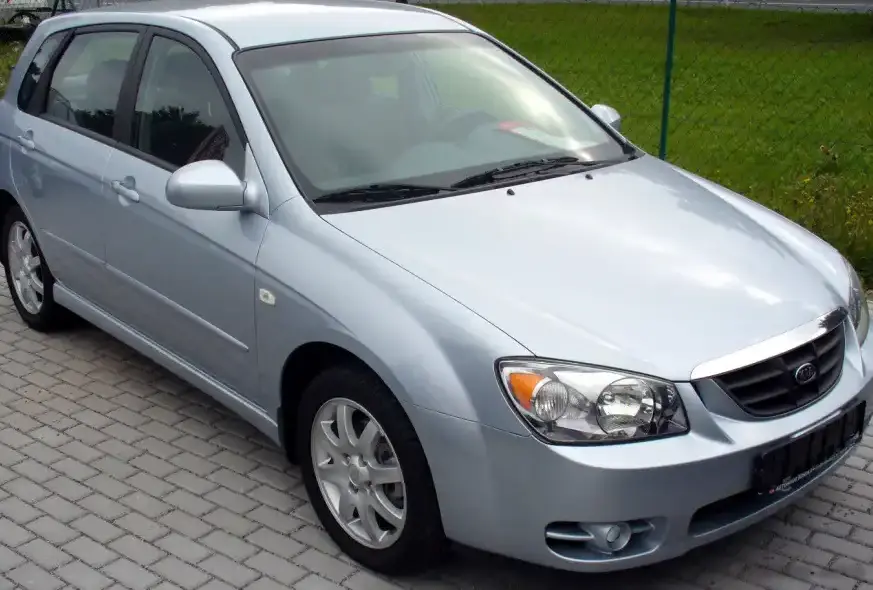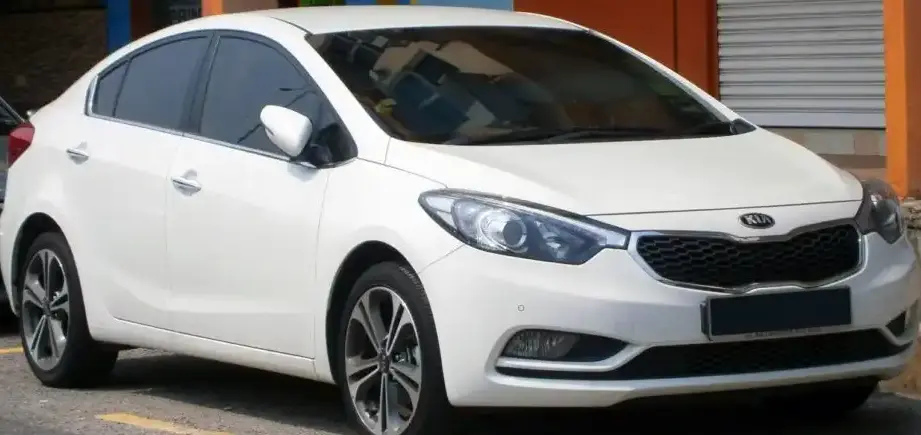
The Kia Cerato III Sedan 1.8 MPI (150 hp) Automatic, produced between 2012 and 2016, represents a significant step forward for Kia in the North American and global compact sedan market. Part of the third generation (YD) Cerato lineup, known as the K3 in some markets, this variant aimed to provide a balance of fuel efficiency, comfortable driving, and modern features at a competitive price point. It was positioned as a mid-range offering within the Cerato III range, slotting between the base 1.6L engine and the more performance-oriented options available in certain regions. The Cerato III was built on the Hyundai-Kia ‘JD’ platform, also underpinning the Hyundai Elantra of the same era.
Technical Specifications
| Brand | Kia |
| Model | Cerato |
| Generation | Cerato III Sedan |
| Type (Engine) | 1.8 MPI (150 Hp) Automatic |
| Start of production | 2012 |
| End of production | 2016 |
| Powertrain Architecture | Internal Combustion engine |
| Body type | Sedan |
| Seats | 5 |
| Doors | 4 |
| Fuel consumption (urban) | 10 l/100 km (23.5 US mpg) |
| Fuel consumption (extra urban) | 5.4 l/100 km (43.6 US mpg) |
| Fuel consumption (combined) | 7.1 l/100 km (33.1 US mpg) |
| CO2 emissions | 169 g/km |
| Fuel Type | Petrol (Gasoline) |
| Emission standard | Euro IV |
| Weight-to-power ratio | 8.6 kg/Hp |
| Weight-to-torque ratio | 7.2 kg/Nm |
| Power | 150 Hp @ 6500 rpm |
| Power per litre | 83.5 Hp/l |
| Torque | 178 Nm @ 4700 rpm (131.29 lb.-ft. @ 4700 rpm) |
| Engine layout | Front, Transverse |
| Engine Model/Code | Nu/G4NB |
| Engine displacement | 1797 cm3 (109.66 cu. in.) |
| Number of cylinders | 4 |
| Engine configuration | Inline |
| Cylinder Bore | 81 mm (3.19 in.) |
| Piston Stroke | 87.2 mm (3.43 in.) |
| Compression ratio | 10.3:1 |
| Number of valves per cylinder | 4 |
| Fuel injection system | Multi-port manifold injection |
| Valvetrain | DOHC, D-CVVT |
| Engine oil capacity | 4.5 l (4.76 US qt | 3.96 UK qt) |
| Coolant capacity | 6 l (6.34 US qt | 5.28 UK qt) |
| Kerb Weight | 1284-1325 kg (2830.74 – 2921.12 lbs.) |
| Max. weight | 1790 kg (3946.27 lbs.) |
| Max load | 465-506 kg (1025.15 – 1115.54 lbs.) |
| Trunk (boot) space | 482 l (17.02 cu. ft.) |
| Fuel tank capacity | 50 l (13.21 US gal | 11 UK gal) |
| Permitted trailer load (braked) | 1100 kg (2425.08 lbs.) |
| Permitted trailer load (unbraked) | 610 kg (1344.82 lbs.) |
| Permitted towbar download | 75 kg (165.35 lbs.) |
| Length | 4560 mm (179.53 in.) |
| Width | 1780 mm (70.08 in.) |
| Height | 1435 mm (56.5 in.) |
| Wheelbase | 2700 mm (106.3 in.) |
| Ride height (ground clearance) | 140 mm (5.51 in.) |
| Minimum turning circle | 10.6 m (34.78 ft.) |
| Drivetrain Architecture | Front wheel drive |
| Number of gears | 6 |
| Gearbox type | Automatic transmission Manu-matic |
| Front suspension | Independent type McPherson |
| Rear suspension | Torsion |
| Front brakes | Ventilated discs, 280 mm |
| Rear brakes | Disc, 262 mm |
| Assisting systems | ABS (Anti-lock braking system) |
| Steering type | Steering rack and pinion |
| Power steering | Electric Steering |
| Tires size | 205/55 R16 |
| Wheel rims size | 16 |
Powertrain & Engine Architecture
The heart of the Cerato III 1.8 MPI Automatic is the Kia-developed Nu engine, specifically the G4NB variant. This 1.8-liter inline-four cylinder engine utilizes multi-point fuel injection and a double overhead camshaft (DOHC) valvetrain with Kia’s Dual Continuous Variable Valve Timing (D-CVVT) technology. D-CVVT optimizes valve timing for both intake and exhaust, improving fuel efficiency and throttle response across the engine’s operating range. The engine produces 150 horsepower at 6,500 rpm and 178 Nm (131.29 lb-ft) of torque at 4,700 rpm. The engine is transversely mounted in the front of the vehicle. Paired with this engine is a six-speed automatic transmission with a ‘Manu-matic’ function, allowing drivers some degree of manual gear selection. This transmission was chosen for its smooth operation and contribution to overall fuel economy.
Driving Characteristics
The 1.8L Automatic Cerato offers a comfortable and predictable driving experience. While not designed for outright performance, the engine provides adequate power for everyday driving situations, including highway merging and passing. The automatic transmission is tuned for fuel efficiency, resulting in relatively conservative gear ratios. Acceleration is linear, but the engine can feel strained when pushed hard, especially when fully loaded. Compared to the available manual transmission or potential higher-output engine options (depending on the market), this variant prioritizes ease of use and fuel economy over sporty handling. The steering is light and precise, making it easy to maneuver in urban environments.
Equipment & Trim Levels
The 1.8 MPI Automatic trim typically included standard features such as air conditioning, power windows and locks, a basic audio system with USB connectivity, and standard safety equipment like ABS, airbags, and stability control. Higher trim levels, often denoted by ‘LX’ or ‘EX’ designations, added features like alloy wheels, a more advanced audio system with Bluetooth, a sunroof, and upgraded interior materials. Interior upholstery was typically cloth, with optional leather available on higher trims. Dashboard configuration was generally straightforward and functional, prioritizing usability over stylistic flair.
Chassis & Braking
The Cerato III utilizes a front-wheel-drive layout with an independent McPherson strut suspension in the front and a torsion beam suspension in the rear. This suspension setup provides a comfortable ride quality, absorbing bumps and irregularities in the road surface effectively. Braking duties are handled by ventilated discs in the front and solid discs in the rear. ABS (Anti-lock Braking System) is standard, enhancing braking performance and stability, particularly in emergency situations. The chassis was designed to balance ride comfort with reasonable handling characteristics, catering to a broad range of drivers.
Market Reception & Comparison
The Kia Cerato III 1.8 MPI Automatic was generally well-received by automotive critics as a practical and value-oriented compact sedan. It was praised for its comfortable ride, spacious interior, and comprehensive warranty. However, some reviewers noted that the engine lacked the refinement and power of some competitors, and the interior materials were not as premium as those found in some other vehicles in the segment. Compared to the base 1.6L engine, the 1.8L offered a noticeable improvement in performance. Compared to potential turbocharged or higher-displacement engine options, it provided a more affordable and fuel-efficient alternative.
Legacy
The Kia Cerato III 1.8 MPI Automatic has proven to be a relatively reliable vehicle in the used car market. The Nu engine is generally considered durable, and the six-speed automatic transmission has a good track record. Common maintenance items include routine oil changes, filter replacements, and occasional sensor replacements. While not a particularly collectible vehicle, the Cerato III represents a pivotal moment for Kia, demonstrating the brand’s increasing commitment to quality, design, and technology. Today, these vehicles offer an affordable and practical transportation option for budget-conscious buyers.