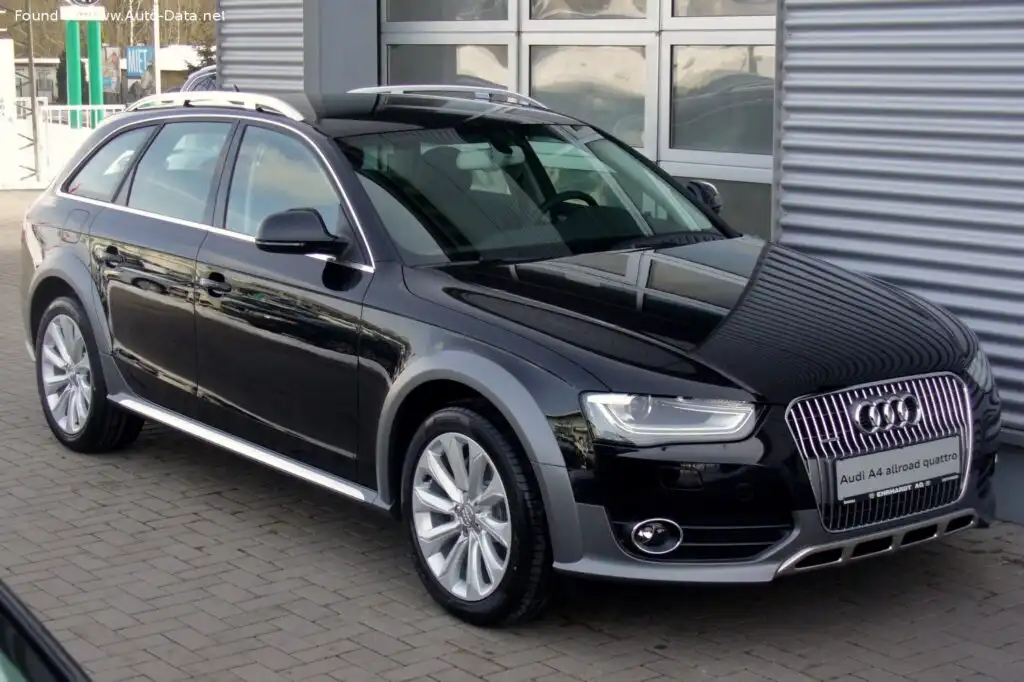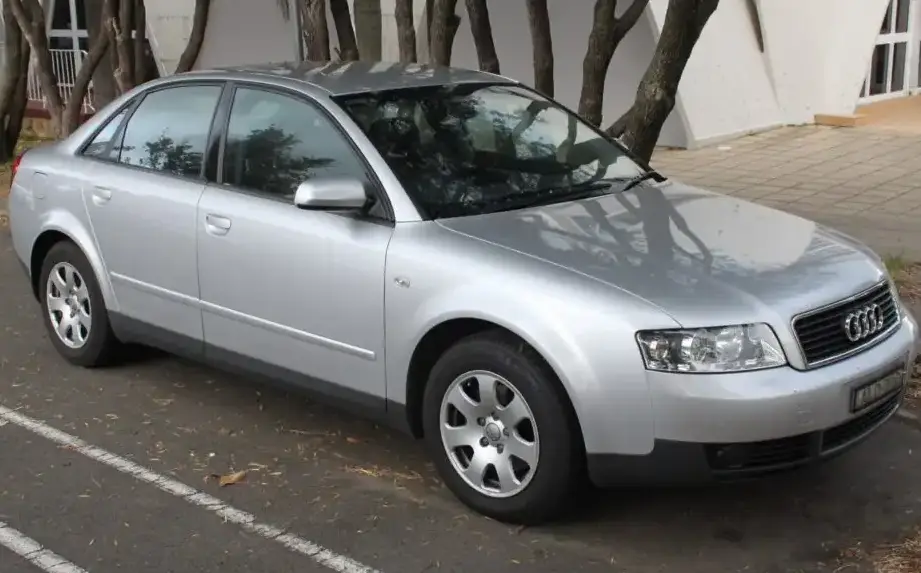
The Audi A4 (B6), produced between 2001 and 2005, represented a significant step forward for Audi’s popular compact executive car. Within the B6 generation (chassis code 8E), the 2.5 TDI V6, generating 155 horsepower, occupied a unique position. Introduced primarily for the European market, this variant offered a blend of performance and fuel efficiency, appealing to drivers seeking a refined driving experience with the practicality of a diesel engine. Production of this specific engine configuration spanned from 2001 to 2002, before being superseded by revised versions within the B6 range. It was positioned as a mid-range offering, bridging the gap between the entry-level 1.8L petrol engines and the more potent 3.0L V6.
Technical Specifications
| Brand | Audi |
| Model | A4 |
| Generation | A4 (B6 8E) |
| Type (Engine) | 2.5 TDI V6 (155 Hp) |
| Start of production | 2001 |
| End of production | 2002 |
| Powertrain Architecture | Internal Combustion engine |
| Body type | Sedan |
| Seats | 5 |
| Doors | 4 |
| Fuel consumption (urban) | 9.7 l/100 km (24.2 US mpg) |
| Fuel consumption (extra urban) | 5.3 l/100 km (44.4 US mpg) |
| Fuel consumption (combined) | 6.8 l/100 km (34.6 US mpg) |
| Fuel Type | Diesel |
| Acceleration 0 – 100 km/h | 9.4 sec |
| Acceleration 0 – 62 mph | 9.4 sec |
| Acceleration 0 – 60 mph | 8.9 sec |
| Maximum speed | 227 km/h (141.05 mph) |
| Weight-to-power ratio | 9.7 kg/Hp |
| Weight-to-torque ratio | 4.9 kg/Nm |
| Power | 155 Hp @ 4000 rpm |
| Torque | 310 Nm @ 1400 rpm (228.64 lb.-ft. @ 1400 rpm) |
| Engine layout | Front, Longitudinal |
| Engine Model/Code | AYM |
| Engine displacement | 2496 cm3 (152.32 cu. in.) |
| Number of cylinders | 6 |
| Engine configuration | V-engine |
| Cylinder Bore | 78.3 mm (3.08 in.) |
| Piston Stroke | 86.4 mm (3.4 in.) |
| Compression ratio | 18.5:1 |
| Number of valves per cylinder | 4 |
| Fuel injection system | Direct injection |
| Engine aspiration | Turbocharger, Intercooler |
| Valvetrain | DOHC |
| Engine oil capacity | 5.5 l (5.81 US qt | 4.84 UK qt) |
| Coolant capacity | 12 l (12.68 US qt | 10.56 UK qt) |
| Kerb Weight | 1505 kg (3317.96 lbs.) |
| Max. weight | 2055 kg (4530.5 lbs.) |
| Max load | 550 kg (1212.54 lbs.) |
| Trunk (boot) space – minimum | 445 l (15.72 cu. ft.) |
| Trunk (boot) space – maximum | 720 l (25.43 cu. ft.) |
| Fuel tank capacity | 70 l (18.49 US gal | 15.4 UK gal) |
| Length | 4548 mm (179.06 in.) |
| Width | 1772 mm (69.76 in.) |
| Height | 1428 mm (56.22 in.) |
| Wheelbase | 2650 mm (104.33 in.) |
| Front track | 1528 mm (60.16 in.) |
| Rear track | 1526 mm (60.08 in.) |
| Drag coefficient (Cd) | 0.31 |
| Minimum turning circle | 11.1 m (36.42 ft.) |
| Drivetrain | Front wheel drive |
| Number of gears | 6 |
| Gearbox type | Manual transmission |
| Front suspension | Independent multi-link suspension |
| Rear suspension | Independent multi-link suspension |
| Front brakes | Ventilated discs |
| Rear brakes | Disc |
| Assisting systems | ABS (Anti-lock braking system) |
| Steering type | Steering rack and pinion |
| Power steering | Hydraulic Steering |
| Tires size | 205/55 R16 |
| Wheel rims size | 7J x 16 |
Powertrain & Engine Architecture
The heart of this A4 variant is the 2.5-liter V6 TDI engine, designated with the code AYM. This engine is a 24-valve, direct-injection diesel, utilizing a turbocharger with an intercooler to boost power output. The direct injection system, employing common rail technology, allowed for precise fuel delivery and optimized combustion. The engine’s valvetrain is a Double Overhead Camshaft (DOHC) design, contributing to efficient valve control and improved engine breathing. The 6-speed manual transmission was standard, providing a good balance between performance and fuel economy. The engine’s longitudinal mounting within the chassis facilitated a front-wheel-drive configuration, typical for European-market A4s.
Driving Characteristics
The 2.5 TDI V6 offered a noticeable step up in performance compared to the base 1.8L petrol engines. While not as overtly sporty as the higher-output V6 models, the 155 hp and 310 Nm (228.64 lb-ft) of torque provided ample power for everyday driving and comfortable highway cruising. The turbocharger delivered a surge of power from around 1400 rpm, making overtaking maneuvers relatively effortless. The 6-speed manual transmission allowed drivers to keep the engine in its optimal power band. Compared to the automatic transmissions available on other A4 variants, the manual offered a more engaging driving experience and slightly improved fuel economy. The front-wheel-drive configuration, while providing good traction in most conditions, could exhibit some torque steer under hard acceleration.
Equipment & Trim Levels
The 2.5 TDI V6 typically came equipped with a reasonably comprehensive set of features. Standard equipment generally included power windows, central locking, air conditioning, and an upgraded audio system compared to the base models. Interior upholstery was typically cloth, although leather options were available. Trim levels varied depending on the market, but common options included alloy wheels, a sunroof, and upgraded interior trim. The A4 B6 offered a range of optional extras, such as parking sensors, a navigation system, and heated seats, allowing buyers to customize their vehicle to their preferences.
Chassis & Braking
The A4 B6 featured fully independent multi-link suspension on both the front and rear axles, providing a comfortable ride and good handling characteristics. The front suspension utilized coil springs and shock absorbers, while the rear suspension incorporated a separate spring and damper arrangement. Braking duties were handled by ventilated discs on the front wheels and solid discs on the rear. Anti-lock Braking System (ABS) was standard, enhancing braking performance and stability. The steering system was a rack-and-pinion setup with hydraulic power assistance, providing precise and responsive steering feel.
Market Reception & Comparison
The 2.5 TDI V6 A4 was well-received in Europe, particularly by drivers who valued fuel efficiency and torque. Critics praised the engine’s refinement and its ability to deliver strong performance without excessive fuel consumption. Compared to the 1.8L petrol engines, the 2.5 TDI offered significantly more torque and better fuel economy. However, it was more expensive to purchase and maintain than the petrol variants. Compared to the more powerful 3.0L V6 TDI, the 2.5 TDI offered a more affordable entry point into the V6 diesel range, albeit with slightly less performance.
Legacy
The AYM engine, while generally reliable, is known to require regular maintenance, particularly regarding the turbocharger and fuel injection system. Proper servicing, including regular oil changes and fuel filter replacements, is crucial for ensuring long-term reliability. Today, the 2.5 TDI V6 A4 B6 represents a relatively affordable entry point into the Audi ownership experience. Well-maintained examples are still sought after by enthusiasts who appreciate the engine’s character and the car’s overall build quality. However, potential buyers should be aware of the potential for age-related issues and the importance of a thorough pre-purchase inspection.