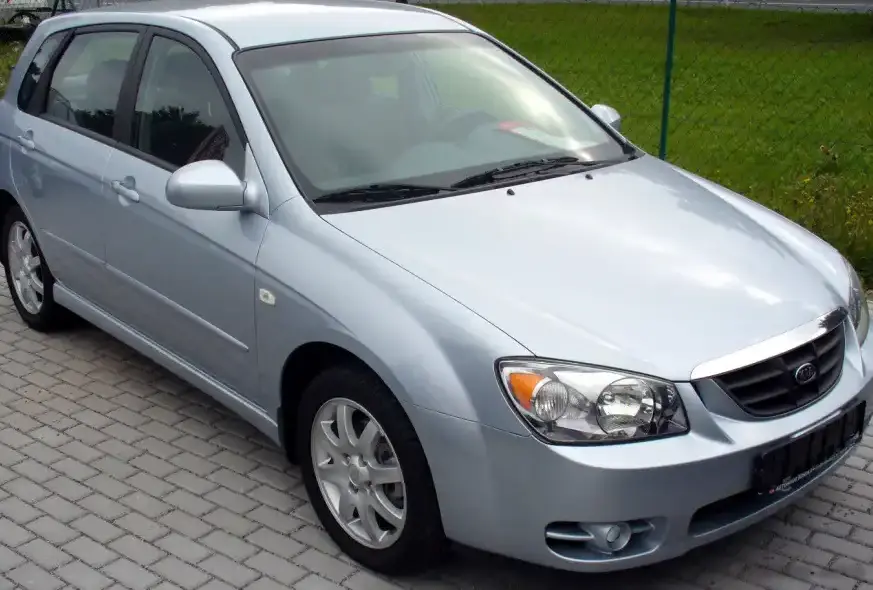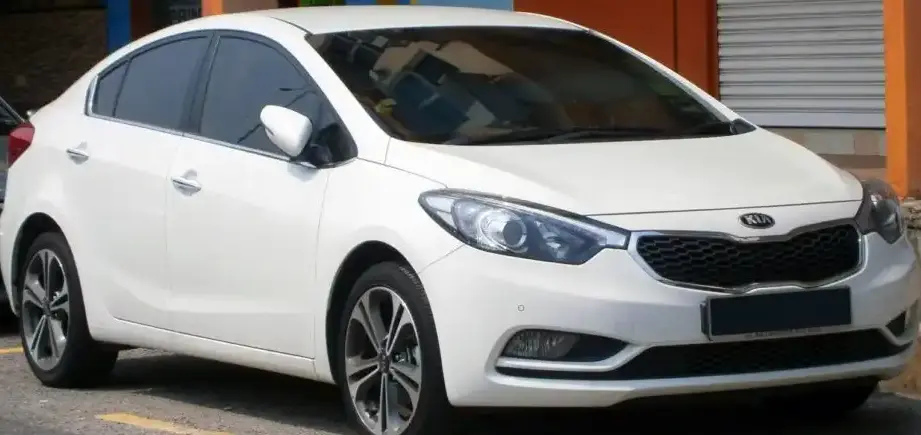
The Kia Cerato III Sedan 2.0 MPI (160 Hp), produced between 2012 and 2016, represents a significant step forward for Kia in the competitive compact sedan segment. This variant, powered by the Nu engine family, was a key offering within the broader Cerato III (also known as the K3 in some markets) lineup, which was based on the Hyundai-Kia ‘JD’ platform. Positioned as a mid-range option, it aimed to balance performance, fuel efficiency, and value for the North American and global markets. The Cerato III aimed to elevate Kia’s brand image by offering a more refined and feature-rich vehicle than its predecessors.
Technical Specifications
| Brand | Kia |
| Model | Cerato |
| Generation | Cerato III Sedan |
| Type (Engine) | 2.0 MPI (160 Hp) |
| Start of production | 2012 year |
| End of production | 2016 year |
| Powertrain Architecture | Internal Combustion engine |
| Body type | Sedan |
| Seats | 5 |
| Doors | 4 |
| CO2 emissions | 164 g/km |
| Fuel Type | Petrol (Gasoline) |
| Acceleration 0 – 100 km/h | 8.5 sec |
| Acceleration 0 – 62 mph | 8.5 sec |
| Acceleration 0 – 60 mph | 8.1 sec |
| Maximum speed | 210 km/h (130.49 mph) |
| Weight-to-power ratio | 7.5 kg/Hp, 133.6 Hp/tonne |
| Weight-to-torque ratio | 6.2 kg/Nm, 161.9 Nm/tonne |
| Power | 160 Hp @ 6200 rpm |
| Power per litre | 80 Hp/l |
| Torque | 194 Nm @ 4300 rpm (143.09 lb.-ft. @ 4300 rpm) |
| Engine layout | Front, Transverse |
| Engine Model/Code | Nu / G4NA |
| Engine displacement | 1999 cm3 (121.99 cu. in.) |
| Number of cylinders | 4 |
| Engine configuration | Inline |
| Cylinder Bore | 81 mm (3.19 in.) |
| Piston Stroke | 97 mm (3.82 in.) |
| Compression ratio | 10.3:1 |
| Number of valves per cylinder | 4 |
| Fuel injection system | Multi-port manifold injection |
| Valvetrain | DOHC, Dual-CVVT |
| Engine oil capacity | 4 l (4.23 US qt | 3.52 UK qt) |
| Coolant | 6 l (6.34 US qt | 5.28 UK qt) |
| Kerb Weight | 1198-1296 kg (2641.14 – 2857.19 lbs.) |
| Max. weight | 1740 kg (3836.04 lbs.) |
| Max load | 444-542 kg (978.85 – 1194.91 lbs.) |
| Trunk (boot) space – minimum | 482 l (17.02 cu. ft.) |
| Fuel tank capacity | 50 l (13.21 US gal | 11 UK gal) |
| Permitted trailer load with brakes (12%) | 1200 kg (2645.55 lbs.) |
| Permitted trailer load without brakes | 610 kg (1344.82 lbs.) |
| Length | 4560 mm (179.53 in.) |
| Width | 1780 mm (70.08 in.) |
| Height | 1445 mm (56.89 in.) |
| Wheelbase | 2700 mm (106.3 in.) |
| Front track | 1555-1557 mm (61.22 – 61.3 in.) |
| Rear (Back) track | 1566-1570 mm (61.65 – 61.81 in.) |
| Front overhang | 880 mm (34.65 in.) |
| Rear overhang | 980 mm (38.58 in.) |
| Ride height (ground clearance) | 150 mm (5.91 in.) |
| Drag coefficient (Cd) | 0.27 |
| Minimum turning circle (turning diameter) | 10.6 m (34.78 ft.) |
| Drivetrain Architecture | The Internal combustion engine (ICE) drives the front wheels of the vehicle. |
| Drive wheel | Front wheel drive |
| Number of gears and type of gearbox | 6 gears, manual transmission |
| Front suspension | Independent type McPherson |
| Rear suspension | Torsion |
| Front brakes | Ventilated discs, 280 mm |
| Rear brakes | Disc, 262 mm |
| Assisting systems | ABS (Anti-lock braking system) |
| Steering type | Steering rack and pinion |
| Power steering | Electric Steering |
| Tires size | 205/55 R16; 215/45 R17 |
| Wheel rims size | 16; 17 |
Powertrain & Engine Architecture
The heart of the Cerato III 2.0 MPI is the Kia-Hyundai Nu engine family. Specifically, the G4NA code designates this 2.0-liter inline-four cylinder engine. This engine utilizes a cast iron block with an aluminum cylinder head, a common configuration for balancing durability and weight. The Nu engine features a multi-point fuel injection system, delivering fuel directly into the intake ports. The dual continuously variable valve timing (Dual-CVVT) system optimizes valve timing for improved performance and fuel efficiency across the engine’s operating range. This engine produces 160 horsepower at 6200 rpm and 194 Nm (143 lb-ft) of torque at 4300 rpm. The six-speed manual transmission was standard, offering a relatively direct connection to the engine.
Driving Characteristics
The 2.0-liter engine and six-speed manual transmission combination in the Cerato III provided a reasonably engaging driving experience. Acceleration from 0-60 mph took approximately 8.1 seconds, making it competitive within its class. While not a sports sedan, the engine offered sufficient power for everyday driving and highway merging. The six-speed manual allowed drivers to maintain control and extract the most performance from the engine. Compared to the base 1.6L engine, the 2.0L offered a noticeable improvement in acceleration and overall responsiveness. However, it didn’t possess the same level of refinement or power as some of its competitors with larger displacement engines or turbocharging.
Equipment & Trim Levels
The 2.0 MPI trim of the Cerato III typically included standard features such as air conditioning, power windows and locks, a basic audio system with USB connectivity, and standard safety equipment like ABS and airbags. Higher trim levels, such as the SX, added features like alloy wheels, a sunroof, a more advanced audio system, and upgraded interior materials. Interior upholstery was typically cloth, with optional leather available on higher trims. Dashboard configuration was relatively straightforward, prioritizing functionality over elaborate design.
Chassis & Braking
The Cerato III utilized a front-wheel-drive layout with an independent McPherson strut suspension in the front and a torsion beam suspension in the rear. This suspension setup provided a comfortable ride quality, suitable for everyday commuting. The front brakes were ventilated discs, providing adequate stopping power, while the rear brakes were solid discs. The steering was rack-and-pinion with electric power steering, offering a light and easy steering feel. Stabilizer bars were included both front and rear to reduce body roll during cornering.
Market Reception & Comparison
The Kia Cerato III 2.0 MPI was generally well-received by automotive critics as a solid and value-packed compact sedan. It was praised for its spacious interior, comfortable ride, and generous warranty. However, some critics noted that the interior materials weren’t as premium as those found in some competitors, and the handling wasn’t as sporty. Compared to other 2.0-liter offerings in the segment, such as the Honda Civic or Toyota Corolla, the Cerato offered a competitive level of features and performance at a lower price point. Fuel economy was respectable, averaging around 28 mpg combined.
Legacy
The Kia Cerato III 2.0 MPI has proven to be a relatively reliable vehicle in the used car market. The Nu engine family is generally known for its durability, and with proper maintenance, these engines can last for many years. Common issues reported by owners include minor electrical glitches and wear-and-tear on suspension components. Today, the Cerato III represents an affordable and practical option for buyers seeking a reliable compact sedan. Its combination of value, features, and reasonable running costs continues to make it a popular choice in the used car market.