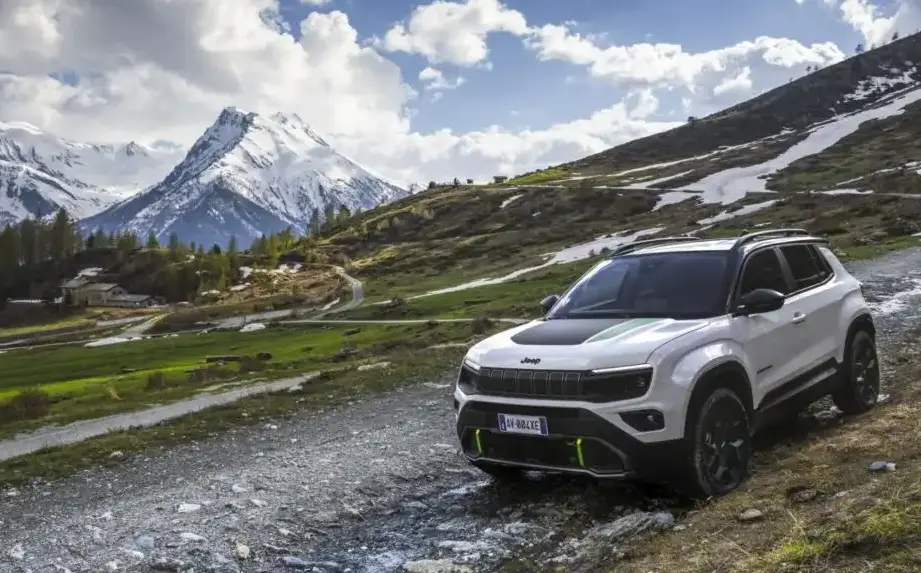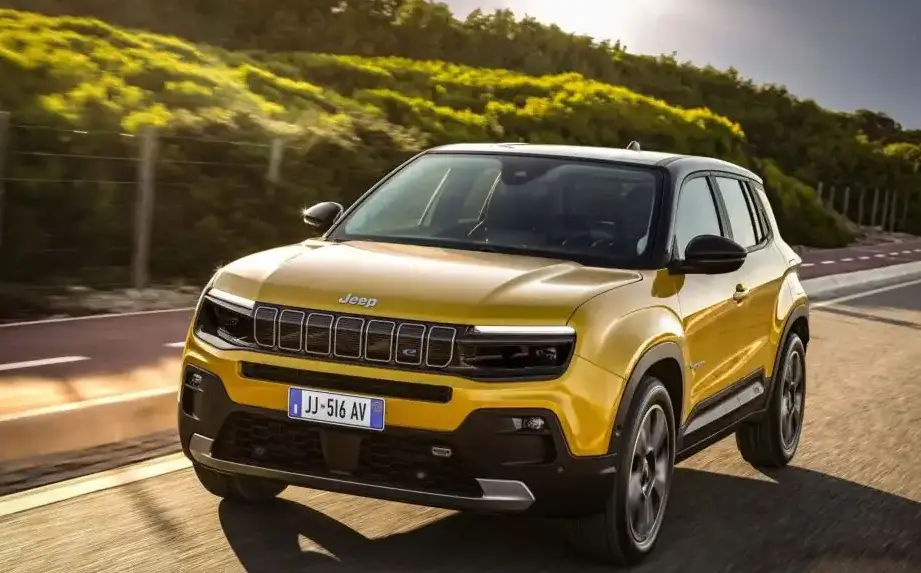
The Jeep Avenger 1.2 (100 Hp) e-Hybrid e-DCS is a subcompact crossover SUV introduced by Jeep in December 2023. Positioned as an entry-level offering within the Avenger lineup, it represents Jeep’s first fully electric vehicle and a significant step towards electrification. The Avenger is built on the Stellantis CMP/eMPV platform, shared with other Peugeot and Opel/Vauxhall models. Production continued until April 2025, with the 1.2 e-Hybrid serving as a bridge between traditional internal combustion engine (ICE) options and the fully electric variants. This mild-hybrid powertrain aimed to offer improved fuel efficiency and reduced emissions while maintaining a relatively affordable price point.
Technical Specifications
| Brand | Jeep |
| Model | Avenger |
| Generation | Avenger |
| Type (Engine) | 1.2 (100 Hp) e-Hybrid e-DCS |
| Start of production | December, 2023 |
| End of production | April, 2025 |
| Powertrain Architecture | MHEV (Mild Hybrid Electric Vehicle) |
| Body type | SUV |
| Seats | 5 |
| Doors | 5 |
| Combined fuel consumption (WLTP) | 4.9-5 l/100 km (48 – 47 US mpg, 57.6 – 56.5 UK mpg, 20.4 – 20 km/l) |
| CO2 emissions (WLTP) | 111-114 g/km |
| Fuel Type | Petrol (Gasoline) |
| Acceleration 0 – 100 km/h | 10.9 sec |
| Acceleration 0 – 62 mph | 10.9 sec |
| Acceleration 0 – 60 mph | 10.4 sec |
| Maximum speed | 184 km/h (114.33 mph) |
| Weight-to-power ratio | 12.1 kg/Hp, 82.4 Hp/tonne |
| Weight-to-torque ratio | 5.9 kg/Nm, 169 Nm/tonne |
| Gross battery capacity | 0.9 kWh |
| Battery voltage | 48 V |
| Battery technology | Lithium-ion (Li-Ion) |
| Battery weight | 60 kg (132.28 lbs) |
| Battery location | Under the front seats |
| All-electric range | 1 km (0.62 mi) |
| Max speed (electric) | 30 km/h (18.64 mph) |
| Electric motor power | 29 Hp |
| Electric motor Torque | 55 Nm (40.57 lb.-ft.) |
| Electric motor location | Integrated into the transmission |
| Power | 100 Hp @ 5500 rpm |
| Torque | 205 Nm @ 1750 rpm (151.2 lb.-ft. @ 1750 rpm) |
| Engine layout | Front, Transverse |
| Engine Model/Code | HN05 |
| Engine displacement | 1199 cm3 (73.17 cu. in.) |
| Number of cylinders | 3 |
| Engine configuration | Inline |
| Number of valves per cylinder | 4 |
| Fuel injection system | Direct injection |
| Engine aspiration | Turbocharger, Intercooler |
| Valvetrain | DOHC |
| Engine oil capacity | 3.5 l (3.7 US qt | 3.08 UK qt) |
| Kerb Weight | 1213 kg (2674.21 lbs) |
| Trunk (boot) space – minimum | 380 l (13.42 cu. ft.) |
| Trunk (boot) space – maximum | 1277 l (45.1 cu. ft.) |
| Permitted trailer load with brakes (12%) | 1100 kg (2425.08 lbs) |
| Length | 4084 mm (160.79 in.) |
| Width | 1776 mm (69.92 in.) |
| Width with mirrors folded | 1808 mm (71.18 in.) |
| Width including mirrors | 1981 mm (77.99 in.) |
| Height | 1536 mm (60.47 in.) |
| Wheelbase | 2557 mm (100.67 in.) |
| Front overhang | 822 mm (32.36 in.) |
| Rear overhang | 705 mm (27.76 in.) |
| Minimum turning circle | 10.5 m (34.45 ft.) |
| Approach angle | 19° |
| Departure angle | 33° |
| Ramp-over angle | 20° |
| Wading depth | 230 mm (9.06 in.) |
| Drivetrain Architecture | Front wheel drive, MHEV |
| Number of gears and type of gearbox | 6 gears, automatic transmission e-DCS |
| Front brakes | Ventilated discs, 302×26 mm |
| Rear brakes | Disc, 249×10 mm |
| Tires size | 215/65 R16; 215/60 R17; 215/55 R18 |
| Wheel rims size | 16; 17; 18 |
INTRODUCTION
The Jeep Avenger 1.2 e-Hybrid e-DCS, launched in late 2023, is a compact SUV designed to appeal to European and other international markets where smaller, more fuel-efficient vehicles are in high demand. It’s built on Stellantis’s CMP (Common Modular Platform) which allows for flexible powertrain options, including fully electric, gasoline, and mild-hybrid configurations. The 1.2 e-Hybrid variant specifically utilizes a 48-volt mild-hybrid system to enhance fuel economy and reduce emissions. Within the Avenger range, this trim level serves as a more accessible entry point, offering a balance between affordability and modern features. It’s positioned below the fully electric models and higher-spec gasoline variants.
Powertrain & Engine Architecture
At the heart of the Avenger 1.2 e-Hybrid is the HN05, a 1.2-liter turbocharged three-cylinder gasoline engine. This engine, part of Stellantis’s “Firefly” family, is known for its efficiency and compact size. It produces 100 horsepower at 5500 rpm and 205 Nm (151.2 lb-ft) of torque at 1750 rpm. The engine features direct fuel injection and a turbocharger with an intercooler to optimize performance. The ‘e-Hybrid’ designation indicates the integration of a 48-volt mild-hybrid system. This system includes a small electric motor and a battery pack (0.9 kWh lithium-ion) located under the front seats. The electric motor provides a power boost during acceleration and allows for regenerative braking, capturing energy that would otherwise be lost during deceleration. The e-DCS (electric Dual-Clutch System) is a six-speed automatic transmission that incorporates the electric motor, enabling smooth gear changes and contributing to the overall efficiency of the powertrain. The engine utilizes a DOHC valvetrain, ensuring efficient cylinder filling and exhaust scavenging.
Driving Characteristics
The Avenger 1.2 e-Hybrid e-DCS offers a comfortable and refined driving experience, particularly suited for urban environments. The mild-hybrid system provides a noticeable boost during initial acceleration, helping to overcome the inherent limitations of a small-displacement engine. While not a performance-oriented vehicle, the 10.9-second 0-62 mph acceleration is adequate for everyday driving. The e-DCS transmission shifts smoothly and efficiently, contributing to a relaxed driving experience. Compared to the fully electric Avenger, the 1.2 e-Hybrid offers a more familiar driving feel for those accustomed to traditional internal combustion engines. However, it lacks the instant torque and silent operation of the EV. Compared to higher-output gasoline versions of the Avenger, the 1.2 e-Hybrid prioritizes fuel economy over outright performance. The gear ratios are tuned for efficiency, rather than aggressive acceleration.
Equipment & Trim Levels
The Avenger 1.2 e-Hybrid e-DCS typically comes standard with a respectable level of equipment. This includes features such as a touchscreen infotainment system (typically 8-inch or larger) with Apple CarPlay and Android Auto compatibility, automatic climate control, and a suite of advanced driver-assistance systems (ADAS) like automatic emergency braking, lane departure warning, and traffic sign recognition. Interior upholstery is generally cloth, with options for upgraded materials available. Higher trim levels may include features like a larger touchscreen, a digital instrument cluster, heated seats, and a panoramic sunroof. Exterior features typically include alloy wheels, LED headlights, and rear parking sensors. Optional extras often include a premium audio system, a navigation system, and a hands-free parking assist feature.
Chassis & Braking
The Avenger utilizes a front-wheel-drive chassis with a MacPherson strut suspension in the front and a torsion beam suspension in the rear. This setup provides a good balance between ride comfort and handling. The steering is electric power-assisted, offering light and precise control. Braking duties are handled by ventilated discs on the front wheels (302x26mm) and solid discs on the rear wheels (249x10mm). The Avenger is equipped with ABS (Anti-lock Braking System) and electronic stability control as standard safety features. The suspension is tuned to prioritize comfort, but it also provides adequate body control during cornering. Stabilizer bars are included to reduce body roll.
Market Reception & Comparison
The Jeep Avenger 1.2 e-Hybrid e-DCS was generally well-received by automotive critics, who praised its fuel efficiency, comfortable ride, and stylish design. However, some reviewers noted that the engine could feel underpowered when fully loaded or driving uphill. Compared to other mild-hybrid SUVs in its class, the Avenger offers a competitive level of fuel economy (4.9-5 l/100 km) and a relatively affordable price point. The fully electric Avenger offers superior performance and zero emissions, but at a higher cost. Higher-output gasoline versions of the Avenger provide more power but sacrifice fuel efficiency. The Avenger’s main competitors include the Peugeot 2008, Opel/Vauxhall Mokka, and Renault Captur.
Legacy
The Jeep Avenger 1.2 e-Hybrid e-DCS represents an important step in Jeep’s transition towards electrification. While production was relatively short-lived, the powertrain is expected to remain reliable due to the proven technology used in the Firefly engine and the 48-volt mild-hybrid system. On the used car market, these models are likely to appeal to buyers seeking a fuel-efficient and affordable compact SUV with a touch of Jeep’s brand appeal. The longevity of the battery pack in the mild-hybrid system will be a key factor in the long-term reliability of these vehicles. The Avenger’s success has paved the way for further electrified models from Jeep, solidifying its commitment to a more sustainable future.