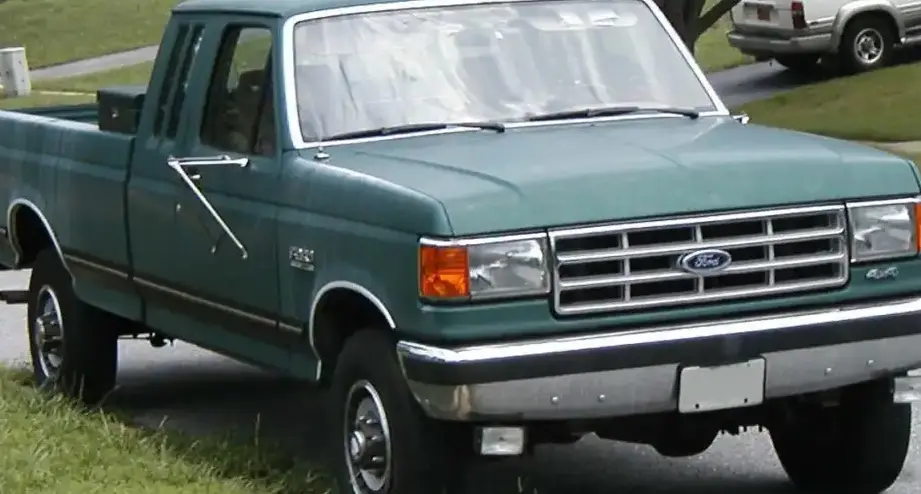
The Ford F-Series F-250 VIII SuperCab HD, equipped with the 7.5-liter 460 cubic inch V8 engine producing 230 horsepower and paired with a four-speed automatic transmission, was a significant offering in Ford’s heavy-duty truck lineup from 1988 to 1991. This variant occupied a middle ground within the F-250 range, providing a balance between capability and affordability for buyers needing a robust work truck. It was part of the eighth generation (F-Series VIII) of the Ford F-Series, known for its increased refinement and durability compared to earlier models. The SuperCab configuration offered expanded rear seating, making it a more versatile option for families or crews.
Technical Specifications
| Brand | Ford |
| Model | F-Series F-250 |
| Generation | F-Series F-250 VIII SuperCab HD |
| Type (Engine) | 7.5 460 V8 (230 Hp) 4×4 Automatic |
| Start of production | 1988 |
| End of production | 1991 |
| Powertrain Architecture | Internal Combustion engine |
| Body type | Pick-up |
| Seats | 6 |
| Doors | 2 |
| Fuel Type | Petrol (Gasoline) |
| Power | 230 Hp @ 3600 rpm |
| Power per litre | 30.5 Hp/l |
| Torque | 529 Nm @ 2200 rpm / 390.17 lb.-ft. @ 2200 rpm |
| Engine layout | Front, Longitudinal |
| Engine displacement | 7538 cm3 / 460 cu. in. |
| Number of cylinders | 8 |
| Engine configuration | V-engine |
| Piston Stroke | 97.79 mm / 3.85 in. |
| Compression ratio | 8.5:1 |
| Fuel injection system | Multi-port manifold injection |
| Engine aspiration | Naturally aspirated engine |
| Max. weight | 3992 kg / 8800.85 lbs |
| Fuel tank capacity | 141 l / 37.25 US gal | 31.02 UK gal |
| Length | 5895 mm / 232.09 in. |
| Width | 1778 mm / 70 in. |
| Height | 1956 mm / 77.01 in. |
| Wheelbase | 3937 mm / 155 in. |
| Wading depth | 914 mm / 35.98 in. |
| Drivetrain Architecture | The Internal combustion engine (ICE) drives the rear wheels permanently, and the front wheels are driven through an electrically or mechanically operated clutch if necessary. |
| Drive wheel | All wheel drive (4×4) |
| Number of gears and type of gearbox | 4 gears, automatic transmission |
| Front suspension | Leaf spring |
| Rear suspension | Leaf spring |
| Front brakes | Disc |
| Rear brakes | Drum |
| Power steering | Electric Steering |
| Tires size | 235/85 R16 |
| Wheel rims size | 16 |
Powertrain & Engine Architecture
The heart of this F-250 variant was the 7.5-liter (460 cubic inch) Ford 385 series V8 engine. This engine, designated internally as the 460, was a long-stroke design known for its substantial low-end torque. The 1988-1991 versions utilized a multi-port fuel injection system, a significant upgrade from the carburetor-equipped earlier models, improving fuel efficiency and throttle response. The engine featured a cast iron block and heads, contributing to its durability. The 230 horsepower rating at 3600 rpm and 390 lb-ft of torque at 2200 rpm provided ample power for towing and hauling. The four-speed automatic transmission (typically a Ford C6) was chosen for its robustness and ability to handle the engine’s torque output. While not the most technologically advanced transmission, it was well-suited for the truck’s intended purpose.
Driving Characteristics
The F-250 with the 460 V8 and automatic transmission offered a comfortable, albeit not particularly sporty, driving experience. The automatic transmission, while reliable, wasn’t known for quick shifts. Acceleration was adequate, but the truck’s weight and the transmission’s gearing prioritized towing capacity over outright speed. Compared to the available manual transmission options, the automatic reduced driver fatigue, especially in stop-and-go traffic or during long hauls. The 4×4 system provided enhanced traction in challenging conditions, making it suitable for both work and recreational use. The leaf spring suspension, while providing a stable ride when loaded, could be somewhat harsh when the truck was empty.
Equipment & Trim Levels
The SuperCab configuration added a second row of seats, increasing passenger capacity to six. Standard features typically included a basic AM/FM radio, vinyl upholstery, and manual windows and locks. The F-250 was generally offered in a range of trim levels, with the base model being fairly spartan. Optional extras included air conditioning, power windows and locks, a tilt steering wheel, and upgraded sound systems. The interior was designed for practicality and durability rather than luxury. The dashboard layout was straightforward, with easily accessible controls.
Chassis & Braking
The F-250’s chassis was a traditional body-on-frame construction, providing a robust foundation for heavy-duty use. The front suspension utilized leaf springs, while the rear suspension also employed leaf springs, designed to handle substantial loads. The braking system featured disc brakes on the front axle and drum brakes on the rear. Power steering was standard, making maneuvering the large truck easier. The 235/85 R16 tires were chosen for their durability and load-carrying capacity. The truck’s substantial weight and relatively simple braking system meant that stopping distances were longer than those of more modern vehicles.
Market Reception & Comparison
The F-250 with the 460 V8 and automatic transmission was well-received by buyers who needed a capable and reliable work truck. Critics generally praised the engine’s torque and the truck’s overall durability. However, the automatic transmission was sometimes criticized for its lack of responsiveness. Compared to the smaller 302 cubic inch V8 engine option, the 460 provided significantly more power and towing capacity. Compared to the later introduction of diesel engines in the F-250 lineup, the 460 offered a lower initial cost but suffered from lower fuel economy. The 460 was also seen as less complex to maintain than the diesel options.
Legacy
The 460 V8 engine, in general, has a reputation for being a durable and relatively easy-to-maintain powerplant. While not the most fuel-efficient engine, it remains a popular choice among truck enthusiasts. The F-250 SuperCab HD with the 460 V8 and automatic transmission has become a sought-after classic truck, particularly among those looking for a capable and reliable workhorse. Today, well-maintained examples command reasonable prices in the used car market. Common issues with these trucks include rust, worn suspension components, and potential carburetor problems (in earlier models). However, parts availability remains good, making it relatively easy to keep these trucks on the road. The combination of a spacious cabin, robust powertrain, and four-wheel drive capability ensures that this F-250 variant continues to be appreciated by truck enthusiasts and working professionals alike.