
Technical Specifications
| Brand | Audi |
| Model | Q2 |
| Generation | Q2 |
| Type (Engine) | 1.6 TDI (116 Hp) Edition 1 |
| Start of production | 2016 |
| End of production | 2018 |
| Powertrain Architecture | Internal Combustion engine |
| Body type | SUV |
| Seats | 5 |
| Doors | 5 |
| Fuel consumption (urban) | 4.9-5.0 l/100 km (48-47 US mpg, 57.6-56.5 UK mpg, 20.4-20 km/l) |
| Fuel consumption (extra urban) | 4.1-4.4 l/100 km (57.4-53.5 US mpg, 68.9-64.2 UK mpg, 24.4-22.7 km/l) |
| Fuel consumption (combined) | 4.4-4.6 l/100 km (53.5-51.1 US mpg, 64.2-61.4 UK mpg, 22.7-21.7 km/l) |
| CO2 emissions | 114-120 g/km |
| Fuel Type | Diesel |
| Acceleration 0 – 100 km/h | 10.3 sec |
| Acceleration 0 – 62 mph | 10.3 sec |
| Acceleration 0 – 60 mph | 9.8 sec |
| Maximum speed | 197 km/h (122.41 mph) |
| Emission standard | Euro 6 |
| Weight-to-power ratio | 11.3 kg/Hp, 88.5 Hp/tonne |
| Weight-to-torque ratio | 5.2 kg/Nm, 190.8 Nm/tonne |
| Power | 116 Hp @ 3250-4000 rpm |
| Power per litre | 72.6 Hp/l |
| Torque | 250 Nm @ 1500-3200 rpm (184.39 lb.-ft. @ 1500-3200 rpm) |
| Engine layout | Front, Transverse |
| Engine Model/Code | DDYA |
| Engine displacement | 1598 cm3 (97.52 cu. in.) |
| Number of cylinders | 4 |
| Engine configuration | Inline |
| Cylinder Bore | 79.5 mm (3.13 in.) |
| Piston Stroke | 80.5 mm (3.17 in.) |
| Compression ratio | 16.2:1 |
| Number of valves per cylinder | 4 |
| Fuel injection system | Diesel Commonrail |
| Engine aspiration | Turbocharger, Intercooler |
| Engine oil capacity | 4.7 l (4.97 US qt | 4.14 UK qt) |
| Coolant | 8 l (8.45 US qt | 7.04 UK qt) |
| Kerb Weight | 1310 kg (2888.06 lbs.) |
| Max. weight | 1870 kg (4122.64 lbs.) |
| Max load | 560 kg (1234.59 lbs.) |
| Trunk (boot) space – minimum | 405 l (14.3 cu. ft.) |
| Trunk (boot) space – maximum | 1050 l (37.08 cu. ft.) |
| Fuel tank capacity | 50 l (13.21 US gal | 11 UK gal) |
| Max. roof load | 60 kg (132.28 lbs.) |
| Permitted trailer load with brakes (8%) | 1700 kg (3747.86 lbs.) |
| Permitted trailer load with brakes (12%) | 1500 kg (3306.93 lbs.) |
| Permitted trailer load without brakes | 690 kg (1521.19 lbs.) |
| Permitted towbar download | 75 kg (165.35 lbs.) |
| Length | 4191 mm (165 in.) |
| Width | 1794 mm (70.63 in.) |
| Height | 1508 mm (59.37 in.) |
| Wheelbase | 2601 mm (102.4 in.) |
| Front track | 1547 mm (60.91 in.) |
| Rear (Back) track | 1541 mm (60.67 in.) |
| Drag coefficient (Cd) | 0.31 |
| Minimum turning circle | 11.1 m (36.42 ft.) |
| Drivetrain Architecture | The Internal combustion engine (ICE) drives the front wheels of the vehicle. |
| Drive wheel | Front wheel drive |
| Number of gears and type of gearbox | 6 gears, manual transmission |
| Front suspension | Independent, type McPherson with coil spring and anti-roll bar |
| Rear suspension | Semi-independent, coil spring |
| Front brakes | Ventilated discs |
| Rear brakes | Disc |
| Assisting systems | ABS (Anti-lock braking system) |
| Steering type | Steering rack and pinion |
| Power steering | Electric Steering |
| Tires size | 205/60 R16; 215/60 R16; 215/55 R17; 215/50 R18; 235/40 R19 |
| Wheel rims size | 6.0 J x 16; 17; 18; 19 |
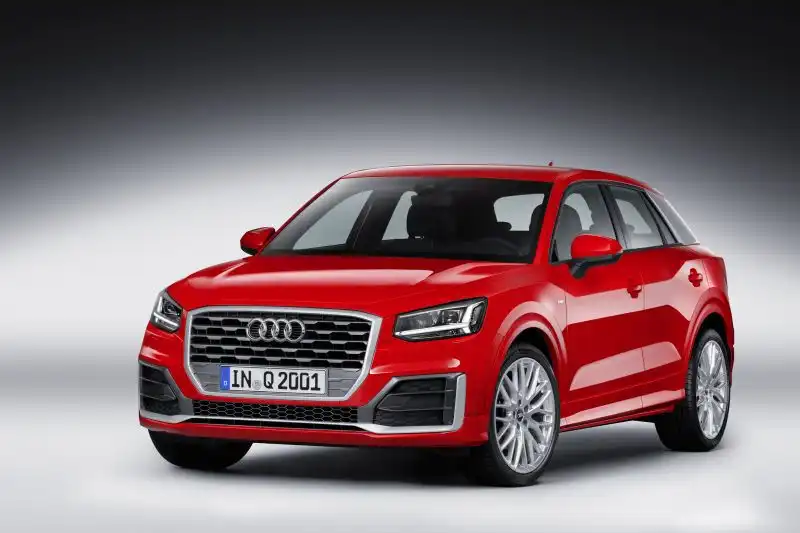
The Audi Q2 1.6 TDI Edition 1, launched in 2016, was a significant addition to Audi’s expanding SUV range. Built on the Volkswagen Group’s MQB platform (specifically the A05 variant), it represented Audi’s entry into the subcompact luxury crossover segment. The Edition 1 trim was a limited-run launch version, designed to generate initial excitement and showcase the Q2’s design and technology. It was primarily marketed in Europe, where demand for smaller, more efficient premium vehicles was high. The 1.6 TDI engine, coupled with a manual transmission, offered a balance of fuel economy and acceptable performance for urban and highway driving.
Powertrain & Engine Architecture
The Q2 1.6 TDI Edition 1 was powered by the Volkswagen Group’s DDYA engine, a 1.6-liter inline-four cylinder diesel engine. This engine utilized a common rail direct injection system, delivering fuel directly into the combustion chamber at extremely high pressure for improved efficiency and reduced emissions. The engine featured a turbocharger with an intercooler, boosting power output and torque. The valvetrain employed four valves per cylinder, optimizing gas flow for enhanced performance. The Edition 1 was exclusively offered with a six-speed manual transmission, prioritizing fuel economy and driver engagement over the convenience of an automatic. This transmission was known for its relatively smooth shifting and well-spaced gear ratios. The engine produced 116 horsepower at 3250-4000 rpm and 250 Nm (184 lb-ft) of torque between 1500-3200 rpm, providing adequate power for everyday driving.
Driving Characteristics
The 1.6 TDI engine, while not particularly powerful, provided sufficient performance for typical urban and highway driving. Acceleration from 0-60 mph took approximately 9.8 seconds, and the top speed was 122.41 mph. The manual transmission allowed for precise control over gear selection, enabling drivers to maximize fuel efficiency or extract more power when needed. The gear ratios were tuned for economy, meaning the engine could feel strained when accelerating quickly or climbing hills. Compared to higher-output Q2 variants, such as the 2.0 TDI, the 1.6 TDI offered a more relaxed driving experience, prioritizing comfort and fuel efficiency over outright performance. The front-wheel-drive configuration contributed to a lighter vehicle weight, further enhancing fuel economy but limiting traction in adverse weather conditions.
Equipment & Trim Levels
The Edition 1 trim level included a generous amount of standard equipment. Interior features typically included sport seats upholstered in a combination of cloth and leatherette, a leather-wrapped multi-function steering wheel, and Audi’s MMI infotainment system with a 5.8-inch display screen. Exterior features included unique 17-inch alloy wheels, contrasting roof arches in Manhattan Grey, and LED headlights. Optional extras available for the Edition 1 included a panoramic sunroof, navigation system, and advanced driver-assistance systems such as park assist and adaptive cruise control. The interior design was modern and minimalist, reflecting Audi’s design language at the time.
Chassis & Braking
The Q2 1.6 TDI Edition 1 featured a McPherson strut front suspension and a semi-independent torsion beam rear suspension. This setup provided a good balance of ride comfort and handling. The front suspension incorporated a stabilizer bar to reduce body roll during cornering. The braking system consisted of ventilated discs at the front and solid discs at the rear, providing adequate stopping power for the vehicle’s weight and performance. Anti-lock braking system (ABS) was standard, enhancing safety and stability during emergency braking situations. The steering was an electric power-assisted rack and pinion system, offering precise and responsive steering feel.
Market Reception & Comparison
The Audi Q2 1.6 TDI Edition 1 was generally well-received by automotive critics. It was praised for its stylish design, comfortable interior, and fuel efficiency. However, some critics noted that the 1.6 TDI engine lacked the power and refinement of larger engines offered in the Q2 lineup. Compared to the 2.0 TDI variants, the 1.6 TDI offered significantly lower running costs but compromised on performance. The manual transmission was appreciated by driving enthusiasts, but some buyers preferred the convenience of an automatic gearbox. Fuel economy was a key selling point, with the Q2 1.6 TDI achieving combined fuel consumption figures of around 53.5 mpg.
Legacy
The Audi Q2 1.6 TDI Edition 1 remains a popular choice in the used car market, particularly for buyers seeking a stylish and fuel-efficient subcompact SUV. The DDYA engine is generally considered reliable, although regular maintenance is essential to ensure longevity. Common issues include diesel particulate filter (DPF) clogging, particularly on vehicles used primarily for short journeys. The Q2’s modern design and well-equipped interior have helped it maintain its appeal over time. The Edition 1 trim, with its unique styling elements, is often sought after by collectors and enthusiasts. Overall, the Q2 1.6 TDI Edition 1 represents a solid entry point into the Audi brand, offering a blend of practicality, style, and efficiency.
