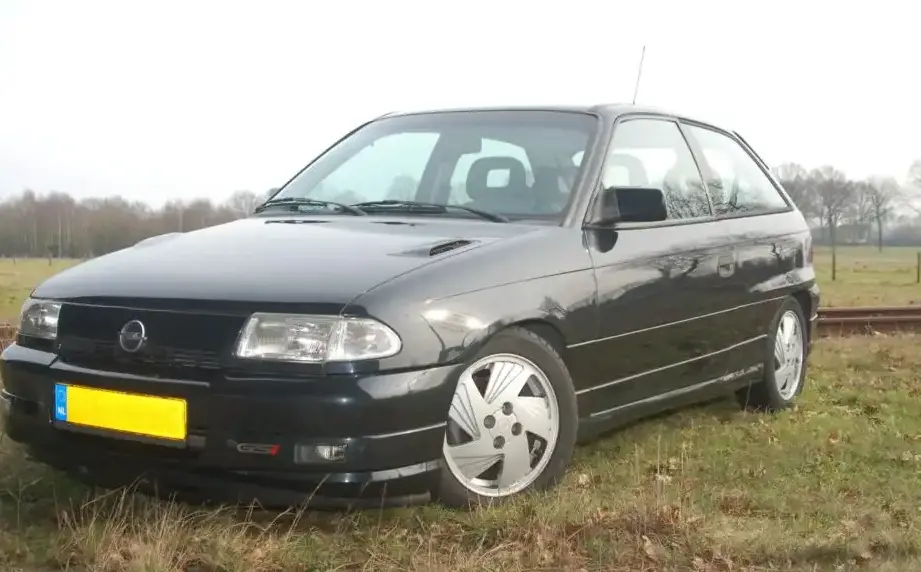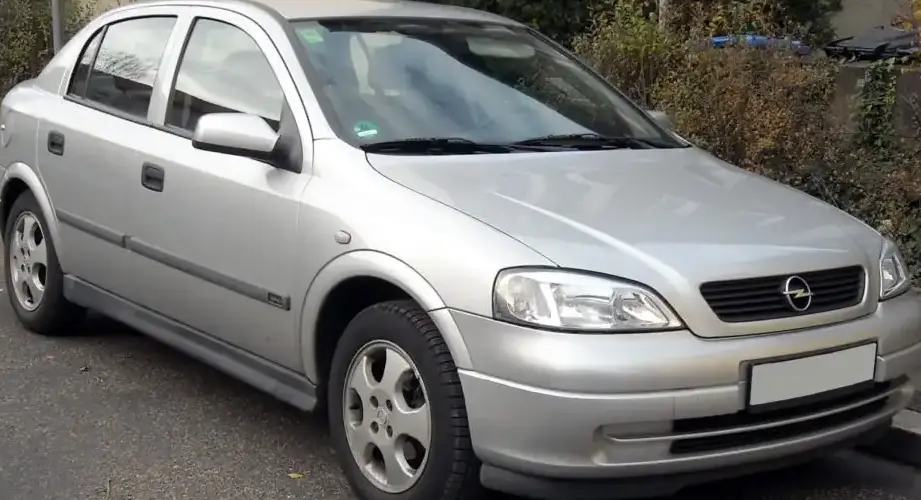
The Opel Astra G 1.8 Ecotec 16V, produced from March 1998 to June 2000, represented a significant step forward for Opel’s compact offering. Part of the G generation (1998-2004), this variant occupied a middle ground in the Astra lineup, offering a balance between performance and affordability. It was primarily marketed in Europe as a practical and relatively efficient family hatchback, available in both 3 and 5-door configurations. The Astra G was a crucial model for Opel, building on the success of its predecessor and establishing a strong presence in the competitive European C-segment.
Technical Specifications
| Brand | Opel |
| Model | Astra |
| Generation | Astra G |
| Type (Engine) | 1.8 Ecotec 16V (116 Hp) |
| Start of production | March, 1998 |
| End of production | June, 2000 |
| Powertrain Architecture | Internal Combustion engine |
| Body type | Hatchback |
| Seats | 5 |
| Doors | 3-5 |
| Fuel consumption (urban) | 10.9 l/100 km (21.6 US mpg, 25.9 UK mpg, 9.2 km/l) |
| Fuel consumption (extra urban) | 6 l/100 km (39.2 US mpg, 47.1 UK mpg, 16.7 km/l) |
| Fuel consumption (combined) | 7.8 l/100 km (30.2 US mpg, 36.2 UK mpg, 12.8 km/l) |
| CO2 emissions | 188 g/km |
| Fuel Type | Petrol (Gasoline) |
| Acceleration 0 – 100 km/h | 10 sec |
| Acceleration 0 – 62 mph | 10 sec |
| Acceleration 0 – 60 mph | 9.5 sec |
| Maximum speed | 200 km/h (124.27 mph) |
| Emission standard | Euro 2 |
| Weight-to-power ratio | 10 kg/Hp, 100.4 Hp/tonne |
| Weight-to-torque ratio | 6.8 kg/Nm, 147.2 Nm/tonne |
| Power | 116 Hp @ 5400 rpm |
| Power per litre | 64.6 Hp/l |
| Torque | 170 Nm @ 3400 rpm (125.39 lb.-ft. @ 3400 rpm) |
| Engine layout | Front, Transverse |
| Engine Model/Code | X18XE1 |
| Engine displacement | 1796 cm3 (109.6 cu. in.) |
| Number of cylinders | 4 |
| Engine configuration | Inline |
| Cylinder Bore | 80.5 mm (3.17 in.) |
| Piston Stroke | 88.2 mm (3.47 in.) |
| Compression ratio | 10.5:1 |
| Number of valves per cylinder | 4 |
| Fuel injection system | Multi-port manifold injection |
| Engine aspiration | Naturally aspirated engine |
| Valvetrain | DOHC |
| Engine oil capacity | 4.25 l (4.49 US qt | 3.74 UK qt) |
| Coolant | 6.3 l (6.66 US qt | 5.54 UK qt) |
| Kerb Weight | 1155 kg (2546.34 lbs.) |
| Max. weight | 1665 kg (3670.7 lbs.) |
| Max load | 510 kg (1124.36 lbs.) |
| Trunk (boot) space – minimum | 370 l (13.07 cu. ft.) |
| Trunk (boot) space – maximum | 1180 l (41.67 cu. ft.) |
| Fuel tank capacity | 52 l (13.74 US gal | 11.44 UK gal) |
| Max. roof load | 100 kg (220.46 lbs.) |
| Permitted towbar download | 75 kg (165.35 lbs.) |
| Length | 4110 mm (161.81 in.) |
| Width | 1709 mm (67.28 in.) |
| Width including mirrors | 1989 mm (78.31 in.) |
| Height | 1425 mm (56.1 in.) |
| Wheelbase | 2606 mm (102.6 in.) |
| Front track | 1464 mm (57.64 in.) |
| Rear (Back) track | 1452 mm (57.17 in.) |
| Front overhang | 791 mm (31.14 in.) |
| Rear overhang | 713 mm (28.07 in.) |
| Ride height (ground clearance) | 130 mm (5.12 in.) |
| Drag coefficient (Cd) | 0.28 |
| Minimum turning circle | 10.8 m (35.43 ft.) |
| Drivetrain Architecture | The Internal combustion engine (ICE) drives the front wheels of the vehicle. |
| Drive wheel | Front wheel drive |
| Number of gears and type of gearbox | 5 gears, manual transmission |
| Front suspension | Independent, type McPherson with coil spring and anti-roll bar |
| Rear suspension | Semi-independent, coil spring |
| Front brakes | Ventilated discs |
| Rear brakes | Disc |
| Assisting systems | ABS (Anti-lock braking system) |
| Steering type | Steering rack and pinion |
| Power steering | Hydraulic Steering |
| Tires size | 195/60 R15; 205/50 R16 |
| Wheel rims size | 6.5J x 15 ET45; 6.5J x 16 ET49 |
Powertrain & Engine Architecture
The heart of the Astra G 1.8 Ecotec was the X18XE1 engine, a 1.8-liter (1796 cc) inline-four cylinder powerplant. This engine featured a dual overhead camshaft (DOHC) valvetrain with four valves per cylinder, contributing to its relatively high output for its displacement. The ‘Ecotec’ designation signified Opel’s focus on fuel efficiency and reduced emissions. The X18XE1 utilized multi-port fuel injection, delivering fuel directly into the intake ports. This system, combined with the engine’s design, aimed for a balance between power delivery and fuel economy. The engine produced 116 horsepower at 5400 rpm and 170 Nm (125 lb-ft) of torque at 3400 rpm. The engine was transversely mounted, driving the front wheels. The standard transmission for this variant was a five-speed manual, though a four-speed automatic transmission was also available, albeit less common.
Driving Characteristics
The 1.8 Ecotec with the five-speed manual transmission offered a reasonably engaging driving experience. Acceleration from 0-60 mph took around 9.5 seconds, and top speed was approximately 124 mph. While not a sports car, the engine provided adequate power for everyday driving and overtaking maneuvers. The automatic transmission, while offering convenience, noticeably dulled performance, extending the 0-60 mph time to around 10 seconds. The gear ratios in the automatic were tuned for fuel efficiency rather than outright acceleration. The Astra G’s suspension provided a comfortable ride, absorbing bumps and imperfections in the road well. Steering was precise and responsive, making the car easy to maneuver in urban environments.
Equipment & Trim Levels
The 1.8 Ecotec variant typically came equipped with features considered standard for the time, including power steering, central locking, electric front windows, and an anti-lock braking system (ABS). Higher trim levels, such as the ‘Comfort’ or ‘Elegance’ packages, added features like air conditioning, alloy wheels, a CD player, and upgraded interior trim. Interior upholstery was typically cloth, with options for upgraded materials on higher-spec models. The dashboard layout was functional and straightforward, prioritizing usability over flashy design.
Chassis & Braking
The Astra G utilized an independent McPherson strut suspension setup at the front, providing good handling and ride comfort. The rear suspension was a semi-independent torsion beam arrangement, a cost-effective solution that offered a reasonable compromise between handling and space efficiency. Braking consisted of ventilated discs at the front and solid discs at the rear. The ABS system helped to maintain control during emergency braking situations. The chassis was designed to provide a stable and predictable driving experience, with a focus on safety and practicality.
Market Reception & Comparison
The Astra G 1.8 Ecotec was generally well-received by automotive critics. It was praised for its comfortable ride, decent performance, and relatively fuel-efficient engine. However, some critics noted that the interior materials were not as refined as those found in some of its competitors. Compared to the more powerful 2.0-liter 16V and turbocharged variants, the 1.8 Ecotec offered a more affordable entry point into the Astra G range. The 1.8 was also seen as a more sensible option than the diesel models for drivers who primarily covered shorter distances. Fuel economy was competitive for its class, averaging around 30-36 mpg on the combined cycle.
Legacy
The Opel Astra G 1.8 Ecotec remains a relatively common sight on European roads today. The X18XE1 engine is known for its reliability, provided it is properly maintained. Common issues include oil leaks and occasional sensor failures. The availability of spare parts is good, and the engine is relatively easy to work on for experienced mechanics. In the used car market, the Astra G 1.8 Ecotec represents a good value proposition for buyers seeking a practical and affordable compact hatchback. Its blend of comfort, efficiency, and reliability has ensured its enduring popularity.