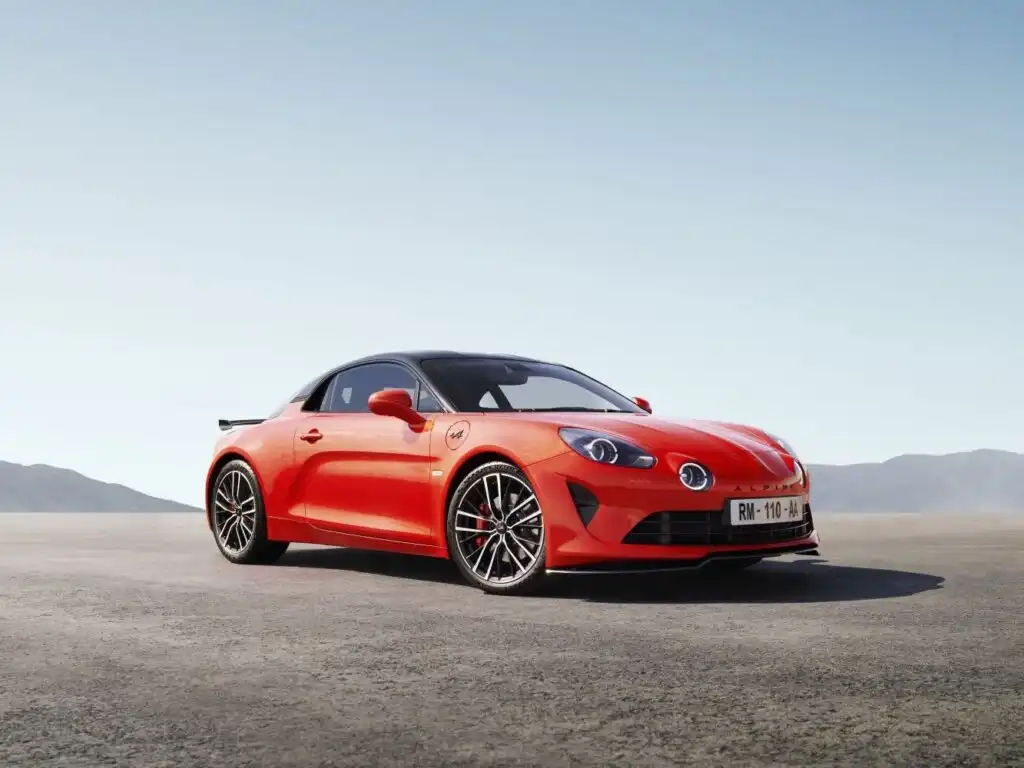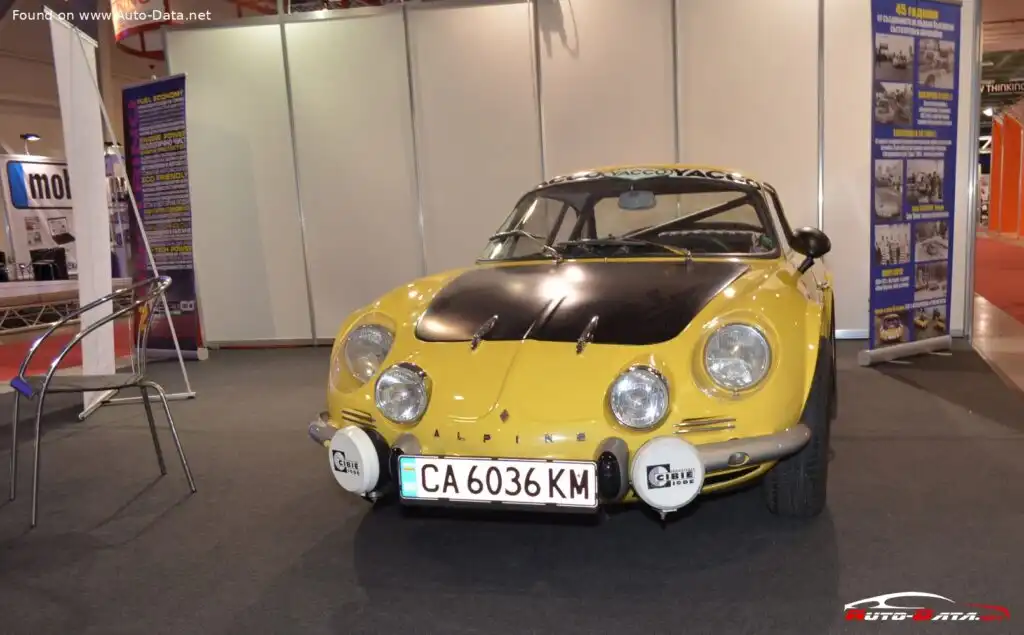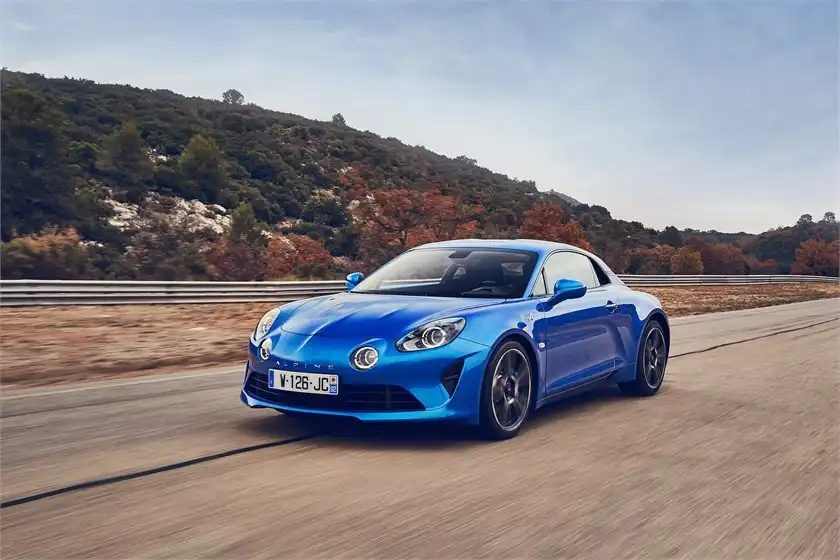
The Alpine A110 is a rear mid-engine, rear-wheel-drive sports car introduced by the French automobile manufacturer Alpine in 2017. The vehicle marked the relaunch of the Alpine brand, which had been dormant since 1995, and was developed as a modern reinterpretation of the original Alpine A110 produced from 1961 to 1977. The 2017 model, specifically the version equipped with the 1.8-litre turbocharged engine producing 252 Hp and paired with an automatic transmission, was designed to embody the core principles of its predecessor: light weight, compact dimensions, and exceptional agility. Its development was focused on delivering a pure and engaging driving experience, prioritizing handling dynamics over raw power, a philosophy that positioned it as a unique contender in the competitive sports car market.
History and Development
The revival of the Alpine brand was a long-term project for its parent company, Renault. Initial plans for a new sports car were formalized through a joint venture with Caterham Cars in 2012. Although the partnership was dissolved in 2014, Alpine continued the project independently, aiming to create a vehicle that would be a true spiritual successor to the legendary A110 Berlinette. The design and engineering teams were guided by the French principle of légèreté (lightness), which was paramount to the original car’s rally-winning success.
The car’s design was previewed by a series of concept vehicles, including the Alpine Célébration and the Alpine Vision Concept, which were met with positive reception for their faithful yet modern interpretation of the classic A110’s styling cues. The final production version was unveiled at the 2017 Geneva Motor Show, staying remarkably true to the concepts. The initial launch model was the Première Édition, a limited run of 1,955 units—a number chosen to commemorate the year Alpine was founded by Jean Rédélé. This launch edition was mechanically identical to the standard model that followed, featuring the 1.8-litre, 252 Hp engine that would define the first phase of the car’s production life, which concluded in late 2021 before a model range update.
Design and Construction
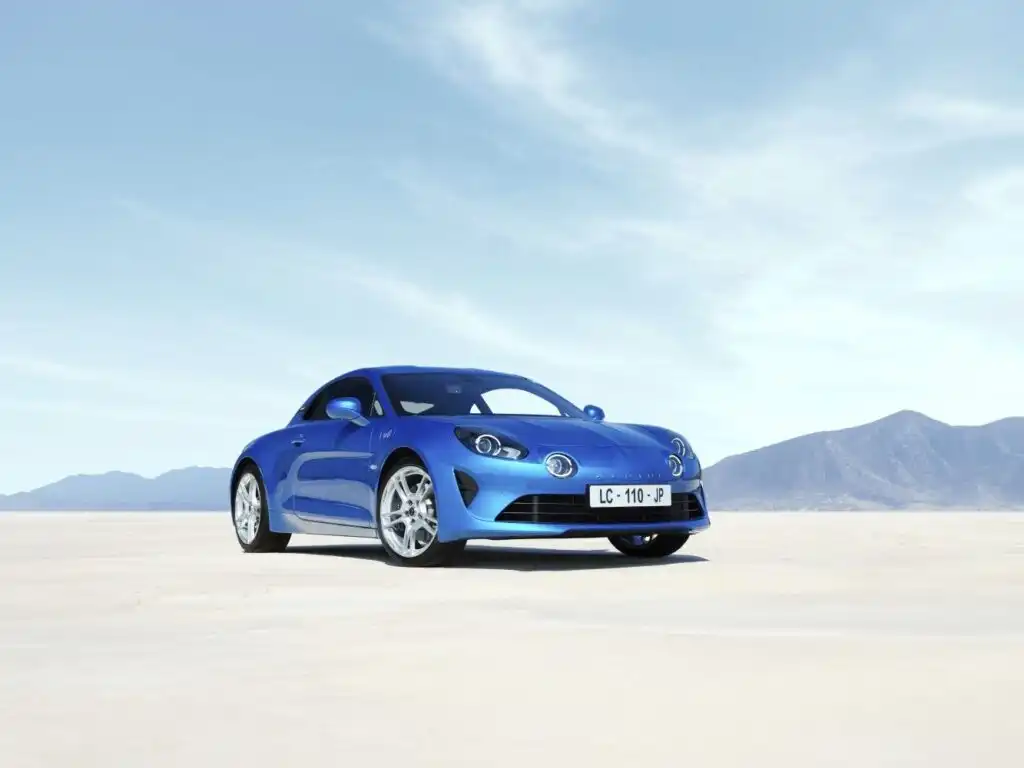
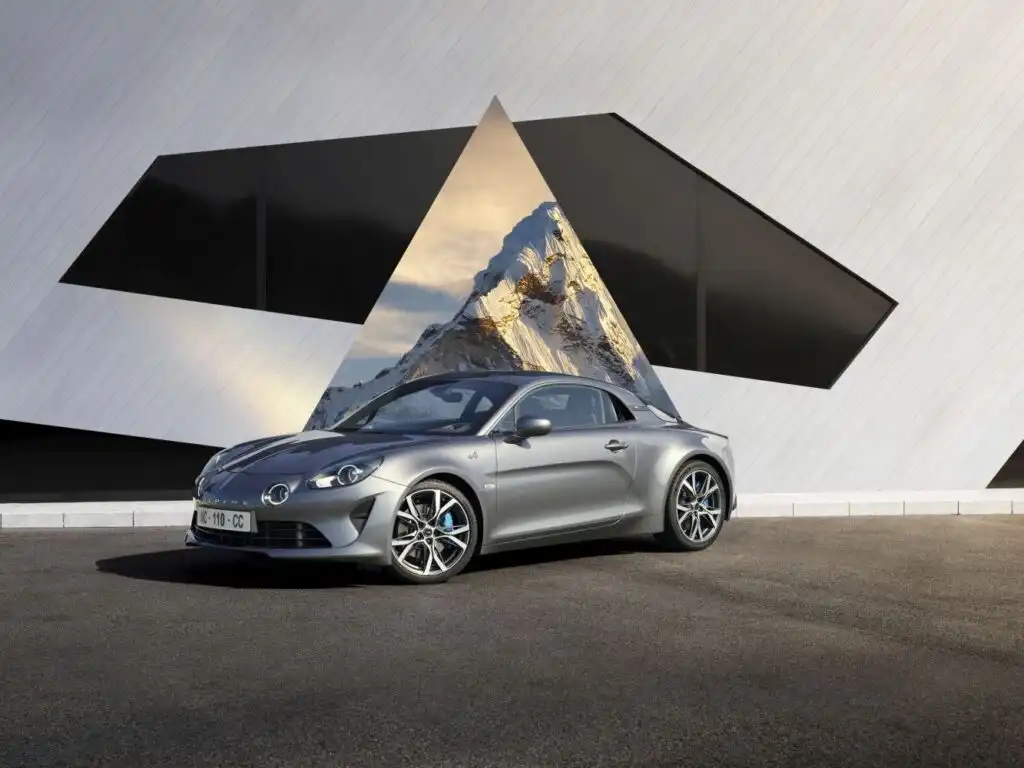
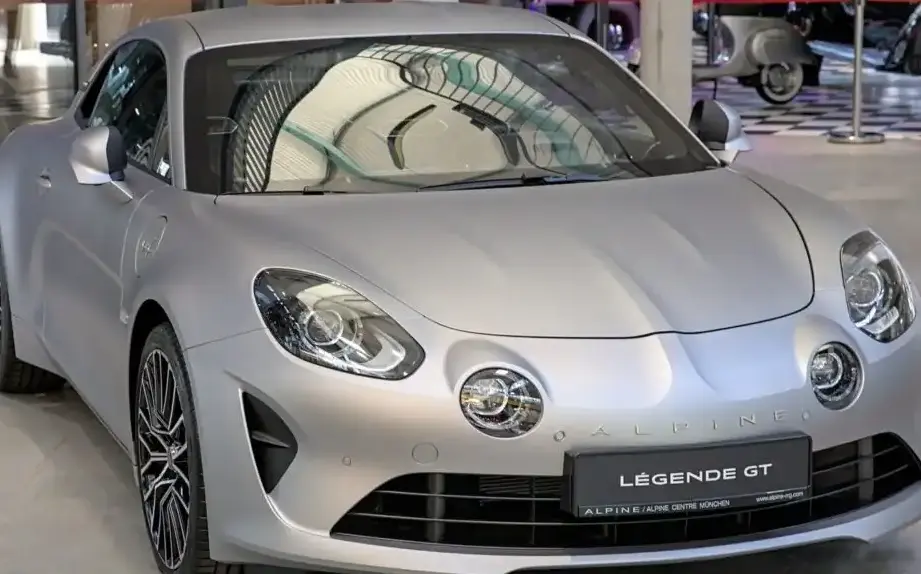
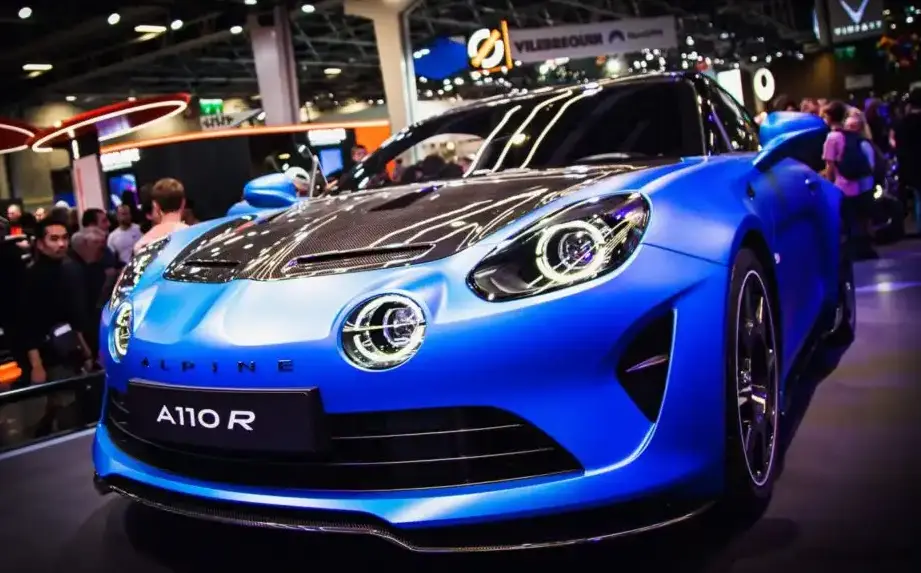
The exterior design of the Alpine A110 is a masterful blend of retro-futuristic styling. It directly references the original A110 with its distinctive four-headlamp front fascia, a central spine on the bonnet, sculpted side panels, and a wrap-around rear windscreen. Despite these classic cues, the vehicle is thoroughly modern in its execution, with sleek lines and an aerodynamically optimized profile. A key feature of its aerodynamic design is a completely flat underbody and a functional rear diffuser, which together generate significant downforce. This clever engineering eliminates the need for a large rear spoiler, preserving the clean and historic silhouette of the car. The drag coefficient (Cd) is a respectable 0.32, balancing aerodynamic efficiency with the downforce required for high-speed stability.
The interior is driver-focused and minimalist, reflecting the car’s performance-oriented nature. It features two Sabelt lightweight bucket seats, each weighing only 13.1 kg, which contribute to the overall weight-saving ethos. High-quality materials such as leather, microfiber, and exposed aluminum are used throughout the cabin, creating a premium yet functional environment. The digital instrument cluster and a central touchscreen infotainment system provide modern conveniences without cluttering the cockpit.
The heart of the A110’s dynamic prowess lies in its advanced construction. The chassis and body are made almost entirely of aluminum, which is bonded and riveted for exceptional rigidity and low mass. This construction technique allows the A110 to achieve a remarkably low kerb weight of just 1,103 kg (2,431.7 lbs). The fuel tank is located behind the front axle, and the engine is mounted in a mid-rear position, resulting in an optimal weight distribution of 44% front and 56% rear. This balance is crucial for the car’s agile and responsive handling characteristics.
Powertrain and Performance of the Alpine A110
The 2017 Alpine A110 is powered by a 1.8-litre (1800 cm³) turbocharged four-cylinder engine, designated M5P. This all-aluminum, direct-injection engine is a derivative of the powertrain used in other Renault-Nissan-Mitsubishi Alliance vehicles but was extensively reworked by Alpine engineers with a specific air intake, turbocharger, and exhaust system. In this application, the engine is mounted transversely and produces a maximum power of 252 Hp (188 kW; 249 bhp) at 6,000 rpm and a peak torque of 320 Nm (236 lb-ft) available from a low 2,000 rpm. This results in a potent power-per-litre figure of 140 Hp/l.
Power is sent exclusively to the rear wheels through a 7-speed dual-clutch automatic transmission (DCT) manufactured by Getrag. This gearbox was chosen for its rapid shift times and efficiency, and it features wet clutches for enhanced durability. It offers several driving modes (Normal, Sport, and Track), which alter the engine mapping, steering feel, exhaust note, and transmission shift logic to suit driver preference.
The combination of a potent engine, a quick-shifting gearbox, and an extremely low kerb weight results in exhilarating performance. The Alpine A110 accelerates from 0 to 100 km/h (62 mph) in just 4.5 seconds. Its top speed is electronically limited to 250 km/h (155 mph). Beyond the raw numbers, the car’s performance is defined by its impressive power-to-weight ratio of 228.5 Hp per tonne and a torque-to-weight ratio of 290.1 Nm per tonne. This allows for instantaneous throttle response and strong in-gear acceleration, making the A110 feel lively and energetic at all speeds. Despite its performance capabilities, the vehicle remains relatively efficient, with a combined fuel consumption of 6.1 l/100 km and CO2 emissions of 138 g/km.
Driving Dynamics
The suspension system is a critical component of the A110’s celebrated handling. Unlike many competitors in its class that use MacPherson struts, the A110 features a sophisticated double-wishbone suspension setup at both the front and rear axles. This design provides superior control over wheel camber during cornering, maximizing the tire’s contact patch with the road and enhancing grip and stability. The suspension is tuned for a balance of agility and compliance, making the car capable on twisty roads while remaining comfortable enough for daily use.
Braking is handled by 320 mm ventilated discs at all four corners, with Brembo calipers providing strong and consistent stopping power. The steering is an electrically assisted rack-and-pinion system that has been praised for its directness and feedback, connecting the driver intimately with the front wheels. The vehicle is fitted with Michelin Pilot Sport 4 tires specifically developed for the car, with a size of 205/40 R18 on the front wheels and a wider 235/40 R18 at the rear to effectively transmit power to the road. This carefully engineered combination of chassis, suspension, and steering creates a driving experience that is playful, intuitive, and immensely rewarding.
Technical Specifications
| Specification | Value |
| ——————————– | —————————————————————— |
| General Information | |
| Brand | Alpine |
| Model | A110 |
| Generation | A110 (2017) |
| Engine Type | 1.8 (252 Hp) Automatic |
| Production Start | 2017 |
| Production End | November 2021 |
| Powertrain Architecture | Internal Combustion Engine (ICE) |
| Body Type | Coupé |
| Seats | 2 |
| Doors | 2 |
| Performance | |
| Fuel Consumption (Combined) | 6.1 l/100 km (38.6 US mpg / 46.3 UK mpg) |
| CO2 Emissions | 138 g/km |
| Fuel Type | Petrol (Gasoline) |
| Acceleration 0-100 km/h | 4.5 seconds |
| Maximum Speed | 250 km/h (155.34 mph) |
| Power-to-Weight Ratio | 228.5 Hp/tonne |
| Torque-to-Weight Ratio | 290.1 Nm/tonne |
| Engine | |
| Power | 252 Hp @ 6000 rpm |
| Torque | 320 Nm @ 2000 rpm |
| Engine Layout | Mid-engine, Transverse |
| Engine Model/Code | M5P |
| Engine Displacement | 1798 cm³ (1.8 L) |
| Number of Cylinders | 4 |
| Engine Configuration | Inline |
| Valves per Cylinder | 4 |
| Fuel System | Direct Injection |
| Aspiration | Turbocharger, Intercooler |
| Valvetrain | Dual Overhead Camshaft (DOHC) |
| Space, Volume, and Weights | |
| Kerb Weight | 1103 kg (2431.7 lbs) |
| Fuel Tank Capacity | 45 litres (11.89 US gal / 9.9 UK gal) |
| Dimensions | |
| Length | 4180 mm (164.57 in) |
| Width | 1798 mm (70.79 in) |
| Height | 1252 mm (49.29 in) |
| Wheelbase | 2420 mm (95.28 in) |
| Front Track | 1556 mm (61.26 in) |
| Rear Track | 1553 mm (61.14 in) |
| Drag Coefficient (Cd) | 0