
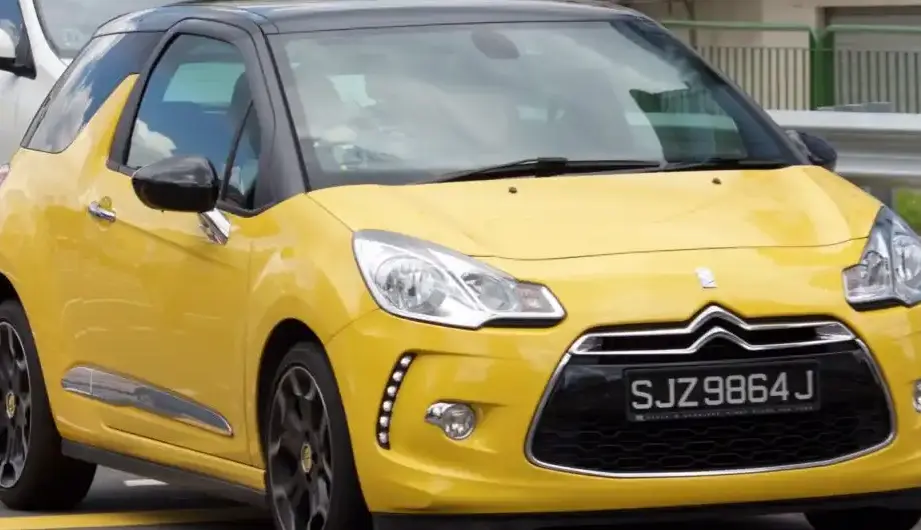
The Citroën DS 3 (Phase I) 1.6 HDi Airdream 110 hp variant, produced from 2009 to 2011, represented a key offering in Citroën’s attempt to capture a younger, more style-conscious audience. Positioned as a premium subcompact hatchback, the DS 3 aimed to blend distinctive design with efficient diesel power. This particular engine and transmission combination – the 1.6-liter HDi diesel paired with a 6-speed manual gearbox – served as a popular mid-range option within the DS 3 lineup, offering a balance between fuel economy, performance, and affordability. It was a crucial model for Citroën as they sought to establish the DS brand as a separate, more upscale entity within their broader portfolio.
Technical Specifications
| Brand | Citroën |
| Model | DS3 |
| Generation | DS 3 (Phase I) |
| Type (Engine) | 1.6 HDi Airdream (110 Hp) FAP |
| Start of production | 2009 |
| End of production | 2011 |
| Powertrain Architecture | Internal Combustion engine |
| Body type | Hatchback |
| Seats | 5 |
| Doors | 3 |
| Fuel consumption (urban) | 5.6 l/100 km (42 US mpg, 50.4 UK mpg, 17.9 km/l) |
| Fuel consumption (extra urban) | 3.4 l/100 km (69.2 US mpg, 83.1 UK mpg, 29.4 km/l) |
| Fuel consumption (combined) | 3.9 l/100 km (60.3 US mpg, 72.4 UK mpg, 25.6 km/l) |
| CO2 emissions | 118 g/km |
| Fuel Type | Diesel |
| Acceleration 0 – 100 km/h | 9.8 sec |
| Acceleration 0 – 62 mph | 9.8 sec |
| Acceleration 0 – 60 mph | 9.3 sec |
| Maximum speed | 190 km/h (118.06 mph) |
| Emission standard | Euro 5 |
| Weight-to-power ratio | 9.9 kg/Hp, 100.9 Hp/tonne |
| Weight-to-torque ratio | 4 kg/Nm, 247.7 Nm/tonne |
| Power | 110 Hp @ 3600 rpm |
| Power per litre | 70.5 Hp/l |
| Torque | 270 Nm @ 1750 rpm (199.14 lb.-ft. @ 1750 rpm) |
| Engine layout | Front, Transverse |
| Engine Model/Code | 9HR DV6C |
| Engine displacement | 1560 cm3 (95.2 cu. in.) |
| Number of cylinders | 4 |
| Engine configuration | Inline |
| Cylinder Bore | 75 mm (2.95 in.) |
| Piston Stroke | 88.3 mm (3.48 in.) |
| Fuel injection system | Diesel Commonrail |
| Engine aspiration | Turbocharger, Intercooler |
| Engine oil capacity | 3.75 l (3.96 US qt | 3.3 UK qt) |
| Kerb Weight | 1090 kg (2403.04 lbs.) |
| Max. weight | 1612 kg (3553.85 lbs.) |
| Max load | 522 kg (1150.81 lbs.) |
| Trunk (boot) space – minimum | 285 l (10.06 cu. ft.) |
| Trunk (boot) space – maximum | 980 l (34.61 cu. ft.) |
| Fuel tank capacity | 48 l (12.68 US gal | 10.56 UK gal) |
| Max. roof load | 70 kg (154.32 lbs.) |
| Permitted trailer load with brakes (12%) | 900 kg (1984.16 lbs.) |
| Permitted trailer load without brakes | 570 kg (1256.63 lbs.) |
| Permitted towbar download | 46 kg (101.41 lbs.) |
| Length | 3948 mm (155.43 in.) |
| Width | 1715 mm (67.52 in.) |
| Width including mirrors | 2004 mm (78.9 in.) |
| Height | 1458-1483 mm (57.4 – 58.39 in.) |
| Wheelbase | 2464 mm (97.01 in.) |
| Front track | 1465-1468 mm (57.68 – 57.8 in.) |
| Rear (Back) track | 1467-1471 mm (57.76 – 57.91 in.) |
| Front overhang | 824 mm (32.44 in.) |
| Rear overhang | 660 mm (25.98 in.) |
| Minimum turning circle (turning diameter) | 10.4 m (34.12 ft.) |
| Drivetrain Architecture | The Internal combustion engine (ICE) drives the front wheels of the vehicle. |
| Drive wheel | Front wheel drive |
| Number of gears and type of gearbox | 6 gears, manual transmission |
| Front suspension | Independent, type McPherson with coil spring and anti-roll bar |
| Rear suspension | Independent coil spring, Elastic beam |
| Front brakes | Ventilated discs |
| Rear brakes | Disc |
| Assisting systems | ABS (Anti-lock braking system) |
| Steering type | Steering rack and pinion |
| Power steering | Electric Steering |
| Tires size | 205/45 R17 |
| Wheel rims size | 17 |
Powertrain & Engine Architecture
The heart of this DS 3 variant is the PSA Group’s 9HR (DV6C) 1.6-liter four-cylinder diesel engine. This engine, a common sight in European vehicles of the era, is characterized by its robust construction and relatively simple design. It utilizes a common rail direct injection system, delivering fuel at extremely high pressure for optimized combustion. A turbocharger with an intercooler is employed to boost power output and improve torque across a wider rev range. The engine’s valvetrain features two overhead camshafts (DOHC) operating four valves per cylinder. The FAP (Filtre à Particules) or Diesel Particulate Filter, is a crucial component of the exhaust system, designed to trap soot particles and reduce emissions, meeting the stringent Euro 5 standards. The engine is transversely mounted at the front of the vehicle, driving the front wheels. The 6-speed manual transmission provides precise gear changes and contributes to the car’s overall efficiency.
Driving Characteristics
The 110 hp 1.6 HDi Airdream offered a respectable driving experience for a subcompact. While not overtly sporty, it provided sufficient power for everyday driving and highway cruising. The 270 Nm (199 lb-ft) of torque, available from a low 1750 rpm, meant that the DS 3 felt responsive in most situations, with good acceleration in the mid-range. The 6-speed manual transmission allowed drivers to keep the engine in its optimal power band. Compared to the more powerful petrol (gasoline) versions of the DS 3, the HDi offered superior fuel economy and a more relaxed driving style. However, it lacked the outright acceleration and engine responsiveness of the higher-output petrol engines. The gear ratios were tuned for efficiency, prioritizing fuel savings over outright performance.
Equipment & Trim Levels
The 1.6 HDi Airdream 110 hp typically came equipped with a reasonable level of standard features. These included air conditioning, electric front windows, a CD stereo system, and ABS brakes. Higher trim levels, such as Sport or Chic, added features like alloy wheels, automatic headlights, rain-sensing wipers, and a more premium interior trim. Interior upholstery was typically cloth, with options for leather upgrades. The dashboard layout was modern and functional, with a focus on ergonomics. Optional extras included a panoramic sunroof, navigation system, and parking sensors.
Chassis & Braking
The DS 3 (Phase I) utilized a McPherson strut front suspension and an elastic beam rear suspension. This setup provided a good balance between ride comfort and handling. The front suspension incorporated a stabilizer bar to reduce body roll during cornering. Braking duties were handled by ventilated discs at the front and solid discs at the rear. ABS (Anti-lock Braking System) was standard, enhancing braking performance and safety. The steering was electrically assisted, providing light and precise control.
Market Reception & Comparison
The Citroën DS 3 1.6 HDi Airdream 110 hp was generally well-received by automotive critics. It was praised for its stylish design, fuel efficiency, and comfortable ride. However, some critics noted that the engine could be a little noisy and that the interior, while well-designed, lacked the premium feel of some competitors. Compared to other trims in the DS 3 lineup, the HDi offered a compelling value proposition for buyers prioritizing fuel economy and low running costs. It was a direct competitor to models like the Mini Cooper Diesel and the Audi A1, offering a more affordable alternative with a distinctive French flair.
Legacy
The 1.6 HDi engine, in its various iterations, proved to be a reliable and durable powertrain. While the FAP (Diesel Particulate Filter) can require maintenance over time, the engine itself is generally known for its longevity. In the used car market, the DS 3 1.6 HDi Airdream 110 hp remains a popular choice, particularly for buyers seeking an economical and stylish city car. Its combination of fuel efficiency, practicality, and distinctive design continues to appeal to a wide range of drivers. The DS 3, and this variant in particular, played a significant role in establishing the DS brand as a credible alternative to premium German automakers.
