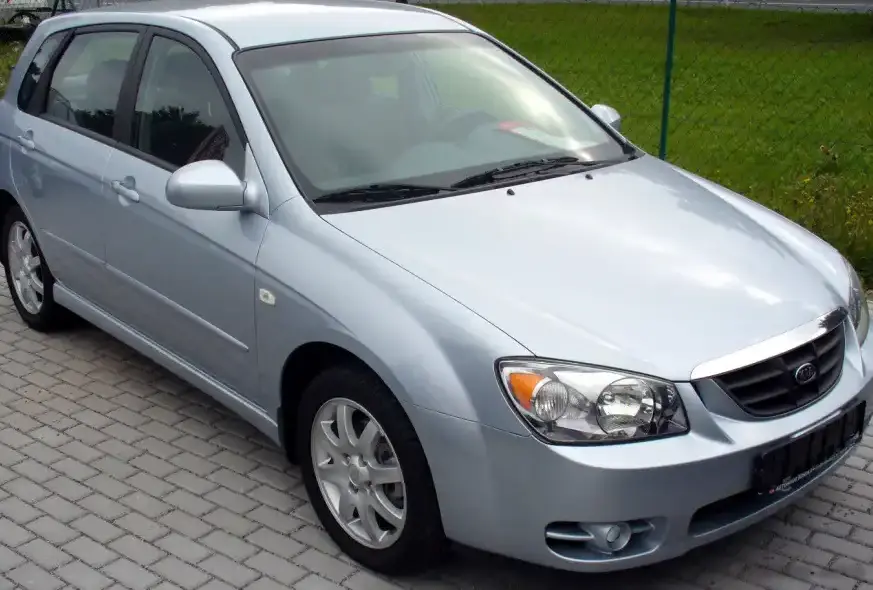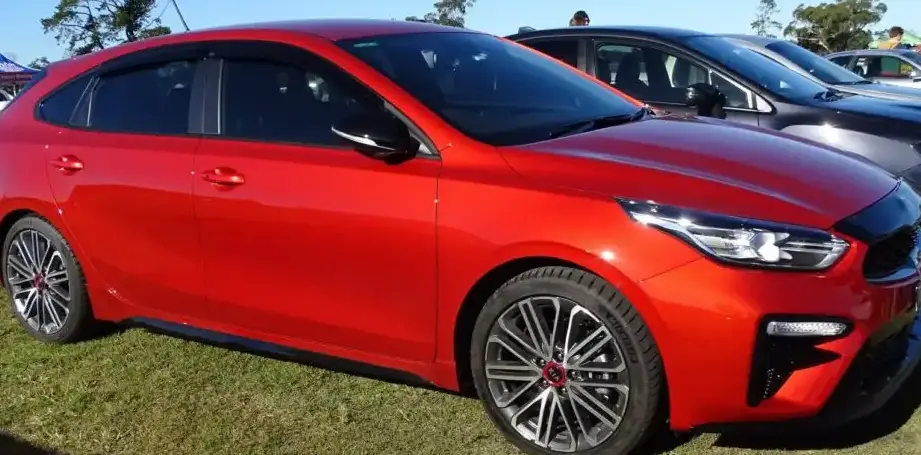
The Kia Cerato IV Hatchback, produced from January 2018 to May 2021, represented Kia’s entry into the competitive compact hatchback segment. This fourth generation of the Cerato (known as the K3 in some markets) aimed to offer a blend of practicality, style, and value. The 2.0 MPI (Multi-Point Injection) Automatic variant, powered by the Nu engine family, served as a mid-range offering, positioned above the base 1.6L engine and below any potential performance-oriented trims. It was primarily marketed towards buyers seeking a comfortable and well-equipped daily driver with a focus on ease of use, particularly in markets where manual transmissions were less popular.
Technical Specifications
| Brand | Kia |
| Model | Cerato |
| Generation | Cerato IV Hatchback |
| Type (Engine) | 2.0 MPI (152 Hp) Automatic |
| Start of production | January, 2018 |
| End of production | May, 2021 |
| Powertrain Architecture | Internal Combustion engine |
| Body type | Hatchback |
| Seats | 5 |
| Doors | 5 |
| Fuel consumption (urban) | 10.2 l/100 km (23.1 US mpg) |
| Fuel consumption (extra urban) | 5.7 l/100 km (41.3 US mpg) |
| Fuel consumption (combined) | 7.4 l/100 km (31.8 US mpg) |
| CO2 emissions | 167 g/km |
| Fuel Type | Petrol (Gasoline) |
| Emission standard | Euro 5 |
| Weight-to-power ratio | 8.4 kg/Hp |
| Weight-to-torque ratio | 6.6 kg/Nm |
| Power | 152 Hp @ 6200 rpm |
| Torque | 192 Nm @ 4000 rpm (141.61 lb.-ft. @ 4000 rpm) |
| Engine layout | Front, Transverse |
| Engine Model/Code | Nu / G4NH |
| Engine displacement | 1999 cm3 (121.99 cu. in.) |
| Number of cylinders | 4 |
| Engine configuration | Inline |
| Cylinder Bore | 81 mm (3.19 in.) |
| Piston Stroke | 97 mm (3.82 in.) |
| Compression ratio | 10.3:1 |
| Number of valves per cylinder | 4 |
| Fuel injection system | Multi-port manifold injection |
| Engine aspiration | Naturally aspirated engine |
| Valvetrain | DOHC, D-CVVT |
| Engine oil capacity | 4 l (4.23 US qt | 3.52 UK qt) |
| Coolant capacity | 5.4 l (5.71 US qt | 4.75 UK qt) |
| Kerb Weight | 1270 kg (2799.87 lbs.) |
| Trunk (boot) space – minimum | 428 l (15.11 cu. ft.) |
| Fuel tank capacity | 50 l (13.21 US gal | 11 UK gal) |
| Permitted trailer load with brakes (12%) | 1100 kg (2425.08 lbs.) |
| Permitted trailer load without brakes | 610 kg (1344.82 lbs.) |
| Length | 4510 mm (177.56 in.) |
| Width | 1800 mm (70.87 in.) |
| Height | 1445 mm (56.89 in.) |
| Wheelbase | 2700 mm (106.3 in.) |
| Ride height (ground clearance) | 140 mm (5.51 in.) |
| Minimum turning circle | 10.6 m (34.78 ft.) |
| Drivetrain Architecture | Front wheel drive |
| Number of gears and type of gearbox | 6 gears, automatic transmission |
| Front suspension | Independent type McPherson |
| Rear suspension | Torsion |
| Front brakes | Ventilated discs |
| Rear brakes | Disc |
| Tires size | 225/45 R17 91W |
| Wheel rims size | 7J x 17 ET50 |
Powertrain & Engine Architecture
The heart of the Cerato 2.0 MPI Automatic is the Kia-Hyundai Nu engine family, specifically the G4NH code. This 2.0-liter inline-four engine utilizes a naturally aspirated configuration and multi-point fuel injection. The engine features a double overhead camshaft (DOHC) valvetrain with Kia’s Dual Continuous Variable Valve Timing (D-CVVT) technology. D-CVVT optimizes valve timing based on engine load and speed, improving both performance and fuel efficiency. The engine produces 152 horsepower at 6,200 rpm and 192 Nm (141.61 lb-ft) of torque at 4,000 rpm. Paired with this engine is a conventional six-speed automatic transmission. This transmission, while not offering the lightning-fast shifts of dual-clutch transmissions, provides smooth and predictable gear changes, prioritizing comfort and ease of driving.
Driving Characteristics
The 2.0L engine and six-speed automatic combination delivers adequate, but not exhilarating, performance. Acceleration is sufficient for everyday driving situations, with a 0-60 mph time estimated around 9-10 seconds. The automatic transmission is tuned for fuel economy and comfort, meaning it doesn’t hold gears for long under hard acceleration. Compared to a manual transmission equipped Cerato, the automatic version feels slightly less responsive. However, it offers a more relaxed driving experience, particularly in stop-and-go traffic. The gear ratios are optimized for cruising, making it a comfortable highway companion. The 1.6L engine offered a more economical option, but at the expense of performance, while higher trim levels (if offered in some markets) might have featured more powerful engine options.
Equipment & Trim Levels
The 2.0 MPI Automatic trim typically included a respectable level of standard equipment. Features commonly found in this variant include air conditioning, power windows and locks, a touchscreen infotainment system with Apple CarPlay and Android Auto compatibility, a rearview camera, and basic safety features like ABS and stability control. Higher trim levels offered upgrades such as leather upholstery, a sunroof, automatic climate control, and advanced driver-assistance systems (ADAS) like lane departure warning and automatic emergency braking. Interior upholstery was generally cloth, with optional leather available. The dashboard layout was functional and modern, with a focus on user-friendliness.
Chassis & Braking
The Cerato IV Hatchback utilizes a front-wheel-drive layout with an independent McPherson strut suspension in the front and a torsion beam suspension in the rear. This suspension setup provides a comfortable ride quality, absorbing bumps and imperfections in the road reasonably well. The front brakes are ventilated discs, providing adequate stopping power, while the rear brakes are solid discs. The steering is electrically assisted, offering light and precise control. Stabilizer bars are included both front and rear to reduce body roll during cornering. The chassis is designed to balance comfort and handling, leaning more towards the former.
Market Reception & Comparison
The Kia Cerato IV Hatchback 2.0 MPI Automatic was generally well-received by automotive critics as a practical and value-oriented option. Reviewers praised its spacious interior, comfortable ride, and generous standard features. However, some criticized its somewhat bland styling and lack of engaging driving dynamics. Compared to rivals like the Honda Civic, Toyota Corolla, and Mazda3, the Cerato offered a more affordable price point, but often lacked the same level of refinement and driving enjoyment. Fuel economy was competitive within its class, but not class-leading. Reliability reports generally indicated good dependability, although long-term ownership costs were comparable to other vehicles in the segment.
Legacy
The Kia Cerato IV Hatchback 2.0 MPI Automatic has proven to be a relatively reliable vehicle in the used car market. The Nu engine family is known for its durability, and the six-speed automatic transmission has a good track record. Common maintenance items include routine oil changes, filter replacements, and occasional brake service. While not a particularly collectible vehicle, it represents a significant step forward for Kia in terms of design, quality, and features. Today, these Ceratos offer an affordable and practical transportation option for budget-conscious buyers seeking a well-equipped and dependable compact hatchback.