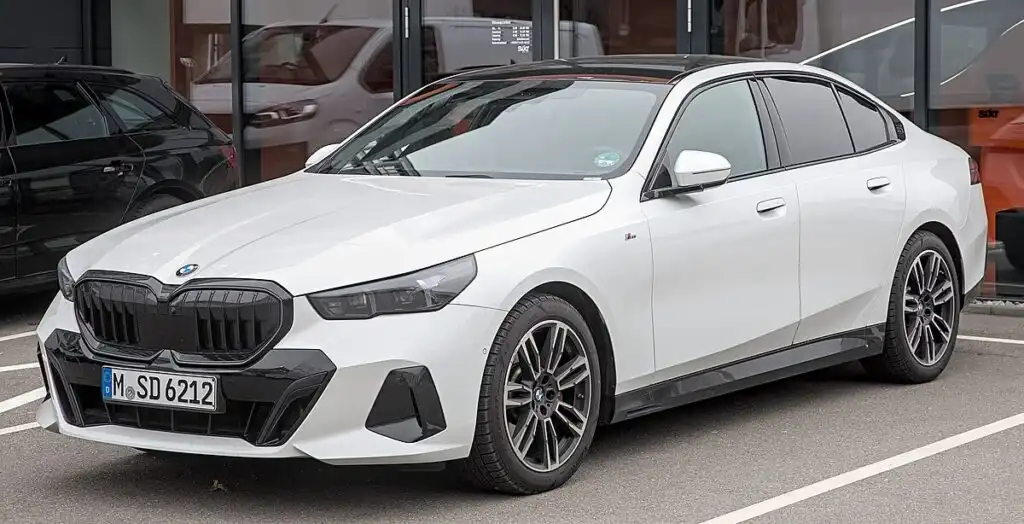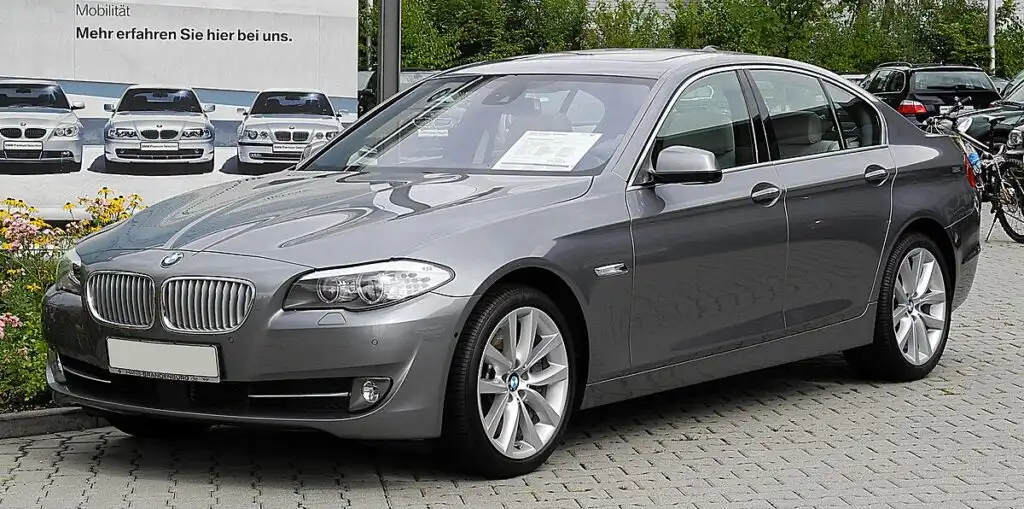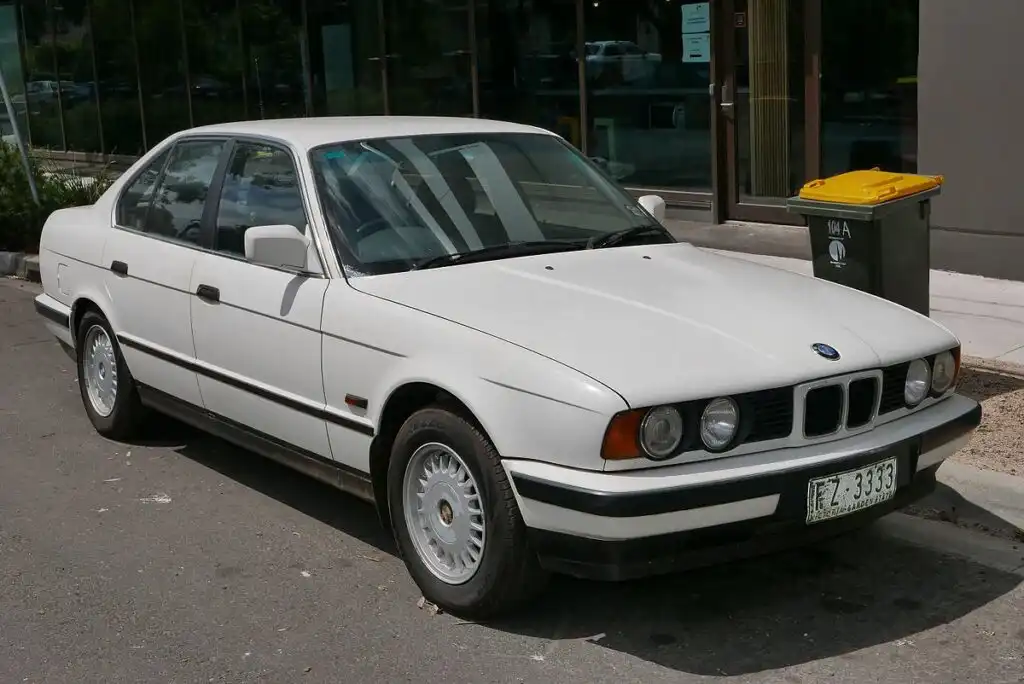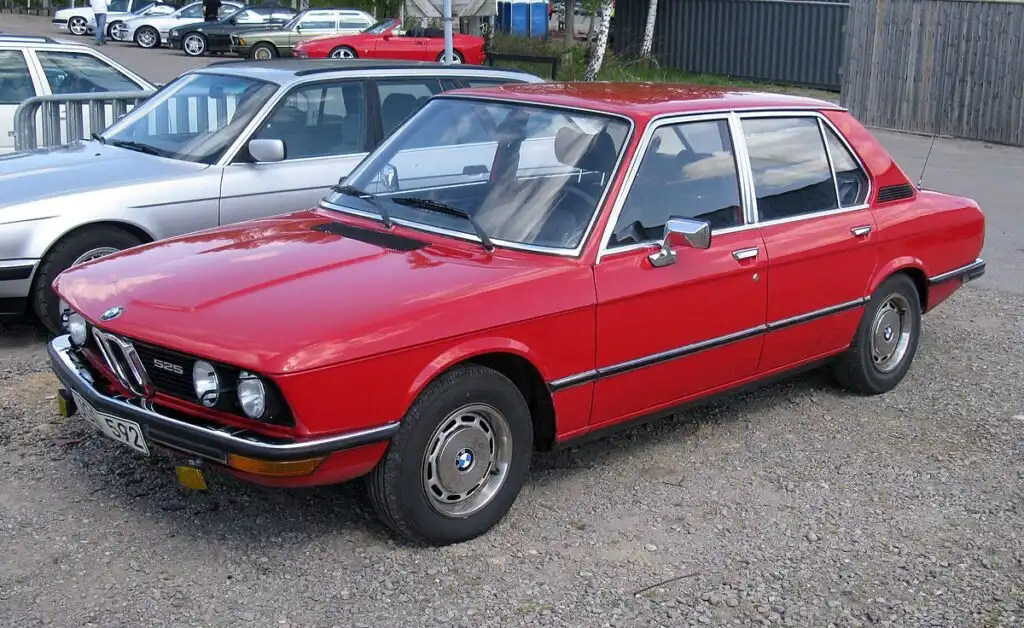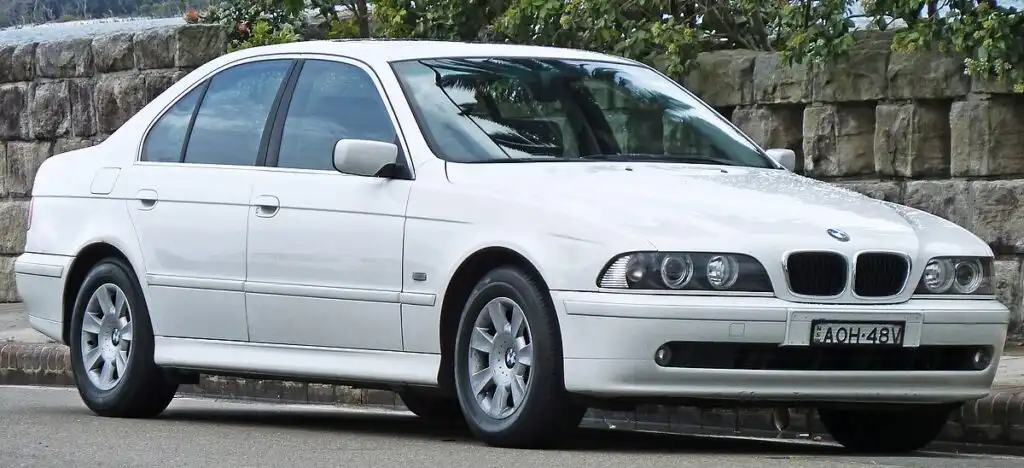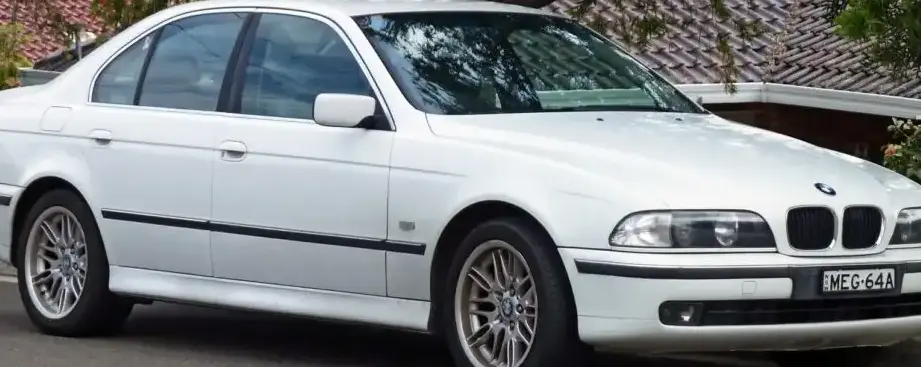
The BMW 5 Series E39 523i, produced from 1995 to 1998, represented a key entry point into the mid-size luxury sedan market for BMW. Positioned below the 528i and 540i, the 523i offered a balance of BMW’s renowned driving dynamics and a more accessible price point. It was part of the E39 generation (1995-2003), a platform celebrated for its build quality, handling, and relatively straightforward mechanical design compared to later BMW models. The 523i aimed to attract buyers who desired the prestige of the 5 Series badge without the higher costs associated with the larger, more powerful engines.
Technical Specifications
| Brand | BMW |
| Model | 5 Series |
| Generation | 5 Series (E39) |
| Type (Engine) | 523i (170 Hp) |
| Start of production | 1995 |
| End of production | 1998 |
| Powertrain Architecture | Internal Combustion engine |
| Body type | Sedan |
| Seats | 5 |
| Doors | 4 |
| Fuel consumption (urban) | 13.1 l/100 km (18 US mpg, 21.6 UK mpg) |
| Fuel consumption (extra urban) | 7.2 l/100 km (32.7 US mpg, 39.2 UK mpg) |
| Fuel Type | Petrol (Gasoline) |
| Acceleration 0 – 100 km/h | 8.5 sec |
| Acceleration 0 – 62 mph | 8.5 sec |
| Acceleration 0 – 60 mph | 8.1 sec |
| Maximum speed | 228 km/h (141.67 mph) |
| Weight-to-power ratio | 8.7 kg/Hp, 115.3 Hp/tonne |
| Weight-to-torque ratio | 6 kg/Nm, 166.1 Nm/tonne |
| Power | 170 Hp @ 5500 rpm |
| Power per litre | 68.2 Hp/l |
| Torque | 245 Nm @ 3950 rpm (180.7 lb.-ft. @ 3950 rpm) |
| Engine layout | Front, Longitudinal |
| Engine Model/Code | M52B25 |
| Engine displacement | 2494 cm3 (152.19 cu. in.) |
| Number of cylinders | 6 |
| Engine configuration | Inline |
| Cylinder Bore | 84 mm (3.31 in.) |
| Piston Stroke | 75 mm (2.95 in.) |
| Compression ratio | 10.5:1 |
| Number of valves per cylinder | 4 |
| Fuel injection system | Multi-port manifold injection |
| Engine aspiration | Naturally aspirated engine |
| Valvetrain | DOHC |
| Engine oil capacity | 6.5 l (6.87 US qt | 5.72 UK qt) |
| Coolant | 10.5 l (11.1 US qt | 9.24 UK qt) |
| Kerb Weight | 1475 kg (3251.82 lbs.) |
| Max. weight | 1985 kg (4376.18 lbs.) |
| Max load | 510 kg (1124.36 lbs.) |
| Trunk (boot) space – minimum | 460 l (16.24 cu. ft.) |
| Fuel tank capacity | 70 l (18.49 US gal | 15.4 UK gal) |
| Length | 4775 mm (187.99 in.) |
| Width | 1800 mm (70.87 in.) |
| Height | 1435 mm (56.5 in.) |
| Wheelbase | 2830 mm (111.42 in.) |
| Front track | 1516 mm (59.69 in.) |
| Rear (Back) track | 1530 mm (60.24 in.) |
| Drivetrain Architecture | The Internal combustion engine (ICE) drives the rear wheels of the vehicle. |
| Drive wheel | Rear wheel drive |
| Number of gears and type of gearbox | 5 gears, manual transmission |
| Front suspension | Wishbone |
| Rear suspension | Several levers and rods |
| Front brakes | Ventilated discs |
| Rear brakes | Disc |
| Assisting systems | ABS (Anti-lock braking system) |
| Steering type | Steering rack and pinion |
| Power steering | Hydraulic Steering |
| Tires size | 205/65 R15 |
| Wheel rims size | 15 |
Powertrain & Engine Architecture
The heart of the 523i was the M52B25, a 2.5-liter inline-six engine. This engine was a significant evolution of BMW’s long-standing six-cylinder tradition, known for its smoothness and responsiveness. The M52 featured a cast iron block with an aluminum cylinder head, dual overhead camshafts (DOHC), and four valves per cylinder. Fuel delivery was handled by a Bosch Motronic multi-port fuel injection system, optimizing fuel efficiency and emissions. The engine produced 170 horsepower at 5500 rpm and 245 Nm (180.7 lb-ft) of torque at 3950 rpm. The 5-speed manual transmission was standard, providing a direct connection to the engine. An optional 5-speed automatic transmission was also available, catering to drivers prioritizing comfort and convenience.
Driving Characteristics
The 523i, particularly with the manual transmission, offered a balanced driving experience. While not as overtly sporty as the 528i or 540i, it provided ample power for everyday driving and confident highway cruising. The inline-six engine delivered a linear powerband, making it easy to modulate throttle response. The automatic transmission, while smooth, did slightly diminish the engine’s responsiveness compared to the manual. Gear ratios were tuned for a blend of fuel economy and acceleration. The 523i’s rear-wheel-drive configuration contributed to its balanced handling characteristics, although it lacked the limited-slip differential found on some higher-performance models.
Equipment & Trim Levels
The 523i typically came standard with features such as power windows, power locks, air conditioning, and an AM/FM stereo. Upholstery was typically cloth, although leather was available as an option. Optional extras included a sunroof, heated front seats, automatic climate control, and a premium sound system. Trim levels were relatively simple; the 523i was offered with a base level of equipment, with various packages available to add additional features. The interior design was typical of BMW at the time – functional, well-built, and focused on the driver.
Chassis & Braking
The E39 5 Series utilized a robust chassis with independent suspension at all four wheels. The front suspension employed a MacPherson strut design, while the rear featured a multi-link setup. This configuration provided a comfortable ride while maintaining good handling characteristics. The 523i typically came equipped with ventilated disc brakes at the front and solid disc brakes at the rear. Anti-lock braking system (ABS) was standard, enhancing safety and control during emergency braking situations. Steering was rack-and-pinion with hydraulic power assistance, providing precise and responsive steering feel.
Market Reception & Comparison
The 523i was generally well-received by automotive critics as a sensible and well-rounded entry into the 5 Series range. It was praised for its smooth engine, comfortable ride, and solid build quality. However, some reviewers noted that it lacked the outright performance of the 528i and 540i. Compared to the 528i, the 523i offered better fuel economy but less power. The 523i also provided a more affordable alternative to the more expensive 540i, which featured a larger V8 engine. Reliability was generally good, although like all BMWs of this era, preventative maintenance was crucial.
Legacy
The E39 523i has developed a strong following among BMW enthusiasts. The M52B25 engine is known for its durability and relatively simple maintenance requirements. While not as sought-after as the higher-performance models, the 523i offers a compelling combination of luxury, comfort, and reliability at a more affordable price point in the used car market. Well-maintained examples are still relatively common and continue to provide years of enjoyable driving. The E39 generation as a whole is considered by many to be a high point in BMW’s engineering and design history, and the 523i represents a solid and dependable member of that lineage.