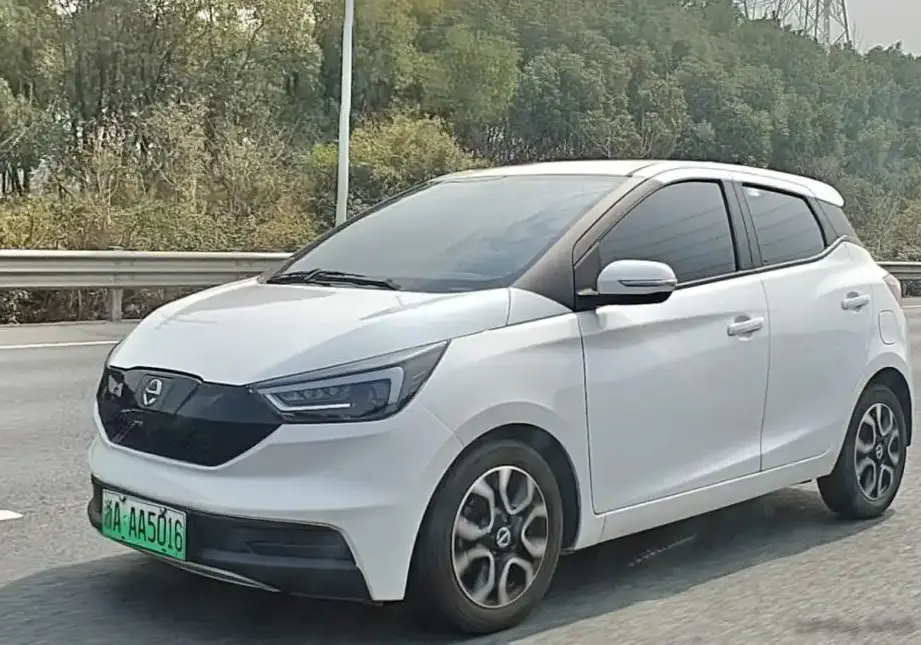
Technical Specifications
| Brand | JMEV |
| Model | EV3 |
| Generation | EV3 |
| Type (Engine) | 31.9 kWh (49 Hp) Electric |
| Start of production | October, 2023 |
| End of production | January, 2025 |
| Powertrain Architecture | BEV (Electric Vehicle) |
| Body type | Hatchback |
| Seats | 4 |
| Doors | 5 |
| Fuel Type | Electricity |
| Maximum speed | 100 km/h (62.14 mph) |
| Weight-to-power ratio | 23 kg/Hp, 43.6 Hp/tonne |
| Weight-to-torque ratio | 8 kg/Nm, 124.4 Nm/tonne |
| Gross battery capacity | 31.9 kWh |
| Battery technology | Lithium nickel manganese cobalt oxides (Li-NMC) |
| Battery location | Below the floor |
| All-electric range (NEDC) | 302 km (187.65 mi) |
| Electric motor power | 49 Hp |
| Electric motor Torque | 140 Nm (103.26 lb.-ft.) |
| Electric motor location | Front axle, Transverse |
| Electric motor type | Synchronous |
| System power | 49 Hp |
| System torque | 140 Nm (103.26 lb.-ft.) |
| Kerb Weight | 1125 kg (2480.2 lbs.) |
| Length | 3720 mm (146.46 in.) |
| Width | 1640 mm (64.57 in.) |
| Height | 1535 mm (60.43 in.) |
| Wheelbase | 2390 mm (94.09 in.) |
| Front track | 1420 mm (55.91 in.) |
| Rear (Back) track | 1420 mm (55.91 in.) |
| Drivetrain Architecture | One electric motor drives the front wheels. |
| Drive wheel | Front wheel drive |
| Number of gears and type of gearbox | 1 gears, automatic transmission |
| Front suspension | Independent type McPherson |
| Rear suspension | Torsion |
| Front brakes | Ventilated discs |
| Rear brakes | Drum |
| Assisting systems | ABS (Anti-lock braking system) |
| Steering type | Steering rack and pinion |
| Power steering | Electric Steering |
| Tires size | 175/60 R15 |
| Wheel rims size | 15 |
The JMEV EV3 31.9 kWh (49 hp) Electric is a battery electric vehicle (BEV) produced by the Chinese manufacturer JMEV from October 2023 to January 2025. Positioned as an entry-level electric hatchback, the EV3 aimed to provide affordable electric transportation within the rapidly expanding Chinese EV market. It represents JMEV’s commitment to producing compact, city-focused electric vehicles. The EV3 is a five-door hatchback designed to accommodate four passengers, and utilizes a single electric motor driving the front wheels.
Powertrain & Engine Architecture
The JMEV EV3 is powered by a single synchronous electric motor located transversely on the front axle. This motor produces 49 horsepower and 140 Nm (103.26 lb.-ft.) of torque. The vehicle utilizes a 31.9 kWh lithium nickel manganese cobalt oxides (Li-NMC) battery pack positioned under the floor, contributing to a lower center of gravity. The EV3 employs a single-speed automatic transmission, typical for electric vehicles, simplifying the driving experience. The battery supports standard charging methods, though specific charging port details are limited in available documentation. The electric powertrain is designed for efficiency and ease of use, prioritizing urban driving conditions.
Driving Characteristics
With only 49 hp, the EV3’s performance is geared towards city commuting rather than spirited driving. Acceleration is modest, and the top speed is limited to 100 km/h (62.14 mph). The single-speed automatic transmission provides seamless power delivery, but lacks the gear ratios found in conventional vehicles. The weight-to-power ratio of 23 kg/Hp indicates a relatively low power output for the vehicle’s weight. The EV3’s handling is adequate for urban environments, with the McPherson strut front suspension providing a comfortable ride. The rear torsion beam suspension is a cost-effective solution, but may not offer the same level of sophistication as independent rear suspension systems.
Equipment & Trim Levels
As an entry-level EV, the JMEV EV3 was equipped with basic amenities. Standard features likely included power windows, manual air conditioning, and a basic infotainment system. Interior upholstery was likely a durable cloth material. Information regarding specific trim levels and optional extras is scarce, but it’s reasonable to assume that higher trims may have offered features such as a touchscreen infotainment system, upgraded interior materials, and additional safety equipment. The focus was on providing essential features at an affordable price point.
Chassis & Braking
The EV3 features a front-wheel-drive layout. The front suspension utilizes an independent McPherson strut design, while the rear suspension employs a torsion beam setup. This combination provides a balance between ride comfort and handling. The braking system consists of ventilated discs on the front wheels and drum brakes on the rear wheels. An Anti-lock Braking System (ABS) is included as a standard safety feature. The vehicle rides on 15-inch wheels with 175/60 R15 tires. The chassis is designed to be lightweight, contributing to improved energy efficiency.
Market Reception & Comparison
The JMEV EV3 was primarily targeted at the Chinese market, where demand for affordable electric vehicles is high. Reviews of the EV3 were generally focused on its value proposition. Critics noted its limited range and modest performance, but acknowledged its low price point. Compared to other EVs in its class, the EV3 offered a competitive range for its price, but lacked the advanced features and performance of more expensive models. Its primary competitors included other entry-level Chinese EVs, such as those from BYD and Chery. Fuel economy, being an electric vehicle, is measured in energy consumption rather than miles per gallon, and the EV3 offered a reasonable range of 302 km (187.65 mi) on the NEDC cycle.
Legacy
The JMEV EV3 represents an early effort to bring affordable electric transportation to the masses. While production was relatively short-lived (2023-2025), it contributed to the growth of the EV market in China. The long-term reliability of the EV3’s powertrain remains to be fully assessed, but the simplicity of the electric drivetrain suggests that it could prove to be relatively durable. On the used car market, the EV3 is likely to appeal to budget-conscious buyers seeking a basic and economical electric vehicle for city driving. Its relatively small battery capacity may limit its appeal to those requiring longer range, but its affordability could make it an attractive option for those with limited driving needs.