
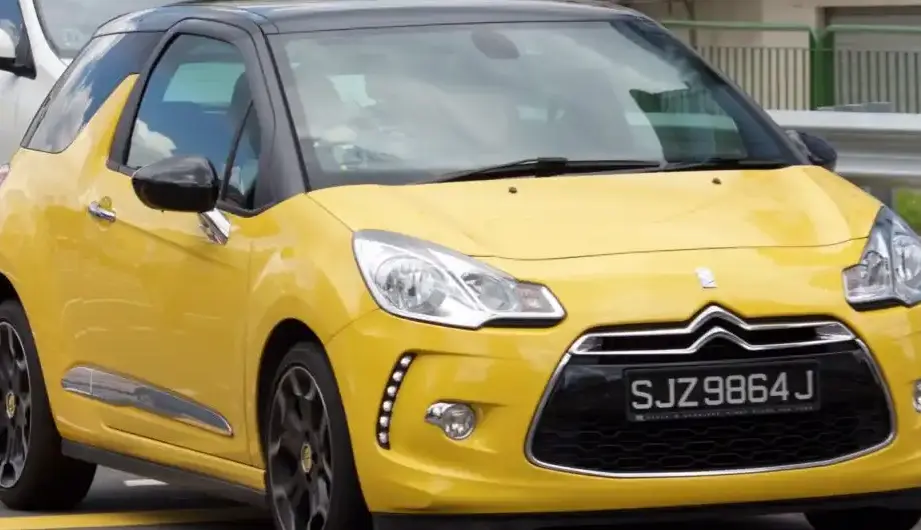
The Citroen DS 3 (Phase I) 1.6 THP 155, produced from November 2011 to 2014, represented a significant step up in performance for the DS 3 range. Positioned as a mid-range offering, it bridged the gap between the entry-level 1.4 VTi models and the more performance-focused DS 3 Racing. This variant was primarily aimed at the European market, offering a blend of style, efficiency, and respectable power within the increasingly competitive subcompact hatchback segment. It was built on the PF1 platform, shared with the Peugeot 207 and first-generation Mini Cooper, and sought to establish Citroen’s DS line as a premium alternative to mainstream competitors.
Technical Specifications
| Brand | Citroen |
| Model | DS3 |
| Generation | DS 3 (Phase I) |
| Type (Engine) | 1.6 THP (155 Hp) |
| Start of production | November, 2011 |
| End of production | 2014 |
| Powertrain Architecture | Internal Combustion engine |
| Body type | Hatchback |
| Seats | 5 |
| Doors | 3 |
| Fuel consumption (urban) | 7.9 l/100 km (29.8 US mpg, 35.8 UK mpg, 12.7 km/l) |
| Fuel consumption (extra urban) | 4.5 l/100 km (52.3 US mpg, 62.8 UK mpg, 22.2 km/l) |
| Fuel consumption (combined) | 5.8 l/100 km (40.6 US mpg, 48.7 UK mpg, 17.2 km/l) |
| CO2 emissions | 135 g/km |
| Fuel Type | Petrol (Gasoline) |
| Acceleration 0 – 100 km/h | 7.3 sec |
| Acceleration 0 – 62 mph | 7.3 sec |
| Acceleration 0 – 60 mph | 6.9 sec |
| Maximum speed | 214 km/h (132.97 mph) |
| Emission standard | Euro 5 |
| Weight-to-power ratio | 7 kg/Hp, 142.2 Hp/tonne |
| Weight-to-torque ratio | 4.5 kg/Nm, 220.2 Nm/tonne |
| Power | 155 Hp @ 6000 rpm |
| Power per litre | 97 Hp/l |
| Torque | 240 Nm @ 4000 rpm (177.01 lb.-ft. @ 4000 rpm) |
| Engine layout | Front, Transverse |
| Engine Model/Code | 5FR EP6DT, 5FV EP6CDT |
| Engine displacement | 1598 cm3 (97.52 cu. in.) |
| Number of cylinders | 4 |
| Engine configuration | Inline |
| Cylinder Bore | 77 mm (3.03 in.) |
| Piston Stroke | 85.8 mm (3.38 in.) |
| Fuel injection system | Direct injection |
| Engine aspiration | Turbocharger, Intercooler |
| Engine oil capacity | 4.3 l (4.54 US qt | 3.78 UK qt) |
| Coolant | 6.2 l (6.55 US qt | 5.46 UK qt) |
| Kerb Weight | 1090 kg (2403.04 lbs.) |
| Max. weight | 1590 kg (3505.35 lbs.) |
| Max load | 500 kg (1102.31 lbs.) |
| Trunk (boot) space – minimum | 285 l (10.06 cu. ft.) |
| Trunk (boot) space – maximum | 980 l (34.61 cu. ft.) |
| Fuel tank capacity | 50 l (13.21 US gal | 11 UK gal) |
| Max. roof load | 70 kg (154.32 lbs.) |
| Permitted trailer load with brakes (12%) | 900 kg (1984.16 lbs.) |
| Permitted trailer load without brakes | 570 kg (1256.63 lbs.) |
| Permitted towbar download | 46 kg (101.41 lbs.) |
| Length | 3948 mm (155.43 in.) |
| Width | 1715 mm (67.52 in.) |
| Width including mirrors | 2004 mm (78.9 in.) |
| Height | 1458-1483 mm (57.4 – 58.39 in.) |
| Wheelbase | 2464 mm (97.01 in.) |
| Front track | 1465-1468 mm (57.68 – 57.8 in.) |
| Rear (Back) track | 1467-1471 mm (57.76 – 57.91 in.) |
| Front overhang | 824 mm (32.44 in.) |
| Rear overhang | 660 mm (25.98 in.) |
| Minimum turning circle | 10.4 m (34.12 ft.) |
| Drivetrain Architecture | The Internal combustion engine (ICE) drives the front wheels of the vehicle. |
| Drive wheel | Front wheel drive |
| Number of gears and type of gearbox | 6 gears, manual transmission |
| Front suspension | Independent, type McPherson with coil spring and anti-roll bar |
| Rear suspension | Independent coil spring, Elastic beam |
| Front brakes | Ventilated discs |
| Rear brakes | Disc |
| Assisting systems | ABS (Anti-lock braking system) |
| Steering type | Steering rack and pinion |
| Power steering | Electric Steering |
| Tires size | 205/45 R17 |
| Wheel rims size | 17 |
Powertrain & Engine Architecture
The heart of the DS 3 1.6 THP 155 is the EP6DT engine, a 1.6-liter turbocharged inline-four cylinder petrol engine. This engine is part of the Prince engine family, co-developed by PSA Peugeot Citroën and BMW. It utilizes direct fuel injection, delivering fuel directly into the combustion chamber for improved efficiency and power. The engine also features a twin-scroll turbocharger and an intercooler to minimize turbo lag and maximize boost pressure. Valve timing is controlled by variable valve timing on both the intake and exhaust camshafts, optimizing performance across the rev range. The 6-speed manual transmission was the standard offering, providing precise gear changes and contributing to the car’s engaging driving experience. The engine code 5FR indicates the engine management system.
Driving Characteristics
The 1.6 THP 155 offered a noticeable performance upgrade over the lower-powered DS 3 variants. The 155 horsepower and 240 Nm (177 lb-ft) of torque provided brisk acceleration, with a 0-60 mph time of around 6.9 seconds. The turbocharger provides a strong mid-range punch, making overtaking maneuvers easy. While not a dedicated hot hatch, the DS 3 1.6 THP 155 offered a satisfying driving experience, balancing performance with everyday usability. The manual gearbox was well-matched to the engine’s characteristics, with gear ratios optimized for both acceleration and fuel economy. Compared to the base 1.4 VTi, the THP 155 felt significantly more responsive and capable. It lacked the outright performance of the DS 3 Racing, but offered a more refined and accessible driving experience.
Equipment & Trim Levels
The DS 3 1.6 THP 155 typically came equipped with a generous level of standard features. These included air conditioning, electric front windows, a CD stereo with USB connectivity, and alloy wheels. Higher trim levels, such as Sport and Prestige, added features like automatic climate control, rear parking sensors, a panoramic sunroof, and leather upholstery. The interior featured a distinctive dashboard design with a contrasting color scheme, reflecting the DS line’s focus on style and individuality. Optional extras included a navigation system, upgraded audio system, and various cosmetic enhancements.
Chassis & Braking
The DS 3 1.6 THP 155 utilized a McPherson strut front suspension and an elastic beam rear suspension. This setup provided a good balance between ride comfort and handling. The front brakes were ventilated discs, while the rear brakes were solid discs, providing adequate stopping power for the car’s performance level. ABS (Anti-lock Braking System) was standard. The steering was electrically assisted, offering a light and precise feel. The suspension was tuned to provide a slightly firmer ride than the lower-powered models, reflecting the increased performance capabilities.
Market Reception & Comparison
The DS 3 1.6 THP 155 was generally well-received by automotive critics. It was praised for its stylish design, engaging driving experience, and efficient engine. However, some critics noted that the interior space was somewhat limited, and the ride could be a bit firm on rough roads. Compared to rivals like the Mini Cooper and Audi A1, the DS 3 offered a more affordable price point and a distinctive design. In terms of fuel economy, the 1.6 THP 155 offered a respectable 40.6 US mpg combined, making it a relatively economical option for a performance-oriented hatchback. Reliability was generally good, although some owners reported minor issues with the turbocharger and fuel injection system.
Legacy
The Citroen DS 3 1.6 THP 155 remains a popular choice in the used car market. The EP6DT engine, while generally reliable, requires regular maintenance, including oil changes and timing belt replacements. The turbocharger can be a potential weak point, so it’s important to check for signs of wear and tear. Overall, the DS 3 1.6 THP 155 offers a compelling combination of style, performance, and affordability, making it a desirable option for those seeking a distinctive and engaging subcompact hatchback.
