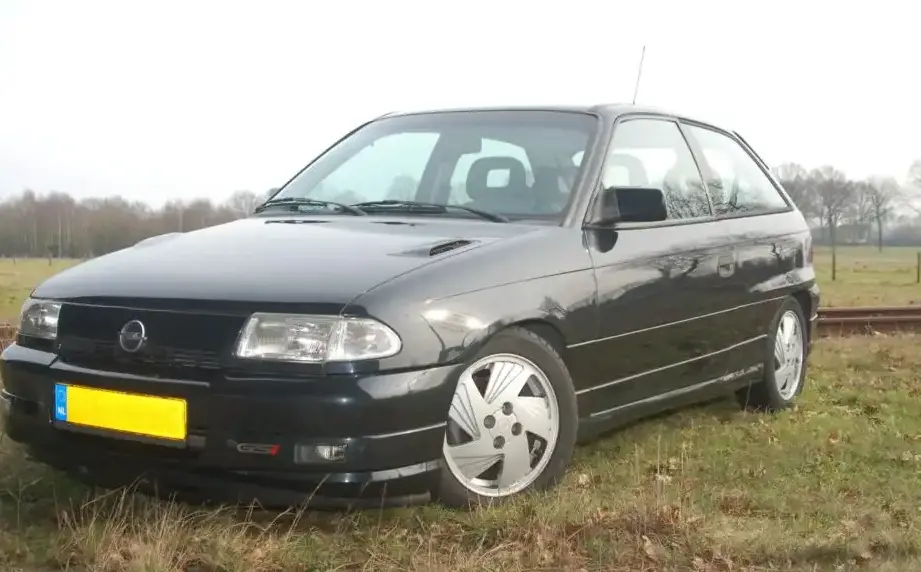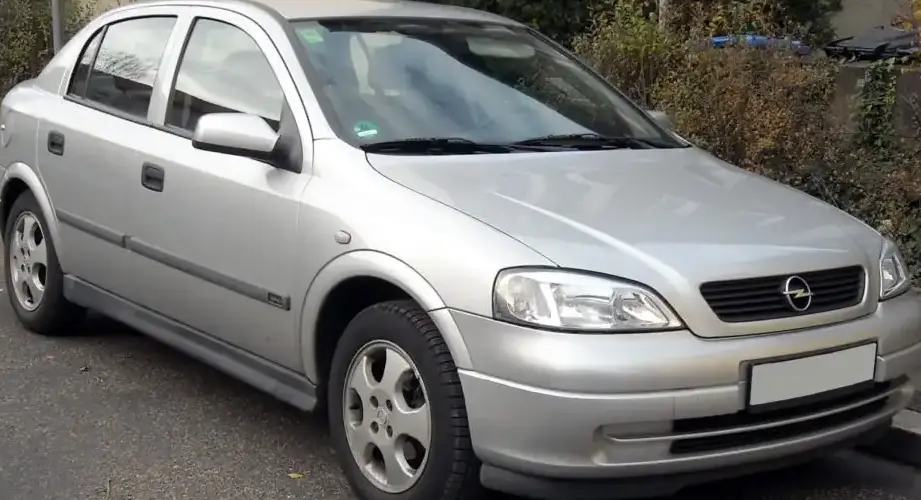
The Opel Astra G 2.0 Ecotec 16V, produced from March 1998 to June 2000, represented a significant step up in performance and refinement within the Astra G range (1998-2004). Positioned as a mid-range offering, it bridged the gap between the more economical base models and the performance-oriented variants. This model, built on the GM/Opel T-platform (also known as the 1HX0 chassis), aimed to provide a balance of power, fuel efficiency, and practicality for the European market. The Astra G was a crucial model for Opel, representing a substantial redesign over its predecessor and incorporating modern features and safety advancements.
Technical Specifications
| Brand | Opel |
| Model | Astra |
| Generation | Astra G |
| Type (Engine) | 2.0 Ecotec 16V (136 Hp) |
| Start of production | March, 1998 |
| End of production | June, 2000 |
| Powertrain Architecture | Internal Combustion engine |
| Body type | Hatchback |
| Seats | 5 |
| Doors | 3-5 |
| Fuel consumption (urban) | 12 l/100 km (19.6 US mpg, 23.5 UK mpg, 8.3 km/l) |
| Fuel consumption (extra urban) | 6.6 l/100 km (35.6 US mpg, 42.8 UK mpg, 15.2 km/l) |
| Fuel consumption (combined) | 8.6 l/100 km (27.4 US mpg, 32.8 UK mpg, 11.6 km/l) |
| CO2 emissions | 207 g/km |
| Fuel Type | Petrol (Gasoline) |
| Acceleration 0 – 100 km/h | 9 sec |
| Acceleration 0 – 62 mph | 9 sec |
| Acceleration 0 – 60 mph | 8.6 sec |
| Maximum speed | 208 km/h (129.25 mph) |
| Emission standard | Euro 2 |
| Weight-to-power ratio | 8.7 kg/Hp, 114.8 Hp/tonne |
| Weight-to-torque ratio | 6.3 kg/Nm, 158.6 Nm/tonne |
| Power | 136 Hp @ 5600 rpm |
| Power per litre | 68.1 Hp/l |
| Torque | 188 Nm @ 3200 rpm (138.66 lb.-ft. @ 3200 rpm) |
| Engine layout | Front, Transverse |
| Engine Model/Code | X20XEV |
| Engine displacement | 1998 cm3 (121.93 cu. in.) |
| Number of cylinders | 4 |
| Engine configuration | Inline |
| Cylinder Bore | 86 mm (3.39 in.) |
| Piston Stroke | 86 mm (3.39 in.) |
| Compression ratio | 10.8:1 |
| Number of valves per cylinder | 4 |
| Fuel injection system | Multi-port manifold injection |
| Engine aspiration | Naturally aspirated engine |
| Valvetrain | DOHC |
| Engine oil capacity | 4.25 l (4.49 US qt | 3.74 UK qt) |
| Coolant | 6.7 l (7.08 US qt | 5.9 UK qt) |
| Kerb Weight | 1185 kg (2612.48 lbs.) |
| Max. weight | 1685 kg (3714.79 lbs.) |
| Max load | 500 kg (1102.31 lbs.) |
| Trunk (boot) space – minimum | 370 l (13.07 cu. ft.) |
| Trunk (boot) space – maximum | 1180 l (41.67 cu. ft.) |
| Fuel tank capacity | 52 l (13.74 US gal | 11.44 UK gal) |
| Max. roof load | 100 kg (220.46 lbs.) |
| Permitted trailer load with brakes (12%) | 1300 kg (2866.01 lbs.) |
| Permitted trailer load without brakes | 615 kg (1355.84 lbs.) |
| Permitted towbar download | 75 kg (165.35 lbs.) |
| Length | 4110 mm (161.81 in.) |
| Width | 1709 mm (67.28 in.) |
| Width including mirrors | 1989 mm (78.31 in.) |
| Height | 1425 mm (56.1 in.) |
| Wheelbase | 2606 mm (102.6 in.) |
| Front track | 1464 mm (57.64 in.) |
| Rear (Back) track | 1425 mm (56.1 in.) |
| Front overhang | 791 mm (31.14 in.) |
| Rear overhang | 713 mm (28.07 in.) |
| Ride height (ground clearance) | 130 mm (5.12 in.) |
| Drag coefficient (Cd) | 0.28 |
| Minimum turning circle (turning diameter) | 10.8 m (35.43 ft.) |
| Drivetrain Architecture | The Internal combustion engine (ICE) drives the front wheels of the vehicle. |
| Drive wheel | Front wheel drive |
| Number of gears and type of gearbox | 5 gears, manual transmission |
| Front suspension | Independent, type McPherson with coil spring and anti-roll bar |
| Rear suspension | Semi-independent, coil spring |
| Front brakes | Ventilated discs |
| Rear brakes | Disc |
| Assisting systems | ABS (Anti-lock braking system) |
| Steering type | Steering rack and pinion |
| Power steering | Hydraulic Steering |
| Tires size | 205/50 R16 V |
| Wheel rims size | 6J x 16 ET49 |
Powertrain & Engine Architecture
The heart of the Astra G 2.0 Ecotec was the X20XEV engine, a naturally aspirated, 16-valve inline-four cylinder powerplant. Displacing 1998cc, this engine featured multi-port fuel injection and a double overhead camshaft (DOHC) valvetrain. The X20XEV was part of Opel’s ‘Ecotec’ engine family, designed for efficiency and reduced emissions. The engine’s design emphasized lightweight construction and optimized airflow. The 5-speed manual transmission was the standard offering, providing a direct connection to the front wheels. The engine produced 136 horsepower at 5600 rpm and 188 Nm (138.66 lb-ft) of torque at 3200 rpm. This configuration provided a noticeable performance boost over the smaller displacement engines available in the Astra G lineup.
Driving Characteristics
The 2.0 Ecotec 16V offered a more engaging driving experience than the base models. While not a sports car, the engine provided sufficient power for confident overtaking and highway cruising. The 0-60 mph time of around 8.6 seconds was respectable for the era. The five-speed manual transmission allowed drivers to keep the engine in its optimal power band. The gear ratios were well-matched for everyday driving, providing a balance between acceleration and fuel economy. Compared to the lower-powered 1.6L and 1.8L variants, the 2.0L felt significantly more responsive, particularly at higher speeds. The chassis, while not particularly sporty, was well-balanced and provided a comfortable ride.
Equipment & Trim Levels
The 2.0 Ecotec 16V was typically offered in higher trim levels, such as the ‘Comfort’ or ‘Sport’ variants, depending on the market. Standard equipment often included power windows, central locking, power steering, and an upgraded audio system. Optional extras could include air conditioning, alloy wheels, a sunroof, and upgraded interior trim. Interior upholstery was typically cloth, with higher trims offering partial leather options. The dashboard layout was functional and ergonomically designed, with clear instrumentation. Safety features included ABS brakes and driver and passenger airbags.
Chassis & Braking
The Astra G utilized an independent McPherson strut suspension at the front and a semi-independent torsion beam suspension at the rear. This setup provided a good balance between ride comfort and handling. The front brakes were ventilated discs, while the rear brakes were solid discs. ABS (Anti-lock Braking System) was standard, enhancing braking performance and stability. The chassis was relatively lightweight, contributing to the car’s agility. Stabilizer bars were fitted to both the front and rear axles to reduce body roll during cornering.
Market Reception & Comparison
The Astra G 2.0 Ecotec 16V was generally well-received by automotive critics. It was praised for its refined engine, comfortable ride, and practical interior. Compared to rivals like the Volkswagen Golf and Ford Focus, the Astra G offered a competitive package in terms of performance, features, and price. Fuel economy was considered reasonable for a 2.0L engine, averaging around 27.4 US mpg in combined driving. Reliability was generally good, although some owners reported minor issues with the engine’s cooling system. The 2.0L variant was often seen as a more desirable alternative to the smaller-engined models, offering a more rewarding driving experience.
Legacy
The Opel Astra G 2.0 Ecotec 16V remains a popular choice among used car buyers. The X20XEV engine is known for its durability and relatively straightforward maintenance. Parts availability is generally good, and the car’s simple mechanical design makes it relatively easy to repair. While not a collector’s item, well-maintained examples of the Astra G 2.0 Ecotec 16V are increasingly sought after by enthusiasts who appreciate its blend of practicality, performance, and affordability. The engine’s robust design has contributed to its longevity, and many examples are still on the road today, a testament to Opel’s engineering.