
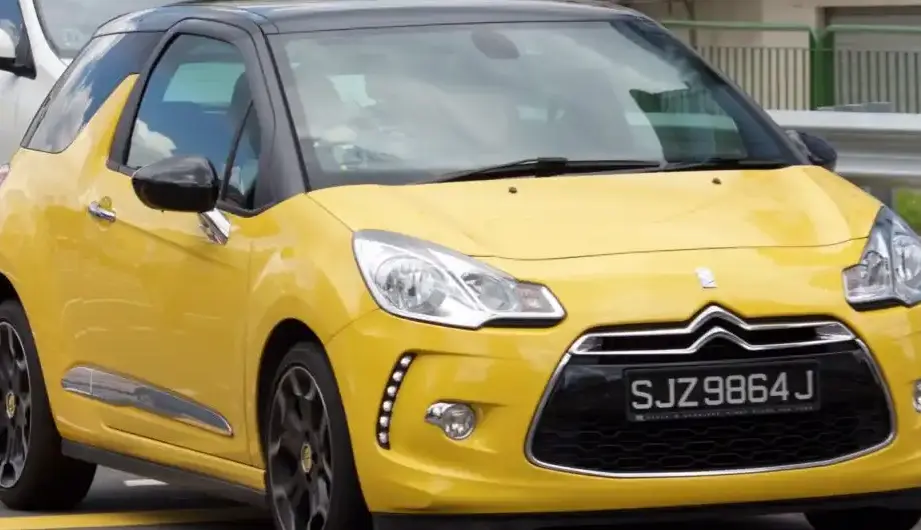
The Citroen DS 3 (Phase I) 1.6 VTi 120 Automatic, produced between 2009 and 2014, represented a key variant within the stylish and distinctive DS 3 hatchback range. Positioned as a mid-range offering, it aimed to balance performance with convenience, appealing to buyers seeking a comfortable and refined driving experience. This model was a significant part of Citroen’s effort to establish the DS line as a premium sub-brand, offering a more sophisticated alternative to mainstream Citroen models. It was primarily marketed in Europe, where the compact hatchback segment is particularly popular, and offered a unique blend of French design flair and practical usability.
Technical Specifications
| Brand | Citroen |
| Model | DS3 |
| Generation | DS 3 (Phase I) |
| Type (Engine) | 1.6 VTi (120 Hp) Automatic |
| Start of production | 2009 |
| End of production | 2014 |
| Powertrain Architecture | Internal Combustion engine |
| Body type | Hatchback |
| Seats | 5 |
| Doors | 3 |
| Fuel consumption (urban) | 9.6-9.7 l/100 km (24.5 – 24.2 US mpg, 29.4 – 29.1 UK mpg, 10.4 – 10.3 km/l) |
| Fuel consumption (extra urban) | 5.3-5.4 l/100 km (44.4 – 43.6 US mpg, 53.3 – 52.3 UK mpg, 18.9 – 18.5 km/l) |
| Fuel consumption (combined) | 6.9-7.0 l/100 km (34.1 – 33.6 US mpg, 40.9 – 40.4 UK mpg, 14.5 – 14.3 km/l) |
| CO2 emissions | 158-160 g/km |
| Fuel Type | Petrol (Gasoline) |
| Acceleration 0 – 100 km/h | 10.9 sec |
| Acceleration 0 – 62 mph | 10.9 sec |
| Acceleration 0 – 60 mph | 10.4 sec |
| Maximum speed | 190 km/h (118.06 mph) |
| Emission standard | EURO 5 |
| Weight-to-power ratio | 9.5 kg/Hp, 104.8 Hp/tonne |
| Weight-to-torque ratio | 7.2 kg/Nm, 139.7 Nm/tonne |
| Power | 120 Hp @ 6000 rpm |
| Power per litre | 75.1 Hp/l |
| Torque | 160 Nm @ 4250 rpm (118.01 lb.-ft. @ 4250 rpm) |
| Engine layout | Front, Transverse |
| Engine Model/Code | 5FS EP6C |
| Engine displacement | 1598 cm3 (97.52 cu. in.) |
| Number of cylinders | 4 |
| Engine configuration | Inline |
| Cylinder Bore | 77 mm (3.03 in.) |
| Piston Stroke | 85.8 mm (3.38 in.) |
| Fuel injection system | Multi-port manifold injection |
| Engine aspiration | Naturally aspirated engine |
| Engine oil capacity | 4.3 l (4.54 US qt | 3.78 UK qt) |
| Coolant | 5.7 l (6.02 US qt | 5.02 UK qt) |
| Kerb Weight | 1145 kg (2524.29 lbs.) |
| Max. weight | 1587 kg (3498.74 lbs.) |
| Max load | 442 kg (974.44 lbs.) |
| Trunk (boot) space – minimum | 285 l (10.06 cu. ft.) |
| Trunk (boot) space – maximum | 980 l (34.61 cu. ft.) |
| Fuel tank capacity | 50 l (13.21 US gal | 11 UK gal) |
| Max. roof load | 70 kg (154.32 lbs.) |
| Permitted trailer load with brakes (12%) | 900 kg (1984.16 lbs.) |
| Permitted trailer load without brakes | 570 kg (1256.63 lbs.) |
| Permitted towbar download | 46 kg (101.41 lbs.) |
| Length | 3948 mm (155.43 in.) |
| Width | 1715 mm (67.52 in.) |
| Height | 1458-1483 mm (57.4 – 58.39 in.) |
| Wheelbase | 2464 mm (97.01 in.) |
| Front track | 1465-1468 mm (57.68 – 57.8 in.) |
| Rear (Back) track | 1467-1471 mm (57.76 – 57.91 in.) |
| Front overhang | 824 mm (32.44 in.) |
| Rear overhang | 660 mm (25.98 in.) |
| Minimum turning circle | 10.4 m (34.12 ft.) |
| Drivetrain Architecture | The Internal combustion engine (ICE) drives the front wheels of the vehicle. |
| Drive wheel | Front wheel drive |
| Number of gears and type of gearbox | 4 gears, automatic transmission |
| Front suspension | Independent, type McPherson with coil spring and anti-roll bar |
| Rear suspension | Independent coil spring, Elastic beam |
| Front brakes | Ventilated discs |
| Rear brakes | Disc |
| Assisting systems | ABS (Anti-lock braking system) |
| Steering type | Steering rack and pinion |
| Tires size | 195/55 R16; 205/45 R17 |
| Wheel rims size | 16; 17 |
INTRODUCTION
The Citroen DS 3 (Phase I) 1.6 VTi 120 Automatic, launched in 2009, was a key component of Citroen’s strategy to revitalize its brand image. Built on the PF1 platform (also known as the 1HX0/A3 platform shared with Peugeot and Mini), the DS 3 aimed to blend distinctive styling with a comfortable driving experience. The 1.6 VTi 120 Automatic variant occupied a middle ground in the DS 3 lineup, offering a step up from the base models in terms of power and refinement, while remaining more accessible than the higher-performance or diesel options. This model was particularly popular in European markets where compact, stylish hatchbacks are highly sought after.
Powertrain & Engine Architecture
At the heart of the DS 3 1.6 VTi 120 Automatic lies the PSA-developed 5FS EP6C engine. This 1.6-liter inline-four cylinder engine utilizes a naturally aspirated configuration and multi-point fuel injection. The engine produces 120 horsepower at 6000 rpm and 160 Nm (118 lb-ft) of torque at 4250 rpm. The engine features a double overhead camshaft (DOHC) valvetrain, contributing to its relatively efficient operation. Paired with this engine is a four-speed automatic transmission, which, while providing convenience, was a point of criticism for some reviewers who preferred the responsiveness of the manual gearbox. The automatic transmission was chosen to appeal to drivers prioritizing ease of use over outright performance.
Driving Characteristics
The DS 3 1.6 VTi 120 Automatic offered a comfortable, if not particularly sporty, driving experience. The four-speed automatic transmission, while smooth, lacked the gear ratios to keep the engine in its optimal power band during spirited driving. Acceleration from 0-100 km/h (0-62 mph) took around 10.9 seconds, and top speed was limited to 190 km/h (118 mph). Compared to the six-speed manual version of the same engine, the automatic felt slightly less responsive. However, for everyday driving, the automatic provided a relaxed and convenient experience, particularly in urban environments. The relatively light weight of the DS 3 (around 1145 kg or 2524 lbs) helped to mitigate some of the performance limitations of the powertrain.
Equipment & Trim Levels
The 1.6 VTi 120 Automatic trim typically included features such as air conditioning, electric front windows, a CD stereo system, and alloy wheels. Higher trim levels, often denoted by names like ‘Sport’ or ‘DSport’, added features like automatic headlights, rain-sensing wipers, rear parking sensors, and upgraded interior trim. Interior upholstery was typically cloth, with options for leather available on higher-spec models. A distinctive feature of the DS 3 was its customizable exterior, with a range of roof colors and mirror cap options allowing buyers to personalize their vehicle.
Chassis & Braking
The DS 3 1.6 VTi 120 Automatic utilized a McPherson strut front suspension and an elastic beam rear suspension. This setup provided a good balance between ride comfort and handling. The front brakes were ventilated discs, while the rear brakes were solid discs. Anti-lock Braking System (ABS) was standard. The suspension was tuned to prioritize comfort, resulting in a relatively soft ride quality. Stabilizer bars were fitted to both the front and rear axles to reduce body roll during cornering.
Market Reception & Comparison
The DS 3 1.6 VTi 120 Automatic received generally positive reviews, with critics praising its stylish design and comfortable ride. However, the four-speed automatic transmission was often criticized for being somewhat dated and lacking the refinement of more modern automatic gearboxes. Compared to the 1.6 HDi diesel variants, the VTi offered less fuel economy but a more responsive engine. Against the higher-performance DS 3 Racing, the VTi 120 Automatic was significantly slower but more affordable and practical. Fuel economy averaged around 6.9-7.0 l/100 km (34.1-33.6 US mpg), which was respectable for a petrol engine of this size.
Legacy
The Citroen DS 3 1.6 VTi 120 Automatic has proven to be a relatively reliable vehicle, with the 5FS EP6C engine generally considered durable. However, like many European cars of this era, it’s important to check for regular maintenance records and potential issues with the timing belt. On the used car market, these models are often sought after for their distinctive styling and affordability. While the four-speed automatic transmission may not be the most modern, it remains a functional and reliable unit. The DS 3, in general, helped to establish Citroen’s DS line as a viable alternative to premium brands, and the 1.6 VTi 120 Automatic played a significant role in its initial success.
