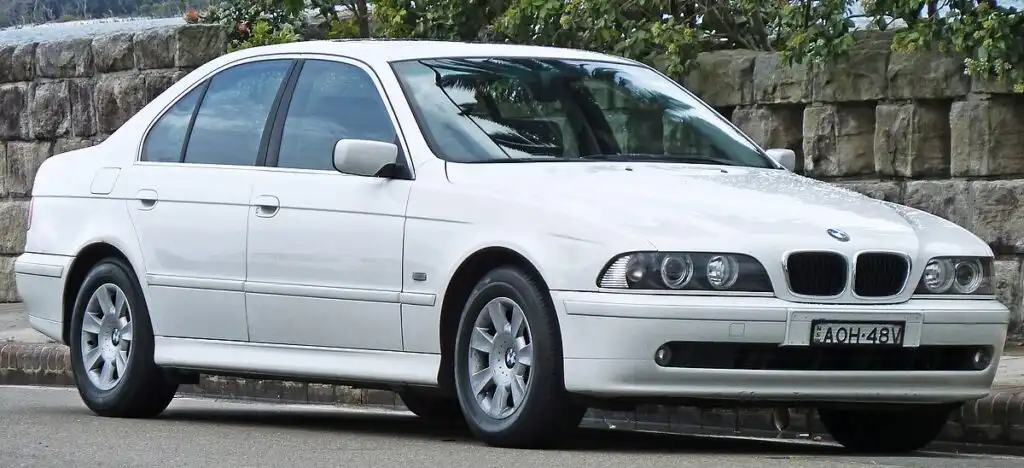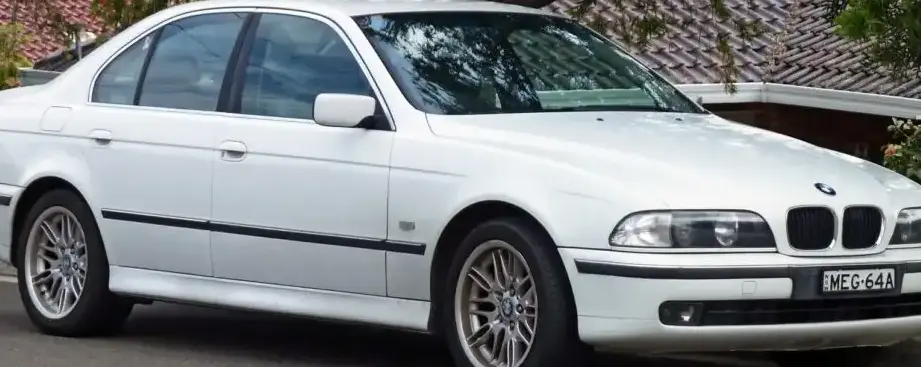
The BMW 5 Series (E39) 525tds Automatic, produced between 1996 and 2000, represented a unique offering within the broader E39 generation. Positioned as a fuel-efficient, torque-rich alternative to the gasoline-powered variants, the 525tds catered to European drivers prioritizing economy and long-distance comfort. It occupied a middle ground in the 5 Series lineup, offering a step up from the base models while remaining more accessible than the higher-performance 530d or 540i. This variant combined a turbocharged diesel engine with a five-speed automatic transmission, a configuration designed for relaxed cruising and everyday usability.
Technical Specifications
| Brand | BMW |
| Model | 5 Series |
| Generation | 5 Series (E39) |
| Type (Engine) | 525tds (143 Hp) Automatic |
| Start of production | 1996 |
| End of production | 2000 |
| Powertrain Architecture | Internal Combustion engine |
| Body type | Sedan |
| Seats | 5 |
| Doors | 4 |
| Fuel consumption (urban) | 13 l/100 km (18.1 US mpg, 21.7 UK mpg, 7.7 km/l) |
| Fuel consumption (extra urban) | 7 l/100 km (33.6 US mpg, 40.4 UK mpg, 14.3 km/l) |
| Fuel Type | Diesel |
| Acceleration 0 – 100 km/h | 11 sec |
| Acceleration 0 – 62 mph | 11 sec |
| Acceleration 0 – 60 mph | 10.5 sec |
| Maximum speed | 205 km/h (127.38 mph) |
| Weight-to-power ratio | 10.9 kg/Hp, 92 Hp/tonne |
| Weight-to-torque ratio | 5.6 kg/Nm, 180.1 Nm/tonne |
| Power | 143 Hp @ 4600 rpm |
| Power per litre | 57.2 Hp/l |
| Torque | 280 Nm @ 2200 rpm (206.52 lb.-ft. @ 2200 rpm) |
| Engine layout | Front, Longitudinal |
| Engine Model/Code | M51D25 |
| Engine displacement | 2498 cm3 (152.44 cu. in.) |
| Number of cylinders | 6 |
| Engine configuration | Inline |
| Cylinder Bore | 80 mm (3.15 in.) |
| Piston Stroke | 82.8 mm (3.26 in.) |
| Compression ratio | 22:1 |
| Number of valves per cylinder | 2 |
| Fuel injection system | Precombustion chamber injection |
| Engine aspiration | Turbocharger, Intercooler |
| Valvetrain | OHC |
| Engine oil capacity | 6.75 l (7.13 US qt, 5.94 UK qt) |
| Coolant | 10 l (10.57 US qt, 8.8 UK qt) |
| Kerb Weight | 1555 kg (3428.19 lbs.) |
| Max. weight | 2015 kg (4442.31 lbs.) |
| Max load | 460 kg (1014.13 lbs.) |
| Trunk (boot) space – minimum | 460 l (16.24 cu. ft.) |
| Fuel tank capacity | 70 l (18.49 US gal, 15.4 UK gal) |
| Length | 4775 mm (187.99 in.) |
| Width | 1800 mm (70.87 in.) |
| Height | 1435 mm (56.5 in.) |
| Wheelbase | 2830 mm (111.42 in.) |
| Front track | 1516 mm (59.69 in.) |
| Rear (Back) track | 1530 mm (60.24 in.) |
| Drivetrain Architecture | Rear wheel drive |
| Number of gears and type of gearbox | 5 gears, automatic transmission |
| Front suspension | Wishbone |
| Rear suspension | Several levers and rods |
| Front brakes | Ventilated discs |
| Rear brakes | Disc |
| Assisting systems | ABS (Anti-lock braking system) |
| Steering type | Steering rack and pinion |
| Power steering | Hydraulic Steering |
| Tires size | 205/65 R15 |
| Wheel rims size | 15 |
Powertrain & Engine Architecture
The heart of the 525tds was the BMW M51D25 engine, a 2.5-liter inline-six diesel. This engine utilized precombustion chamber injection, a system common in European diesels of the era, offering a balance between efficiency and refinement. A turbocharger with an intercooler was employed to boost power output to 143 horsepower and 280 Nm (206 lb-ft) of torque. The M51D25 was known for its durability and relatively quiet operation for a diesel engine. The five-speed automatic transmission, a ZF 5HP19, was chosen for its smooth shifting and suitability for long-distance driving. This transmission featured electronic control and adaptive shift programming, adjusting to the driver’s style and road conditions.
Driving Characteristics
The 525tds Automatic offered a distinctly different driving experience compared to its gasoline-powered siblings or even the manual diesel variants. While not a performance machine, the engine’s ample torque provided effortless acceleration in everyday driving situations. The automatic transmission, while smooth, did result in a slight performance deficit compared to the manual gearbox, with a 0-60 mph time of around 10.5 seconds. The gear ratios were optimized for fuel economy and relaxed cruising, rather than outright speed. The focus was on providing a comfortable and refined driving experience, making it well-suited for highway journeys.
Equipment & Trim Levels
The 525tds Automatic typically came equipped with a respectable level of standard features. This included power windows, central locking, air conditioning, and an AM/FM radio. Interior upholstery was usually cloth, although leather options were available. Trim levels varied depending on the market, but generally offered upgrades such as wood trim, upgraded audio systems, and sunroofs. Optional extras included heated seats, automatic climate control, and a navigation system. The overall interior design was typical of the E39, characterized by a functional and understated elegance.
Chassis & Braking
The E39 5 Series chassis was renowned for its balance and handling. The 525tds utilized a wishbone front suspension and a multi-link rear suspension, providing a comfortable ride and precise handling. Due to the added weight of the diesel engine, the suspension was often slightly stiffer than that of the gasoline-powered models. Braking was accomplished via ventilated discs at the front and solid discs at the rear, with ABS as standard. The braking system was generally considered adequate for the vehicle’s performance, although it lacked the stopping power of the larger brake systems found on the higher-performance models.
Market Reception & Comparison
The 525tds Automatic was generally well-received by automotive critics in Europe. It was praised for its fuel efficiency, comfortable ride, and refined engine. However, some critics noted the slightly sluggish performance compared to the gasoline-powered variants. Compared to the 530d, the 525tds offered a more affordable entry point into the world of BMW diesel performance, but with a noticeable reduction in power. Against the gasoline-powered 523i or 528i, the 525tds provided superior fuel economy and torque, but at the expense of outright acceleration.
Legacy
The M51D25 engine, found in the 525tds, proved to be a remarkably durable and reliable powerplant. Many examples have surpassed 200,000 miles with proper maintenance. The ZF 5HP19 automatic transmission is also known for its longevity. Today, the 525tds Automatic represents an affordable entry point into E39 ownership. While not as sought-after as the higher-performance models, it offers a comfortable, reliable, and fuel-efficient driving experience. Its relative rarity compared to the gasoline variants is beginning to increase its appeal among BMW enthusiasts. Finding well-maintained examples can be challenging, but the 525tds remains a testament to BMW’s engineering prowess and a practical classic for those seeking a comfortable and economical grand tourer.