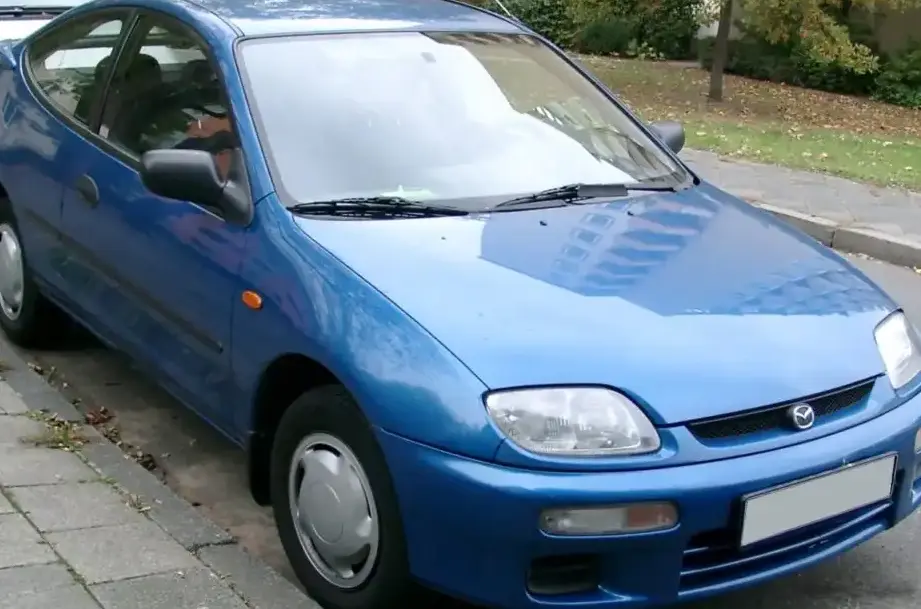
The Mazda 323 C IV (BG), produced between 1989 and 1994, represented Mazda’s entry into the competitive compact hatchback market. This fourth generation of the 323, known as the BG series, aimed to offer a blend of affordability, practicality, and Mazda’s signature driving dynamics. The 1.3-liter (67 horsepower) variant occupied the base trim level, serving as the most accessible option for buyers. It was a key model in Europe and other international markets, where smaller displacement engines were favored due to taxation and fuel economy considerations. This model played a significant role in establishing the 323 as a popular choice for first-time car buyers and those seeking an economical daily driver.
Technical Specifications
| Brand | Mazda |
| Model | 323 |
| Generation | 323 C IV (BG) |
| Type (Engine) | 1.3 (67 Hp) |
| Start of production | 1989 |
| End of production | 1994 |
| Powertrain Architecture | Internal Combustion engine |
| Body type | Hatchback |
| Seats | 5 |
| Doors | 3 |
| Fuel Type | Petrol (Gasoline) |
| Acceleration 0 – 100 km/h | 11 sec |
| Acceleration 0 – 62 mph | 11 sec |
| Acceleration 0 – 60 mph | 10.5 sec |
| Maximum speed | 150 km/h (93.21 mph) |
| Power | 67 Hp |
| Engine layout | Front, Transverse |
| Number of cylinders | 4 |
| Engine configuration | Inline |
| Fuel injection system | Multi-port manifold injection |
| Engine aspiration | Naturally aspirated engine |
| Drivetrain Architecture | The Internal combustion engine (ICE) drives the front wheels of the vehicle. |
| Drive wheel | Front wheel drive |
| Number of gears and type of gearbox | 5 gears, manual transmission |
| Front suspension | Spring Strut |
| Rear suspension | Coil spring |
| Steering type | Steering rack and pinion |
| Power steering | Hydraulic Steering |
Powertrain & Engine Architecture
The heart of the 323 C IV 1.3 was the Mazda B6 engine, a 1.3-liter inline-four cylinder gasoline engine. This engine, typically producing around 67 horsepower, was designed for fuel efficiency and reliability rather than outright performance. It featured a single overhead camshaft (SOHC) valvetrain operating two valves per cylinder. The engine utilized a multi-port fuel injection system, which improved fuel atomization and combustion efficiency compared to earlier carburetor-based systems. The B6 engine was known for its relatively simple design, contributing to its durability and ease of maintenance. The engine was transversely mounted in the front of the vehicle, driving the front wheels. The standard transmission was a five-speed manual gearbox, offering a reasonable balance between fuel economy and driver control. While an automatic transmission was offered on some 323 models, it wasn’t typically paired with the base 1.3-liter engine due to the performance limitations.
Driving Characteristics
The 1.3-liter 323 C IV offered modest performance. Acceleration from 0 to 60 mph took approximately 10.5 to 11 seconds, and the top speed was around 93 mph. The five-speed manual transmission allowed drivers to keep the engine in its optimal power band, but the limited horsepower meant that spirited driving required frequent downshifting. Compared to the higher-spec 1.6-liter and 1.8-liter versions of the 323, the 1.3 felt noticeably slower, particularly when fully loaded or climbing hills. However, the light weight of the vehicle and its responsive steering made it enjoyable to drive around town. The gear ratios were tuned for fuel economy, with a relatively long fifth gear for highway cruising. The suspension provided a comfortable ride, absorbing bumps and imperfections in the road reasonably well.
Equipment & Trim Levels
The 1.3-liter 323 C IV typically represented the entry-level trim. Standard equipment generally included basic features such as cloth upholstery, a simple dashboard layout, and manual windows and door locks. Power steering was often standard, but air conditioning and central locking were usually optional extras. The interior was functional and durable, prioritizing practicality over luxury. Depending on the market, options could include a radio/cassette player, upgraded speakers, and alloy wheels. The exterior styling was relatively understated, with body-colored bumpers and basic hubcaps. The focus was on providing a no-frills, affordable package for budget-conscious buyers.
Chassis & Braking
The 323 C IV utilized a front-wheel-drive chassis with independent front suspension using MacPherson struts and a twist-beam rear suspension. This setup provided a good balance between ride comfort and handling. The steering was a rack-and-pinion system with hydraulic power assistance, offering precise and responsive steering feel. Braking was typically accomplished with disc brakes on the front wheels and drum brakes on the rear wheels. The braking system was adequate for the vehicle’s weight and performance, but it lacked the stopping power of the larger, more powerful 323 variants. Stabilizer bars were often included to reduce body roll during cornering.
Market Reception & Comparison
The Mazda 323 C IV 1.3 was generally well-received as an affordable and reliable compact hatchback. Critics praised its fuel efficiency and ease of driving, but noted its lack of outright performance. Compared to rivals such as the Ford Escort, Opel/Vauxhall Astra, and Volkswagen Golf, the 323 offered a slightly more sporty driving experience and a reputation for reliability. The 1.3-liter engine provided good fuel economy, making it an attractive option for buyers seeking a low-cost-to-operate vehicle. However, the higher-spec 323 models, with their larger engines and more luxurious features, were often preferred by those willing to spend a bit more. The 1.6 and 1.8 liter models offered a significant performance boost, while the diesel variants provided even better fuel economy.
Legacy
The Mazda 323 C IV 1.3 has proven to be a relatively durable and reliable vehicle. The B6 engine, while not particularly powerful, is known for its longevity and ease of maintenance. Today, these cars are becoming increasingly rare, but well-maintained examples can still be found. They are often sought after by enthusiasts looking for a classic, affordable, and reliable hatchback. Parts availability can be a challenge, but many components are still available through specialist suppliers. The 323 C IV 1.3 represents a significant chapter in Mazda’s history, demonstrating the company’s commitment to producing practical, affordable, and enjoyable vehicles.