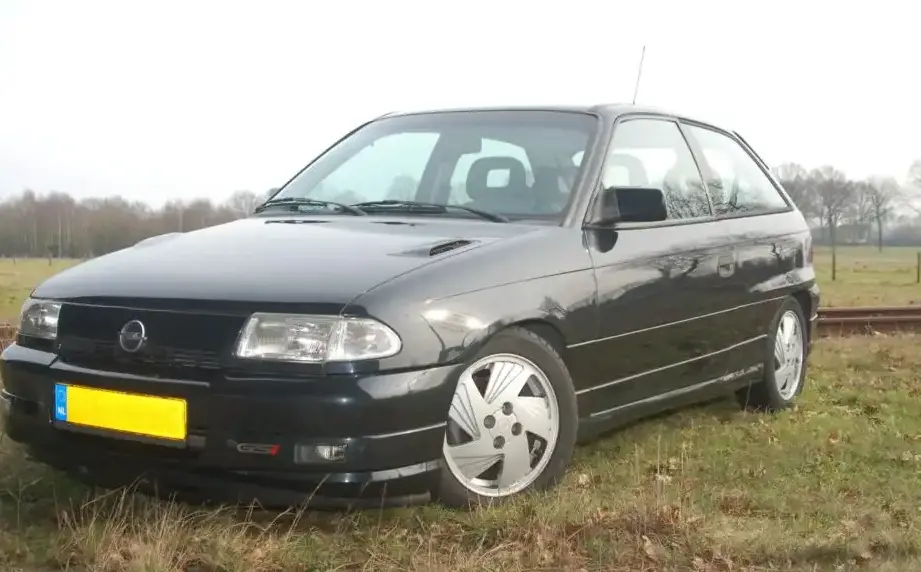
The Opel Astra G Cabrio 1.6 16V, produced between March 2001 and January 2003, represented an accessible entry point into the Astra G Cabriolet range. Positioned as the base model, it offered open-air motoring at a more affordable price point than its more powerful siblings. This variant was primarily marketed in Europe, capitalizing on the popularity of compact convertibles. It utilized the Astra G platform (1HX0/A3), known for its relatively lightweight construction and decent handling characteristics. The 1.6L engine and five-speed manual transmission combination aimed for a balance between fuel efficiency and acceptable performance for everyday driving.
Technical Specifications
| Brand | Opel |
| Model | Astra |
| Generation | Astra G Cabrio |
| Type (Engine) | 1.6 16V (101 Hp) |
| Start of production | March, 2001 |
| End of production | January, 2003 |
| Powertrain Architecture | Internal Combustion engine |
| Body type | Cabriolet |
| Seats | 4 |
| Doors | 2 |
| Fuel consumption (urban) | 9.9 l/100 km (23.8 US mpg) |
| Fuel consumption (extra urban) | 5.6 l/100 km (42 US mpg) |
| Fuel consumption (combined) | 7.2 l/100 km (32.7 US mpg) |
| CO2 emissions | 175 g/km |
| Fuel Type | Petrol (Gasoline) |
| Acceleration 0 – 100 km/h | 13 sec |
| Acceleration 0 – 62 mph | 13 sec |
| Acceleration 0 – 60 mph | 12.4 sec |
| Maximum speed | 190 km/h (118.06 mph) |
| Emission standard | Euro 3 |
| Weight-to-power ratio | 12.6 kg/Hp |
| Weight-to-torque ratio | 8.5 kg/Nm |
| Power | 101 Hp @ 6000 rpm |
| Torque | 150 Nm @ 3600 rpm (110.63 lb.-ft. @ 3600 rpm) |
| Engine layout | Front, Transverse |
| Engine Model/Code | Z16XE |
| Engine displacement | 1598 cm3 (97.52 cu. in.) |
| Number of cylinders | 4 |
| Engine configuration | Inline |
| Cylinder Bore | 79 mm (3.11 in.) |
| Piston Stroke | 81.5 mm (3.21 in.) |
| Compression ratio | 10.5:1 |
| Number of valves per cylinder | 4 |
| Fuel injection system | Multi-port manifold injection |
| Engine aspiration | Naturally aspirated engine |
| Valvetrain | DOHC |
| Engine oil capacity | 3.25 l (3.43 US qt | 2.86 UK qt) |
| Coolant capacity | 6.3 l (6.66 US qt | 5.54 UK qt) |
| Kerb Weight | 1275 kg (2810.89 lbs.) |
| Max. weight | 1695 kg (3736.84 lbs.) |
| Max load | 420 kg (925.94 lbs.) |
| Trunk (boot) space – minimum | 330 l (11.65 cu. ft.) |
| Fuel tank capacity | 52 l (13.74 US gal | 11.44 UK gal) |
| Length | 4267 mm (167.99 in.) |
| Width | 1709 mm (67.28 in.) |
| Width including mirrors | 1989 mm (78.31 in.) |
| Height | 1390 mm (54.72 in.) |
| Wheelbase | 2606 mm (102.6 in.) |
| Front track | 1474 mm (58.03 in.) |
| Rear track | 1462 mm (57.56 in.) |
| Front overhang | 812 mm (31.97 in.) |
| Rear overhang | 849 mm (33.43 in.) |
| Drag coefficient (Cd) | 0.30 |
| Minimum turning circle | 11 m (36.09 ft.) |
| Drivetrain Architecture | Front wheel drive |
| Number of gears | 5 |
| Gearbox type | Manual transmission |
| Front suspension | Independent, McPherson with coil spring and anti-roll bar |
| Rear suspension | Semi-independent, coil spring |
| Front brakes | Ventilated discs |
| Rear brakes | Disc |
| Assisting systems | ABS (Anti-lock braking system) |
| Steering type | Steering rack and pinion |
| Power steering | Hydraulic |
| Tires size | 195/60 R15 H |
| Wheel rims size | 6.5J x 15 |
Powertrain & Engine Architecture
The heart of the Astra G Cabrio 1.6 16V is the Z16XE engine, a 1.6-liter inline-four cylinder gasoline engine. This engine is a member of Opel’s ‘Ecotec’ family, designed with a focus on fuel efficiency and reduced emissions. It features a dual overhead camshaft (DOHC) valvetrain with four valves per cylinder, contributing to improved breathing and power output. Fuel delivery is managed by a multi-port fuel injection system. The engine produces 101 horsepower at 6000 rpm and 150 Nm (110.63 lb-ft) of torque at 3600 rpm. The engine’s relatively simple design made it reliable and relatively easy to maintain. The five-speed manual transmission was the standard offering, providing a fairly direct connection to the engine. Gear ratios were tuned for a balance of acceleration and fuel economy, rather than outright performance.
Driving Characteristics
The 1.6L engine, paired with the five-speed manual, provided adequate, but not exhilarating, performance. Acceleration from 0-60 mph took around 12.4 seconds, and top speed was approximately 118 mph. The car felt reasonably nimble due to its relatively light weight, but lacked the punch of the more powerful 2.0L or turbocharged variants. The gear ratios were spaced to keep the engine within its optimal power band during normal driving conditions. Compared to the 2.0L 16V or the later turbocharged models, the 1.6L felt noticeably slower, particularly when fully loaded or tackling uphill climbs. However, the lighter engine also contributed to slightly better handling balance.
Equipment & Trim Levels
The base 1.6 16V trim typically included features such as power steering, ABS brakes, central locking, and basic instrumentation. Interior upholstery was usually cloth, and the dashboard featured a straightforward layout. Optional extras included air conditioning, alloy wheels, a CD player, and electric windows. The trim level was deliberately kept basic to maintain an attractive price point. It was aimed at buyers who prioritized affordability and open-air enjoyment over luxury features and high performance.
Chassis & Braking
The Astra G Cabrio utilized a McPherson strut front suspension and a semi-independent coil spring rear suspension. This setup provided a reasonable compromise between ride comfort and handling. The front brakes were ventilated discs, while the rear brakes were solid discs. ABS (Anti-lock Braking System) was standard, enhancing safety. The suspension was tuned for comfort, resulting in a slightly softer ride compared to the coupe or hatchback versions of the Astra G. Stabilizer bars were fitted to both the front and rear axles to reduce body roll during cornering.
Market Reception & Comparison
The Astra G Cabrio 1.6 16V was generally well-received as an affordable and stylish convertible. Critics praised its handling and fuel efficiency, but noted its lack of outright performance. Compared to the more powerful Astra G Cabrio variants, the 1.6L offered significantly better fuel economy. The 2.0L 16V provided a noticeable performance boost, but at the expense of fuel consumption. The turbocharged models offered even greater performance, but were considerably more expensive and potentially less reliable. The 1.6L appealed to buyers who wanted a fun, economical, and reliable convertible for everyday use.
Legacy
The Z16XE engine, while not known for being particularly powerful, proved to be a durable and reliable unit. Astra G Cabrios with this engine are still relatively common on the used car market today. Maintenance costs are generally low, and parts availability is good. However, as with any older vehicle, potential buyers should be aware of common issues such as corrosion and wear and tear on suspension components. The 1.6L variant remains a popular choice for those seeking an affordable and enjoyable classic convertible experience.