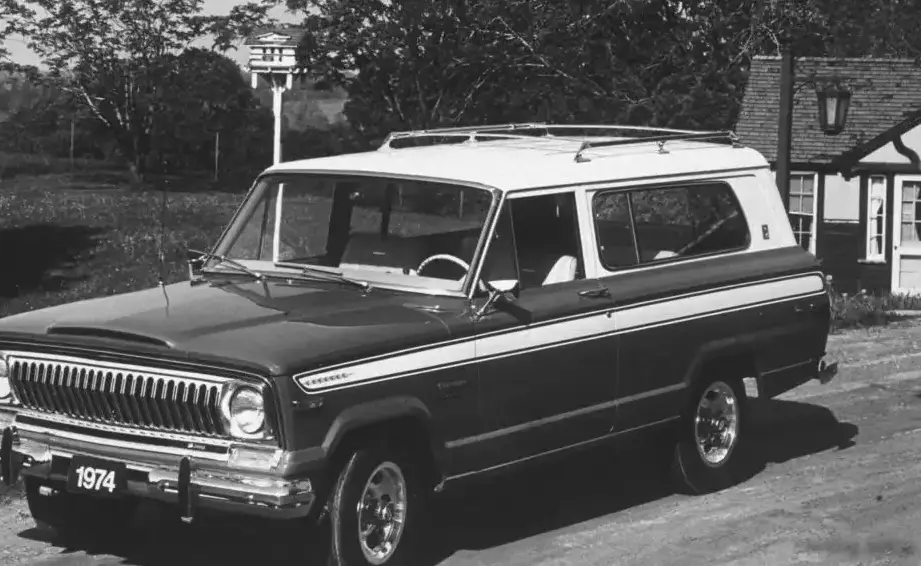
The Jeep Cherokee SJ Chief 5.9 V8, produced for a limited run between 1977 and 1978, represents a unique and powerful iteration of the first-generation Cherokee (SJ). Positioned as a more performance-oriented variant within the Cherokee lineup, the Chief 5.9 offered a substantial increase in horsepower compared to the base models, appealing to buyers seeking both off-road capability and on-road presence. This two-door SUV was a key player in establishing the Cherokee’s reputation as a versatile and rugged vehicle, particularly in the North American market. It was built on the Jeep SJ platform, sharing its core structure with other full-size Jeep models of the era.
Technical Specifications
| Brand | Jeep |
| Model | Cherokee |
| Generation | Cherokee I (SJ) 3-door |
| Type | Chief 5.9 V8 (182 Hp) 4WD Automatic |
| Start of production | 1977 |
| End of production | 1978 |
| Powertrain Architecture | Internal Combustion engine |
| Body type | SUV |
| Seats | 5 |
| Doors | 3 |
| Fuel Type | Petrol (Gasoline) |
| Maximum speed | 125 km/h (77.67 mph) |
| Weight-to-power ratio | 11 kg/Hp, 91 Hp/tonne |
| Power | 182 Hp @ 4200 rpm |
| Power per litre | 30.9 Hp/l |
| Engine layout | Front, Longitudinal |
| Engine Model/Code | AMC P |
| Engine displacement | 5893 cm3 (359.61 cu. in.) |
| Number of cylinders | 8 |
| Engine configuration | V-engine |
| Cylinder Bore | 103.63 mm (4.08 in.) |
| Piston Stroke | 87.38 mm (3.44 in.) |
| Compression ratio | 8.25:1 |
| Fuel injection system | Carburettor |
| Engine aspiration | Naturally aspirated engine |
| Valvetrain | OHV |
| Engine oil capacity | 4.7 l (4.97 US qt | 4.14 UK qt) |
| Coolant | 13.2 l (13.95 US qt | 11.61 UK qt) |
| Kerb Weight | 2000 kg (4409.25 lbs.) |
| Max. weight | 2350 kg (5180.86 lbs.) |
| Max load | 350 kg (771.62 lbs.) |
| Trunk (boot) space – maximum | 2693 l (95.1 cu. ft.) |
| Fuel tank capacity | 83 l (21.93 US gal | 18.26 UK gal) |
| Permitted trailer load without brakes | 680 kg (1499.14 lbs.) |
| Length | 4600 mm (181.1 in.) |
| Width | 2000 mm (78.74 in.) |
| Height | 1730 mm (68.11 in.) |
| Wheelbase | 2770 mm (109.06 in.) |
| Front track | 1670 mm (65.75 in.) |
| Rear (Back) track | 1580 mm (62.2 in.) |
| Front overhang | 700 mm (27.56 in.) |
| Rear overhang | 1130 mm (44.49 in.) |
| Ride height (ground clearance) | 218 mm (8.58 in.) |
| Minimum turning circle (turning diameter) | 12 m (39.37 ft.) |
| Drivetrain Architecture | The Internal combustion engine (ICE) drives the rear wheels permanently, and the front wheels are driven through an electrically or mechanically operated clutch if necessary. |
| Drive wheel | All wheel drive (4×4) |
| Number of gears and type of gearbox | 3 gears, automatic transmission |
| Front suspension | Leaf spring |
| Rear suspension | Leaf spring |
| Front brakes | Disc |
| Rear brakes | Drum |
| Steering type | Cone worm with recirculation balls |
| Wheel rims size | 7J x 15 |
Powertrain & Engine Architecture
The heart of the Cherokee Chief 5.9 was the AMC 360 cubic inch (5.9-liter) V8 engine, designated as the AMC P engine family. This engine, a staple of American Motors Corporation (AMC) vehicles, was known for its robust construction and ample torque. The 1977-1978 version produced 182 horsepower at 4200 rpm. Fuel delivery was managed by a carburetor, a common setup for the time, though less efficient than modern fuel injection systems. The engine featured an overhead valve (OHV) valvetrain, a relatively simple and durable design. The automatic transmission was a three-speed unit, providing smooth but not particularly quick shifts. This combination prioritized usability and towing capacity over outright acceleration.
Driving Characteristics
The Cherokee Chief 5.9, with its 5.9L V8 and automatic transmission, offered a distinctly different driving experience compared to the four-cylinder or inline-six powered Cherokees. While not a sports car, the V8 provided ample low-end torque, making it capable of tackling challenging terrain and hauling loads with ease. The automatic transmission, while convenient, did result in some power loss and a less engaging driving experience than a manual transmission. Acceleration was adequate for the era, but the Cherokee Chief 5.9 was not known for its speed. The 3-speed automatic’s gear ratios were optimized for towing and off-road crawling rather than rapid acceleration. The vehicle’s substantial weight (around 4409 lbs) further limited its performance.
Equipment & Trim Levels
The Chief trim level, even in its base form, offered a reasonable level of equipment. Standard features typically included a basic interior with vinyl or cloth upholstery, a heater and defroster, and a relatively simple dashboard layout. The Chief 5.9 often included upgraded features like power steering and power brakes. Optional extras could include air conditioning, a radio, and upgraded interior trim packages. The interior was functional and durable, designed to withstand the rigors of off-road use. The two-door configuration meant rear seat access was less convenient than in four-door models.
Chassis & Braking
The Cherokee SJ utilized a body-on-frame construction, providing a robust and durable chassis. Suspension consisted of leaf springs at both the front and rear, a common setup for trucks and SUVs of the time. This suspension provided a comfortable ride on paved roads but was primarily designed for off-road capability and load-carrying capacity. The braking system featured disc brakes on the front wheels and drum brakes on the rear. While adequate for the vehicle’s weight and intended use, the braking system was not particularly sophisticated by modern standards. The steering system employed a cone worm and recirculation balls setup, providing a relatively direct steering feel.
Market Reception & Comparison
The Cherokee Chief 5.9 V8 was generally well-received by automotive critics and buyers who prioritized power and capability. However, its fuel economy was a significant drawback, especially during the late 1970s when fuel prices were rising. Compared to the base Cherokee models with smaller engines, the Chief 5.9 offered a substantial performance upgrade but came at a higher price point. It was often compared to other full-size SUVs of the era, such as the Chevrolet Blazer and Ford Bronco, offering a similar level of capability and ruggedness. The Chief 5.9 appealed to a niche market of buyers who wanted a powerful and capable SUV for both on-road and off-road adventures.
Legacy
The Cherokee Chief 5.9 V8, while produced for only two years, has become a sought-after classic among Jeep enthusiasts. The AMC 360 V8 engine is known for its durability and relative simplicity, making it a relatively easy engine to maintain and repair. However, parts availability can be a challenge, as many components are no longer in production. Today, well-maintained examples of the Cherokee Chief 5.9 command a premium in the used car market, appealing to collectors and enthusiasts who appreciate its unique combination of power, capability, and classic Jeep styling. The powertrain, while not particularly fuel-efficient by modern standards, remains a reliable and enjoyable powerplant for those who appreciate a classic American V8 engine.