
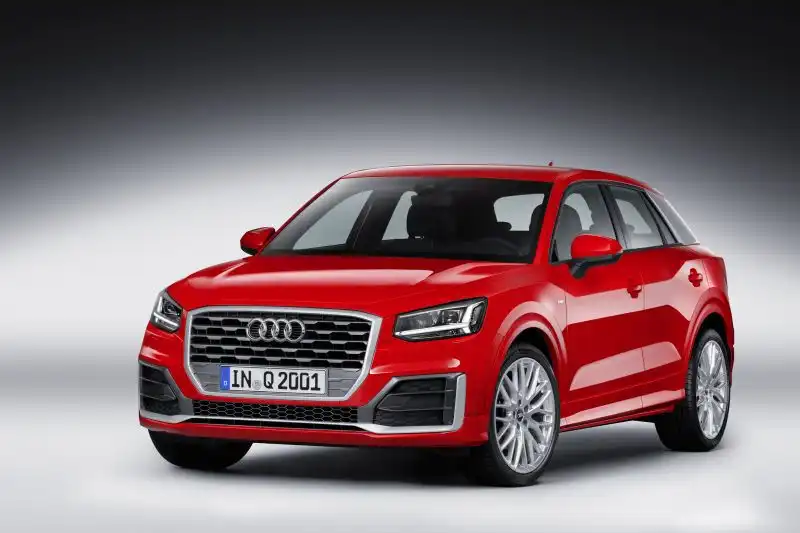
The Audi Q2 30 TFSI S tronic, produced from 2018 to 2020, represents an entry point into the Audi Q2 range. Positioned as a compact crossover SUV, it was primarily marketed in Europe and other international markets, offering a blend of Audi’s premium interior and technology within a relatively affordable package. This variant utilized a 1.0-liter turbocharged three-cylinder engine paired with Audi’s seven-speed S tronic dual-clutch transmission, targeting buyers seeking fuel efficiency and ease of use over outright performance. It occupied the lower end of the Q2 lineup, sitting below the more powerful 35 TFSI and diesel variants.
Technical Specifications
| Brand | Audi |
| Model | Q2 |
| Generation | Q2 |
| Type (Engine) | 30 TFSI (116 Hp) S tronic |
| Start of production | 2018 |
| End of production | 2020 |
| Powertrain Architecture | Internal Combustion engine |
| Body type | SUV |
| Seats | 5 |
| Doors | 5 |
| Fuel consumption (urban) | 5.9-6.1 l/100 km (39.9 – 38.6 US mpg) |
| Fuel consumption (extra urban) | 5.0-5.1 l/100 km (47 – 46.1 US mpg) |
| Fuel consumption (combined) | 5.3-5.4 l/100 km (44.4 – 43.6 US mpg) |
| CO2 emissions | 122-124 g/km |
| Fuel Type | Petrol (Gasoline) |
| Acceleration 0 – 100 km/h | 10.3 sec |
| Acceleration 0 – 62 mph | 10.3 sec |
| Acceleration 0 – 60 mph | 9.8 sec |
| Maximum speed | 197 km/h (122.41 mph) |
| Emission standard | Euro 6d – TEMP |
| Weight-to-power ratio | 10.8 kg/Hp |
| Weight-to-torque ratio | 6.3 kg/Nm |
| Power | 116 Hp @ 5000-5500 rpm |
| Torque | 200 Nm @ 2000-3500 rpm (147.51 lb.-ft. @ 2000-3500 rpm) |
| Engine layout | Front, Transverse |
| Engine Model/Code | DKRF |
| Engine displacement | 999 cm3 (60.96 cu. in.) |
| Number of cylinders | 3 |
| Engine configuration | Inline |
| Number of valves per cylinder | 4 |
| Fuel injection system | Direct injection |
| Engine aspiration | Turbocharger, Intercooler |
| Engine oil capacity | 4 l (4.23 US qt | 3.52 UK qt) |
| Coolant capacity | 8 l (8.45 US qt | 7.04 UK qt) |
| Kerb Weight | 1250 kg (2755.78 lbs.) |
| Max. weight | 1830 kg (4034.46 lbs.) |
| Max load | 580 kg (1278.68 lbs.) |
| Trunk (boot) space – minimum | 405 l (14.3 cu. ft.) |
| Trunk (boot) space – maximum | 1050 l (37.08 cu. ft.) |
| Fuel tank capacity | 50 l (13.21 US gal | 11 UK gal) |
| Max. roof load | 60 kg (132.28 lbs.) |
| Permitted trailer load with brakes (8%) | 1500 kg (3306.93 lbs.) |
| Permitted trailer load with brakes (12%) | 1300 kg (2866.01 lbs.) |
| Permitted trailer load without brakes | 660 kg (1455.05 lbs.) |
| Permitted towbar download | 75 kg (165.35 lbs.) |
| Length | 4191 mm (165 in.) |
| Width | 1794 mm (70.63 in.) |
| Width including mirrors | 2009 mm (79.09 in.) |
| Height | 1508 mm (59.37 in.) |
| Wheelbase | 2601 mm (102.4 in.) |
| Front track | 1547 mm (60.91 in.) |
| Rear track | 1541 mm (60.67 in.) |
| Minimum turning circle | 11.1 m (36.42 ft.) |
| Drivetrain Architecture | Front wheel drive |
| Number of gears | 7 |
| Gearbox type | Automatic transmission S tronic |
| Front suspension | Independent type McPherson |
| Rear suspension | Torsion |
| Front brakes | Ventilated discs |
| Rear brakes | Disc |
| Assisting systems | ABS (Anti-lock braking system) |
| Steering type | Steering rack and pinion |
| Power steering | Electric |
INTRODUCTION
The Audi Q2 30 TFSI S tronic, launched in 2018, was a key component of Audi’s strategy to broaden the appeal of the Q2 model line. Built on the Volkswagen Group’s MQB platform (specifically the A05 variant), it shared its underpinnings with models like the Volkswagen Polo and Audi A1. The “30 TFSI” designation indicated the engine’s power output, while “S tronic” denoted the use of Audi’s efficient dual-clutch transmission. This variant was aimed at buyers prioritizing fuel economy, ease of driving, and the prestige of the Audi brand, rather than outright performance. Production continued until 2020, with subsequent model year updates introducing minor revisions to equipment and styling.
Powertrain & Engine Architecture
At the heart of the Q2 30 TFSI lies the DKRF engine, a 1.0-liter turbocharged three-cylinder petrol engine. This engine is part of Audi’s EA211 family, known for its compact size and efficiency. It features direct fuel injection, a single scroll turbocharger, and an intercooler to enhance performance. The engine produces 116 horsepower at 5000-5500 rpm and 200 Nm (147.51 lb-ft) of torque between 2000 and 3500 rpm. The S tronic seven-speed dual-clutch transmission is a crucial element of this powertrain. It offers quick and smooth gear changes, contributing to both performance and fuel efficiency. The transmission features two clutches, allowing for pre-selection of the next gear, minimizing interruption in power delivery. The engine is transversely mounted, driving the front wheels.
Driving Characteristics
The Q2 30 TFSI S tronic delivers a comfortable and refined driving experience, prioritizing ease of use over sporty handling. Acceleration from 0 to 60 mph takes approximately 9.8 seconds, and it reaches a top speed of 122.41 mph. While not particularly quick, the engine provides adequate power for everyday driving situations. The S tronic transmission contributes to a responsive feel, with quick shifts and seamless transitions. The gear ratios are tuned for fuel efficiency, with taller gearing in higher gears. Compared to the more powerful 35 TFSI variant, the 30 TFSI feels noticeably less energetic, particularly during overtaking maneuvers. However, the lower power output also results in better fuel economy. The steering is light and precise, making it easy to maneuver in urban environments.
Equipment & Trim Levels
The Q2 30 TFSI S tronic typically came equipped with a respectable level of standard features. These included Audi’s MMI infotainment system with a 7-inch display, Bluetooth connectivity, air conditioning, and a leather-wrapped multifunction steering wheel. Safety features such as ABS, electronic stability control, and multiple airbags were also standard. Higher trim levels offered options such as Audi Virtual Cockpit (a fully digital instrument cluster), navigation system, heated seats, and a panoramic sunroof. Interior upholstery was typically cloth, with leather options available as upgrades. Exterior styling options included various wheel designs and paint colors.
Chassis & Braking
The Q2 30 TFSI utilizes a McPherson strut front suspension and a torsion beam rear suspension. This setup provides a good balance between comfort and handling. The front suspension features independent operation, while the torsion beam rear suspension is a cost-effective and space-saving solution. The braking system consists of ventilated discs at the front and solid discs at the rear. ABS (Anti-lock Braking System) is standard, enhancing braking performance and stability. The Q2’s relatively low weight (1250 kg / 2755.78 lbs) contributes to its manageable handling characteristics.
Market Reception & Comparison
The Audi Q2 30 TFSI S tronic was generally well-received by automotive critics. It was praised for its stylish design, premium interior, and fuel efficiency. However, some reviewers noted that the 1.0-liter engine could feel underpowered, particularly when fully loaded or driving uphill. Compared to the 35 TFSI variant, the 30 TFSI offered a more affordable entry point into the Q2 range, but at the expense of performance. In terms of fuel economy, the 30 TFSI outperformed the more powerful engines, achieving combined fuel consumption figures of 5.3-5.4 l/100 km (44.4 – 43.6 US mpg). Reliability reports suggest that the DKRF engine and S tronic transmission are generally reliable, although regular maintenance is essential.
Legacy
The Audi Q2 30 TFSI S tronic remains a popular choice in the used car market, particularly for buyers seeking a stylish and efficient compact SUV. The 1.0-liter engine and S tronic transmission have proven to be relatively durable, provided they are properly maintained. While not the most exciting variant in the Q2 lineup, it offers a compelling combination of practicality, comfort, and brand prestige. Its continued presence in the used car market reflects its appeal to a broad range of buyers looking for a premium crossover experience without a premium price tag.
