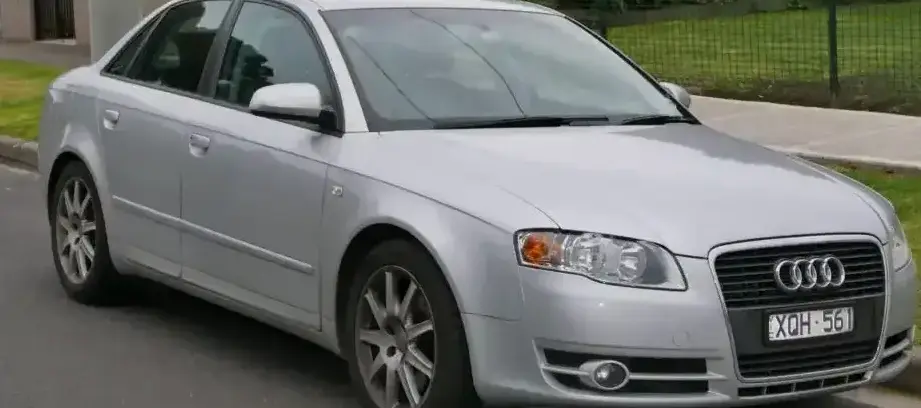
The Audi A4 (B7) 1.8T, produced between 2004 and 2008, represented a significant evolution of Audi’s popular compact executive car. Positioned as a mid-range offering within the B7 generation (internally designated 8E), this variant combined a turbocharged 1.8-liter four-cylinder engine with a five-speed automatic transmission. It aimed to provide a balance of performance, fuel efficiency, and comfort for buyers seeking a more accessible entry point into the A4 lineup compared to the higher-performance models like the 3.2 FSI or the diesel-powered TDI variants. The B7 A4 was a crucial model for Audi, building upon the success of the B6 and solidifying the brand’s reputation for sophisticated engineering and build quality in the North American and European markets.
Technical Specifications
| Brand | Audi |
| Model | A4 |
| Generation | A4 (B7 8E) |
| Type (Engine) | 1.8 T (163 Hp) |
| Start of production | 2004 |
| End of production | 2008 |
| Powertrain Architecture | Internal Combustion engine |
| Body type | Sedan |
| Seats | 5 |
| Doors | 4 |
| Fuel consumption (urban) | 11.3 l/100 km (20.8 US mpg, 25 UK mpg, 8.8 km/l) |
| Fuel consumption (extra urban) | 6.4 l/100 km (36.8 US mpg, 44.1 UK mpg, 15.6 km/l) |
| Fuel consumption (combined) | 8.2 l/100 km (28.7 US mpg, 34.4 UK mpg, 12.2 km/l) |
| CO2 emissions | 197 g/km |
| Fuel Type | Petrol (Gasoline) |
| Acceleration 0 – 100 km/h | 8.6 sec |
| Acceleration 0 – 62 mph | 8.6 sec |
| Acceleration 0 – 60 mph | 8.2 sec |
| Maximum speed | 228 km/h (141.67 mph) |
| Emission standard | Euro 4 |
| Weight-to-power ratio | 8.5 kg/Hp, 117.3 Hp/tonne |
| Weight-to-torque ratio | 6.2 kg/Nm, 161.9 Nm/tonne |
| Power | 163 Hp @ 5700 rpm |
| Power per litre | 91.5 Hp/l |
| Torque | 225 Nm @ 1950-4700 rpm (165.95 lb.-ft. @ 1950-4700 rpm) |
| Engine layout | Front, Longitudinal |
| Engine Model/Code | BFB |
| Engine displacement | 1781 cm3 (108.68 cu. in.) |
| Number of cylinders | 4 |
| Engine configuration | Inline |
| Cylinder Bore | 81 mm (3.19 in.) |
| Piston Stroke | 86.4 mm (3.4 in.) |
| Compression ratio | 9.3:1 |
| Number of valves per cylinder | 5 |
| Fuel injection system | Multi-port manifold injection |
| Engine aspiration | Turbocharger, Intercooler |
| Valvetrain | DOHC |
| Engine oil capacity | 4.1 l (4.33 US qt | 3.61 UK qt) |
| Coolant | 8 l (8.45 US qt | 7.04 UK qt) |
| Kerb Weight | 1390 kg (3064.43 lbs.) |
| Max. weight | 1940 kg (4276.97 lbs.) |
| Max load | 550 kg (1212.54 lbs.) |
| Trunk (boot) space – minimum | 460 l (16.24 cu. ft.) |
| Trunk (boot) space – maximum | 720 l (25.43 cu. ft.) |
| Fuel tank capacity | 70 l (18.49 US gal | 15.4 UK gal) |
| Max. roof load | 75 kg (165.35 lbs.) |
| Permitted trailer load with brakes (8%) | 1600 kg (3527.4 lbs.) |
| Permitted trailer load with brakes (12%) | 1400 kg (3086.47 lbs.) |
| Permitted trailer load without brakes | 730 kg (1609.37 lbs.) |
| Permitted towbar download | 80 kg (176.37 lbs.) |
| Length | 4586 mm (180.55 in.) |
| Width | 1772 mm (69.76 in.) |
| Width including mirrors | 1937 mm (76.26 in.) |
| Height | 1427 mm (56.18 in.) |
| Wheelbase | 2648 mm (104.25 in.) |
| Front track | 1522 mm (59.92 in.) |
| Rear (Back) track | 1522 mm (59.92 in.) |
| Drag coefficient (Cd) | 0.30 |
| Minimum turning circle (turning diameter) | 11.1 m (36.42 ft.) |
| Drivetrain Architecture | The Internal combustion engine (ICE) drives the front wheels of the vehicle. |
| Drive wheel | Front wheel drive |
| Number of gears and type of gearbox | 5 gears, manual transmission |
| Front suspension | Independent multi-link suspension |
| Rear suspension | Independent multi-link suspension |
| Front brakes | Ventilated discs |
| Rear brakes | Disc |
| Assisting systems | ABS (Anti-lock braking system) |
| Steering type | Steering rack and pinion |
| Power steering | Hydraulic Steering |
| Tires size | 205/55 R16 |
| Wheel rims size | 7J x 16 |
Powertrain & Engine Architecture
The heart of the A4 1.8T B7 is the BFB engine code, a 1781cc inline-four cylinder engine. This engine is a member of the EA888 family, known for its robust construction and tuning potential. The BFB utilizes a single turbocharger with an intercooler to boost power and torque. Fuel delivery is managed by a multi-port fuel injection system, providing precise fuel metering for optimal combustion. The engine features a double overhead camshaft (DOHC) valvetrain with five valves per cylinder (four intake, one exhaust), enhancing volumetric efficiency. The five-speed automatic transmission (typically the 01V) was chosen for its smooth operation and ease of use, catering to drivers prioritizing comfort over outright performance. This transmission features a torque converter and electronic control for optimized shift points.
Driving Characteristics
The 1.8T automatic A4 offered a comfortable and refined driving experience. With 163 horsepower and 166 lb-ft of torque, acceleration was adequate for everyday driving, achieving 0-60 mph in around 8.2 seconds. However, it wasn’t as brisk as the higher-powered variants. The automatic transmission, while smooth, did result in some power loss compared to the six-speed manual option. Gear ratios were tuned for fuel efficiency and comfortable cruising, rather than aggressive acceleration. The engine provided a usable powerband, with peak torque available from 1950-4700 rpm, making it suitable for both city and highway driving. Compared to the 2.0T or 3.2 FSI models, the 1.8T automatic felt less responsive, but it offered a more relaxed and economical driving experience.
Equipment & Trim Levels
The 1.8T automatic typically came standard with features like air conditioning, power windows and locks, a multi-function steering wheel, and an Audi Concert audio system. Interior upholstery was usually cloth, although leather options were available. Common optional extras included sunroof, heated front seats, parking sensors, and upgraded alloy wheels. Trim levels varied by market, but generally, the 1.8T automatic occupied a mid-range position in the A4 lineup, offering a good balance of features and price. The dashboard layout was typical of Audi at the time, with a clean and functional design emphasizing ergonomics.
Chassis & Braking
The B7 A4 featured fully independent multi-link suspension at both the front and rear, providing a comfortable ride and good handling characteristics. The 1.8T models typically used slightly smaller stabilizer bars compared to the higher-performance variants. Braking systems consisted of ventilated discs at the front and solid discs at the rear, equipped with ABS (Anti-lock Braking System). The suspension tuning was geared towards comfort and stability, rather than outright sportiness. The front track and rear track were both 1522mm, contributing to the car’s balanced handling.
Market Reception & Comparison
The A4 1.8T automatic was generally well-received by critics as a practical and well-rounded compact executive car. It was praised for its comfortable ride, refined interior, and good fuel economy (around 28.7 US mpg combined). However, some reviewers noted that the automatic transmission dulled the engine’s performance compared to the manual version. Compared to rivals like the BMW 3 Series and Mercedes-Benz C-Class, the A4 1.8T offered a compelling combination of value, features, and driving dynamics. The 1.8T was often seen as a more sensible and economical choice than the more powerful, but also more expensive, A4 variants.
Legacy
The BFB engine, while generally reliable, is known to be susceptible to carbon buildup on the intake valves, particularly with infrequent oil changes. The automatic transmission, if properly maintained, is also relatively durable. Today, the A4 B7 1.8T automatic represents an affordable entry point into Audi ownership. It’s a popular choice for those seeking a comfortable and reliable used car with a touch of German engineering. Parts availability is generally good, and the car’s relatively simple mechanicals make it a viable option for DIY mechanics. While not a performance icon, the A4 1.8T B7 remains a respected and capable compact executive car.