
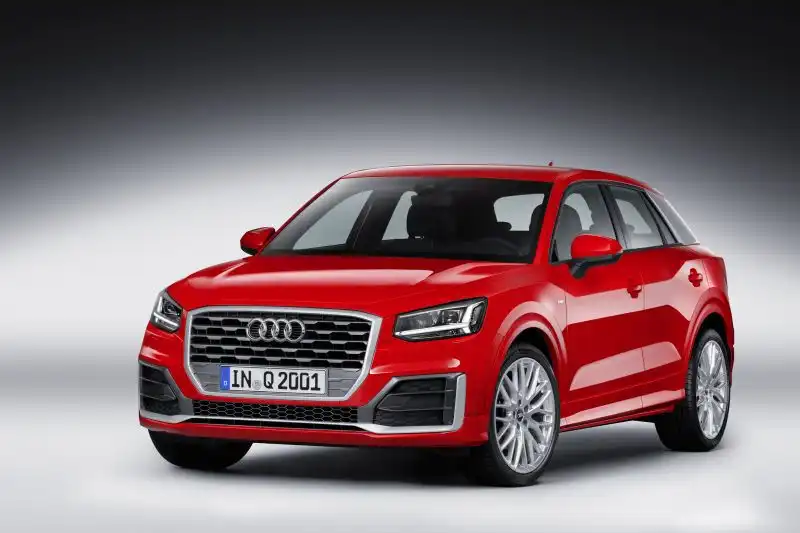
The Audi Q2 35 TDI, produced from 2018 to 2020, represents a key variant within the first generation (GA) of Audi’s subcompact luxury crossover SUV, the Q2. Positioned as a mid-range offering, the 35 TDI aimed to balance fuel efficiency with respectable performance, appealing to European buyers seeking a practical yet premium vehicle. It played a significant role in Audi’s expansion into the growing subcompact SUV segment, offering a more accessible entry point into the Audi brand compared to larger Q models. This particular configuration utilized a 2.0-liter turbocharged diesel engine paired with a six-speed manual transmission, a common setup in European markets prioritizing fuel economy and driving engagement.
Technical Specifications
| Brand | Audi |
| Model | Q2 |
| Generation | Q2 (GA) |
| Type (Engine) | 35 TDI (150 Hp) |
| Start of production | 2018 |
| End of production | 2020 |
| Powertrain Architecture | Internal Combustion engine |
| Body type | SUV |
| Seats | 5 |
| Doors | 5 |
| Combined fuel consumption (WLTP) | 5.2-5.7 l/100 km (45.2 – 41.3 US mpg, 54.3 – 49.6 UK mpg, 19.2 – 17.5 km/l) |
| CO2 emissions (WLTP) | 137-149 g/km |
| Fuel consumption (urban) | 5.4-5.8 l/100 km (43.6 – 40.6 US mpg, 52.3 – 48.7 UK mpg, 18.5 – 17.2 km/l) |
| Fuel consumption (extra urban) | 3.9-4.2 l/100 km (60.3 – 56 US mpg, 72.4 – 67.3 UK mpg, 25.6 – 23.8 km/l) |
| Fuel consumption (combined) | 4.5-4.7 l/100 km (52.3 – 50 US mpg, 62.8 – 60.1 UK mpg, 22.2 – 21.3 km/l) |
| CO2 emissions | 118-124 g/km |
| Fuel Type | Diesel |
| Acceleration 0 – 100 km/h | 8.5 sec |
| Acceleration 0 – 62 mph | 8.5 sec |
| Acceleration 0 – 60 mph | 8.1 sec |
| Maximum speed | 211 km/h (131.11 mph) |
| Emission standard | Euro 6d-Temp |
| Weight-to-power ratio | 9.1 kg/Hp, 109.9 Hp/tonne |
| Weight-to-torque ratio | 4 kg/Nm, 249.1 Nm/tonne |
| Power | 150 Hp @ 3500-4000 rpm |
| Torque | 340 Nm @ 1750-3000 rpm (250.77 lb.-ft. @ 1750-3000 rpm) |
| Engine layout | Front, Transverse |
| Engine Model/Code | DFGA |
| Engine displacement | 1968 cm3 (120.09 cu. in.) |
| Number of cylinders | 4 |
| Engine configuration | Inline |
| Number of valves per cylinder | 4 |
| Fuel injection system | Diesel Commonrail |
| Engine aspiration | Turbocharger, Intercooler |
| Engine oil capacity | 4.7 l (4.97 US qt | 4.14 UK qt) |
| Coolant capacity | 8 l (8.45 US qt | 7.04 UK qt) |
| Kerb Weight | 1365 kg (3009.31 lbs.) |
| Max. weight | 1955 kg (4310.04 lbs.) |
| Max load | 590 kg (1300.73 lbs.) |
| Trunk (boot) space – minimum | 405 l (14.3 cu. ft.) |
| Fuel tank capacity | 50 l (13.21 US gal | 11 UK gal) |
| Max. roof load | 60 kg (132.28 lbs.) |
| Permitted trailer load with brakes (8%) | 1800 kg (3968.32 lbs.) |
| Permitted trailer load with brakes (12%) | 1600 kg (3527.4 lbs.) |
| Permitted trailer load without brakes | 720 kg (1587.33 lbs.) |
| Permitted towbar download | 75 kg (165.35 lbs.) |
| Length | 4191 mm (165 in.) |
| Width | 1794 mm (70.63 in.) |
| Width including mirrors | 2009 mm (79.09 in.) |
| Height | 1508 mm (59.37 in.) |
| Wheelbase | 2601 mm (102.4 in.) |
| Front track | 1547 mm (60.91 in.) |
| Rear track | 1541 mm (60.67 in.) |
| Front overhang | 828 mm (32.6 in.) |
| Rear overhang | 762 mm (30 in.) |
| Drivetrain Architecture | Front wheel drive |
| Number of gears and type of gearbox | 6 gears, manual transmission |
| Front suspension | Independent type McPherson |
| Rear suspension | Torsion |
| Front brakes | Ventilated discs |
| Rear brakes | Disc |
| Tires size | 205/60 R16; 215/60 R16; 215/55 R17; 215/50 R18; 235/40 R19 |
| Wheel rims size | 6J x 16; 6.5J x 16; 7J x 17; 7J x 18; 8J x 19 |
Powertrain & Engine Architecture
The heart of the Q2 35 TDI is the Volkswagen Group’s 1.968-liter (120.09 cubic inches) inline-four cylinder diesel engine, designated DFGA. This engine is part of the EA288 family, known for its robust construction and efficiency. It utilizes a common rail direct injection system, delivering fuel at extremely high pressures for optimized combustion. A turbocharger with an intercooler further enhances performance by forcing more air into the cylinders. The engine produces 150 horsepower at 3500-4000 rpm and 340 Nm (250.77 lb-ft) of torque between 1750-3000 rpm. The six-speed manual transmission provides drivers with direct control over gear selection, contributing to a more engaging driving experience. This transmission was chosen to maximize fuel economy and offer a balance between performance and cost.
Driving Characteristics
The Q2 35 TDI with the manual transmission delivers a surprisingly capable driving experience. While not overtly sporty, the engine provides ample torque for everyday driving and overtaking maneuvers. The six-speed gearbox is well-matched to the engine’s powerband, allowing for smooth and efficient gear changes. Acceleration from 0 to 100 km/h (0-62 mph) takes approximately 8.5 seconds. Compared to higher-output Q2 variants, such as those with gasoline engines, the 35 TDI prioritizes fuel efficiency over outright speed. The manual transmission offers a more connected feel than the optional S tronic dual-clutch transmission, appealing to drivers who enjoy a more traditional driving experience. The relatively low kerb weight of 1365 kg (3009.31 lbs) contributes to its nimble handling.
Equipment & Trim Levels
The Q2 35 TDI typically came equipped with a respectable level of standard features. These included Audi’s MMI radio plus infotainment system with a 5.8-inch display, air conditioning, alloy wheels, and a leather-wrapped multifunction steering wheel. Safety features such as ABS, electronic stability control, and multiple airbags were also standard. Optional extras included larger alloy wheels, a panoramic sunroof, upgraded infotainment systems with larger displays and navigation, and various driver assistance systems like park assist and adaptive cruise control. Interior upholstery was typically cloth, with leather options available as an upgrade. Trim levels varied slightly depending on the market, but generally offered progressive enhancements in terms of comfort and technology.
Chassis & Braking
The Q2 35 TDI utilizes a front-wheel-drive layout with an independent McPherson strut suspension at the front and a torsion beam suspension at the rear. This setup provides a good balance between ride comfort and handling. The front brakes are ventilated discs, while the rear brakes are solid discs. The steering is electric power-assisted, offering precise and responsive control. The suspension tuning is geared towards comfort, but the Q2 remains relatively stable and predictable in corners. The relatively compact size and lower weight of the 35 TDI variant contribute to its agility.
Market Reception & Comparison
The Audi Q2 35 TDI was generally well-received by automotive critics. It was praised for its fuel efficiency, comfortable ride, and stylish design. However, some critics noted that the interior space was somewhat limited for a vehicle in its class. Compared to other Q2 trims, the 35 TDI offered a more affordable entry point into the Q2 range, making it an attractive option for budget-conscious buyers. Its fuel economy was notably better than that of the gasoline-powered Q2 variants, making it a popular choice for those who prioritize running costs. Reliability reports suggest that the EA288 diesel engine is generally robust, although regular maintenance is crucial for long-term durability.
Legacy
The Audi Q2 35 TDI, while no longer in production, remains a popular choice in the used car market. Its combination of fuel efficiency, practicality, and Audi’s premium brand image continues to appeal to buyers. The EA288 diesel engine has proven to be relatively reliable, although potential buyers should be aware of the importance of regular servicing and adherence to manufacturer’s recommendations. The Q2 35 TDI represents a significant step in Audi’s expansion into the subcompact SUV segment, offering a compelling alternative to traditional hatchback and compact car options.
