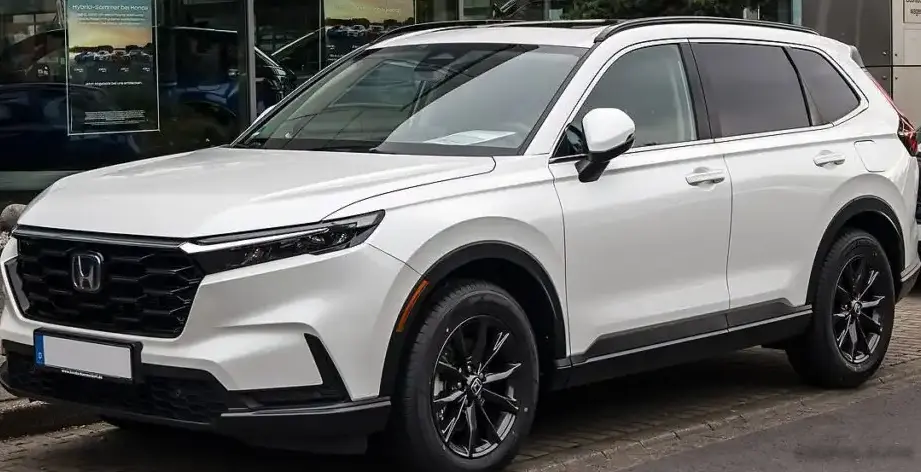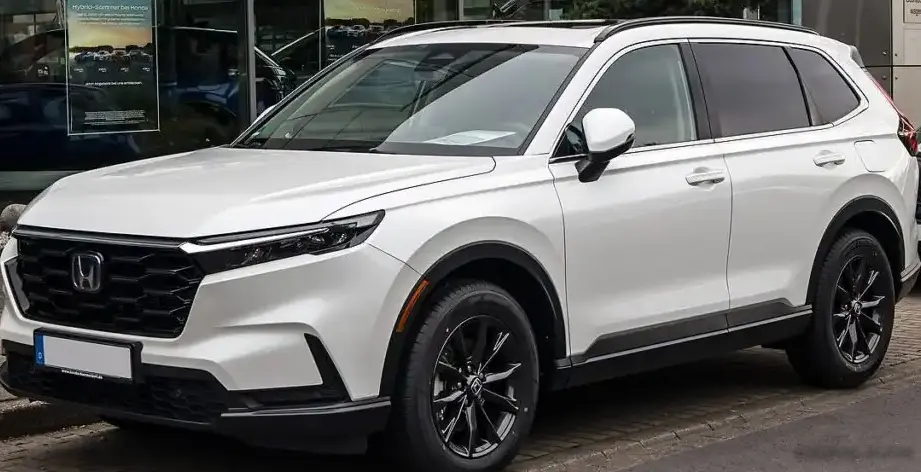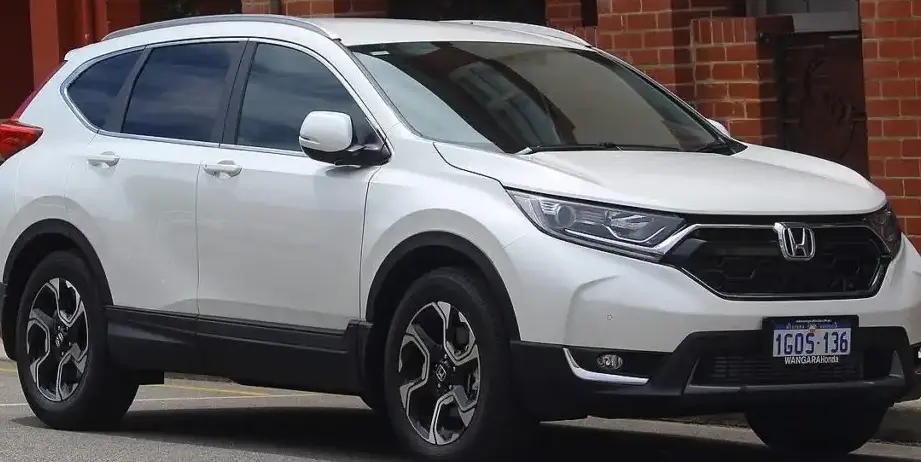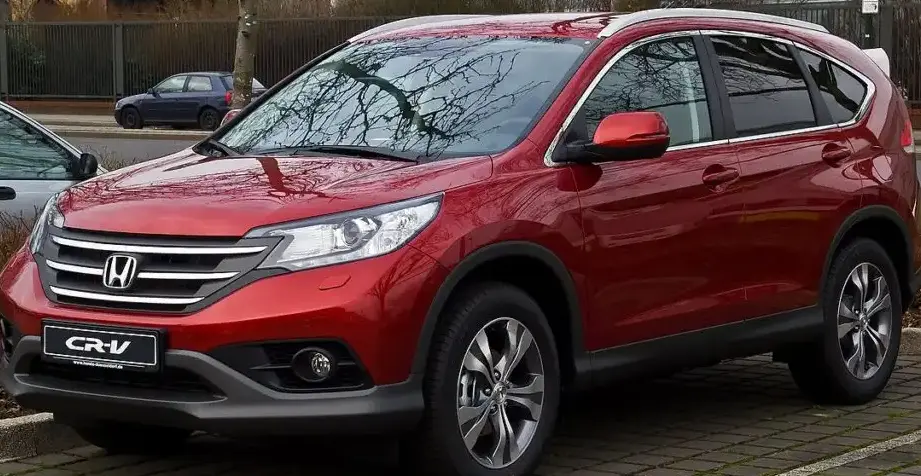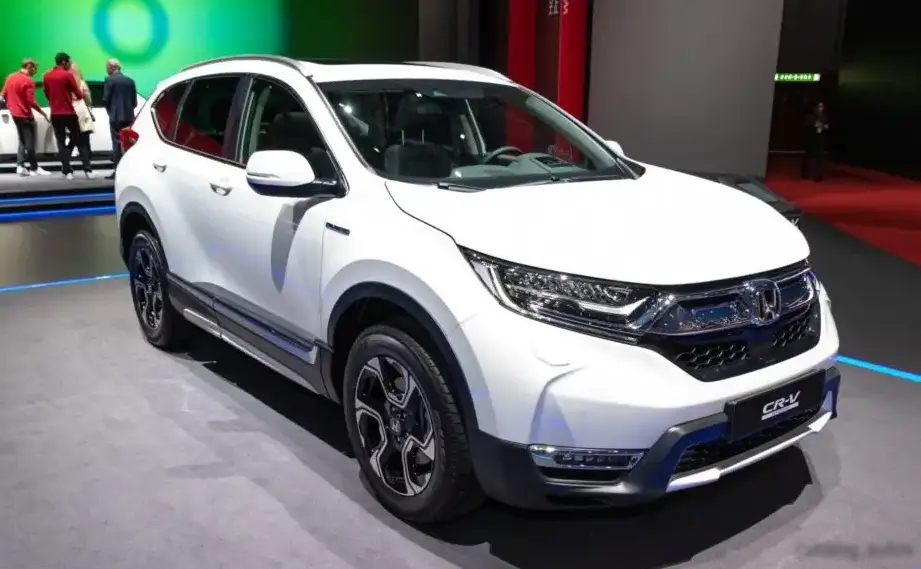
The Honda CR-V V 1.5 (190 Hp) Automatic, produced between 2017 and 2019, represents a significant iteration of Honda’s popular compact SUV. Part of the fifth-generation CR-V (internally designated as the RW platform), this variant was primarily aimed at the North American and global markets, offering a balance of fuel efficiency, practicality, and modern technology. It occupied a mid-range position within the CR-V V lineup, slotting between the base 1.5L turbocharged engine with continuously variable transmission (CVT) and the available hybrid powertrain. This specific configuration was designed to appeal to buyers seeking a comfortable and capable daily driver without the premium price tag of the higher trims or the fuel economy focus of the hybrid.
Technical Specifications
| Brand | Honda |
| Model | CR-V |
| Generation | CR-V V |
| Type (Engine) | 1.5 (190 Hp) Automatic |
| Start of production | 2017 |
| End of production | 2019 |
| Powertrain Architecture | Internal Combustion engine |
| Body type | SUV |
| Seats | 5 |
| Doors | 5 |
| Fuel consumption (urban) | 8.4 l/100 km (28 US mpg) |
| Fuel consumption (extra urban) | 6.9 l/100 km (34.1 US mpg) |
| Fuel consumption (combined) | 7.8 l/100 km (30.2 US mpg) |
| Fuel Type | Petrol (Gasoline) |
| Weight-to-power ratio | 8 kg/Hp |
| Weight-to-torque ratio | 6.3 kg/Nm |
| Power | 190 Hp @ 5600 rpm |
| Power per litre | 126.8 Hp/l |
| Torque | 243 Nm @ 2000-5000 rpm (179.23 lb.-ft. @ 2000-5000 rpm) |
| Engine layout | Front, Transverse |
| Engine Model/Code | L15BE |
| Engine displacement | 1498 cm3 (91.41 cu. in.) |
| Number of cylinders | 4 |
| Engine configuration | Inline |
| Cylinder Bore | 73 mm (2.87 in.) |
| Piston Stroke | 89.5 mm (3.52 in.) |
| Compression ratio | 10.3:1 |
| Number of valves per cylinder | 4 |
| Fuel injection system | Direct injection |
| Engine aspiration | Turbocharger, Intercooler |
| Valvetrain | DOHC |
| Engine oil capacity | 3.5 l (3.7 US qt | 3.08 UK qt) |
| Coolant capacity | 6.2 l (6.55 US qt | 5.46 UK qt) |
| Kerb Weight | 1523-1541 kg (3357.64 – 3397.32 lbs.) |
| Trunk (boot) space – minimum | 1110 l (39.2 cu. ft.) |
| Trunk (boot) space – maximum | 2146 l (75.79 cu. ft.) |
| Fuel tank capacity | 53 l (14 US gal | 11.66 UK gal) |
| Permitted trailer load with brakes (12%) | 680 kg (1499.14 lbs.) |
| Length | 4587 mm (180.59 in.) |
| Width | 1854 mm (72.99 in.) |
| Height | 1679 mm (66.1 in.) |
| Wheelbase | 2659 mm (104.69 in.) |
| Front track | 1600 mm (62.99 in.) |
| Rear track | 1618 mm (63.7 in.) |
| Ride height (ground clearance) | 198 mm (7.8 in.) |
| Minimum turning circle | 11.4 m (37.4 ft.) |
| Approach angle | 19.3° |
| Departure angle | 23.5° |
| Drivetrain Architecture | Front wheel drive |
| Number of gears and type of gearbox | automatic transmission CVT |
| Front suspension | Independent, type McPherson with coil spring and anti-roll bar |
| Rear suspension | Independent multi-link suspension |
| Front brakes | Ventilated discs |
| Rear brakes | Disc |
| Assisting systems | ABS (Anti-lock braking system) |
| Steering type | Steering rack and pinion |
| Power steering | Electric Steering |
| Tires size | 235/60 R18 |
| Wheel rims size | 18 |
Powertrain & Engine Architecture
The heart of the CR-V V 1.5 Automatic is Honda’s L15BE 1.5-liter inline-four cylinder engine. This engine utilizes direct injection and a single turbocharger with an intercooler to deliver a respectable 190 horsepower and 243 Nm (179.23 lb.-ft.) of torque. The engine employs a dual overhead camshaft (DOHC) valvetrain with four valves per cylinder, optimizing airflow for improved performance and efficiency. The turbocharger provides a noticeable boost in power, particularly at lower RPMs, addressing a common criticism of naturally aspirated engines in this class. The engine is paired with a continuously variable transmission (CVT), which prioritizes fuel economy and smooth acceleration over traditional stepped gear changes. While CVTs sometimes receive criticism for their driving feel, Honda’s implementation in the CR-V is generally well-regarded for its responsiveness and minimal “rubber band” effect.
Driving Characteristics
The 1.5L turbo engine and CVT combination in the CR-V V delivers a comfortable and predictable driving experience. Acceleration is adequate for everyday driving situations, with the turbocharger providing a useful surge of power when needed for merging or overtaking. The CVT effectively keeps the engine in its optimal power band, resulting in smooth and linear acceleration. Compared to the manual transmission versions of the CR-V, the automatic offers less driver engagement but greater convenience. Against higher-output versions (available in some markets), the 1.5L feels less powerful, particularly when fully loaded with passengers and cargo. However, the fuel economy benefits of the smaller engine and CVT are significant.
Equipment & Trim Levels
The CR-V V 1.5 Automatic typically came standard with features such as automatic climate control, a touchscreen infotainment system with Apple CarPlay and Android Auto compatibility, a rearview camera, and Honda Sensing suite of safety features (including adaptive cruise control, lane departure warning, and automatic emergency braking). Higher trim levels added features like leather upholstery, a power sunroof, and a premium audio system. Interior upholstery was typically cloth in the base trims, with leather options available on higher-spec models. Dashboard configurations were consistent across the range, featuring a clean and modern design.
Chassis & Braking
The CR-V V utilizes an independent suspension system, with McPherson struts at the front and a multi-link setup at the rear. This configuration provides a comfortable ride quality and good handling characteristics. Front brakes are ventilated discs, while rear brakes are solid discs. Anti-lock braking system (ABS) is standard. The suspension tuning is geared towards comfort rather than sporty handling, making it well-suited for everyday driving. Stabilizer bars are present at both the front and rear to reduce body roll during cornering.
Market Reception & Comparison
The CR-V V 1.5 Automatic was generally well-received by automotive critics. It was praised for its spacious interior, comfortable ride, and good fuel economy. The CVT transmission was a point of discussion, with some reviewers finding it acceptable and others preferring the engagement of a traditional automatic. Compared to competitors like the Toyota RAV4 and Nissan Rogue, the CR-V V offered a compelling combination of features and value. Fuel economy was competitive within its class, and reliability ratings were generally positive.
Legacy
The L15BE engine and CVT combination in the CR-V V has proven to be a relatively reliable powertrain. While some owners have reported minor issues with the turbocharger or CVT, these are not widespread. The CR-V V 1.5 Automatic remains a popular choice in the used car market, offering a practical and efficient option for buyers seeking a compact SUV. Its reputation for reliability and spaciousness continues to make it a desirable vehicle, and well-maintained examples command reasonable resale values.