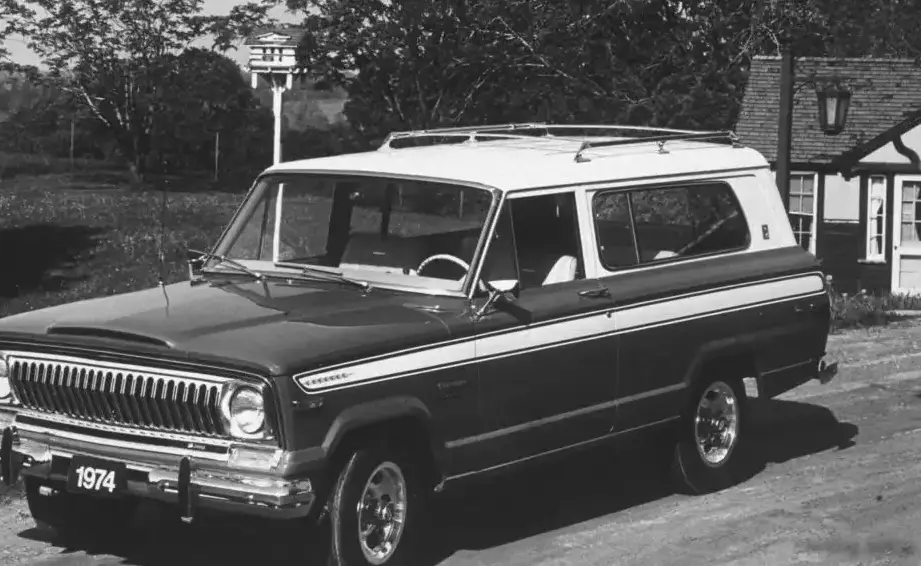
The Jeep Cherokee II (XJ), specifically the 3-door model equipped with the 4.0-liter inline-six engine and automatic transmission, represents a significant iteration in the Cherokee lineage. Produced from 1991 to 1996, this variant occupied a middle ground within the XJ range, offering a balance between capability, comfort, and affordability. It was positioned as a step up from the base 2.5-liter four-cylinder models, while remaining more accessible than the higher-trim level options. The XJ Cherokee, in general, was a pivotal vehicle for Jeep, solidifying its reputation for off-road prowess combined with on-road practicality, and this 4.0L automatic configuration was a popular choice for buyers seeking a versatile SUV.
Technical Specifications
| Brand | Jeep |
| Model | Cherokee |
| Generation | Cherokee II (XJ) 3-door |
| Type (Engine) | 4.0 i (184 Hp) Automatic |
| Start of production | 1991 |
| End of production | 1996 |
| Powertrain Architecture | Internal Combustion engine |
| Body type | SUV |
| Seats | 5 |
| Doors | 5 |
| Fuel consumption (combined) | 12.8 l/100 km (18.4 US mpg, 22.1 UK mpg, 7.8 km/l) |
| Fuel Type | Petrol (Gasoline) |
| Acceleration 0 – 100 km/h | 10.1 sec |
| Acceleration 0 – 62 mph | 10.1 sec |
| Acceleration 0 – 60 mph | 9.6 sec |
| Maximum speed | 180 km/h (111.85 mph) |
| Weight-to-power ratio | 8.3 kg/Hp, 120.3 Hp/tonne |
| Weight-to-torque ratio | 5.3 kg/Nm, 189.5 Nm/tonne |
| Power | 184 Hp @ 4750 rpm |
| Power per litre | 46.4 Hp/l |
| Torque | 290 Nm @ 3950 rpm (213.89 lb.-ft. @ 3950 rpm) |
| Engine layout | Front, Longitudinal |
| Engine Model/Code | MX |
| Engine displacement | 3964 cm3 (241.9 cu. in.) |
| Number of cylinders | 6 |
| Engine configuration | Inline |
| Cylinder Bore | 98.5 mm (3.88 in.) |
| Piston Stroke | 86.7 mm (3.41 in.) |
| Compression ratio | 8.8:1 |
| Number of valves per cylinder | 2 |
| Fuel injection system | Multi-port manifold injection |
| Engine aspiration | Naturally aspirated |
| Engine oil capacity | 5.7 l (6.02 US qt | 5.02 UK qt) |
| Coolant capacity | 11.4 l (12.05 US qt | 10.03 UK qt) |
| Kerb Weight | 1530 kg (3373.07 lbs.) |
| Max. weight | 2210 kg (4872.22 lbs.) |
| Max load | 680 kg (1499.14 lbs.) |
| Trunk (boot) space – minimum | 1011 l (35.7 cu. ft.) |
| Trunk (boot) space – maximum | 2033 l (71.79 cu. ft.) |
| Fuel tank capacity | 76 l (20.08 US gal | 16.72 UK gal) |
| Length | 4288 mm (168.82 in.) |
| Width | 1790 mm (70.47 in.) |
| Height | 1630 mm (64.17 in.) |
| Wheelbase | 2576 mm (101.42 in.) |
| Front track | 1473 mm (57.99 in.) |
| Rear track | 1473 mm (57.99 in.) |
| Drive wheel | All wheel drive (4×4) |
| Number of gears | 4 |
| Gearbox type | Automatic transmission |
| Front suspension | Coil spring |
| Rear suspension | Leaf spring |
| Front brakes | Ventilated discs |
| Rear brakes | Drum |
| Assisting systems | ABS (Anti-lock braking system), Hydraulic Power Steering |
| Tires size | 225/70 R15 T |
| Wheel rims size | 15 |
Introduction
The 1991-1996 Jeep Cherokee II (XJ) 3-door 4.0 i Automatic was a popular choice for those seeking a capable and reliable SUV. Built on the unibody XJ platform, introduced in 1984, this generation of Cherokee represented a significant departure from the previous, body-on-frame designs. The 3-door configuration offered a more compact footprint, appealing to buyers who didn’t require the extended space of the 5-door model. The 4.0-liter inline-six engine paired with an automatic transmission provided a comfortable driving experience and sufficient power for both on-road cruising and moderate off-road adventures. This particular trim level was often considered a sweet spot in the Cherokee lineup, balancing performance, fuel economy, and price.
Powertrain & Engine Architecture
The heart of this Cherokee variant is the 4.0-liter (3964 cc) inline-six cylinder engine, designated as the MX code. This engine is a robust and relatively simple design, known for its durability and torque output. It features a cast iron block and cylinder head, a 8.8:1 compression ratio, and a multi-port fuel injection system. The fuel injection system, while not cutting-edge for the time, provided reliable and efficient fuel delivery. The engine utilizes a two-valve per cylinder configuration and a single overhead camshaft. The 4.0L engine produced 184 horsepower at 4750 rpm and 290 Nm (213.89 lb-ft) of torque at 3950 rpm. The automatic transmission used in this model is typically a 42RE, a four-speed automatic known for its durability. It’s a hydraulically controlled transmission, lacking the electronic controls found in later models. The transmission’s gear ratios were optimized for a balance of acceleration and fuel efficiency, though it wasn’t particularly sporty in its shift characteristics.
Driving Characteristics
The Cherokee II 4.0L Automatic offered a comfortable and capable driving experience. While not a performance machine, the 4.0-liter engine provided ample torque for everyday driving and towing. Acceleration to 60 mph took around 9.6 seconds, which was respectable for an SUV of its size and era. The automatic transmission shifted smoothly, but could feel somewhat sluggish compared to the available manual transmission. The 4×4 system, typically a part-time system with a transfer case, allowed for easy engagement of four-wheel drive for improved traction in slippery conditions or off-road terrain. The leaf spring rear suspension contributed to a somewhat firm ride, particularly when unladen, but also provided good load-carrying capacity. The steering was hydraulic, offering reasonable assistance at low speeds and a connected feel on the road.
Equipment & Trim Levels
The 3-door Cherokee 4.0L Automatic typically came standard with features such as air conditioning, power steering, and an AM/FM radio. Higher trim levels, such as the Limited, added features like upgraded upholstery, power windows and locks, and a premium sound system. Interior upholstery was typically cloth, with optional leather available on higher trims. The dashboard layout was functional and straightforward, with easy-to-read gauges. Optional extras included a sunroof, cruise control, and upgraded wheels. The interior space, while adequate for five passengers, was somewhat limited in the 3-door configuration, particularly rear seat legroom.
Chassis & Braking
The Cherokee II utilized a unibody construction, providing a good balance of strength and weight. The front suspension consisted of coil springs and independent control arms, while the rear suspension employed leaf springs and a solid axle. This combination provided a reasonable ride quality and good off-road capability. The braking system featured ventilated discs in the front and drum brakes in the rear. Anti-lock brakes (ABS) were available as an option, enhancing safety in emergency braking situations. The tires were typically 225/70R15, providing a good compromise between on-road comfort and off-road traction.
Market Reception & Comparison
The Cherokee II 4.0L Automatic was generally well-received by critics and consumers alike. It was praised for its reliability, capability, and affordability. Compared to the 2.5-liter four-cylinder models, the 4.0-liter engine offered a significant performance boost, making it a more enjoyable vehicle to drive. Compared to the higher-trim level Cherokees, it offered a more accessible price point. Fuel economy was reasonable for an SUV of its size, averaging around 18.4 US mpg. However, some critics noted the somewhat dated interior and the firm ride quality.
Legacy
The Jeep Cherokee II (XJ) 4.0L Automatic has developed a strong following among enthusiasts and remains a popular choice in the used car market. The 4.0-liter engine is known for its longevity and relatively simple maintenance requirements. While age and mileage can lead to typical wear and tear, these engines are generally considered to be very durable. The XJ Cherokee, as a whole, is celebrated for its ruggedness and off-road capability, and this 4.0L automatic variant represents a well-rounded and reliable option for those seeking a classic SUV. Parts availability remains good, making it relatively easy to keep these vehicles on the road. Today, well-maintained examples command a premium in the collector market, reflecting the enduring appeal of this iconic Jeep.