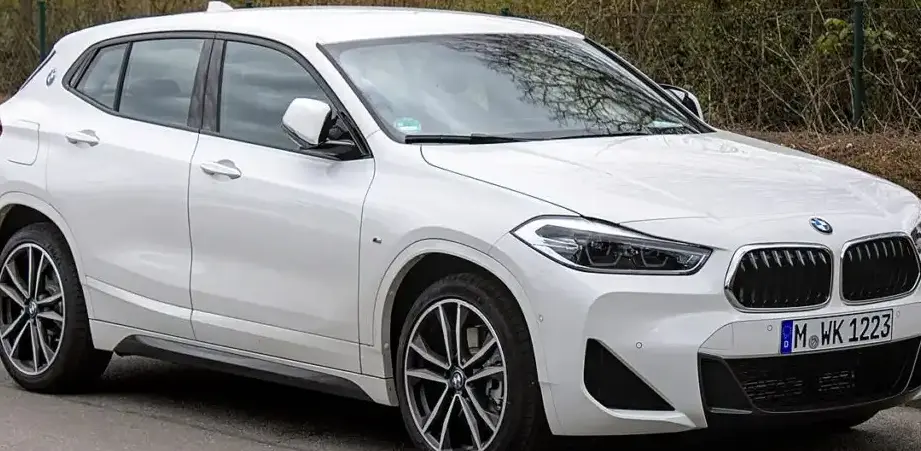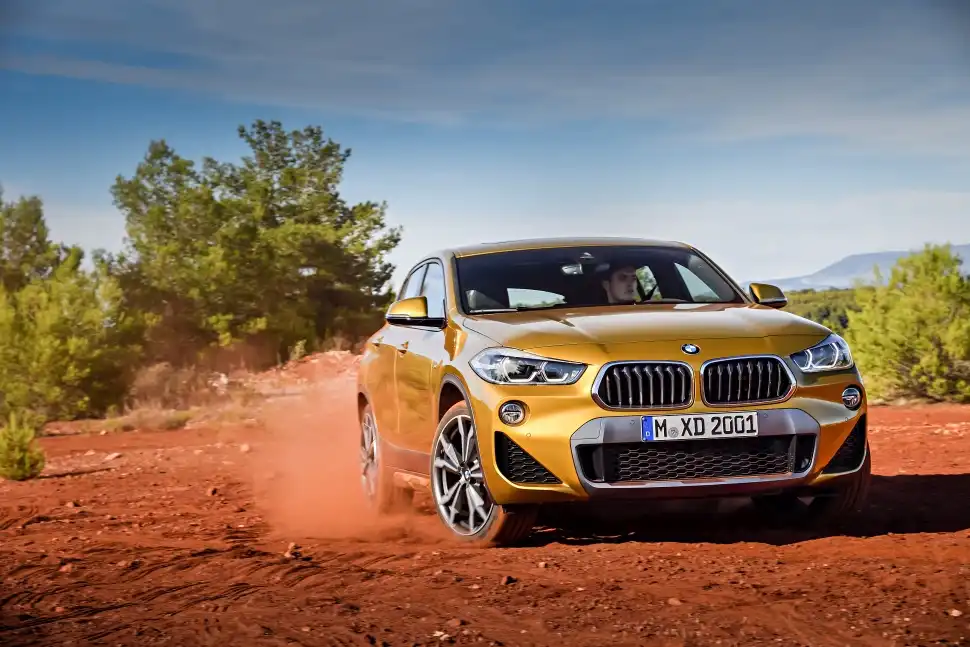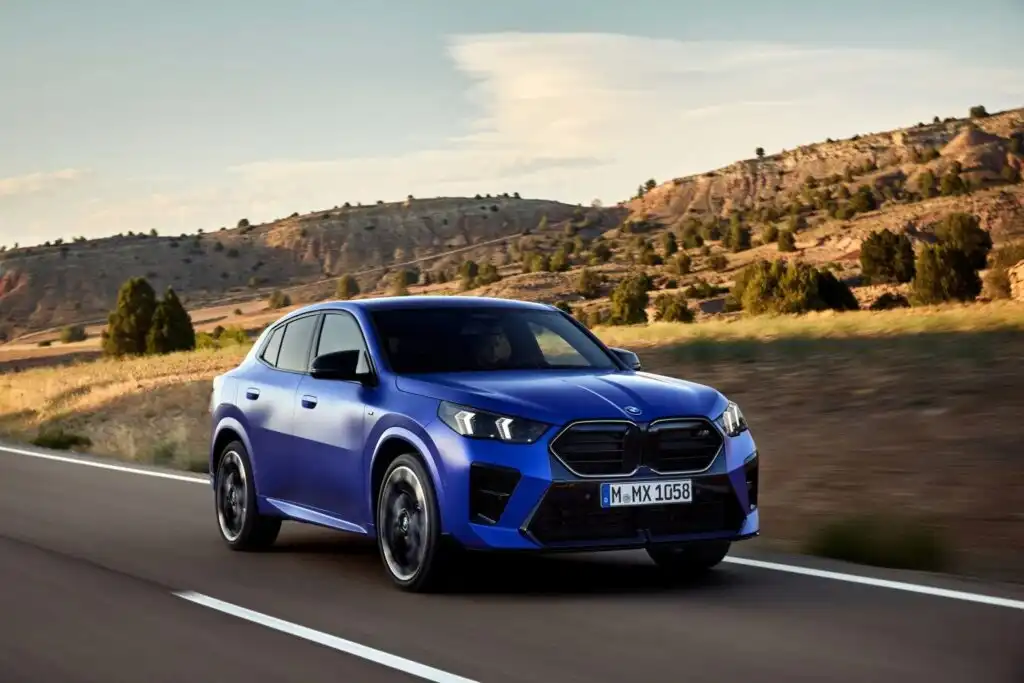
The BMW X2 (U10) 20d, introduced in March 2024, represents a compelling entry point into the compact Sports Activity Coupe (SAC) segment for BMW. This variant combines a 2.0-liter turbocharged diesel engine with a 48-volt mild hybrid system and BMW’s xDrive all-wheel-drive system, paired with a 7-speed Steptronic automatic transmission. Positioned as a mid-range offering within the U10 X2 lineup, it aims to balance fuel efficiency, performance, and practicality for a broad range of buyers. The 20d trim sits below the more powerful gasoline variants and plug-in hybrid models, offering a diesel alternative focused on economy and torque.
Technical Specifications
| Brand | BMW |
| Model | X2 |
| Generation | X2 (U10) |
| Type (Engine) | 20d (163 Hp) Mild Hybrid xDrive Steptronic |
| Start of production | March, 2024 |
| Powertrain Architecture | MHEV (Mild Hybrid Electric Vehicle) |
| Body type | SAC |
| Seats | 5 |
| Doors | 5 |
| Combined fuel consumption (WLTP) | 4.8-5.2 l/100 km (49 – 45.2 US mpg, 58.9 – 54.3 UK mpg, 20.8 – 19.2 km/l) |
| CO2 emissions (WLTP) | 125-136 g/km |
| Fuel Type | Diesel |
| Acceleration 0 – 100 km/h | 8.6 sec |
| Acceleration 0 – 62 mph | 8.6 sec |
| Acceleration 0 – 60 mph | 8.2 sec |
| Maximum speed | 207 km/h (128.62 mph) |
| Emission standard | Euro 6e |
| Weight-to-power ratio | 10.5 kg/Hp, 95.6 Hp/tonne |
| Weight-to-torque ratio | 4.3 kg/Nm, 234.6 Nm/tonne |
| Gross battery capacity | 0.9 kWh |
| Battery voltage | 48 V |
| Battery technology | Lithium-ion (Li-Ion) |
| Battery location | Under the trunk |
| Electric motor power | 20 Hp |
| Electric motor Torque | 55 Nm (40.57 lb.-ft.) |
| Electric motor location | Integrated into the transmission |
| System power | 163 Hp |
| System torque | 400 Nm (295.02 lb.-ft.) |
| Power | 150 Hp @ 4000 rpm |
| Torque | 360 Nm @ 1500-2500 rpm (265.52 lb.-ft. @ 1500-2500 rpm) |
| Engine layout | Front, Transverse |
| Engine Model/Code | B47C20B |
| Engine displacement | 1995 cm3 (121.74 cu. in.) |
| Number of cylinders | 4 |
| Engine configuration | Inline |
| Cylinder Bore | 84 mm (3.31 in.) |
| Piston Stroke | 90 mm (3.54 in.) |
| Compression ratio | 16.5:1 |
| Number of valves per cylinder | 4 |
| Fuel injection system | Diesel Commonrail |
| Engine aspiration | Twin-power turbo, Intercooler |
| Valvetrain | DOHC |
| Engine oil capacity | 6.5 l (6.87 US qt | 5.72 UK qt) |
| Kerb Weight | 1705 kg (3758.88 lbs.) |
| Max. weight | 2280 kg (5026.54 lbs.) |
| Max load | 575 kg (1267.66 lbs.) |
| Trunk (boot) space – minimum | 560 l (19.78 cu. ft.) |
| Trunk (boot) space – maximum | 1470 l (51.91 cu. ft.) |
| Fuel tank capacity | 54 l (14.27 US gal | 11.88 UK gal) |
| AdBlue tank | 20.5 l (5.42 US gal | 4.51 UK gal) |
| Max. roof load | 75 kg (165.35 lbs.) |
| Permitted trailer load with brakes (12%) | 2000 kg (4409.25 lbs.) |
| Permitted trailer load without brakes | 750 kg (1653.47 lbs.) |
| Permitted towbar download | 80 kg (176.37 lbs.) |
| Length | 4554 mm (179.29 in.) |
| Width | 1845 mm (72.64 in.) |
| Width including mirrors | 2104 mm (82.83 in.) |
| Height | 1590 mm (62.6 in.) |
| Wheelbase | 2692 mm (105.98 in.) |
| Front track | 1574 mm (61.97 in.) |
| Rear (Back) track | 1575 mm (62.01 in.) |
| Front overhang | 885 mm (34.84 in.) |
| Rear overhang | 977 mm (38.46 in.) |
| Ride height (ground clearance) | 207 mm (8.15 in.) |
| Drag coefficient (Cd) | 0.27 |
| Minimum turning circle (turning diameter) | 11.7 m (38.39 ft.) |
| Drivetrain Architecture | ICE and electric motor drive front wheels, with on-demand rear drive |
| Drive wheel | All wheel drive (4×4) |
| Number of gears and type of gearbox | 7 gears, automatic transmission Steptronic |
| Front suspension | Spring Strut, Transverse stabilizer |
| Rear suspension | Independent multi-link spring suspension with stabilizer |
| Front brakes | Ventilated discs |
| Rear brakes | Ventilated discs |
| Assisting systems | ABS (Anti-lock braking system) |
| Steering type | Steering rack and pinion |
| Power steering | Electric Steering |
| Tires size | 225/55 R18 |
| Wheel rims size | 7.5J x 18 |
Powertrain & Engine Architecture
At the heart of the X2 20d lies the BMW B47C20B, a 2.0-liter inline-four cylinder diesel engine. This engine benefits from BMW’s extensive experience in diesel technology, featuring a common-rail direct fuel injection system operating at extremely high pressures for optimized combustion. The engine is turbocharged with a twin-scroll turbocharger and intercooler, contributing to its responsive power delivery. The 48V mild hybrid system adds a belt-driven starter-generator, enabling features like extended start-stop operation, regenerative braking, and a small power boost during acceleration. The Steptronic 7-speed automatic transmission is a torque-converter type, known for its smooth shifts and efficiency. It’s electronically controlled and adapts to driving style, offering both automatic and manual shift modes.
Driving Characteristics
The X2 20d delivers a balanced driving experience. The 163 hp and 400 Nm (295 lb-ft) of torque, augmented by the mild hybrid system, provide adequate performance for everyday driving and highway cruising. Acceleration from 0-60 mph takes approximately 8.2 seconds. While not as quick as the higher-powered gasoline variants, the 20d excels in providing strong low-end torque, making it effortless to overtake and navigate city traffic. The automatic transmission is well-tuned, offering smooth gear changes and contributing to a comfortable ride. The xDrive all-wheel-drive system provides enhanced traction and stability, particularly in adverse weather conditions.
Equipment & Trim Levels
The X2 20d typically comes standard with features such as BMW’s iDrive infotainment system with a touchscreen display, automatic climate control, power-adjustable seats, and a suite of safety features including lane departure warning and collision mitigation. Interior upholstery is typically a combination of cloth and synthetic leather, with options for full leather upgrades. Common optional extras include a panoramic sunroof, premium sound system, and advanced driver-assistance systems like adaptive cruise control and parking assist.
Chassis & Braking
The X2 utilizes a front-wheel-drive based chassis with an all-wheel-drive system engaging the rear wheels when needed. The front suspension employs MacPherson struts with a transverse stabilizer bar, while the rear features a multi-link independent suspension, also with a stabilizer bar. This setup provides a good balance between ride comfort and handling agility. Braking duties are handled by ventilated disc brakes on all four wheels, providing ample stopping power. The X2 also incorporates ABS, electronic brakeforce distribution, and brake assist systems.
Market Reception & Comparison
The BMW X2 20d has been generally well-received by automotive critics as a practical and efficient option within the compact SAC segment. It’s praised for its fuel economy, comfortable ride, and the added security of all-wheel drive. Compared to the gasoline-powered X2 variants, the 20d offers superior fuel efficiency and torque, making it a better choice for drivers who prioritize economy and long-distance cruising. However, it lacks the outright performance of the more powerful engines. Against competitors like the Audi Q2 and Mercedes-Benz GLA, the X2 20d holds its own with its refined driving dynamics and premium interior.
Legacy
The B47 engine family, including the B47C20B, has proven to be relatively reliable, although some early versions experienced issues with timing chain wear. The addition of the 48V mild hybrid system in the U10 X2 20d is expected to further enhance the engine’s efficiency and longevity. As a used car, the X2 20d is likely to appeal to buyers seeking a premium compact SUV with good fuel economy and a comfortable driving experience. Regular maintenance, including oil changes and adherence to BMW’s recommended service intervals, will be crucial for ensuring the long-term reliability of this powertrain.