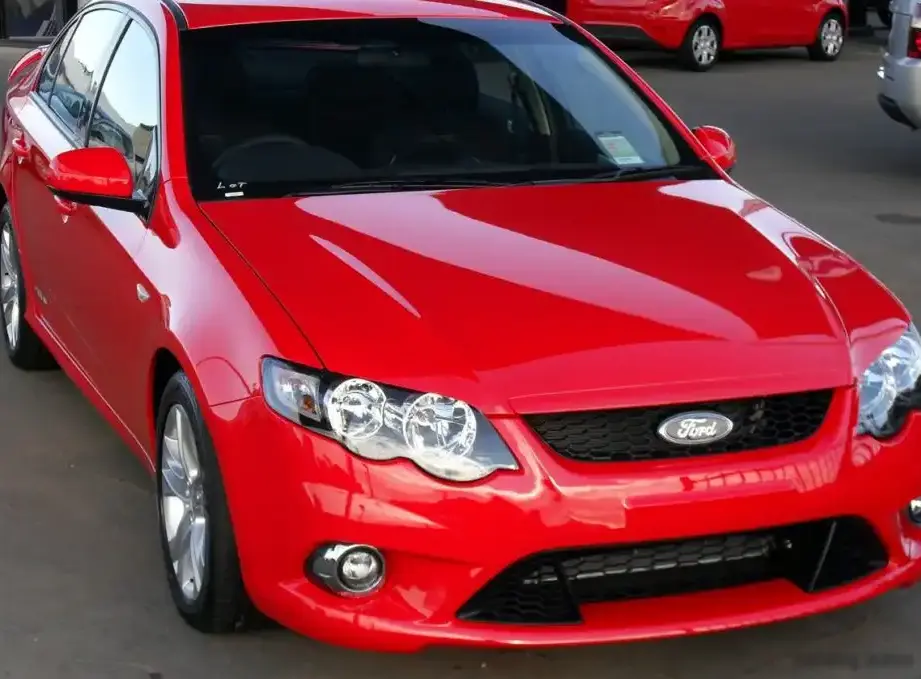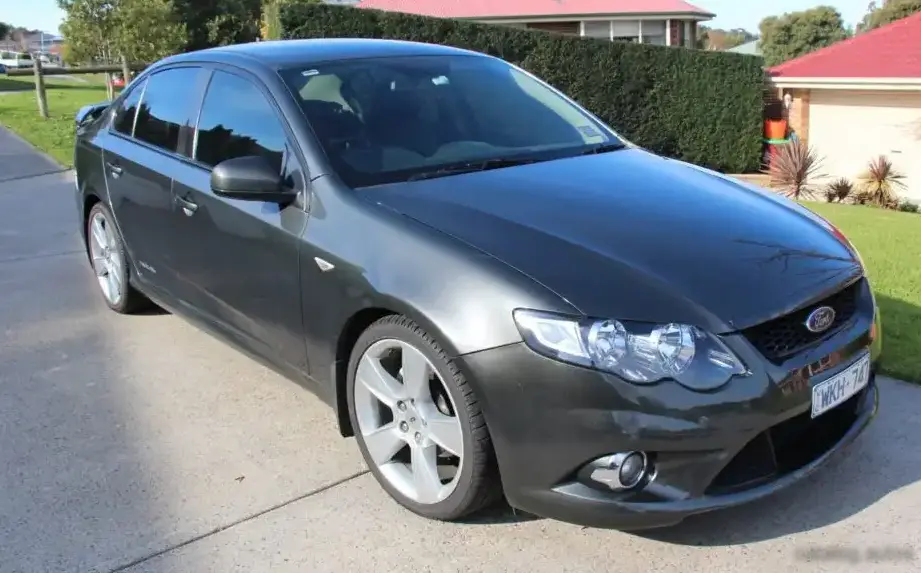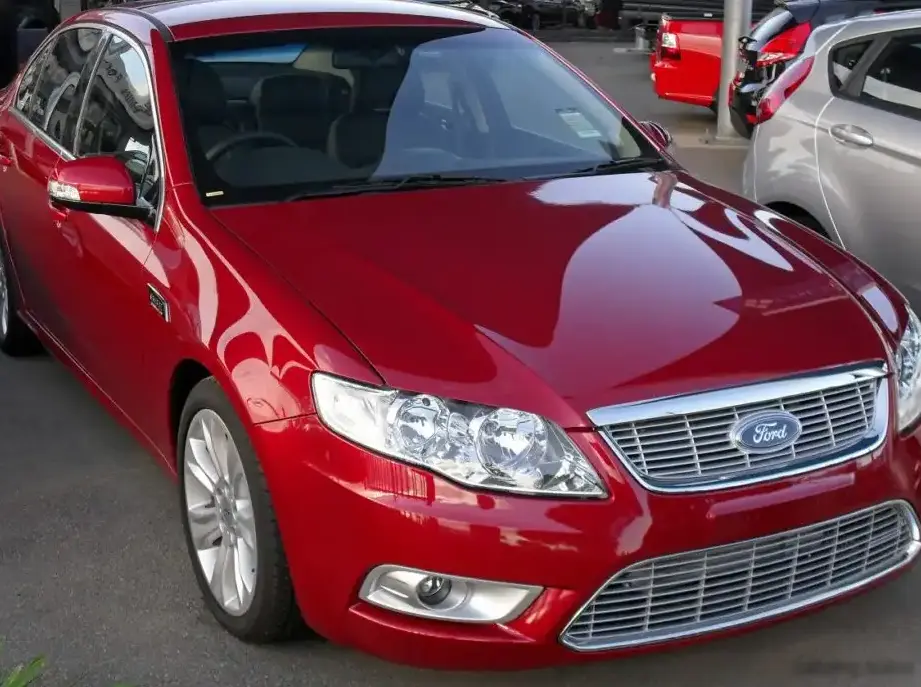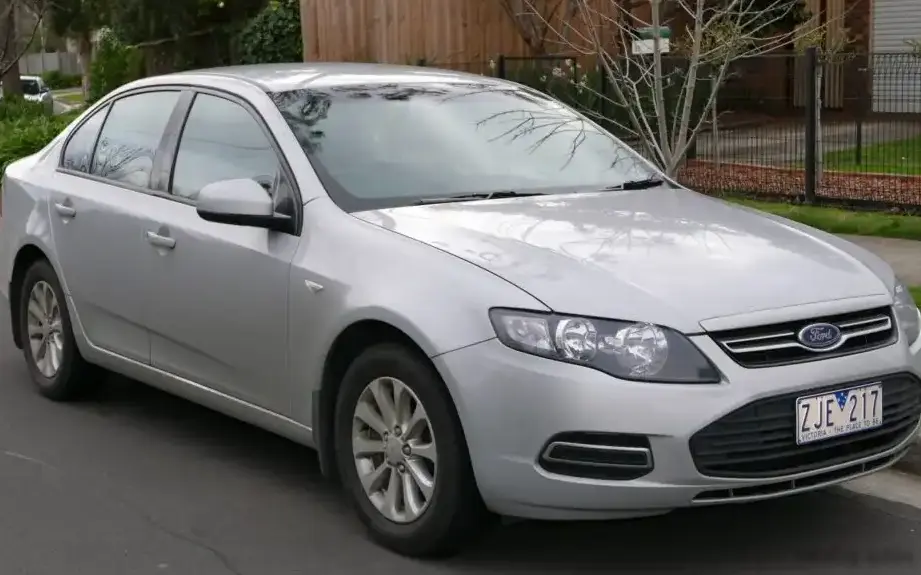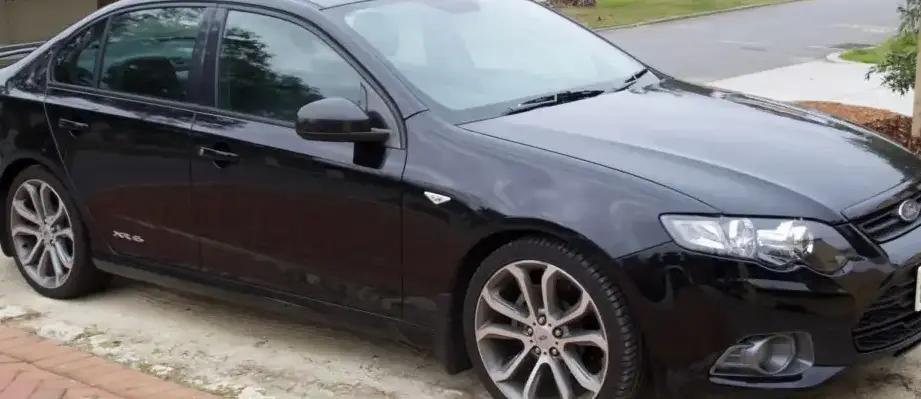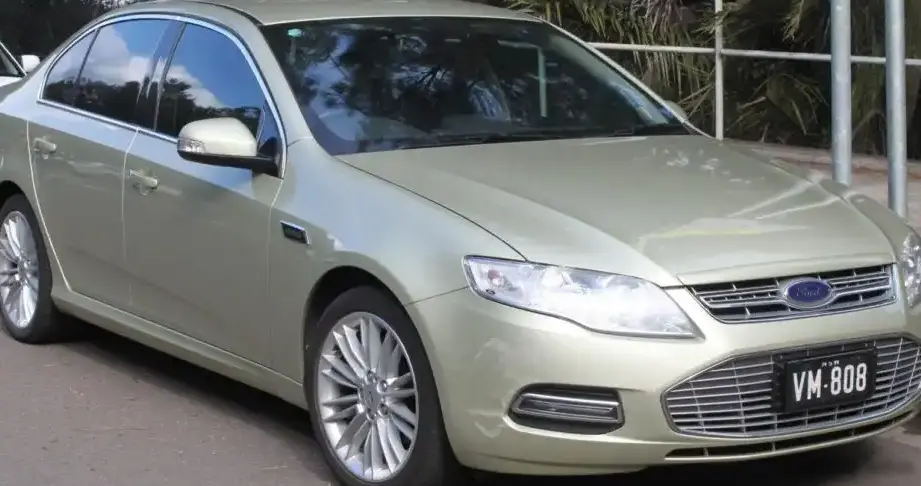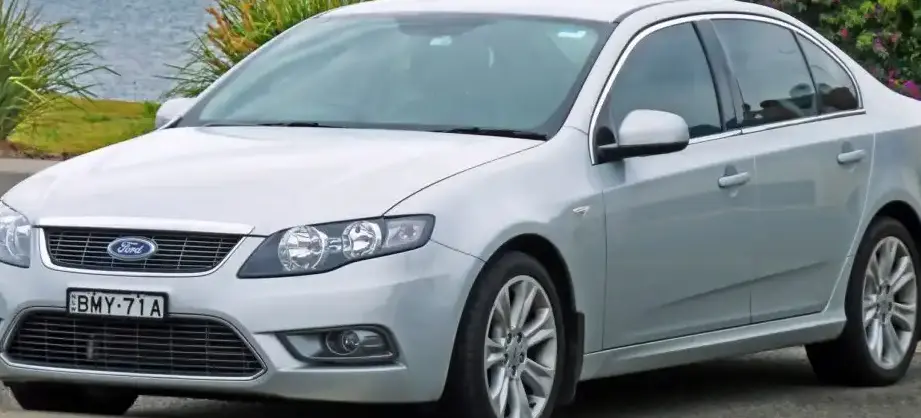
The Ford Falcon FG 4.0 DI-VCT, produced from 2008 to 2011, represented a significant evolution of Australia’s iconic rear-wheel-drive family sedan. This variant, equipped with the 4.0-liter Barra 195 inline-six engine and a six-speed automatic transmission, occupied a middle ground in the FG Falcon lineup, offering a balance between performance, fuel efficiency, and affordability. It was a key model for Ford Australia during a period of increasing competition from imported vehicles and a shifting consumer preference towards smaller, more fuel-conscious cars.
Technical Specifications
| Brand | Ford |
| Model | Falcon |
| Generation | Falcon (FG) |
| Type | 4.0 DI-VCT (265 Hp) 6 Automatic |
| Start of production | 2008 |
| End of production | 2011 |
| Powertrain Architecture | Internal Combustion engine |
| Body type | Sedan |
| Seats | 5 |
| Doors | 4 |
| Fuel consumption (urban) | 13.8 l/100 km (17 US mpg, 20.5 UK mpg) |
| Fuel consumption (extra urban) | 7.6 l/100 km (30.9 US mpg, 37.2 UK mpg) |
| Fuel consumption (combined) | 9.9 l/100 km (23.8 US mpg, 28.5 UK mpg) |
| Fuel Type | Petrol (Gasoline) |
| Weight-to-power ratio | 6.4 kg/Hp, 155.5 Hp/tonne |
| Weight-to-torque ratio | 4.4 kg/Nm, 229.5 Nm/tonne |
| Power | 265 Hp @ 6000 rpm |
| Power per litre | 66.5 Hp/l |
| Torque | 391 Nm @ 3250 rpm (288.39 lb.-ft. @ 3250 rpm) |
| Engine layout | Front, Longitudinal |
| Engine Model/Code | Barra 195 |
| Engine displacement | 3984 cm3 (243.12 cu. in.) |
| Number of cylinders | 6 |
| Engine configuration | Inline |
| Cylinder Bore | 92.25 mm (3.63 in.) |
| Piston Stroke | 99.31 mm (3.91 in.) |
| Compression ratio | 10.3:1 |
| Number of valves per cylinder | 4 |
| Fuel injection system | Multi-port manifold injection |
| Engine aspiration | Naturally aspirated engine |
| Valvetrain | DOHC |
| Kerb Weight | 1704 kg (3756.68 lbs.) |
| Trunk (boot) space (minimum) | 535 l (18.89 cu. ft.) |
| Fuel tank capacity | 68 l (17.96 US gal, 14.96 UK gal) |
| Permitted trailer load with brakes (12%) | 2300 kg (5070.63 lbs.) |
| Length | 4955 mm (195.08 in.) |
| Width | 1868 mm (73.54 in.) |
| Width including mirrors | 2100 mm (82.68 in.) |
| Height | 1453 mm (57.2 in.) |
| Wheelbase | 2838 mm (111.73 in.) |
| Front track | 1583 mm (62.32 in.) |
| Rear track | 1598 mm (62.91 in.) |
| Front overhang | 942 mm (37.09 in.) |
| Rear overhang | 1175 mm (46.26 in.) |
| Minimum turning circle | 11 m (36.09 ft.) |
| Drivetrain Architecture | Rear wheel drive |
| Number of gears | 6 |
| Gearbox type | Automatic transmission |
| Front suspension | Double wishbone |
| Rear suspension | Independent multi-link suspension |
| Front brakes | Ventilated discs |
| Rear brakes | Disc |
| Assisting systems | ABS (Anti-lock braking system) |
| Steering type | Steering rack and pinion |
| Power steering | Hydraulic Steering |
| Tires size | 215/60 R16; 235/50 R17; 245/45 R17; 245/40 R18; 245/35 R19 |
| Wheel rims size | 6.5J x 16; 8J x 17; 8J x 18; 8J x 19 |
INTRODUCTION
The FG Falcon 4.0 DI-VCT automatic was a mainstay of the Ford Australia lineup from 2008 to 2011. Built on the 1HX0/A3 platform, it represented a comprehensive redesign of the Falcon, focusing on improved refinement, fuel efficiency, and safety. The 4.0-liter Barra engine, coupled with the six-speed automatic, aimed to provide a comfortable and capable driving experience for families and commuters. This variant was positioned as a step up from the base 4.0-liter non-DI-VCT models, offering increased power and torque, but remained more accessible than the performance-oriented XR6 Turbo or the luxury-focused Fairmont models.
Powertrain & Engine Architecture
At the heart of the FG Falcon 4.0 DI-VCT was the Barra 195 inline-six engine. This 3.984-liter (243.12 cubic inch) engine featured a cast iron block and aluminum cylinder head. The “DI-VCT” designation stands for Dual Independent Variable Camshaft Timing, a technology that allowed for precise control of valve timing, optimizing both power and fuel efficiency. The engine utilized multi-port fuel injection and a compression ratio of 10.3:1. The Barra engine was known for its robust construction and relatively simple design, making it a reliable powerplant. The six-speed automatic transmission, sourced from BTR (later ZF), was a crucial component of this variant. It offered smoother shifts and improved fuel economy compared to the older four-speed automatic found in previous Falcon models. The transmission was programmed for comfort and efficiency, with gear ratios tailored to provide adequate acceleration and highway cruising ability.
Driving Characteristics
The Falcon FG 4.0 DI-VCT automatic delivered a comfortable and predictable driving experience. While not as overtly sporty as the manual transmission or XR6 Turbo variants, it provided ample power for everyday driving situations. The 265 horsepower and 391 Nm (288 lb-ft) of torque were sufficient for confident overtaking and merging onto highways. The automatic transmission, while smooth, could sometimes feel hesitant during quick downshifts. The gear ratios were optimized for fuel economy, meaning the engine didn’t always feel as responsive as it could be. Compared to the manual transmission version, the automatic sacrificed some performance, but gained in ease of use. The rear-wheel-drive configuration provided a balanced feel, although it lacked the agility of front-wheel-drive competitors.
Equipment & Trim Levels
The FG Falcon 4.0 DI-VCT automatic was typically equipped with a respectable level of standard features. These included air conditioning, power windows and mirrors, a basic audio system with CD player, and an anti-lock braking system (ABS). Interior upholstery was typically cloth, with options for leather available on higher trim levels. Dashboard configuration was functional and straightforward, with a focus on usability. Optional extras included a sunroof, upgraded audio systems, alloy wheels, and parking sensors. The specific trim level (e.g., base Falcon, Falcon XT) determined the level of standard equipment and available options.
Chassis & Braking
The FG Falcon utilized a robust chassis with double wishbone front suspension and an independent multi-link rear suspension. This setup provided a comfortable ride and decent handling characteristics. The braking system consisted of ventilated discs at the front and solid discs at the rear. ABS was standard, providing enhanced braking performance in emergency situations. Stabilizer bars were fitted front and rear to reduce body roll during cornering. The suspension tuning was geared towards comfort, prioritizing ride quality over outright handling prowess. The weight distribution, typical of a front-engine, rear-wheel-drive layout, contributed to a balanced feel, but also meant the car could exhibit some understeer in challenging conditions.
Market Reception & Comparison
The FG Falcon 4.0 DI-VCT automatic was generally well-received by Australian motoring journalists. Critics praised its comfortable ride, spacious interior, and improved refinement compared to previous Falcon generations. However, some criticized its fuel economy, which was higher than that of many imported competitors. Compared to the XR6 Turbo, the 4.0 DI-VCT automatic offered less performance but was more affordable and easier to live with. Against the 4.0-liter non-DI-VCT models, the DI-VCT version provided a noticeable power and torque boost, justifying the slightly higher price. Reliability was generally good, with the Barra engine proving to be a durable powerplant. However, some owners reported issues with the automatic transmission, particularly with early production units.
Legacy
The Ford Falcon FG 4.0 DI-VCT automatic holds a significant place in Australian automotive history. It was one of the last Falcons produced before the end of Australian car manufacturing in 2016. Today, these vehicles are becoming increasingly collectible, particularly well-maintained examples. The Barra engine remains a popular choice for engine swaps and modifications, thanks to its robust construction and potential for increased power. While not the fastest or most fuel-efficient Falcon variant, the 4.0 DI-VCT automatic represents a comfortable, capable, and reliable family sedan that embodies a bygone era of Australian automotive engineering. The used car market sees these Falcons commanding reasonable prices, with condition and mileage being key factors in determining value.