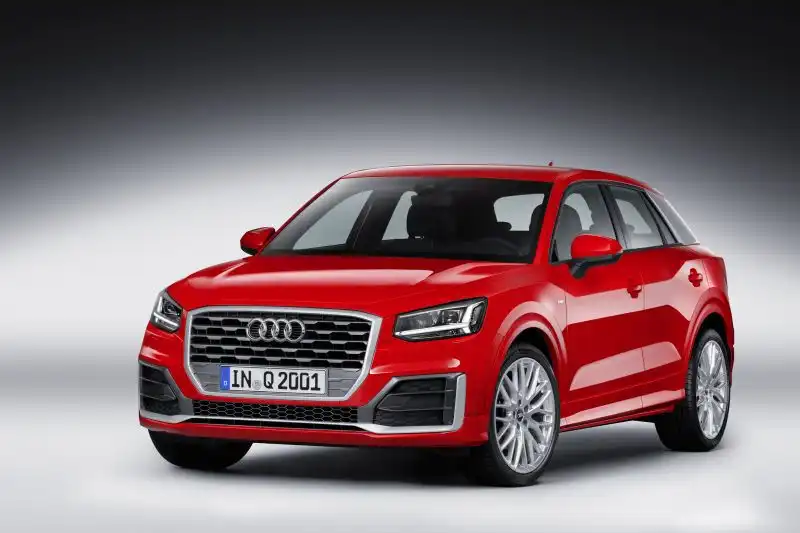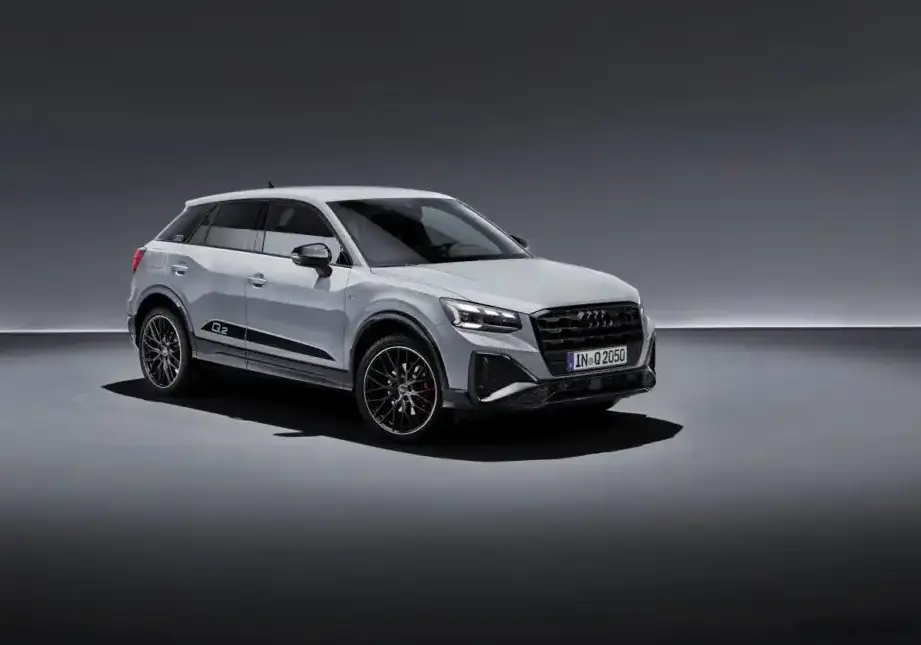
The Audi Q2 35 TDI quattro S tronic, introduced with the 2020 facelift, represents a compelling entry point into the Audi compact SUV range, particularly for European markets where diesel engines remain popular. Positioned as a mid-range offering within the Q2 lineup, it balances fuel efficiency with respectable performance and the added security of Audi’s quattro all-wheel-drive system. This variant combines a 2.0-liter turbocharged diesel engine with a seven-speed S tronic dual-clutch transmission, targeting buyers seeking a practical and refined urban crossover.
Technical Specifications
| Brand | Audi |
| Model | Q2 |
| Generation | Q2 (facelift 2020) |
| Type (Engine) | 35 TDI (150 Hp) quattro S tronic |
| Start of production | 2020 |
| Powertrain Architecture | Internal Combustion engine |
| Body type | SUV |
| Seats | 5 |
| Doors | 5 |
| Combined fuel consumption (WLTP) | 5.3-5.8 l/100 km (44.4 – 40.6 US mpg, 53.3 – 48.7 UK mpg, 18.9 – 17.2 km/l) |
| CO2 emissions (WLTP) | 138-153 g/km |
| Fuel consumption (urban) | 5.5-5.6 l/100 km (42.8 – 42 US mpg, 51.4 – 50.4 UK mpg, 18.2 – 17.9 km/l) |
| Fuel consumption (extra urban) | 4.2-4.4 l/100 km (56 – 53.5 US mpg, 67.3 – 64.2 UK mpg, 23.8 – 22.7 km/l) |
| Fuel consumption (combined) | 4.6-4.8 l/100 km (51.1 – 49 US mpg, 61.4 – 58.9 UK mpg, 21.7 – 20.8 km/l) |
| CO2 emissions (NEDC) | 122-128 g/km |
| Fuel Type | Diesel |
| Acceleration 0 – 100 km/h | 8.2 sec |
| Acceleration 0 – 62 mph | 8.2 sec |
| Acceleration 0 – 60 mph | 7.8 sec |
| Maximum speed | 210 km/h (130.49 mph) |
| Emission standard | Euro 6d-ISC-FCM |
| Weight-to-power ratio | 10 kg/Hp, 100.3 Hp/tonne |
| Weight-to-torque ratio | 4.2 kg/Nm, 240.8 Nm/tonne |
| Power | 150 Hp @ 3000-4200 rpm |
| Torque | 360 Nm @ 1600-2750 rpm (265.52 lb.-ft. @ 1600-2750 rpm) |
| Engine layout | Front, Transverse |
| Engine Model/Code | DTTC |
| Engine displacement | 1968 cm3 (120.09 cu. in.) |
| Number of cylinders | 4 |
| Engine configuration | Inline |
| Number of valves per cylinder | 4 |
| Fuel injection system | Diesel Commonrail |
| Engine aspiration | Turbocharger, Intercooler |
| Engine oil capacity | 5.5 l (5.81 US qt | 4.84 UK qt) |
| Kerb Weight | 1495 kg (3295.91 lbs.) |
| Max. weight | 2060 kg (4541.52 lbs.) |
| Max load | 565 kg (1245.61 lbs.) |
| Trunk (boot) space – minimum | 355 l (12.54 cu. ft.) |
| Trunk (boot) space – maximum | 1000 l (35.31 cu. ft.) |
| Fuel tank capacity | 55 l (14.53 US gal | 12.1 UK gal) |
| Max. roof load | 60 kg (132.28 lbs.) |
| Permitted trailer load with brakes (8%) | 1800 kg (3968.32 lbs.) |
| Permitted trailer load with brakes (12%) | 1800 kg (3968.32 lbs.) |
| Permitted trailer load without brakes | 750 kg (1653.47 lbs.) |
| Permitted towbar download | 75 kg (165.35 lbs.) |
| Length | 4208 mm (165.67 in.) |
| Width | 1794 mm (70.63 in.) |
| Width including mirrors | 2009 mm (79.09 in.) |
| Height | 1508 mm (59.37 in.) |
| Wheelbase | 2601 mm (102.4 in.) |
| Front track | 1546 mm (60.87 in.) |
| Rear track | 1542 mm (60.71 in.) |
| Front overhang | 830 mm (32.68 in.) |
| Rear overhang | 777 mm (30.59 in.) |
| Drag coefficient (Cd) | 0.32 |
| Minimum turning circle | 11.1 m (36.42 ft.) |
| Drivetrain Architecture | All wheel drive (4×4) |
| Number of gears | 7 |
| Type of gearbox | automatic transmission S tronic |
| Front suspension | Independent type McPherson |
| Rear suspension | Independent multi-link suspension |
| Front brakes | Ventilated discs |
| Rear brakes | Disc |
| Assisting systems | ABS (Anti-lock braking system) |
| Steering type | Steering rack and pinion |
| Power steering | Electric Steering |
| Tires size | 205/60 R16 |
| Wheel rims size | 6J x 16 |
INTRODUCTION
The Audi Q2 35 TDI quattro S tronic, launched as part of the 2020 facelift, builds upon the original Q2 (introduced in 2016) which aimed to attract a younger demographic to the Audi brand. Based on the Volkswagen Group’s MQB platform (specifically the A05 variant, also underpinning the Audi A3 and Volkswagen Golf), the Q2 offers a more compact and stylish alternative to the larger Q3. The 35 TDI variant, with its combination of a diesel engine, all-wheel drive, and a dual-clutch transmission, was primarily targeted at European markets where diesel fuel is prevalent and all-weather capability is valued. It slots into the Q2 range between the lower-powered front-wheel-drive models and the more performance-oriented variants like the SQ2.
Powertrain & Engine Architecture
At the heart of the Q2 35 TDI lies the Volkswagen Group’s 1.968-liter (2.0-liter) four-cylinder diesel engine, designated DTTC. This engine is part of the EA288 family and utilizes a common-rail direct injection system, delivering fuel at pressures up to 2,500 bar for optimized combustion. A turbocharger with an intercooler further enhances performance. The engine produces 150 horsepower at 3,000-4,200 rpm and 360 Nm (265 lb-ft) of torque between 1,600 and 2,750 rpm. The S tronic seven-speed dual-clutch transmission provides rapid and smooth gear changes. This transmission features two clutches, allowing for pre-selection of the next gear, resulting in quicker acceleration and improved fuel efficiency. The quattro all-wheel-drive system employs a multi-plate clutch to distribute torque between the front and rear axles as needed, enhancing traction and stability, particularly in adverse weather conditions.
Driving Characteristics
The Q2 35 TDI quattro S tronic delivers a refined and comfortable driving experience. While not overtly sporty, the engine provides ample torque for everyday driving and confident overtaking. The S tronic transmission contributes to brisk acceleration, with the 0-60 mph sprint taking approximately 7.8 seconds. The quattro all-wheel-drive system inspires confidence on slippery surfaces, providing enhanced grip and stability. The gear ratios are tuned for a balance between fuel efficiency and performance, with taller gears for relaxed cruising and shorter gears for quicker acceleration. Compared to the lower-powered front-wheel-drive Q2 variants, the 35 TDI offers noticeably more punch, while remaining more economical and less aggressive than the higher-output petrol models.
Equipment & Trim Levels
The Q2 35 TDI quattro S tronic typically came well-equipped as standard. Features included Audi’s MMI infotainment system with a 7-inch touchscreen display, Bluetooth connectivity, automatic climate control, and a leather-wrapped multifunction steering wheel. Safety features such as ABS, electronic stability control, and multiple airbags were also standard. Optional extras included larger alloy wheels, a panoramic sunroof, upgraded upholstery, a premium sound system, and advanced driver-assistance systems like adaptive cruise control and lane departure warning. Interior trim levels varied, with options for different dashboard inlays and seat materials.
Chassis & Braking
The Q2 35 TDI utilizes an independent McPherson strut suspension at the front and a multi-link suspension at the rear, providing a comfortable ride and good handling characteristics. Stabilizer bars are fitted to both axles to reduce body roll during cornering. The braking system consists of ventilated discs at the front and solid discs at the rear, providing adequate stopping power. ABS (Anti-lock Braking System) and electronic brake-force distribution are standard features. The suspension setup is tuned to prioritize comfort, but still offers a reasonably engaging driving experience.
Market Reception & Comparison
The Audi Q2 35 TDI quattro S tronic was generally well-received by automotive critics. It was praised for its stylish design, refined interior, and efficient powertrain. The combination of all-wheel drive and the diesel engine was seen as a practical choice for drivers in regions with challenging weather conditions. Compared to other compact SUVs in its class, the Q2 offered a more premium feel and a more sophisticated driving experience. However, some critics noted that the rear passenger space was somewhat limited. Fuel economy was a strong point, with the Q2 35 TDI achieving around 5.3-5.8 l/100 km (44.4-40.6 mpg) in real-world driving, making it more economical than the petrol-powered variants.
Legacy
The 1.968-liter TDI engine and the S tronic transmission have proven to be reliable units within the Volkswagen Group. While diesel engines have faced increased scrutiny in recent years, the EA288 family, when properly maintained, is known for its durability. The Q2 35 TDI quattro S tronic holds its value reasonably well in the used car market, particularly examples with a full service history and low mileage. Its combination of practicality, efficiency, and all-wheel-drive capability continues to appeal to buyers seeking a premium compact SUV.