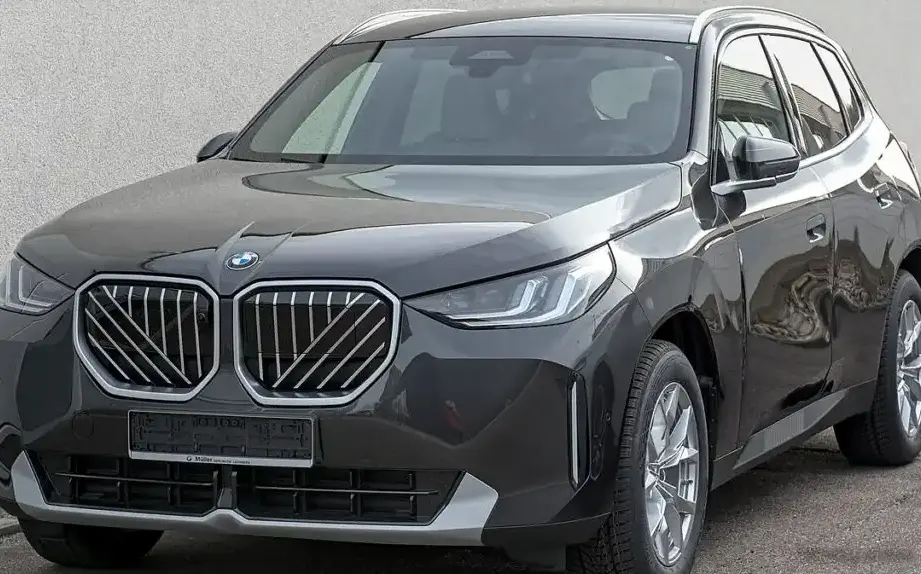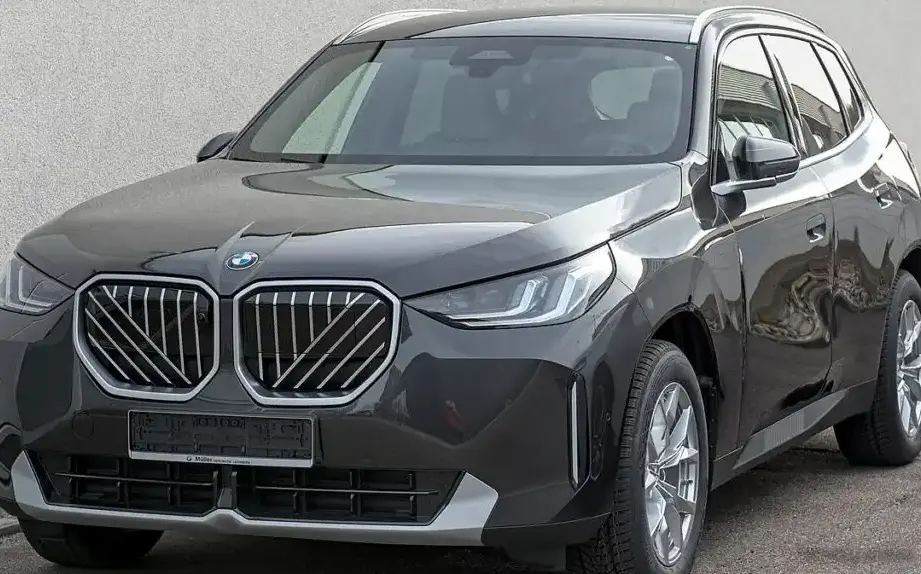
The BMW X3 (E83) 2.0d, produced between 2004 and 2006, represented BMW’s entry into the burgeoning compact luxury SUV segment. This variant, powered by the M47D20 engine producing 150 horsepower, served as a more fuel-efficient and accessible alternative to the higher-performance X3 3.0i models. Positioned as the base engine option in many European markets, the 2.0d aimed to broaden the X3’s appeal to buyers prioritizing economy without sacrificing the BMW driving experience. It was a key component of the E83’s strategy to compete with rivals like the Audi Q5 and Mercedes-Benz GLK, though those models arrived later. The X3 itself was BMW’s first foray into the compact SUV class, built on a modified 3 Series platform.
Technical Specifications
| Brand | BMW |
| Model | X3 |
| Generation | X3 (E83) |
| Type (Engine) | 2.0d (150 Hp) |
| Start of production | 2004 |
| End of production | 2006 |
| Powertrain Architecture | Internal Combustion engine |
| Body type | SUV |
| Seats | 5 |
| Doors | 5 |
| Fuel consumption (urban) | 9.6 l/100 km (24.5 US mpg) |
| Fuel consumption (extra urban) | 5.9 l/100 km (39.9 US mpg) |
| Fuel consumption (combined) | 7.2 l/100 km (32.7 US mpg) |
| Fuel Type | Diesel |
| Acceleration 0 – 100 km/h | 10.2 sec |
| Acceleration 0 – 62 mph | 10.2 sec |
| Acceleration 0 – 60 mph | 9.7 sec |
| Maximum speed | 198 km/h (123.03 mph) |
| Weight-to-power ratio | 11.7 kg/Hp |
| Weight-to-torque ratio | 5.3 kg/Nm |
| Power | 150 Hp @ 4000 rpm |
| Torque | 330 Nm @ 2000 rpm (243.4 lb.-ft. @ 2000 rpm) |
| Engine layout | Front, Longitudinal |
| Engine Model/Code | M47D20 |
| Engine displacement | 1995 cm3 (121.74 cu. in.) |
| Number of cylinders | 4 |
| Engine configuration | Inline |
| Cylinder Bore | 84 mm (3.31 in.) |
| Piston Stroke | 90 mm (3.54 in.) |
| Compression ratio | 17:1 |
| Number of valves per cylinder | 4 |
| Fuel injection system | Diesel Commonrail |
| Engine aspiration | Turbocharger, Intercooler |
| Engine oil capacity | 5.3 l (5.6 US qt | 4.66 UK qt) |
| Coolant capacity | 9.6 l (10.14 US qt | 8.45 UK qt) |
| Kerb Weight | 1750 kg (3858.09 lbs.) |
| Max. weight | 2265 kg (4993.47 lbs.) |
| Max load | 515 kg (1135.38 lbs.) |
| Trunk (boot) space – minimum | 500 l (17.66 cu. ft.) |
| Trunk (boot) space – maximum | 1560 l (55.09 cu. ft.) |
| Fuel tank capacity | 67 l (17.7 US gal | 14.74 UK gal) |
| Length | 4569 mm (179.88 in.) |
| Width | 1853 mm (72.95 in.) |
| Height | 1674 mm (65.91 in.) |
| Wheelbase | 2795 mm (110.04 in.) |
| Front track | 1524 mm (60 in.) |
| Rear track | 1542 mm (60.71 in.) |
| Ride height (ground clearance) | 200 mm (7.87 in.) |
| Drive wheel | All wheel drive (4×4) |
| Number of gears | 6 |
| Gearbox type | Manual transmission |
| Front suspension | Coil spring |
| Rear suspension | Coil spring |
| Front brakes | Disc |
| Rear brakes | Disc |
| Assisting systems | ABS (Anti-lock braking system) |
| Steering type | Steering rack and pinion |
| Power steering | Hydraulic Steering |
| Tires size | 235/55 R17 |
| Wheel rims size | 8.0J x 17 |
Powertrain & Engine Architecture
The heart of the X3 2.0d is the M47D20, a 2.0-liter inline-four diesel engine. This engine was a mainstay in BMW’s lineup during the early 2000s, finding its way into the 1 Series, 3 Series, and other models. It utilizes a second-generation common rail direct injection system, delivering fuel at extremely high pressures for improved combustion efficiency and reduced emissions. The M47D20 features a single overhead camshaft (SOHC) design with four valves per cylinder. A turbocharger with an intercooler is employed to boost power output, providing 150 horsepower and a substantial 330 Nm (243 lb-ft) of torque. The six-speed manual transmission was standard, offering a good balance between fuel economy and driver engagement. While an automatic transmission was available, it was less common and often criticized for its sluggish shifts compared to the manual.
Driving Characteristics
The X3 2.0d, with its 150 hp and manual transmission, offered a respectable, though not exhilarating, driving experience. Acceleration from 0-60 mph took around 9.7 seconds, making it competitive with other compact SUVs of the time. The engine’s torque peak at 2000 rpm provided good low-end grunt, making it suitable for everyday driving and hauling loads. However, compared to the more powerful X3 3.0i, the 2.0d felt noticeably slower, especially when fully loaded or tackling steep inclines. The manual gearbox was well-matched to the engine, with precise shifts and a reasonable gear ratio spread. The X3’s all-wheel-drive system provided excellent traction in various weather conditions, enhancing its practicality and safety.
Equipment & Trim Levels
The X3 2.0d typically came with a fairly comprehensive standard equipment list, including air conditioning, power windows, power mirrors, and a basic audio system. Higher trim levels added features like leather upholstery, sunroof, automatic climate control, and upgraded audio systems. Optional extras included navigation, parking sensors, and heated seats. Interior materials were generally of good quality, reflecting BMW’s commitment to a premium feel. The dashboard layout was functional and driver-focused, with clear instrumentation and intuitive controls.
Chassis & Braking
The X3 E83 utilized a MacPherson strut front suspension and a multi-link rear suspension, providing a comfortable ride and good handling characteristics. The suspension was tuned to prioritize comfort over outright sportiness, but still offered a decent level of body control. Disc brakes were fitted on all four wheels, providing adequate stopping power. ABS (Anti-lock Braking System) was standard, enhancing safety in emergency braking situations. The X3’s all-wheel-drive system, typically a viscous coupling system, distributed power between the front and rear axles as needed, optimizing traction and stability.
Market Reception & Comparison
The X3 2.0d was generally well-received by automotive critics, who praised its fuel efficiency, comfortable ride, and practical interior. However, some reviewers criticized its relatively modest performance compared to its rivals and the higher-powered X3 variants. Compared to the X3 3.0i, the 2.0d offered significantly better fuel economy but lacked the same level of performance and refinement. The 2.0d was often seen as a sensible choice for buyers prioritizing economy and practicality over outright driving thrills. Its reliability was generally good, although some owners reported issues with the diesel particulate filter (DPF) and turbocharger.
Legacy
The BMW X3 (E83) 2.0d remains a relatively common sight on used car markets today. Its robust engine and durable construction have contributed to its longevity. While the M47D20 engine is generally reliable, preventative maintenance, particularly regarding the DPF and turbocharger, is crucial. The X3 2.0d represents a significant milestone in BMW’s history, marking the brand’s entry into the popular compact SUV segment. It laid the foundation for the subsequent generations of X3, which have become best-sellers in the luxury SUV market. Today, it offers an affordable entry point into BMW ownership for those seeking a practical and reasonably efficient SUV.