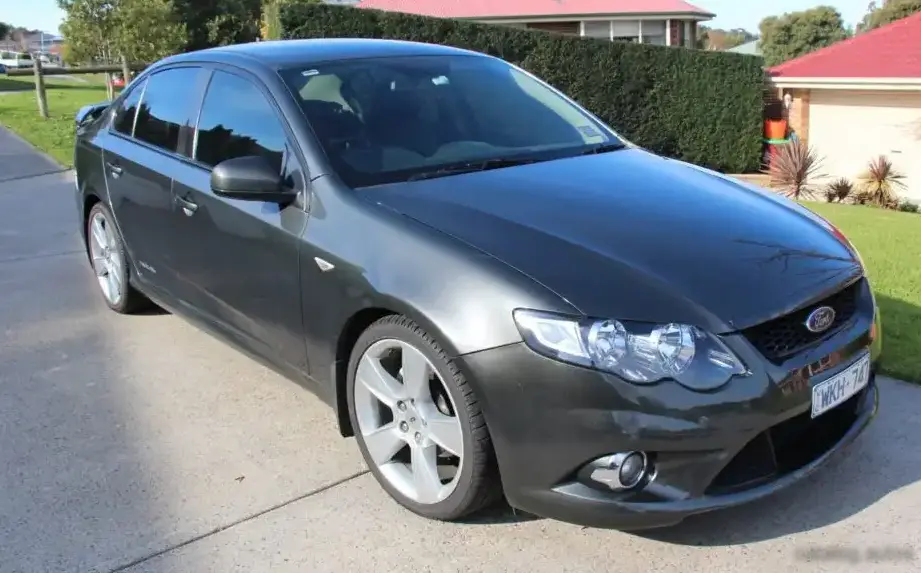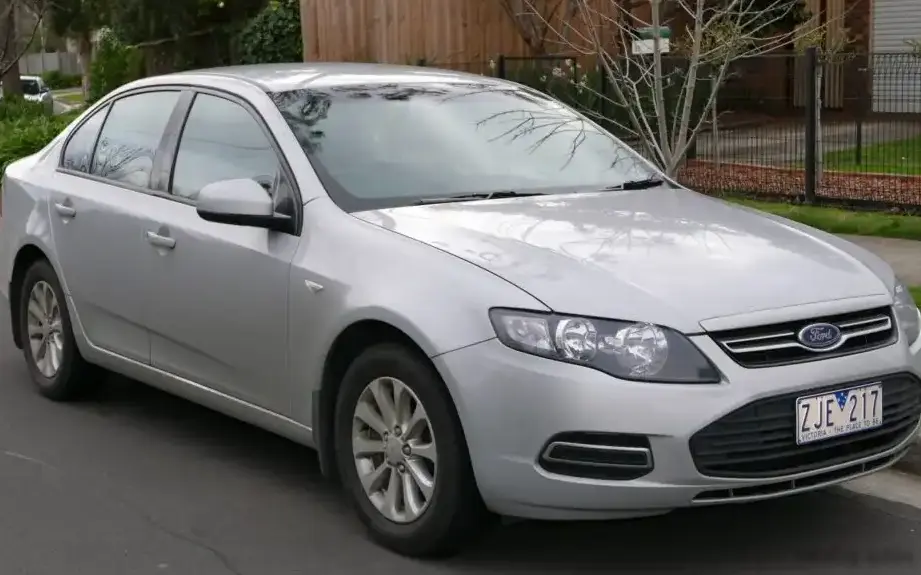
The Ford Falcon FG 4.0 E-Gas Automatic, produced between 2008 and 2011, represented a significant iteration of Australia’s long-running and iconic Falcon model. This variant occupied a middle-ground position within the FG range, offering a balance between performance, fuel efficiency (particularly relevant given its dedicated LPG system), and practicality. It was designed primarily for the Australian and New Zealand markets, where large, rear-wheel-drive sedans remained popular. The FG series itself was a heavily revised version of the BA/BF Falcons, featuring updated styling, improved refinement, and a new generation of Ford’s Barra inline-six engine. The E-Gas designation signified the vehicle’s factory-fitted Liquid Petroleum Gas (LPG) conversion, a common feature in Australian vehicles due to government incentives and the availability of LPG infrastructure.
Technical Specifications
| Brand | Ford |
| Model | Falcon |
| Generation | Falcon (FG) |
| Type (Engine) | 4.0 E-Gas (212 Hp) Automatic |
| Start of production | 2008 |
| End of production | 2011 |
| Powertrain Architecture | Internal Combustion engine |
| Body type | Sedan |
| Seats | 5 |
| Doors | 4 |
| Fuel consumption (combined) | 14.9 l/100 km (15.8 US mpg, 19 UK mpg, 6.7 km/l) |
| Fuel Type | LPG |
| Power | 212 Hp @ 4750 rpm |
| Power per litre | 53.2 Hp/l |
| Torque | 371 Nm @ 2750 rpm (273.64 lb.-ft. @ 2750 rpm) |
| Engine layout | Front, Longitudinal |
| Engine Model/Code | Barra E-Gas |
| Engine displacement | 3984 cm3 (243.12 cu. in.) |
| Number of cylinders | 6 |
| Engine configuration | Inline |
| Cylinder Bore | 92.25 mm (3.63 in.) |
| Piston Stroke | 99.31 mm (3.91 in.) |
| Compression ratio | 10.3:1 |
| Number of valves per cylinder | 4 |
| Fuel injection system | Carburettor |
| Engine aspiration | Naturally aspirated |
| Valvetrain | DOHC |
| Trunk (boot) space (minimum) | 408 l (14.41 cu. ft.) |
| Fuel tank capacity | 93 l (24.57 US gal, 20.46 UK gal) |
| Length | 4955 mm (195.08 in.) |
| Width | 1868 mm (73.54 in.) |
| Width including mirrors | 2100 mm (82.68 in.) |
| Height | 1453 mm (57.2 in.) |
| Wheelbase | 2838 mm (111.73 in.) |
| Front track | 1583 mm (62.32 in.) |
| Rear track | 1598 mm (62.91 in.) |
| Front overhang | 942 mm (37.09 in.) |
| Rear overhang | 1175 mm (46.26 in.) |
| Minimum turning circle | 11 m (36.09 ft.) |
| Drivetrain Architecture | Rear wheel drive |
| Number of gears and type of gearbox | 4 gears, automatic transmission |
| Front suspension | Double wishbone |
| Rear suspension | Independent multi-link suspension |
| Front brakes | Ventilated discs |
| Rear brakes | Disc |
| Assisting systems | ABS (Anti-lock braking system) |
| Steering type | Steering rack and pinion |
| Power steering | Hydraulic |
| Tires size | 215/60 R16; 235/50 R17; 245/40 R18; 245/35 R19 |
| Wheel rims size | 6.5J x 16; 8J x 17; 8J x 18; 8J x 19 |
Powertrain & Engine Architecture
The heart of the Falcon FG 4.0 E-Gas was the Barra 4.0-liter inline-six engine. This engine, a descendant of Ford Australia’s long-running six-cylinder family, featured a double overhead camshaft (DOHC) valvetrain and a robust cast iron block with an aluminum cylinder head. The ‘E-Gas’ designation indicated a factory-installed and engineered LPG conversion. This system utilized a dedicated LPG fuel injection system alongside the standard petrol system, allowing the driver to seamlessly switch between fuels. The engine management system automatically optimized fuel delivery and ignition timing for each fuel type. While the Barra engine was known for its inherent strength and tunability, the LPG conversion did slightly reduce overall power output compared to the petrol-only version. The four-speed automatic transmission, a BTR 4E unit, was a common pairing for this engine, chosen for its smoothness and ease of use. It was not known for being particularly advanced, but it was reliable and well-suited to the engine’s torque characteristics.
Driving Characteristics
The 4.0 E-Gas Automatic Falcon offered a comfortable and relaxed driving experience. The automatic transmission, while lacking the responsiveness of a manual, provided smooth gear changes and made it well-suited for everyday driving and long highway journeys. The 212 hp and 371 Nm of torque provided adequate performance, although it wasn’t a particularly sporty vehicle. Acceleration was respectable, but not exhilarating. The LPG system did result in a slight decrease in power and fuel economy when running on petrol, but the lower cost of LPG often offset this. The rear-wheel-drive configuration provided a balanced feel, but the relatively soft suspension tuning prioritized comfort over handling precision. Compared to the higher-output XR6 or XR8 variants, the 4.0 E-Gas was noticeably less powerful and engaging to drive. However, it offered a more economical and practical alternative for those who didn’t require the extra performance.
Equipment & Trim Levels
The 4.0 E-Gas Automatic typically came equipped with a reasonable level of standard features. These included air conditioning, power windows and mirrors, a basic audio system, and an anti-lock braking system (ABS). Higher trim levels, such as the XR6, added features like sports seats, alloy wheels, a more sophisticated audio system, and additional exterior styling enhancements. Interior upholstery was typically cloth, although leather was available as an option. Dashboard configuration was relatively straightforward, with a focus on functionality rather than high-tech features. Common optional extras included a sunroof, upgraded audio systems, and parking sensors.
Chassis & Braking
The Falcon FG utilized a traditional body-on-frame construction, providing a robust and durable chassis. The front suspension featured a double wishbone design, while the rear suspension employed an independent multi-link setup. This combination aimed to provide a balance between ride comfort and handling stability. The braking system consisted of ventilated discs at the front and solid discs at the rear. ABS was standard, providing enhanced braking control in emergency situations. The steering was a hydraulic rack and pinion system, offering a reasonably direct and responsive feel. Tire sizes varied depending on the trim level, ranging from 215/60 R16 to 245/35 R19.
Market Reception & Comparison
The Falcon FG 4.0 E-Gas Automatic was generally well-received in the Australian market. Critics praised its comfortable ride, spacious interior, and the economic benefits of running on LPG. However, some criticized its relatively dated technology and lack of sporty handling. Compared to the petrol-only 4.0-liter Falcon, the E-Gas version offered a lower running cost, but at the expense of some power and refinement. It was positioned as a practical and affordable option for families and commuters, offering a compelling alternative to imported vehicles. Fuel economy, while not exceptional, was reasonable for a large, rear-wheel-drive sedan, particularly when running on LPG.
Legacy
The Ford Falcon FG 4.0 E-Gas Automatic represents a significant chapter in Australian automotive history. As one of the last Falcons produced in Australia, it holds a special place in the hearts of many enthusiasts. The Barra engine, in particular, has gained a strong following among tuners and modifiers, known for its durability and potential for high power output. While the LPG system may require periodic maintenance, the engine itself is generally considered to be reliable. In the used car market, these Falcons are relatively affordable and offer a unique blend of practicality, comfort, and Australian heritage. However, potential buyers should be aware of the potential maintenance costs associated with an older vehicle and the specific requirements of the LPG system.