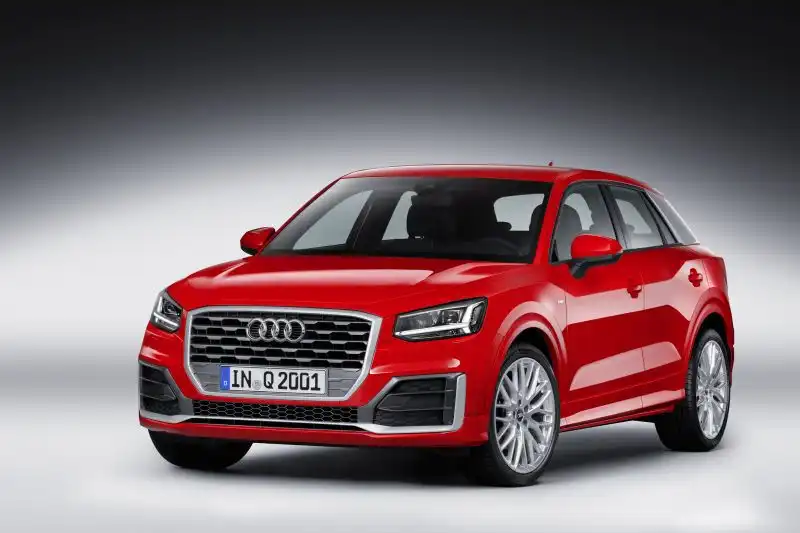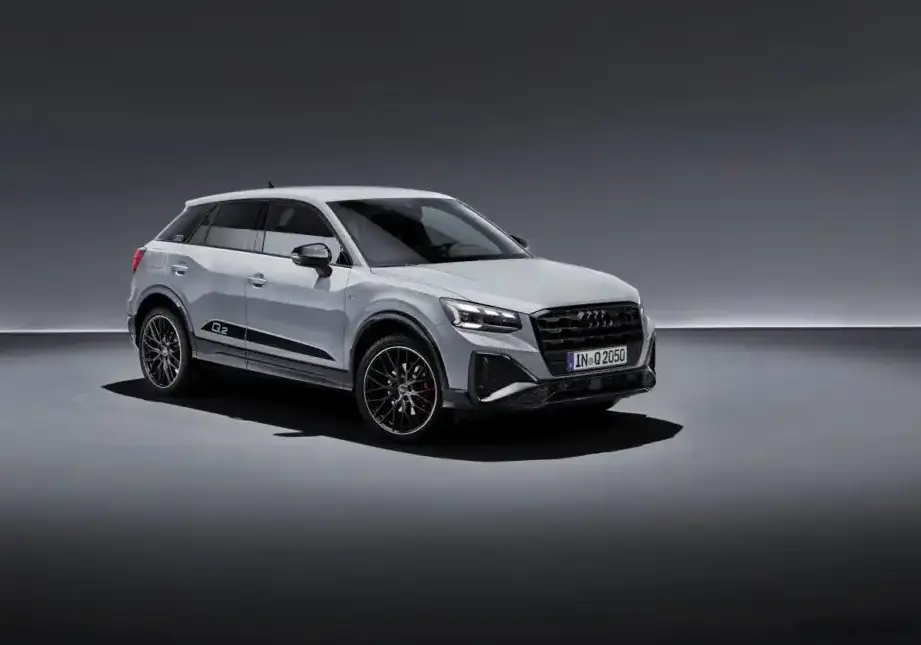
The Audi Q2 35 TFSI (150 hp) represents a key variant within the refreshed Q2 lineup, introduced in 2020. Positioned as a mid-range offering, it aimed to balance performance and efficiency within Audi’s compact SUV range. This facelift brought styling updates and technological enhancements to the original Q2, which debuted in 2016, building upon the Volkswagen Group’s MQB platform (specifically the A05 variant). The 35 TFSI model was a popular choice in European markets, offering a blend of practicality and Audi’s signature refinement. It served as a stepping stone between the entry-level Q2 30 TFSI and the more powerful Q2 45 TFSI.
Technical Specifications
| Brand | Audi |
| Model | Q2 |
| Generation | Q2 (facelift 2020) |
| Type (Engine) | 35 TFSI (150 Hp) |
| Start of production | 2020 |
| Powertrain Architecture | Internal Combustion engine |
| Body type | SUV |
| Seats | 5 |
| Doors | 5 |
| Combined fuel consumption (WLTP) | 5.8-6.4 l/100 km (40.6 – 36.8 US mpg, 48.7 – 44.1 UK mpg, 17.2 – 15.6 km/l) |
| CO2 emissions (WLTP) | 132-146 g/km |
| Fuel consumption (economy) – urban (NEDC) | 6.2-6.3 l/100 km (37.9 – 37.3 US mpg, 45.6 – 44.8 UK mpg, 16.1 – 15.9 km/l) |
| Fuel consumption (economy) – extra urban (NEDC) | 4.5-4.9 l/100 km (52.3 – 48 US mpg, 62.8 – 57.6 UK mpg, 22.2 – 20.4 km/l) |
| Fuel consumption (economy) – combined (NEDC) | 5.1-5.4 l/100 km (46.1 – 43.6 US mpg, 55.4 – 52.3 UK mpg, 19.6 – 18.5 km/l) |
| CO2 emissions (NEDC) | 117-124 g/km |
| Fuel Type | Petrol (Gasoline) |
| Acceleration 0 – 100 km/h | 8.6 sec |
| Acceleration 0 – 62 mph | 8.6 sec |
| Acceleration 0 – 60 mph | 8.2 sec |
| Maximum speed | 218 km/h (135.46 mph) |
| Emission standard | Euro 6d-ISC-FCM |
| Weight-to-power ratio | 8.6 kg/Hp, 116.3 Hp/tonne |
| Weight-to-torque ratio | 5.2 kg/Nm, 193.8 Nm/tonne |
| Power | 150 Hp @ 5000-6000 rpm |
| Power per litre | 100.1 Hp/l |
| Torque | 250 Nm @ 1500-3500 rpm (184.39 lb.-ft. @ 1500-3500 rpm) |
| Engine layout | Front, Transverse |
| Engine Model/Code | DPCA |
| Engine displacement | 1498 cm3 (91.41 cu. in.) |
| Number of cylinders | 4 |
| Engine configuration | Inline |
| Number of valves per cylinder | 4 |
| Fuel injection system | Direct injection |
| Engine aspiration | Turbocharger, Intercooler |
| Engine oil capacity | 4.3 l (4.54 US qt | 3.78 UK qt) |
| Kerb Weight | 1290 kg (2843.96 lbs.) |
| Max. weight | 1855 kg (4089.57 lbs.) |
| Max load | 565 kg (1245.61 lbs.) |
| Trunk (boot) space – minimum | 405 l (14.3 cu. ft.) |
| Trunk (boot) space – maximum | 1050 l (37.08 cu. ft.) |
| Fuel tank capacity | 50 l (13.21 US gal | 11 UK gal) |
| Max. roof load | 60 kg (132.28 lbs.) |
| Permitted trailer load with brakes (8%) | 1700 kg (3747.86 lbs.) |
| Permitted trailer load with brakes (12%) | 1500 kg (3306.93 lbs.) |
| Permitted trailer load without brakes | 680 kg (1499.14 lbs.) |
| Permitted towbar download | 75 kg (165.35 lbs.) |
| Length | 4208 mm (165.67 in.) |
| Width | 1794 mm (70.63 in.) |
| Width including mirrors | 2009 mm (79.09 in.) |
| Height | 1508 mm (59.37 in.) |
| Wheelbase | 2601 mm (102.4 in.) |
| Front track | 1546 mm (60.87 in.) |
| Rear (Back) track | 1542 mm (60.71 in.) |
| Front overhang | 830 mm (32.68 in.) |
| Rear overhang | 777 mm (30.59 in.) |
| Minimum turning circle (turning diameter) | 11.1 m (36.42 ft.) |
| Drivetrain Architecture | The Internal combustion engine (ICE) drives the front wheels of the vehicle. |
| Drive wheel | Front wheel drive |
| Number of gears and type of gearbox | 6 gears, manual transmission |
| Front suspension | Independent type McPherson |
| Rear suspension | Semi-independent, coil spring |
| Front brakes | Ventilated discs |
| Rear brakes | Disc |
| Assisting systems | ABS (Anti-lock braking system) |
| Steering type | Steering rack and pinion |
| Power steering | Electric Steering |
Powertrain & Engine Architecture
The heart of the Q2 35 TFSI is the DPCA engine, a 1.5-liter turbocharged four-cylinder gasoline engine. This engine is part of the EA211 family, widely used across the Volkswagen Group. It utilizes direct fuel injection and a single turbocharger with an intercooler to deliver a balance of power and efficiency. The engine employs variable valve timing on both the intake and exhaust sides, optimizing performance across the rev range. The 35 TFSI utilizes a 6-speed manual transmission as standard, sending power to the front wheels. The engine’s design incorporates features like a coated cylinder bore to reduce friction and improve fuel economy. The engine management system is tuned to prioritize fuel efficiency while still providing responsive acceleration.
Driving Characteristics
The Q2 35 TFSI offers a comfortable and composed driving experience. With 150 horsepower and 250 Nm (184 lb-ft) of torque, it provides adequate performance for everyday driving situations. Acceleration from 0-60 mph takes around 8.2 seconds, and the top speed is 135.46 mph. The turbocharger provides a noticeable boost in power from around 1500 rpm, offering good mid-range acceleration. While not a sports car, the Q2 35 TFSI feels nimble and easy to maneuver in urban environments. Compared to the more powerful 45 TFSI variant, the 35 TFSI offers a more relaxed driving experience, prioritizing fuel economy over outright performance. The manual transmission provides a direct connection to the engine, allowing for precise gear changes.
Equipment & Trim Levels
The Q2 35 TFSI typically came equipped with a generous amount of standard features. These included Audi’s MMI infotainment system with a 7-inch touchscreen display, Bluetooth connectivity, and a suite of driver-assistance systems such as lane departure warning and automatic emergency braking. Interior upholstery was typically cloth, with options for leather upgrades. Available options included a larger touchscreen display, a digital instrument cluster (Audi Virtual Cockpit), a panoramic sunroof, and a premium sound system. Exterior features included LED headlights, alloy wheels, and a choice of exterior colors. Trim levels often varied by market, but generally offered packages that bundled popular options together.
Chassis & Braking
The Q2’s chassis is based on the MQB platform, providing a solid and well-balanced foundation. The front suspension utilizes a McPherson strut design, while the rear suspension employs a semi-independent torsion beam setup. This configuration strikes a good balance between ride comfort and handling. The Q2 35 TFSI is equipped with ventilated disc brakes at the front and solid disc brakes at the rear. ABS (Anti-lock Braking System) is standard, providing enhanced braking performance in emergency situations. The steering is electrically assisted, offering a light and precise feel.
Market Reception & Comparison
The Audi Q2 35 TFSI was generally well-received by automotive critics. It was praised for its stylish design, comfortable interior, and refined driving experience. Fuel economy was also a strong point, with the Q2 35 TFSI achieving around 36.8-40.6 US mpg on the combined cycle. Compared to other compact SUVs in its class, such as the BMW X2 and the Mercedes-Benz GLA, the Q2 offered a compelling combination of value and premium features. The 35 TFSI variant was often seen as a sweet spot in the Q2 lineup, offering a good balance between performance, efficiency, and price. Some critics noted that the rear seat space was somewhat limited compared to some competitors.
Legacy
The Audi Q2 35 TFSI has proven to be a reliable and durable vehicle. The 1.5-liter turbocharged engine is known for its longevity, and the MQB platform is well-regarded for its robustness. On the used car market, the Q2 35 TFSI remains a popular choice, offering a stylish and practical option for buyers seeking a premium compact SUV. Regular maintenance, including oil changes and timing belt replacements, is essential to ensure the long-term reliability of the engine. The Q2’s relatively simple mechanical design makes it relatively easy and affordable to maintain.