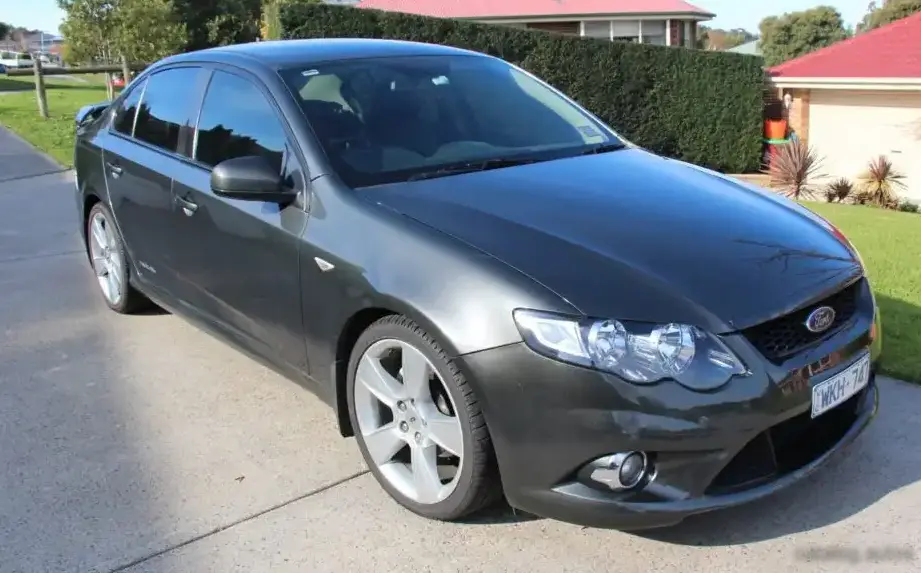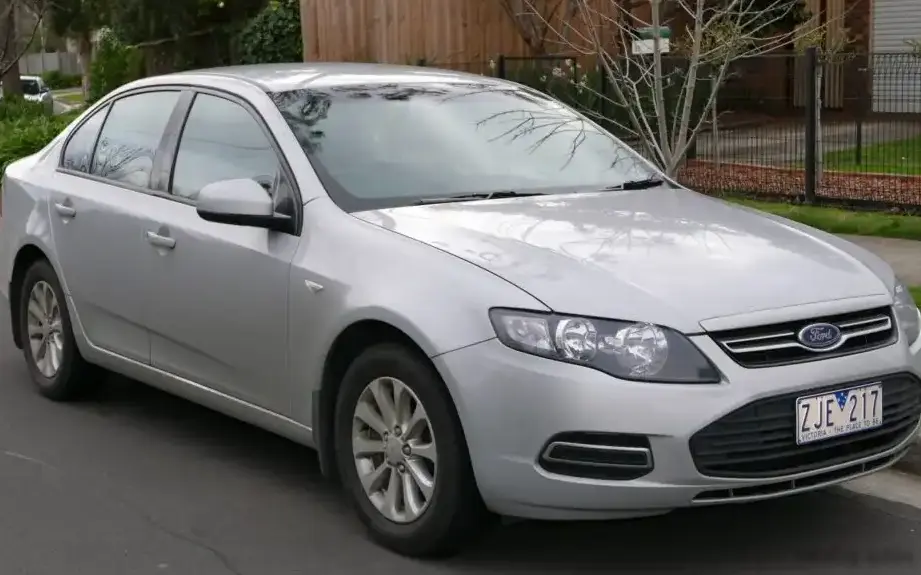
The Ford Falcon FG X 2.0 EcoBoost Automatic, produced from 2011 to 2014, represented a significant shift for the iconic Australian-built Falcon. This variant was introduced as part of the FG MkII facelift, aiming to offer a more fuel-efficient and technologically advanced option within the Falcon lineup. Positioned as a mid-range offering, it bridged the gap between the base models and the performance-oriented XR6 Turbo. The FG X series marked the final generation of the Falcon, making this 2.0 EcoBoost model a notable chapter in Australian automotive history. It was designed to appeal to buyers seeking a balance of performance, comfort, and modern features in a traditionally large Australian sedan.
Technical Specifications
| Brand | Ford |
| Model | Falcon |
| Generation | Falcon (FG, facelift 2011) |
| Type (Engine) | 2.0 EcoBoost (243 Hp) Automatic |
| Start of production | 2011 |
| End of production | 2014 |
| Powertrain Architecture | Internal Combustion engine |
| Body type | Sedan |
| Seats | 5 |
| Doors | 4 |
| Fuel consumption (urban) | 11.8 l/100 km (19.9 US mpg) |
| Fuel consumption (extra urban) | 6 l/100 km (39.2 US mpg) |
| Fuel consumption (combined) | 8.1 l/100 km (29 US mpg) |
| CO2 emissions | 192 g/km |
| Fuel Type | Petrol (Gasoline) |
| Weight-to-power ratio | 6.8 kg/Hp |
| Weight-to-torque ratio | 4.7 kg/Nm |
| Power | 243 Hp @ 5500 rpm |
| Power per litre | 121.6 Hp/l |
| Torque | 353 Nm @ 2000 rpm (260.36 lb.-ft. @ 2000 rpm) |
| Engine layout | Front, Longitudinal |
| Engine displacement | 1999 cm3 (121.99 cu. in.) |
| Number of cylinders | 4 |
| Engine configuration | Inline |
| Cylinder Bore | 87.5 mm (3.44 in.) |
| Piston Stroke | 83.1 mm (3.27 in.) |
| Compression ratio | 9.3:1 |
| Number of valves per cylinder | 4 |
| Fuel injection system | Direct injection |
| Engine aspiration | Turbocharger, Intercooler |
| Valvetrain | DOHC |
| Kerb Weight | 1648 kg (3633.22 lbs.) |
| Trunk (boot) space (minimum) | 535 l (18.89 cu. ft.) |
| Fuel tank capacity | 68 l (17.96 US gal | 14.96 UK gal) |
| Permitted trailer load with brakes (12%) | 1600 kg (3527.4 lbs.) |
| Length | 4955 mm (195.08 in.) |
| Width | 1868 mm (73.54 in.) |
| Width including mirrors | 2100 mm (82.68 in.) |
| Height | 1453 mm (57.2 in.) |
| Wheelbase | 2838 mm (111.73 in.) |
| Front track | 1583 mm (62.32 in.) |
| Rear track | 1598 mm (62.91 in.) |
| Front overhang | 942 mm (37.09 in.) |
| Rear overhang | 1175 mm (46.26 in.) |
| Minimum turning circle | 11 m (36.09 ft.) |
| Drivetrain Architecture | Rear wheel drive |
| Number of gears and type of gearbox | 6 gears, automatic transmission |
| Front suspension | Double wishbone |
| Rear suspension | Independent multi-link suspension |
| Front brakes | Ventilated discs |
| Rear brakes | Disc |
| Assisting systems | ABS (Anti-lock braking system) |
| Steering type | Steering rack and pinion |
| Power steering | Hydraulic Steering |
| Tires size | 215/60 R16; 235/50 17; 245/40 R18 |
| Wheel rims size | 6.5J x 16; 8J x 17; 8J x 18 |
Introduction
The Ford Falcon FG X 2.0 EcoBoost Automatic, launched in 2011, was a pivotal model in the Falcon’s final years of production. Built in Broadmeadows, Victoria, Australia, it represented Ford’s attempt to modernize the Falcon and appeal to a broader audience increasingly concerned with fuel efficiency. The FG X series, a facelift of the FG, brought updated styling, improved technology, and this new engine option. The 2.0 EcoBoost engine was a significant departure from the traditional inline-six and V8 engines that had defined the Falcon for decades. It was designed to offer a compelling alternative for buyers who didn’t require the outright performance of the XR6 Turbo but still desired a capable and comfortable sedan. This variant sat squarely in the middle of the FG X range, offering a balance of features and performance.
Powertrain & Engine Architecture
The heart of the FG X 2.0 EcoBoost is the Ford EcoBoost 2.0-liter turbocharged inline-four engine. This engine, designated as the M6G, is a direct-injected, dual overhead camshaft (DOHC) unit. Direct injection allows for precise fuel delivery, improving both power and efficiency. The turbocharger, coupled with an intercooler, provides a significant boost in power output. The engine utilizes variable valve timing on both intake and exhaust camshafts, optimizing performance across the rev range. The six-speed automatic transmission, a 6R80E unit, was specifically tuned to work with the EcoBoost engine’s torque characteristics. This transmission features a torque converter lock-up clutch to improve fuel economy at cruising speeds. The engine’s longitudinal mounting and rear-wheel-drive configuration were traditional Falcon hallmarks, providing a balanced driving experience.
Driving Characteristics
The 2.0 EcoBoost Automatic Falcon offered a noticeably different driving experience compared to its V8 and even its turbocharged six-cylinder siblings. While it didn’t possess the raw acceleration of the XR6 Turbo, it delivered a respectable 243 horsepower and 353 Nm (260 lb-ft) of torque. The automatic transmission, while smooth, wasn’t particularly quick to shift, and the gear ratios were optimized for fuel economy rather than outright performance. In real-world driving, the 2.0 EcoBoost Falcon felt comfortable and capable for everyday commuting and highway cruising. The turbocharger provided a noticeable surge of power when needed, making overtaking maneuvers relatively effortless. However, the engine could feel strained when pushed hard, and the automatic transmission sometimes hunted for the right gear. Compared to the manual transmission versions, the automatic offered less driver engagement but greater convenience.
Equipment & Trim Levels
The FG X 2.0 EcoBoost Automatic typically came standard with features such as air conditioning, a basic audio system with CD player, power windows and mirrors, and central locking. Higher trim levels added features like alloy wheels, a more advanced audio system with a touchscreen display, Bluetooth connectivity, and cruise control. Interior upholstery was typically cloth, with leather options available as an upgrade. Dashboard configuration was relatively straightforward, with a focus on functionality rather than luxury. Optional extras included a sunroof, parking sensors, and a rear-view camera. The overall interior ambiance was comfortable and practical, reflecting the Falcon’s positioning as a family sedan.
Chassis & Braking
The FG X 2.0 EcoBoost Automatic utilized a double wishbone front suspension and an independent multi-link rear suspension. This suspension setup provided a comfortable ride quality while maintaining reasonable handling characteristics. The braking system consisted of ventilated discs at the front and solid discs at the rear. Anti-lock braking system (ABS) was standard. The Falcon’s chassis was relatively robust, reflecting its origins as a large, rear-wheel-drive sedan. Stabilizer bars were fitted to both the front and rear axles to reduce body roll during cornering. The suspension tuning was geared towards comfort, making it a pleasant vehicle for long-distance driving.
Market Reception & Comparison
The 2.0 EcoBoost Falcon received mixed reviews from Australian automotive critics. While the engine was praised for its fuel efficiency and modern technology, some reviewers found it lacked the character and performance of the traditional Falcon engines. Compared to the XR6 Turbo, the 2.0 EcoBoost offered significantly lower performance but also lower running costs. Fuel economy was a key selling point, with the 2.0 EcoBoost achieving around 8.1 l/100 km (29 US mpg) in combined driving, which was considerably better than the XR6 Turbo. Reliability was generally good, although some owners reported minor issues with the turbocharger and fuel injection system. The 2.0 EcoBoost appealed to buyers who prioritized fuel economy and modern features over outright performance.
Legacy
The Ford Falcon FG X 2.0 EcoBoost Automatic represents a unique chapter in the Falcon’s history. It was a bold attempt to modernize the Falcon and appeal to a changing market. While it didn’t achieve the sales success of some of its predecessors, it demonstrated Ford’s commitment to innovation and fuel efficiency. Today, the FG X 2.0 EcoBoost is becoming increasingly collectible, particularly among enthusiasts who appreciate its unique blend of modern technology and traditional Falcon characteristics. The powertrain, while not without its quirks, has proven to be relatively reliable, and parts availability remains reasonable. As the final Falcon ever produced, the FG X 2.0 EcoBoost holds a special place in Australian automotive culture.