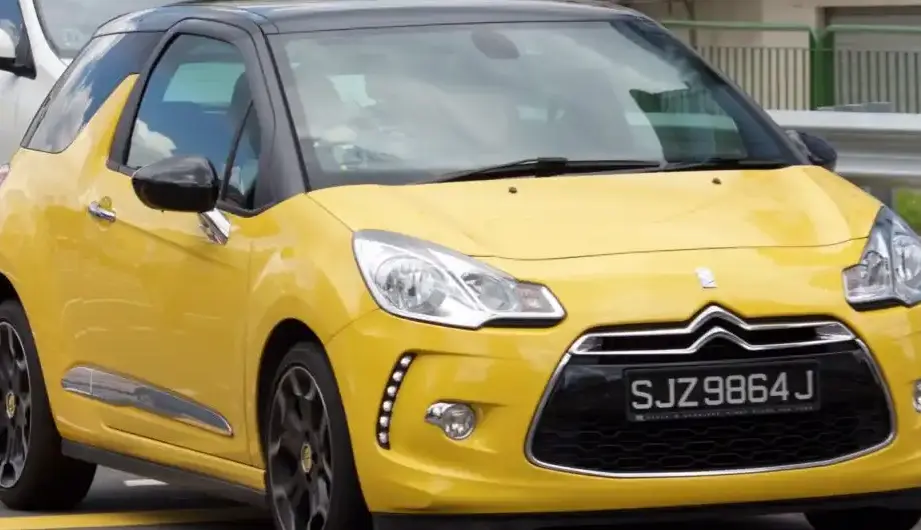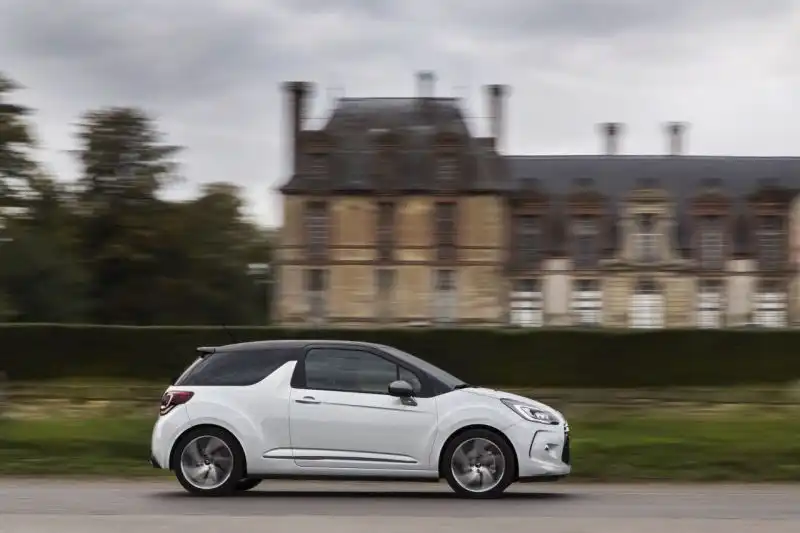
The Citroen DS 3 1.6 VTi 120 Automatic, produced between 2014 and 2015, represents a mid-range offering within the second generation (Phase II) of Citroen’s stylish subcompact hatchback. Positioned as a more accessible entry point to the DS 3 range than the higher-performance variants, it aimed to balance fuel efficiency with reasonable performance and the convenience of an automatic transmission. This variant was primarily marketed in Europe, where the DS 3 competed with vehicles like the Mini Cooper, Audi A1, and Fiat 500, offering a distinctive French design and a focus on personalization. The Phase II update brought styling revisions and minor equipment upgrades compared to the original DS 3 launched in 2010.
Technical Specifications
| Brand | Citroen |
| Model | DS3 |
| Generation | DS 3 (Phase II, 2014) |
| Type (Engine) | 1.6 VTi (120 Hp) Automatic |
| Start of production | 2014 |
| End of production | 2015 |
| Powertrain Architecture | Internal Combustion engine |
| Body type | Hatchback |
| Seats | 5 |
| Doors | 3 |
| Fuel consumption (urban) | 9.3 l/100 km (25.3 US mpg) |
| Fuel consumption (extra urban) | 4.9 l/100 km (48 US mpg) |
| Fuel consumption (combined) | 6.5 l/100 km (36.2 US mpg) |
| CO2 emissions | 150 g/km |
| Fuel Type | Petrol (Gasoline) |
| Acceleration 0 – 100 km/h | 10.9 sec |
| Acceleration 0 – 62 mph | 10.9 sec |
| Acceleration 0 – 60 mph | 10.4 sec |
| Maximum speed | 190 km/h (118.06 mph) |
| Emission standard | Euro 5 |
| Weight-to-power ratio | 9.1 kg/Hp |
| Weight-to-torque ratio | 6.8 kg/Nm |
| Power | 120 Hp @ 6000 rpm |
| Torque | 160 Nm @ 4250 rpm (118.01 lb.-ft. @ 4250 rpm) |
| Engine layout | Front, Transverse |
| Engine Model/Code | 5FS EP6C |
| Engine displacement | 1598 cm3 (97.52 cu. in.) |
| Number of cylinders | 4 |
| Engine configuration | Inline |
| Cylinder Bore | 77 mm (3.03 in.) |
| Piston Stroke | 85.8 mm (3.38 in.) |
| Number of valves per cylinder | 4 |
| Fuel injection system | Multi-port manifold injection |
| Engine aspiration | Naturally aspirated engine |
| Engine oil capacity | 4.25 l (4.49 US qt | 3.74 UK qt) |
| Kerb Weight | 1089 kg (2400.83 lbs.) |
| Max. weight | 1587 kg (3498.74 lbs.) |
| Max load | 498 kg (1097.9 lbs.) |
| Trunk (boot) space – minimum | 285 l (10.06 cu. ft.) |
| Trunk (boot) space – maximum | 980 l (34.61 cu. ft.) |
| Fuel tank capacity | 50 l (13.21 US gal | 11 UK gal) |
| Max. roof load | 70 kg (154.32 lbs.) |
| Permitted trailer load with brakes (12%) | 1150 kg (2535.32 lbs.) |
| Permitted trailer load without brakes | 570 kg (1256.63 lbs.) |
| Permitted towbar download | 46 kg (101.41 lbs.) |
| Length | 3948 mm (155.43 in.) |
| Width | 1715 mm (67.52 in.) |
| Height | 1458-1483 mm (57.4 – 58.39 in.) |
| Wheelbase | 2464 mm (97.01 in.) |
| Front track | 1465-1468 mm (57.68 – 57.8 in.) |
| Rear (Back) track | 1467-1471 mm (57.76 – 57.91 in.) |
| Front overhang | 824 mm (32.44 in.) |
| Rear overhang | 660 mm (25.98 in.) |
| Minimum turning circle (turning diameter) | 10.2 m (33.46 ft.) |
| Drivetrain Architecture | Front wheel drive |
| Number of gears and type of gearbox | 4 gears, automatic transmission |
| Front suspension | Independent, type McPherson with coil spring and anti-roll bar |
| Rear suspension | Independent coil spring, Elastic beam |
| Front brakes | Ventilated discs |
| Rear brakes | Disc |
| Assisting systems | ABS (Anti-lock braking system) |
| Steering type | Steering rack and pinion |
| Tires size | 195/55 R16 |
| Wheel rims size | 16 |
Powertrain & Engine Architecture
The heart of the DS 3 1.6 VTi 120 Automatic is the PSA Group’s 5FS EP6C engine. This 1.6-liter inline-four cylinder engine is a naturally aspirated unit, meaning it doesn’t employ turbocharging or supercharging. It utilizes multi-point fuel injection and features a dual overhead camshaft (DOHC) valvetrain with four valves per cylinder. The engine produces 120 horsepower at 6000 rpm and 160 Nm (118 lb-ft) of torque at 4250 rpm. The automatic transmission is a four-speed unit, a relatively conventional design for its time. While not offering the efficiency of more modern transmissions with greater gear counts, it provided a smooth and accessible driving experience for many drivers. The engine code ‘EP6C’ is a common designation within the PSA/BMW Prince engine family, known for its relatively simple design and reasonable reliability.
Driving Characteristics
The DS 3 1.6 VTi 120 Automatic delivers a comfortable, if not particularly sporty, driving experience. The four-speed automatic transmission, while smooth, lacks the responsiveness of a manual gearbox or a more modern automatic with more gears. Acceleration from 0-100 km/h takes around 10.9 seconds, making it adequate for everyday driving but not exceptionally quick. Compared to the more powerful DS 3 models, such as those equipped with the 1.6 THP turbocharged engine, the 1.6 VTi feels noticeably less energetic. The gear ratios are tuned for fuel economy and ease of use rather than outright performance. The automatic transmission does contribute to a more relaxed driving experience, particularly in urban environments, where frequent gear changes are minimized.
Equipment & Trim Levels
The DS 3 1.6 VTi 120 Automatic typically came equipped with a reasonable level of standard features. These included air conditioning, electric front windows, a CD/radio system with USB connectivity, and ABS brakes. Higher trim levels, often denoted by names like ‘Sport’ or ‘Chic’, added features such as alloy wheels, automatic headlights, rain-sensing wipers, and a more premium interior trim. Interior upholstery was typically cloth, with options for leather upgrades. A panoramic sunroof was a popular optional extra, enhancing the airy feel of the cabin. The DS 3 was also known for its extensive personalization options, allowing buyers to customize the exterior and interior with a wide range of colors and materials.
Chassis & Braking
The DS 3 utilizes a McPherson strut front suspension and an elastic beam rear suspension. This setup provides a good balance between ride comfort and handling. The front brakes are ventilated discs, while the rear brakes are solid discs. ABS (Anti-lock Braking System) is standard. The chassis is relatively lightweight, contributing to the car’s agility. Stabilizer bars are fitted to both the front and rear axles to reduce body roll during cornering. The steering is a rack and pinion system, providing precise and responsive control.
Market Reception & Comparison
The DS 3 1.6 VTi 120 Automatic was generally well-received by critics as a stylish and comfortable city car. However, the automatic transmission was sometimes criticized for being somewhat dated and lacking the refinement of more modern units. Fuel economy was considered reasonable, but not class-leading. Compared to the manual version of the same engine, the automatic offered slightly lower fuel efficiency. The 1.6 VTi Automatic was positioned as a more affordable alternative to the higher-performance DS 3 models, appealing to buyers who prioritized comfort and convenience over outright speed. It offered a compelling alternative to rivals like the Mini Cooper and Audi A1, particularly for those seeking a more distinctive and personalized vehicle.
Legacy
The 1.6 VTi engine, in general, has proven to be a relatively reliable unit, although regular maintenance is crucial. The four-speed automatic transmission is generally durable, but can be prone to wear and tear with high mileage. Today, the DS 3 1.6 VTi 120 Automatic can be found on the used car market at relatively affordable prices. It remains a popular choice for those seeking a stylish and well-equipped subcompact hatchback. Its distinctive design and comfortable driving experience continue to appeal to a wide range of buyers. However, potential buyers should be aware of the age of the vehicle and ensure that it has been properly maintained.