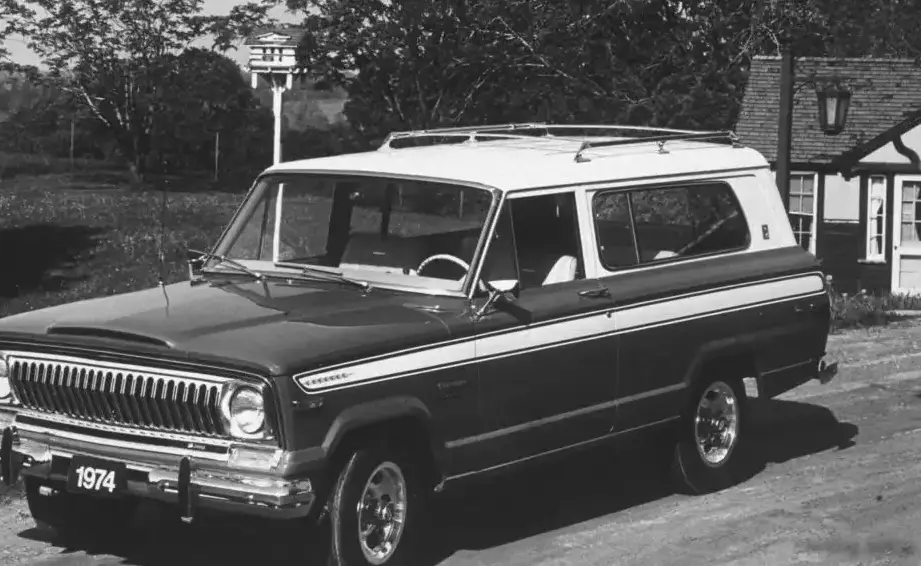
The Jeep Cherokee II (XJ) 5-door 2.5i SE, produced between 1993 and 1995, represented a key iteration of the popular Cherokee model line. Falling within the XJ generation (1984-2001), this variant offered a balance between affordability and capability, targeting buyers seeking a practical and reasonably equipped SUV. The 2.5i SE trim, powered by a 2.5-liter inline-four engine producing 130 horsepower, served as a mid-range option within the Cherokee lineup, positioned above the base models and below the more powerful 4.0-liter inline-six versions. It was primarily sold in the North American market, where the Cherokee enjoyed significant success as a versatile family vehicle and a capable off-road platform.
Technical Specifications
| Brand | Jeep |
| Model | Cherokee |
| Generation | Cherokee II (XJ) 5-door |
| Type (Engine) | 2.5 i SE (130 Hp) |
| Start of production | 1993 |
| End of production | 1995 |
| Powertrain Architecture | Internal Combustion engine |
| Body type | SUV |
| Seats | 5 |
| Doors | 5 |
| Fuel Type | Petrol (Gasoline) |
| Weight-to-power ratio | 10 kg/Hp, 99.6 Hp/tonne |
| Weight-to-torque ratio | 6.5 kg/Nm, 154.8 Nm/tonne |
| Power | 130 Hp @ 5250 rpm |
| Power per litre | 52.8 Hp/l |
| Torque | 202 Nm @ 3000 rpm (148.99 lb.-ft. @ 3000 rpm) |
| Engine layout | Front, Longitudinal |
| Engine displacement | 2464 cm3 (150.36 cu. in.) |
| Number of cylinders | 4 |
| Engine configuration | Inline |
| Cylinder Bore | 98.5 mm (3.88 in.) |
| Piston Stroke | 81 mm (3.19 in.) |
| Compression ratio | 9.2:1 |
| Number of valves per cylinder | 2 |
| Fuel injection system | Multi-port manifold injection |
| Engine aspiration | Naturally aspirated engine |
| Engine oil capacity | 3.8 l (4.02 US qt | 3.34 UK qt) |
| Coolant | 9.5 l (10.04 US qt | 8.36 UK qt) |
| Kerb Weight | 1305 kg (2877.03 lbs.) |
| Trunk (boot) space – minimum | 652 l (23.03 cu. ft.) |
| Trunk (boot) space – maximum | 1315 l (46.44 cu. ft.) |
| Fuel tank capacity | 76 l (20.08 US gal | 16.72 UK gal) |
| Length | 4288 mm (168.82 in.) |
| Width | 1720 mm (67.72 in.) |
| Height | 1621 mm (63.82 in.) |
| Wheelbase | 2575 mm (101.38 in.) |
| Front track | 1473 mm (57.99 in.) |
| Rear (Back) track | 1473 mm (57.99 in.) |
| Drivetrain Architecture | The Internal combustion engine (ICE) drives the rear wheels of the vehicle. |
| Drive wheel | Rear wheel drive |
| Number of gears and type of gearbox | 5 gears, manual transmission |
| Front suspension | Coil spring |
| Rear suspension | Leaf spring |
| Front brakes | Ventilated discs |
| Rear brakes | Drum |
| Assisting systems | ABS (Anti-lock braking system), Hydraulic Steering |
| Tires size | 215/75 R15 S |
Powertrain & Engine Architecture
The heart of the Cherokee 2.5i SE was the 2.5-liter (2464 cc) inline-four cylinder engine. This engine, internally designated as the 4.0L (despite its displacement), was a relatively simple and robust design. It featured a cast iron block and an aluminum cylinder head, employing a multi-port fuel injection system for improved efficiency and drivability. The engine utilized a two-valve-per-cylinder configuration and a 9.2:1 compression ratio. The 130 horsepower output was achieved at 5250 rpm, with peak torque of 202 Nm (148.99 lb-ft) arriving at 3000 rpm. The engine was mounted longitudinally in the chassis. The standard transmission for this variant was a 5-speed manual, although an optional 3-speed automatic transmission was available. The automatic transmission, while offering convenience, did impact acceleration and fuel economy compared to the manual.
Driving Characteristics
The 2.5-liter engine, paired with the manual transmission, provided adequate, though not exhilarating, performance. Acceleration was modest, with a 0-60 mph time estimated around 11-12 seconds. The engine felt relatively strained when climbing hills or carrying a full load. The 5-speed manual transmission offered a reasonable spread of gear ratios, allowing drivers to keep the engine in its optimal power band. The automatic transmission, while smooth, noticeably dulled acceleration and increased fuel consumption. Handling was typical for a body-on-frame SUV of the era – somewhat truck-like, with noticeable body roll in corners. The rear-wheel-drive configuration provided decent traction in most conditions, but four-wheel drive was available on other Cherokee trims for improved off-road capability.
Equipment & Trim Levels
The “SE” designation indicated a step up in features compared to the base Cherokee models. Standard equipment typically included air conditioning, a basic AM/FM stereo, cloth upholstery, and power steering. Optional extras included a cassette player, upgraded sound systems, cruise control, and a sunroof. Interior appointments were functional and durable, prioritizing practicality over luxury. The dashboard layout was straightforward, with easy-to-read gauges and logically placed controls. The 2.5i SE trim aimed to provide a comfortable and well-equipped vehicle for everyday use.
Chassis & Braking
The Cherokee II utilized a traditional body-on-frame construction, providing a robust and durable platform. The front suspension consisted of coil springs, while the rear suspension employed leaf springs – a common setup for trucks and SUVs of the time. This configuration prioritized load-carrying capacity and durability over refined ride quality. Braking duties were handled by ventilated discs at the front and drum brakes at the rear. Anti-lock brakes (ABS) were included as standard equipment, enhancing safety. The 215/75 R15 tires provided a reasonable balance between on-road comfort and off-road traction.
Market Reception & Comparison
The Cherokee 2.5i SE was generally well-received by automotive critics as a practical and affordable SUV. However, the 2.5-liter engine was often criticized for its lack of power, particularly when compared to the more potent 4.0-liter inline-six engine offered in higher trims. Fuel economy was considered average for the class. The 4.0L models were favored by those who needed more power for towing or off-roading, while the 2.5i SE appealed to buyers prioritizing fuel efficiency and a lower purchase price. Compared to competitors like the Ford Explorer and Chevrolet Blazer, the Cherokee offered a more rugged and utilitarian character.
Legacy
The Jeep Cherokee II (XJ) remains a popular vehicle among enthusiasts and collectors. The 2.5-liter engine, while not known for its performance, is generally considered reliable and relatively easy to maintain. Parts availability is good, and the engine’s simplicity makes it a favorite for modifications and upgrades. Today, well-maintained examples of the Cherokee 2.5i SE can be found on the used car market, often appealing to those seeking a classic SUV with a reputation for durability and off-road capability. The XJ Cherokee, as a whole, is widely regarded as one of the most significant and influential SUVs ever produced, and the 2.5i SE variant represents an accessible entry point into the Cherokee ownership experience.