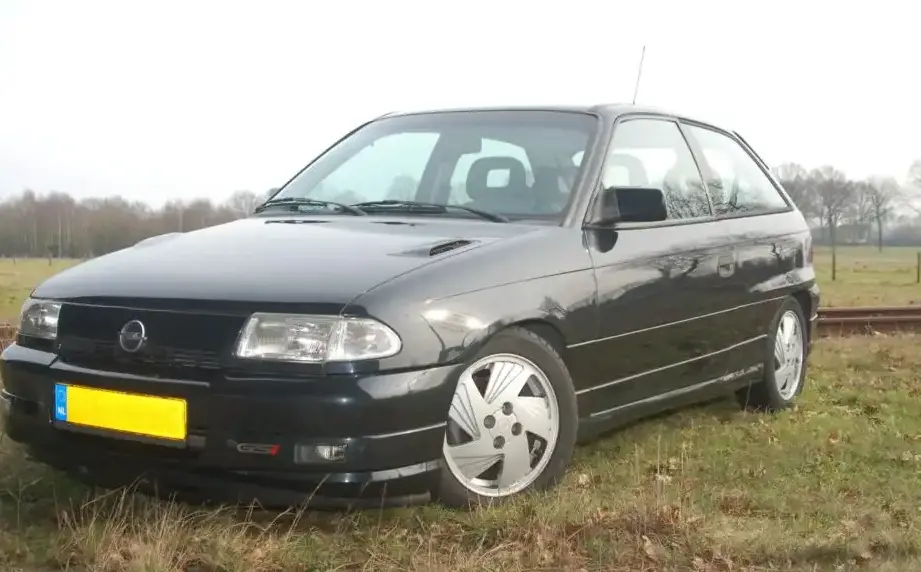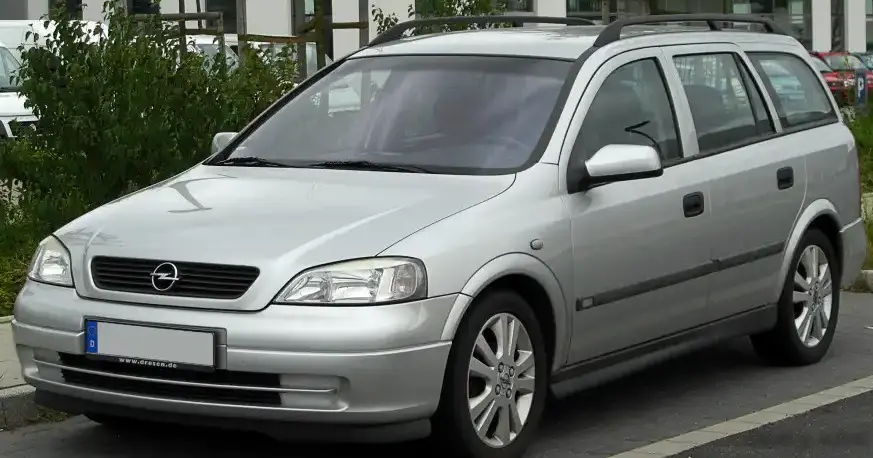
The Opel Astra G Caravan 1.7 TD, produced between October 1998 and January 2000, represented an entry-level diesel option within the broader Astra G Caravan (estate) range. Positioned as a fuel-efficient and practical choice, it catered to buyers prioritizing economy and load-carrying capacity over outright performance. This variant utilized Opel’s X17DTL turbocharged diesel engine, delivering 68 horsepower, and was typically paired with a five-speed manual transmission, though automatic options were available in some markets. The Astra G generation (1998-2004) was a significant model for Opel, representing a substantial leap forward in design, safety, and technology compared to its predecessor, the Astra F.
Technical Specifications
| Brand | Opel |
| Model | Astra |
| Generation | Astra G Caravan |
| Type (Engine) | 1.7 TD (68 Hp) |
| Start of production | October, 1998 |
| End of production | January, 2000 |
| Powertrain Architecture | Internal Combustion engine |
| Body type | Station wagon (estate) |
| Seats | 5 |
| Doors | 5 |
| Fuel consumption (urban) | 7.8 l/100 km (30.2 US mpg, 36.2 UK mpg, 12.8 km/l) |
| Fuel consumption (extra urban) | 5.1 l/100 km (46.1 US mpg, 55.4 UK mpg, 19.6 km/l) |
| Fuel consumption (combined) | 6.1 l/100 km (38.6 US mpg, 46.3 UK mpg, 16.4 km/l) |
| CO2 emissions | 163 g/km |
| Fuel Type | Diesel |
| Acceleration 0 – 100 km/h | 17.5 sec |
| Acceleration 0 – 62 mph | 17.5 sec |
| Acceleration 0 – 60 mph | 16.6 sec |
| Maximum speed | 158 km/h (98.18 mph) |
| Emission standard | Euro 2 |
| Weight-to-power ratio | 16.8 kg/Hp, 59.4 Hp/tonne |
| Weight-to-torque ratio | 8.7 kg/Nm, 115.3 Nm/tonne |
| Power | 68 Hp @ 4500 rpm |
| Power per litre | 40 Hp/l |
| Torque | 132 Nm @ 2400 rpm (97.36 lb.-ft. @ 2400 rpm) |
| Engine layout | Front, Transverse |
| Engine Model/Code | X17DTL |
| Engine displacement | 1700 cm3 (103.74 cu. in.) |
| Number of cylinders | 4 |
| Engine configuration | Inline |
| Cylinder Bore | 82.5 mm (3.25 in.) |
| Piston Stroke | 79.5 mm (3.13 in.) |
| Compression ratio | 22:1 |
| Number of valves per cylinder | 2 |
| Fuel injection system | Precombustion chamber injection |
| Engine aspiration | Turbocharger |
| Valvetrain | SOHC |
| Engine oil capacity | 5.5 l (5.81 US qt | 4.84 UK qt) |
| Coolant | 8.7 l (9.19 US qt | 7.65 UK qt) |
| Kerb Weight | 1145 kg (2524.29 lbs.) |
| Max. weight | 1665 kg (3670.7 lbs.) |
| Max load | 520 kg (1146.4 lbs.) |
| Trunk (boot) space – minimum | 480 l (16.95 cu. ft.) |
| Trunk (boot) space – maximum | 1500 l (52.97 cu. ft.) |
| Fuel tank capacity | 52 l (13.74 US gal | 11.44 UK gal) |
| Max. roof load | 100 kg (220.46 lbs.) |
| Length | 4288 mm (168.82 in.) |
| Width | 1709 mm (67.28 in.) |
| Width including mirrors | 1989 mm (78.31 in.) |
| Height | 1510 mm (59.45 in.) |
| Wheelbase | 2611 mm (102.8 in.) |
| Front track | 1464 mm (57.64 in.) |
| Rear (Back) track | 1452 mm (57.17 in.) |
| Drag coefficient (Cd) | 0.31 |
| Minimum turning circle | 10.8 m (35.43 ft.) |
| Drivetrain Architecture | The Internal combustion engine (ICE) drives the front wheels of the vehicle. |
| Drive wheel | Front wheel drive |
| Number of gears | 5 gears, manual transmission |
| Front suspension | Independent, type McPherson with coil spring and anti-roll bar |
| Rear suspension | Transverse stabilizer |
| Front brakes | Ventilated discs |
| Rear brakes | Drum |
| Assisting systems | ABS (Anti-lock braking system) |
| Steering type | Steering rack and pinion |
| Power steering | Hydraulic Steering |
| Tires size | 175/70 R14 |
| Wheel rims size | 6J x 14 |
Powertrain & Engine Architecture
The heart of the Astra G Caravan 1.7 TD was the X17DTL engine, a 1.7-liter inline-four cylinder diesel. This engine utilized a precombustion chamber injection system, a common technology for diesel engines of the era, which improved combustion efficiency and reduced noise. A turbocharger was employed to boost power output, compensating for the relatively small displacement. The engine featured a single overhead camshaft (SOHC) valvetrain, operating two valves per cylinder. The X17DTL produced 68 horsepower at 4500 rpm and 132 Nm (97.36 lb-ft) of torque at 2400 rpm. The five-speed manual transmission was the most common pairing, offering a balance between fuel economy and usability. While an automatic transmission was available, it was less frequently selected due to its impact on fuel consumption and performance.
Driving Characteristics
The 1.7 TD automatic version of the Astra G Caravan was not designed for spirited driving. Acceleration was leisurely, taking approximately 17.5 seconds to reach 62 mph. The focus was firmly on fuel efficiency and providing a comfortable, economical ride. The automatic transmission, while convenient, further diminished performance compared to the manual version. Gear ratios were optimized for low-end torque and fuel economy, resulting in a somewhat sluggish response during overtaking maneuvers. However, for everyday commuting and long-distance cruising, the 1.7 TD offered a reasonably refined experience, particularly on well-maintained roads.
Equipment & Trim Levels
The 1.7 TD Caravan typically represented the base trim level. Standard equipment generally included power steering, central locking, electric front windows, and an adjustable steering column. Interior upholstery was typically cloth, and the dashboard featured a functional, if somewhat basic, design. Optional extras included air conditioning, alloy wheels, and a radio/cassette player. Higher trim levels, such as the Elegance or Sport, offered additional features like upgraded upholstery, more comprehensive electrical equipment, and exterior styling enhancements.
Chassis & Braking
The Astra G Caravan 1.7 TD utilized an independent McPherson strut suspension setup at the front, providing a comfortable ride and reasonable handling. The rear suspension employed a torsion beam setup, which was cost-effective and space-efficient. Braking was handled by ventilated discs at the front and drum brakes at the rear. Anti-lock Braking System (ABS) was standard, enhancing safety by preventing wheel lockup during emergency braking. The relatively light weight of the vehicle, at approximately 1145 kg (2524.29 lbs), helped to mitigate the impact of the modest engine output.
Market Reception & Comparison
The Astra G Caravan 1.7 TD was generally well-received as a practical and economical family vehicle. Critics praised its fuel efficiency and spacious interior, but noted its lack of outright performance. Compared to the more powerful 1.8-liter gasoline and 2.0-liter diesel variants, the 1.7 TD offered significantly less power and acceleration. However, it also boasted superior fuel economy and lower running costs. The 1.7 TD appealed to buyers who prioritized practicality and affordability over driving excitement. Compared to competitors like the Ford Focus Estate and Volkswagen Golf Estate, the Astra G Caravan offered a competitive package in terms of price, space, and fuel efficiency.
Legacy
The X17DTL engine, while not known for its longevity or high performance, proved to be reasonably reliable with proper maintenance. Common issues included turbocharger failure and injector problems. Today, the Astra G Caravan 1.7 TD is a relatively affordable used car, appealing to buyers seeking a cheap and economical estate vehicle. Parts availability is generally good, and the simple mechanical design makes it relatively easy to maintain for those with some mechanical aptitude. While not a collector’s item, the Astra G Caravan 1.7 TD remains a testament to Opel’s commitment to providing practical and affordable transportation.