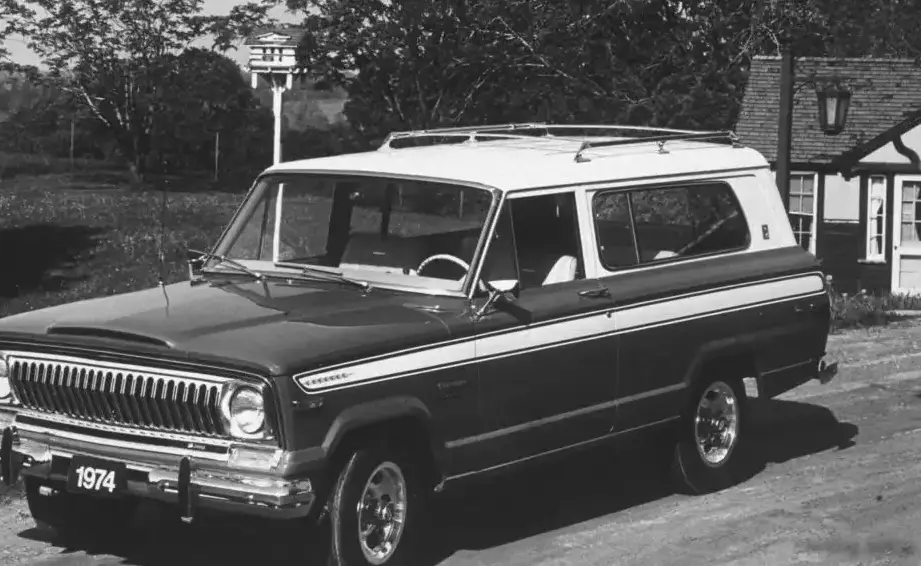
The Jeep Cherokee II (XJ) 5-door 2.5i SE Automatic, produced between 1993 and 1995, represented a key iteration of the popular Cherokee model line. Falling within the XJ generation (1984-2001), this variant occupied a middle ground in the Cherokee lineup, offering a balance between affordability, practicality, and reasonable performance. It was primarily marketed towards buyers seeking a versatile SUV for daily driving and light off-road use. The 2.5i SE trim, equipped with the 2.5-liter inline-four engine and a three-speed automatic transmission, was a common sight in the North American market, appealing to families and individuals who prioritized ease of use over outright speed.
Technical Specifications
| Brand | Jeep |
| Model | Cherokee |
| Generation | Cherokee II (XJ) 5-door |
| Type (Engine) | 2.5 i SE (130 Hp) Automatic |
| Start of production | 1993 |
| End of production | 1995 |
| Powertrain Architecture | Internal Combustion engine |
| Body type | SUV |
| Seats | 5 |
| Doors | 5 |
| Fuel Type | Petrol (Gasoline) |
| Weight-to-power ratio | 10 kg/Hp, 99.6 Hp/tonne |
| Weight-to-torque ratio | 6.5 kg/Nm, 154.8 Nm/tonne |
| Power | 130 Hp @ 5250 rpm |
| Power per litre | 52.8 Hp/l |
| Torque | 202 Nm @ 3000 rpm (148.99 lb.-ft. @ 3000 rpm) |
| Engine layout | Front, Longitudinal |
| Engine displacement | 2464 cm3 (150.36 cu. in.) |
| Number of cylinders | 4 |
| Engine configuration | Inline |
| Cylinder Bore | 98.5 mm (3.88 in.) |
| Piston Stroke | 81 mm (3.19 in.) |
| Compression ratio | 9.2:1 |
| Number of valves per cylinder | 2 |
| Fuel injection system | Multi-port manifold injection |
| Engine aspiration | Naturally aspirated engine |
| Engine oil capacity | 3.8 l (4.02 US qt | 3.34 UK qt) |
| Coolant | 9.5 l (10.04 US qt | 8.36 UK qt) |
| Kerb Weight | 1305 kg (2877.03 lbs.) |
| Trunk (boot) space – minimum | 652 l (23.03 cu. ft.) |
| Trunk (boot) space – maximum | 1315 l (46.44 cu. ft.) |
| Fuel tank capacity | 76 l (20.08 US gal | 16.72 UK gal) |
| Length | 4288 mm (168.82 in.) |
| Width | 1720 mm (67.72 in.) |
| Height | 1621 mm (63.82 in.) |
| Wheelbase | 2575 mm (101.38 in.) |
| Front track | 1473 mm (57.99 in.) |
| Rear (Back) track | 1473 mm (57.99 in.) |
| Drivetrain Architecture | The Internal combustion engine (ICE) drives the rear wheels of the vehicle. |
| Drive wheel | Rear wheel drive |
| Number of gears and type of gearbox | 3 gears, automatic transmission |
| Front suspension | Coil spring |
| Rear suspension | Leaf spring |
| Front brakes | Ventilated discs |
| Rear brakes | Drum |
| Assisting systems | ABS (Anti-lock braking system) |
| Power steering | Hydraulic Steering |
| Tires size | 215/75 R15 S |
| Wheel rims size | 15 |
Powertrain & Engine Architecture
The heart of the 2.5i SE was the 2.5-liter (2464 cc) inline-four cylinder engine. This engine, often referred to by its internal code, was a relatively simple and robust design. It featured a cast iron block and an aluminum cylinder head, employing a two-valve-per-cylinder configuration. Fuel delivery was handled by a multi-port fuel injection system, providing a balance between efficiency and performance. The engine produced 130 horsepower at 5250 rpm and 202 Nm (148.99 lb-ft) of torque at 3000 rpm. The three-speed automatic transmission (typically the Chrysler A727 variant or similar) was chosen for its durability and ease of use, prioritizing smooth shifts over sporty responsiveness. This transmission was a common choice for Jeep vehicles of this era, known for its reliability in moderate-duty applications.
Driving Characteristics
The 130 hp and automatic transmission combination resulted in a driving experience focused on comfort and practicality rather than spirited acceleration. Acceleration from 0 to 60 mph was estimated to be around 11-12 seconds. The automatic transmission’s gear ratios were optimized for everyday driving, providing adequate power for merging onto highways and navigating city streets. Compared to the manual transmission versions of the 2.5L Cherokee, the automatic offered less driver engagement but greater convenience. It also lagged behind the performance of higher-trim models equipped with the 4.0-liter inline-six engine, which offered significantly more power and torque. The rear-wheel-drive configuration provided a traditional SUV feel, with a focus on stability and predictable handling.
Equipment & Trim Levels
The “SE” designation indicated a step up in features compared to the base Cherokee models. Standard equipment typically included air conditioning, power steering, a basic AM/FM radio, and cloth upholstery. Optional extras commonly selected by buyers included a cassette player, upgraded sound systems, power windows and locks, and a sunroof. Interior trim was generally functional and durable, with a focus on practicality rather than luxury. The dashboard layout was straightforward, with easy-to-read gauges and logically placed controls.
Chassis & Braking
The Cherokee II utilized a body-on-frame construction, providing a robust and durable platform. The front suspension employed coil springs, while the rear suspension utilized leaf springs – a traditional setup for trucks and SUVs of this era. This configuration offered a comfortable ride quality, particularly on rough roads. Braking duties were handled by ventilated discs at the front and drum brakes at the rear. An Anti-lock Braking System (ABS) was included as standard equipment, enhancing safety and control during emergency braking situations. The 215/75 R15 tires provided adequate grip for both on-road and light off-road driving.
Market Reception & Comparison
The 2.5i SE Automatic Cherokee was generally well-received by consumers and automotive critics as a practical and affordable SUV. While not the fastest or most luxurious option in its class, it offered a compelling combination of features, reliability, and capability. Fuel economy was reasonable for the time, averaging around 17-19 mpg in combined driving. Compared to the 4.0L Cherokee, the 2.5L offered lower running costs but sacrificed performance. The 2.5L also proved to be more reliable than some of the early 4.0L engines, making it a popular choice for buyers seeking a long-lasting vehicle.
Legacy
The Jeep Cherokee II (XJ) remains a highly regarded SUV among enthusiasts, known for its ruggedness, simplicity, and off-road capability. The 2.5-liter engine, while not known for its blistering performance, proved to be remarkably durable and reliable. Today, well-maintained examples of the 2.5i SE Automatic Cherokee are sought after by collectors and enthusiasts looking for a classic SUV with a strong following. Parts availability remains good, making it relatively easy to keep these vehicles on the road. The XJ Cherokee, and specifically the 2.5L variant, has earned a reputation as a dependable and capable vehicle that can withstand years of use and abuse.