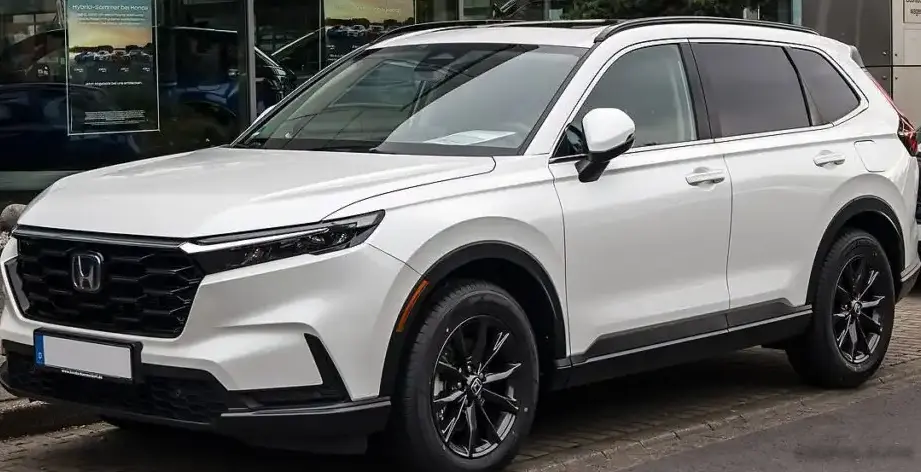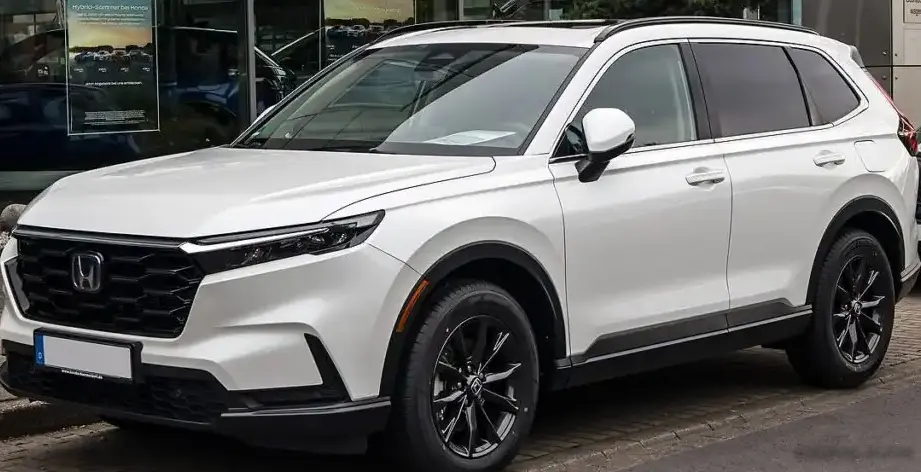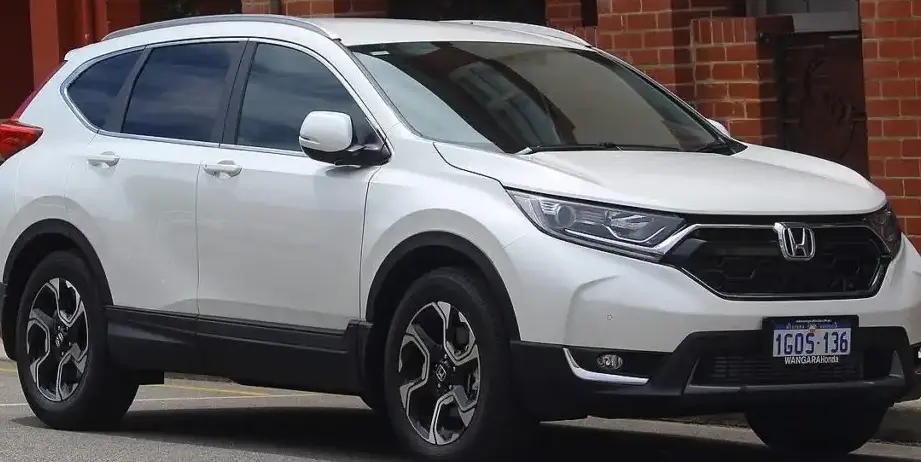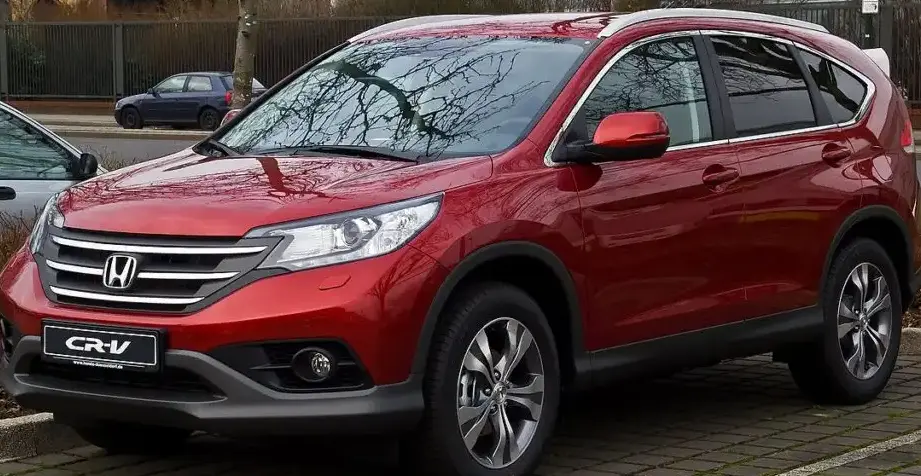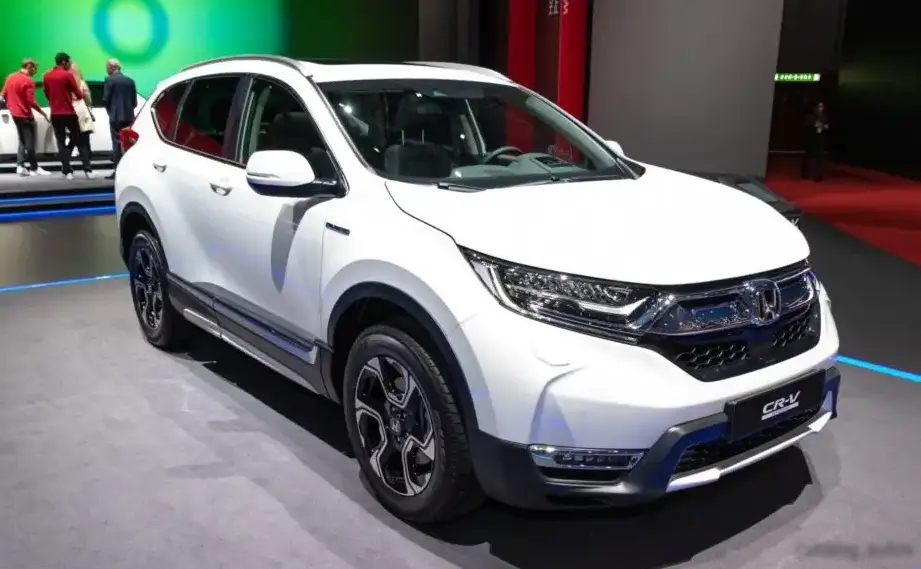
The Honda CR-V V 2.0 i-VTEC (150 Hp) AWD CVT, produced from 2017 to 2019, represents a significant iteration of Honda’s popular compact SUV. Part of the fifth-generation CR-V (internally designated as the RW platform), this variant aimed to balance fuel efficiency, practicality, and all-weather capability for the North American market, where the CR-V consistently ranked as a top seller. It occupied a mid-range position within the CR-V V lineup, offering a step up from the base LX model while remaining more accessible than the higher-trim EX and Touring versions.
Technical Specifications
| Brand | Honda |
| Model | CR-V |
| Generation | CR-V V |
| Type (Engine) | 2.0 i-VTEC (150 Hp) AWD CVT |
| Start of production | 2017 |
| End of production | 2019 |
| Powertrain Architecture | Internal Combustion engine |
| Body type | SUV |
| Seats | 5 |
| Doors | 5 |
| Fuel consumption (urban) | 9.8 l/100 km (24 US mpg) |
| Fuel consumption (extra urban) | 6.2 l/100 km (37.9 US mpg) |
| Fuel consumption (combined) | 7.5 l/100 km (31.4 US mpg) |
| Fuel Type | Petrol (Gasoline) |
| Acceleration 0 – 100 km/h | 11.9 sec |
| Acceleration 0 – 62 mph | 11.9 sec |
| Acceleration 0 – 60 mph | 11.3 sec |
| Maximum speed | 188 km/h (116.82 mph) |
| Emission standard | Euro 5 |
| Weight-to-power ratio | 10.4 kg/Hp |
| Weight-to-torque ratio | 8.2 kg/Nm |
| Power | 150 Hp @ 6500 rpm |
| Torque | 189 Nm @ 4300 rpm (139.4 lb.-ft. @ 4300 rpm) |
| Engine layout | Front, Transverse |
| Engine Model/Code | R20A |
| Engine displacement | 1997 cm3 (121.86 cu. in.) |
| Number of cylinders | 4 |
| Engine configuration | Inline |
| Cylinder Bore | 81 mm (3.19 in.) |
| Piston Stroke | 96.9 mm (3.81 in.) |
| Compression ratio | 10.6:1 |
| Number of valves per cylinder | 4 |
| Fuel injection system | Multi-port manifold injection |
| Engine aspiration | Naturally aspirated engine |
| Valvetrain | SOHC, i-VTEC |
| Engine oil capacity | 3.7 l (3.91 US qt | 3.26 UK qt) |
| Coolant capacity | 6 l (6.34 US qt | 5.28 UK qt) |
| Kerb Weight | 1557 kg (3432.6 lbs.) |
| Max. weight | 2130 kg (4695.85 lbs.) |
| Max load | 573 kg (1263.25 lbs.) |
| Trunk (boot) space – minimum | 1110 l (39.2 cu. ft.) |
| Trunk (boot) space – maximum | 2146 l (75.79 cu. ft.) |
| Fuel tank capacity | 53 l (14 US gal | 11.66 UK gal) |
| Length | 4587 mm (180.59 in.) |
| Width | 1854 mm (72.99 in.) |
| Height | 1679 mm (66.1 in.) |
| Wheelbase | 2659 mm (104.69 in.) |
| Front track | 1600 mm (62.99 in.) |
| Rear (Back) track | 1618 mm (63.7 in.) |
| Minimum turning circle | 11.4 m (37.4 ft.) |
| Drive wheel | All wheel drive (4×4) |
| Number of gears and type of gearbox | automatic transmission CVT |
| Front suspension | Independent, type McPherson with coil spring and anti-roll bar |
| Rear suspension | Independent multi-link suspension |
| Front brakes | Ventilated discs |
| Rear brakes | Disc |
| Assisting systems | ABS (Anti-lock braking system) |
| Steering type | Steering rack and pinion |
| Power steering | Electric Steering |
| Tires size | 235/60 R18 |
| Wheel rims size | 18 |
Powertrain & Engine Architecture
The heart of this CR-V variant is the R20A 2.0-liter inline-four cylinder engine. This engine is a member of Honda’s i-VTEC family, utilizing variable valve timing and lift on both the intake and exhaust valves to optimize performance and fuel efficiency across the rev range. The R20A employs multi-point fuel injection and a relatively high 10.6:1 compression ratio. Unlike some competitors, the R20A is naturally aspirated, eschewing turbocharging in favor of a more linear power delivery. The engine is transversely mounted in the front of the vehicle.
Power is transmitted to all four wheels via a Continuously Variable Transmission (CVT). Honda’s G-Design Shift CVT, as used in this CR-V, simulates stepped gear changes to provide a more familiar driving experience compared to traditional CVTs. The CVT is tuned for fuel economy and smooth operation, prioritizing comfort over outright acceleration. The all-wheel-drive system is a reactive system, engaging the rear wheels when front wheel slip is detected.
Driving Characteristics
The 2.0-liter i-VTEC engine paired with the CVT delivers adequate, but not exhilarating, performance. Acceleration from 0-60 mph takes approximately 11.3 seconds. The CVT effectively keeps the engine in its optimal power band, providing smooth and predictable acceleration. However, the lack of distinct gear changes can feel somewhat disconnected to drivers accustomed to traditional automatic transmissions. Compared to the available 1.5-liter turbocharged engine in other CR-V trims, this 2.0-liter version offers less peak power and torque, resulting in slower acceleration and a less responsive feel. The AWD system provides enhanced traction in inclement weather, making it a practical choice for regions with snow or rain.
Equipment & Trim Levels
The 2.0 i-VTEC AWD CVT trim typically included standard features such as automatic climate control, a rearview camera, Honda’s LaneWatch blind spot display, and a 5-inch color infotainment screen. Upholstery was typically cloth, and interior trim was functional rather than luxurious. Available options included a power moonroof, heated front seats, and a more advanced infotainment system with Apple CarPlay and Android Auto compatibility. This trim level was positioned as a good value proposition, offering essential features and all-wheel drive at a competitive price point.
Chassis & Braking
The CR-V V utilizes a MacPherson strut front suspension and a multi-link rear suspension, providing a comfortable and controlled ride. Stabilizer bars are fitted to both axles to reduce body roll during cornering. Braking duties are handled by ventilated discs at the front and solid discs at the rear. Anti-lock braking system (ABS) is standard. The suspension tuning is geared towards comfort and everyday usability, rather than sporty handling.
Market Reception & Comparison
Critics generally praised the CR-V V for its spacious interior, comfortable ride, and strong resale value. However, the 2.0-liter engine and CVT combination received mixed reviews. Some reviewers found the powertrain adequate for daily driving, while others criticized its lack of power and the somewhat uninspiring driving experience. Compared to the 1.5-liter turbocharged engine, the 2.0-liter version offered slightly better fuel economy in some driving conditions, but at the expense of performance. The 2.0L engine was often seen as a more reliable option, with fewer potential issues compared to the early iterations of the 1.5T engine.
Legacy
The Honda CR-V V 2.0 i-VTEC AWD CVT has proven to be a reliable and durable vehicle. The R20A engine is known for its longevity, and the CVT, while sometimes criticized, has generally held up well over time with proper maintenance. In the used car market, this variant represents a good value for buyers seeking a practical and dependable compact SUV with all-wheel drive. Its relatively simple engine design and lack of complex turbocharging components contribute to its reputation for long-term reliability, making it a popular choice among budget-conscious buyers.