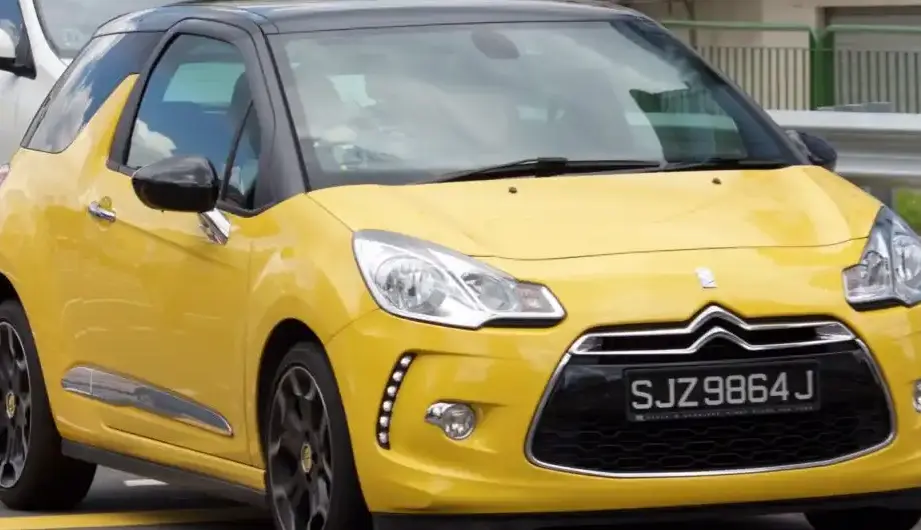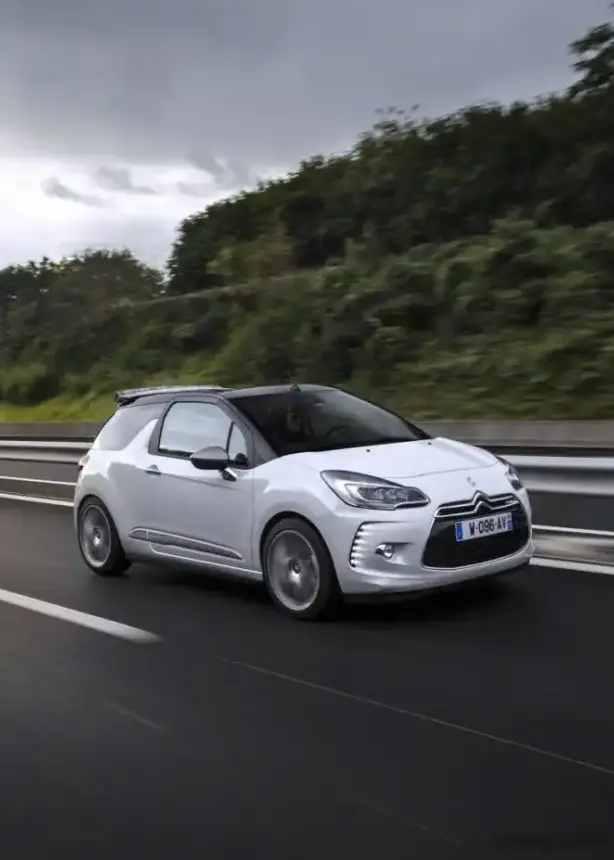
The Citroen DS 3 Cabrio 1.6 BlueHDi (120 hp) S&S, produced from 2014 to 2015, represents a distinctive offering within the second generation (Phase II) of the DS 3 model line. Positioned as a stylish and fuel-efficient convertible, it aimed to capture a segment of the market seeking a premium small car with a focus on diesel economy and a touch of open-air driving. This variant was part of Citroen’s broader strategy to expand the DS line as a more upscale and design-focused sub-brand. It built upon the success of the original DS 3 hatchback, adding the appeal of a retractable fabric roof. The DS 3, in general, was a significant model for Citroen, helping to revitalize the brand’s image and attract a younger demographic.
Technical Specifications
| Brand | Citroen |
| Model | DS3 |
| Generation | DS 3 (Phase II, 2014) Cabrio |
| Type (Engine) | 1.6 BlueHDi (120 Hp) S&S |
| Start of production | 2014 |
| End of production | 2015 |
| Powertrain Architecture | Internal Combustion engine |
| Body type | Cabriolet |
| Seats | 4 |
| Doors | 3 |
| Fuel consumption (urban) | 4.4 l/100 km (53.5 US mpg, 64.2 UK mpg, 22.7 km/l) |
| Fuel consumption (extra urban) | 3.2 l/100 km (73.5 US mpg, 88.3 UK mpg, 31.3 km/l) |
| Fuel consumption (combined) | 3.6 l/100 km (65.3 US mpg, 78.5 UK mpg, 27.8 km/l) |
| CO2 emissions | 94 g/km |
| Fuel Type | Diesel |
| Acceleration 0 – 100 km/h | 9.4 sec |
| Acceleration 0 – 62 mph | 9.4 sec |
| Acceleration 0 – 60 mph | 8.9 sec |
| Maximum speed | 190 km/h (118.06 mph) |
| Emission standard | Euro 6 |
| Weight-to-power ratio | 9.1 kg/Hp, 110.1 Hp/tonne |
| Weight-to-torque ratio | 3.8 kg/Nm, 261.5 Nm/tonne |
| Power | 120 Hp @ 3500 rpm |
| Power per litre | 76.9 Hp/l |
| Torque | 285 Nm @ 1750 rpm (210.21 lb.-ft. @ 1750 rpm) |
| Engine layout | Front, Transverse |
| Engine Model/Code | BHZ DV6FC |
| Engine displacement | 1560 cm3 (95.2 cu. in.) |
| Number of cylinders | 4 |
| Engine configuration | Inline |
| Cylinder Bore | 75 mm (2.95 in.) |
| Piston Stroke | 88.3 mm (3.48 in.) |
| Fuel injection system | Diesel Commonrail |
| Engine aspiration | Turbocharger, Intercooler |
| Engine oil capacity | 3.75 l (3.96 US qt | 3.3 UK qt) |
| Kerb Weight | 1090-1198 kg (2403.04 – 2641.14 lbs.) |
| Max. weight | 1598 kg (3522.99 lbs.) |
| Max load | 400-508 kg (881.85 – 1119.95 lbs.) |
| Trunk (boot) space – minimum | 245 l (8.65 cu. ft.) |
| Fuel tank capacity | 45 l (11.89 US gal | 9.9 UK gal) |
| Permitted trailer load with brakes (12%) | 1150 kg (2535.32 lbs.) |
| Permitted trailer load without brakes | 570 kg (1256.63 lbs.) |
| Permitted towbar download | 46 kg (101.41 lbs.) |
| Length | 3948 mm (155.43 in.) |
| Width | 1715 mm (67.52 in.) |
| Height | 1458-1483 mm (57.4 – 58.39 in.) |
| Wheelbase | 2464 mm (97.01 in.) |
| Front track | 1465-1468 mm (57.68 – 57.8 in.) |
| Rear (Back) track | 1467-1471 mm (57.76 – 57.91 in.) |
| Front overhang | 824 mm (32.44 in.) |
| Rear overhang | 660 mm (25.98 in.) |
| Minimum turning circle | 10.2-10.4 m (33.46 – 34.12 ft.) |
| Drivetrain Architecture | Front wheel drive |
| Drive wheel | Front wheel drive |
| Number of gears and type of gearbox | 6 gears, manual transmission |
| Front suspension | Independent type McPherson |
| Rear suspension | Elastic beam |
| Front brakes | Ventilated discs |
| Rear brakes | Disc |
| Assisting systems | ABS (Anti-lock braking system) |
| Steering type | Steering rack and pinion |
| Tires size | 205/45 R17 |
| Wheel rims size | 17 |
Powertrain & Engine Architecture
The heart of the DS 3 Cabrio 1.6 BlueHDi (120 hp) S&S is the PSA Group’s DV6FC engine, specifically the BHZ variant. This is a 1.6-liter, four-cylinder diesel engine employing common-rail direct injection and a turbocharger with intercooling. The engine produces 120 horsepower at 3500 rpm and a substantial 285 Nm (210 lb-ft) of torque at a low 1750 rpm. This torque output is a key characteristic of modern diesel engines, providing strong pulling power from low engine speeds. The engine features 16 valves (four per cylinder) and a sophisticated engine management system to optimize combustion and reduce emissions. The “BlueHDi” designation indicates the engine’s compliance with stringent Euro 6 emission standards, achieved through the use of a Selective Catalytic Reduction (SCR) system and a diesel particulate filter (DPF). The S&S (Stop & Start) system further enhances fuel efficiency by automatically shutting off the engine when the vehicle is stationary, such as at traffic lights. The engine is transversely mounted at the front of the vehicle, driving the front wheels through a six-speed manual transmission.
Driving Characteristics
The 1.6 BlueHDi engine, paired with the six-speed manual gearbox, delivers a surprisingly sprightly driving experience for a small diesel-powered convertible. While not a performance-oriented vehicle, the ample torque provides good acceleration, with a 0-60 mph time of around 8.9 seconds. The gear ratios are well-chosen to maximize fuel efficiency and provide adequate power for everyday driving. Compared to the more powerful petrol versions of the DS 3, the BlueHDi offers a more relaxed and economical driving style. The manual transmission allows for greater driver control, but the clutch is relatively light and the gearshift action is precise. The Cabriolet body style does introduce a slight degree of body flex compared to the hatchback, but it is generally well-controlled. The suspension, tuned for comfort, provides a reasonably smooth ride, although it can feel a little firm on rougher road surfaces.
Equipment & Trim Levels
The DS 3 Cabrio 1.6 BlueHDi (120 hp) S&S typically came equipped with a good level of standard features. These included air conditioning, a touchscreen infotainment system with Bluetooth connectivity, USB port, and steering wheel-mounted audio controls. Safety features such as ABS, ESP (Electronic Stability Program), and multiple airbags were also standard. The “S&S” trim level often included unique styling elements, such as distinctive alloy wheels and interior trim. Optional extras could include automatic headlights and wipers, rear parking sensors, and a panoramic sunroof. Interior upholstery was typically cloth, with the option of leather upgrades. The dashboard layout was modern and stylish, with a focus on ergonomics and ease of use.
Chassis & Braking
The DS 3 Cabrio utilizes a McPherson strut front suspension and an elastic beam rear suspension. This setup provides a good balance between ride comfort and handling. The front brakes are ventilated discs, while the rear brakes are solid discs, providing adequate stopping power for the vehicle’s weight and performance. The steering is a rack and pinion system, offering precise and responsive steering feel. The car rides on 17-inch alloy wheels with 205/45 R17 tires, providing good grip and handling characteristics. The chassis was reinforced compared to the standard DS 3 hatchback to compensate for the loss of a fixed roof, minimizing body flex.
Market Reception & Comparison
The DS 3 Cabrio 1.6 BlueHDi (120 hp) S&S was generally well-received by critics for its stylish design, fuel efficiency, and comfortable ride. It was seen as a compelling alternative to other small convertibles, such as the Fiat 500C and the Mini Convertible. Compared to the petrol-powered DS 3 variants, the BlueHDi offered significantly better fuel economy, making it an attractive option for drivers who prioritize running costs. However, some critics noted that the diesel engine was slightly noisier than the petrol engines and that the Cabriolet body style introduced a degree of body flex. The manual transmission was praised for its precise shift action, but some drivers may have preferred an automatic option.
Legacy
The Citroen DS 3 Cabrio 1.6 BlueHDi (120 hp) S&S has proven to be a relatively reliable vehicle, with the DV6FC engine being a well-established and durable unit. Common issues are typically related to the diesel particulate filter (DPF), which can become clogged if the vehicle is primarily used for short journeys. Regular servicing and the use of high-quality diesel fuel are essential to maintain the engine’s performance and longevity. On the used car market, these models are generally sought after for their fuel efficiency, stylish design, and relatively low running costs. They represent a good value proposition for buyers looking for a small, economical, and stylish convertible.