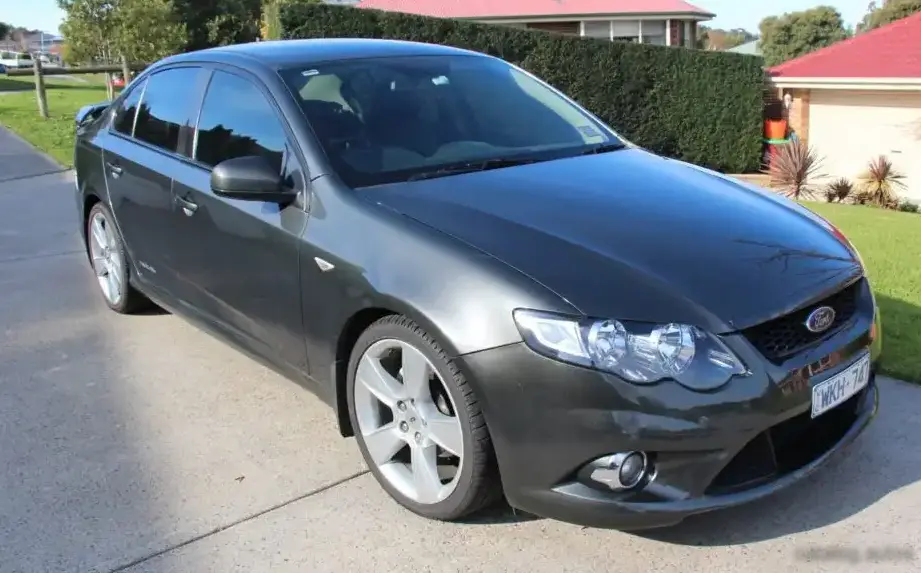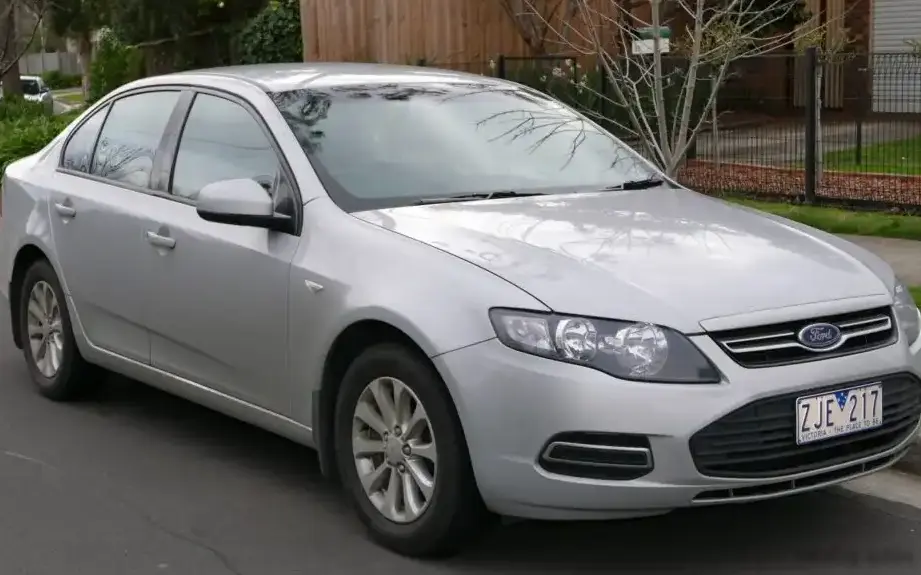
The Ford Falcon FG X 2.0 EcoBoost Automatic, produced between 2014 and 2016, represented a significant shift for the iconic Australian-built Falcon. This variant was positioned as a more fuel-efficient and technologically advanced option within the FG X range, appealing to buyers seeking a balance between performance and economy. It was the final iteration of the Falcon before Ford ceased Australian manufacturing operations, marking the end of an era for a vehicle deeply ingrained in Australian automotive history. The FG X series, built on the Falcon (FG) platform, aimed to modernize the Falcon and compete with imported rivals.
Technical Specifications
| Brand | Ford |
| Model | Falcon |
| Generation | Falcon (FG X) |
| Type (Engine) | 2.0 EcoBoost (239 Hp) Automatic |
| Start of production | 2014 |
| End of production | 2016 |
| Powertrain Architecture | Internal Combustion engine |
| Body type | Sedan |
| Seats | 5 |
| Doors | 4 |
| Fuel consumption (urban) | 11.4 l/100 km (20.6 US mpg) |
| Fuel consumption (extra urban) | 6 l/100 km (39.2 US mpg) |
| Fuel consumption (combined) | 8 l/100 km (29.4 US mpg) |
| CO2 emissions | 189 g/km |
| Fuel Type | Petrol (Gasoline) |
| Weight-to-power ratio | 6.9 kg/Hp |
| Weight-to-torque ratio | 4.7 kg/Nm |
| Power | 239 Hp @ 5500 rpm |
| Power per litre | 119.6 Hp/l |
| Torque | 353 Nm @ 2000 rpm (260.36 lb.-ft. @ 2000 rpm) |
| Engine layout | Front, Longitudinal |
| Engine displacement | 1999 cm3 (121.99 cu. in.) |
| Number of cylinders | 4 |
| Engine configuration | Inline |
| Cylinder Bore | 87.5 mm (3.44 in.) |
| Piston Stroke | 83.1 mm (3.27 in.) |
| Compression ratio | 9.3:1 |
| Number of valves per cylinder | 4 |
| Fuel injection system | Direct injection |
| Engine aspiration | Turbocharger, Intercooler |
| Valvetrain | DOHC |
| Kerb Weight | 1656 kg (3650.86 lbs.) |
| Trunk (boot) space (minimum) | 535 l (18.89 cu. ft.) |
| Fuel tank capacity | 68 l (17.96 US gal | 14.96 UK gal) |
| Permitted trailer load with brakes (12%) | 1600 kg (3527.4 lbs.) |
| Length | 4949 mm (194.84 in.) |
| Width | 1868 mm (73.54 in.) |
| Width including mirrors | 2100 mm (82.68 in.) |
| Height | 1494 mm (58.82 in.) |
| Wheelbase | 2838 mm (111.73 in.) |
| Front track | 1583 mm (62.32 in.) |
| Rear track | 1598 mm (62.91 in.) |
| Front overhang | 943 mm (37.13 in.) |
| Rear overhang | 1168 mm (45.98 in.) |
| Drag coefficient (Cd) | 0.291 |
| Minimum turning circle | 11 m (36.09 ft.) |
| Drivetrain Architecture | Rear wheel drive |
| Number of gears and type of gearbox | 6 gears, automatic transmission |
| Front suspension | Double wishbone |
| Rear suspension | Independent multi-link suspension |
| Front brakes | Ventilated discs |
| Rear brakes | Disc |
| Assisting systems | ABS (Anti-lock braking system) |
| Steering type | Steering rack and pinion |
| Power steering | Hydraulic Steering |
| Tires size | 215/60 R16; 245/40 R18 |
| Wheel rims size | 6.5J x 16; 8J x 18 |
INTRODUCTION
The Ford Falcon FG X 2.0 EcoBoost Automatic was a key component of Ford’s final push with the Falcon in Australia. Introduced in 2014 as part of the FG X update, it offered a downsized, turbocharged engine option alongside the traditional inline-six and V8 variants. This 2.0-liter engine, part of Ford’s global EcoBoost family, was designed to appeal to buyers prioritizing fuel efficiency without sacrificing all performance. The FG X series represented a substantial investment by Ford in the Falcon platform, incorporating updated technology and styling to remain competitive in a market increasingly dominated by imported vehicles. This variant specifically aimed to provide a more accessible entry point into the Falcon range, offering a blend of modern features and reasonable running costs.
Powertrain & Engine Architecture
The heart of the FG X 2.0 EcoBoost is the Ford EcoBoost 2.0-liter inline-four cylinder engine. This engine, designated with engine code M6G, utilizes direct fuel injection and a single turbocharger with an intercooler to deliver 239 horsepower at 5500 rpm and 353 Nm (260 lb-ft) of torque at 2000 rpm. The engine features a dual overhead camshaft (DOHC) valvetrain with four valves per cylinder, optimizing airflow for improved performance. The 6F35 six-speed automatic transmission, sourced from Ford, was the sole transmission option for this variant. This transmission was chosen for its smooth shifting characteristics and contribution to improved fuel economy. The engine’s turbocharging system provides a relatively flat torque curve, offering good responsiveness across a wide range of engine speeds. The longitudinal engine layout and rear-wheel drive configuration were traditional Falcon features, maintained throughout the FG X series.
Driving Characteristics
The Falcon FG X 2.0 EcoBoost Automatic offered a noticeably different driving experience compared to its six-cylinder and V8 siblings. While lacking the raw power of the larger engines, the 2.0-liter EcoBoost provided adequate performance for everyday driving. The turbocharger provides a noticeable boost in power during acceleration, but turbo lag is present, particularly at lower engine speeds. The six-speed automatic transmission is well-tuned, offering smooth gear changes and contributing to a comfortable ride. Compared to the manual transmission options available on other Falcon variants, the automatic prioritizes ease of use over outright performance. The gear ratios are optimized for fuel efficiency, resulting in a slightly less engaging driving experience for enthusiasts. The rear-wheel drive configuration provides a balanced feel, but the relatively modest power output means that traction is rarely an issue.
Equipment & Trim Levels
The 2.0 EcoBoost Automatic was typically offered in base and mid-range trim levels. Standard equipment generally included air conditioning, a basic audio system with Bluetooth connectivity, power windows and mirrors, and a multi-function steering wheel. Higher trim levels added features such as alloy wheels, a more advanced infotainment system with a touchscreen display, parking sensors, and upgraded interior trim. Interior upholstery was typically cloth, with leather options available on higher-spec models. Optional extras included a sunroof, satellite navigation, and a premium sound system. The FG X series also benefited from improved safety features, including multiple airbags and stability control.
Chassis & Braking
The FG X 2.0 EcoBoost utilized a robust chassis derived from the Falcon platform. The front suspension featured a double wishbone design, while the rear suspension employed an independent multi-link setup. This suspension configuration provided a comfortable ride and good handling characteristics. The braking system consisted of ventilated discs at the front and solid discs at the rear. Anti-lock braking system (ABS) was standard. Due to the lower weight of the 2.0-liter engine compared to the six-cylinder and V8 options, the suspension was tuned to provide a slightly softer ride. Stabilizer bars were fitted to both the front and rear axles to reduce body roll during cornering.
Market Reception & Comparison
The Falcon FG X 2.0 EcoBoost Automatic received mixed reviews. Critics praised its fuel efficiency and modern technology, but some found the engine lacking in outright performance compared to the traditional Falcon engines. It was generally seen as a more sensible and practical option for everyday commuting. Compared to the Falcon Ute and XR6 Turbo, the 2.0 EcoBoost offered better fuel economy but significantly less power. Against imported rivals like the Toyota Camry and Mazda 6, the Falcon offered a more spacious interior and a more engaging driving experience, but often at a higher price point. Fuel economy figures of around 8 liters per 100 kilometers (29.4 US mpg) were competitive for a mid-size sedan.
Legacy
The Ford Falcon FG X 2.0 EcoBoost Automatic represents a unique chapter in Australian automotive history. As one of the final Falcons produced in Australia, it holds a special place in the hearts of many enthusiasts. While the 2.0-liter EcoBoost engine wasn’t as iconic as the traditional Falcon engines, it demonstrated Ford’s commitment to innovation and fuel efficiency. On the used car market, these models are generally well-regarded for their reliability and affordability. The EcoBoost engine has proven to be relatively durable, and maintenance costs are reasonable. However, as with any older vehicle, regular servicing and attention to detail are essential to ensure long-term reliability. The FG X 2.0 EcoBoost Automatic serves as a reminder of a bygone era of Australian automotive manufacturing.